As expected, the Samsung Galaxy S26 Ultra is full of AI features, but that’s not all it has up its sleeve to battle the iPhone 17 Pro Max. Samsung’s flagship features the world’s first Privacy Display that is explicitly designed to piss off “shoulder surfers,” and the camera delivers better low-light performance both for photos and video.
Meanwhile, the iPhone 17 Pro Max is a beast in its own right, offering super fast performance from its A19 Pro chip, epic battery life and a new Center Stage front camera. So which phone wins? I put the Galaxy S26 Ultra vs iPhone 17 Pro Max through several rounds of head-to-head combat to find out which is the best phone overall.
Galaxy S26 Ultra vs. iPhone 17 Pro Max: Specs
| Row 0 - Cell 0 | Galaxy S26 Ultra |
iPhone 17 Pro Max |
Starting Price |
$1,299 |
$1,199 |
Display |
6.9-inch Dynamic AMOLED 2X (3120 x 1440) |
6.9-inch Super Retina XDR (1320 x 2868) |
Refresh Rate |
1-120Hz adaptive |
1-120Hz ProMotion |
Chip |
Snapdragon 8 Elite Gen 5 for Galaxy |
Apple A19 Pro |
RAM |
12GB / 16GB |
12GB (Estimated) |
Storage |
256GB, 512GB, 1TB |
256GB, 512GB, 1TB, 2TB |
Rear Cameras |
200MP main (f/1.4), 50MP ultrawide (f/1.9), 10MP (3x, f/2.4), 50MP (5x, f/2.9) |
48MP main (1/1.78), 48MP ultrawide (f/2.2), 48MP telephoto (4x/8x, f/2.8) |
Front Camera |
12MP (f/2.2) |
18MP Center Stage (f/1.9) |
Battery Life |
16 hours 10 mins (TG Test) |
17 hours 54 mins (TG Test) |
Wired Charging |
60W |
40W |
Weight |
7.55 oz (214g) |
8.22 oz (233g) |
Dimensions |
6.44 x 3.07 x 0.31 in (163.6 x 78.0 x 7.9 mm) |
6.43 x 3.07 x 0.34 in (163.3 x 78.0 x 8.6 mm) |
Frame Material |
Armor Aluminum |
Aluminum (Unibody) |
Software |
Android 16 (One UI 8.5) |
iOS 26 |
Galaxy S26 Ultra vs. iPhone 17 Pro Max: Price

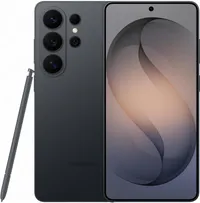
The good news is that the Galaxy S26 Ultra didn’t get a price hike. The bad news is that it starts at $1,299, which is $100 more than the iPhone 17 Pro Max. For that price you get 256GB of storage. Upgrading to 512GB will cost you $1,499 and 1TB $1,799.
You can get up to $720 off in instant trade-in credit through Samsung.com, and we’re also tracking the best S26 Ultra deals overall.
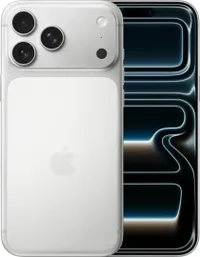
The iPhone 17 Pro Max starts at $1,199 for 256GB of storage, and you can upgrade to 512GB for $1,399, 1TB for $1,599 and 2TB for $1,999. It’s worth noting that the 1TB option is $200 cheaper than the S26 Ultra with the same storage. Our iPhone 17 deals page has the latest discounts on the Pro Max.
Winner: iPhone 17 Pro Max
Galaxy S26 Ultra vs. iPhone 17 Pro Max: Design

Interestingly, both the Galaxy S26 Ultra and iPhone 17 Pro Max have both ditched titanium bands for aluminum, which was likely an effort to save weight (and maybe cost). And the S26 Ultra looks a bit more like an iPhone now thanks to its more rounded corners.

But there’s still some distinct differences between these flagships. The Galaxy S26 Ultra is considerably lighter at 7.5 ounces (214 grams) versus 8.22 ounces (233 grams) for the iPhone 17 Pro Max. The Samsung is also thinner at 0.31 inches (7.9mm) compared to 0.34 inches (8.6mm) for the iPhone.

I’m not a fan of the redesigned camera bump on the S26 Ultra. The glass surround looks nice but this area causes the phone to be lopsided on a table and it wobbles when you press on the display. The iPhone 17 Pro Max’s camera plateau is also huge, but because it stretches across the back of the phone, there’s no wobble.

The S26 Ultra color options include Black, White, Sky Blue and Cobalt Violet. I like the Violet option best, and there’s two online exclusive colors at Samsung.com in Silver Shadow and Pink Gold.
Apple’s offers a bolder Cosmic Orange color that really stands out, along with Blue and Silver. But unfortunately that’s it. Only three hues.
Winner: Draw
Galaxy S26 Ultra vs. iPhone 17 Pro Max: Display

The Galaxy S26 Ultra comes out swinging in this round with its Privacy Display, which helps obscure content off-angle at the pixel level. You no longer need a separate privacy screen that you stick on your phone. And it works super well. You just turn Privacy Display on and the viewing angle is automatically narrowed.

Plus, you can set which apps automatically enable Privacy Display and can even blank out specific parts of the screen, such as incoming notifications.
| Row 0 - Cell 0 | Brightness HDR (nits) |
Brightness SDR (nits) |
Color (DCI-P3) |
Delta-E (accuracy) |
Galaxy S26 Ultra |
1,804 (Natural) / 1,860 (Vivid) |
1,211 (Natural) / 1,191 (Vivid) |
90.6% (Natural) |
0.22 |
iPhone 17 Pro Max |
1,899 |
999 |
77.6% |
0.26 |
So what about the displays themselves? Indoors, I found that the iPhone 17 Pro Max looked brighter when I played the “Super Mario Galaxy Movie” trailer on both phones. However, I asked a few colleagues and they preferred the colors and contrast from the Galaxy S26 Ultra and I agree. The iPhone’s image was a tad washed out by comparison.

Outdoors, the Galaxy S26 Ultra shined brighter with its Adaptive Brightness turned on. The Tom’s Guide homepage was a lot easier to read on a partly sunny day.
In our labs, the iPhone 17 Pro Max turned in a slightly higher HDR brightness but a lower color output. And the Galaxy S26 Ultra’s panel proved slightly more accurate.
My only complaint about the S26 Ultra’s display is that its viewing angles aren’t quite as wide as the iPhone 17 Pro Max, even when Privacy Display is turned off.
Winner: Galaxy S26 Ultra
Galaxy S26 Ultra vs. iPhone 17 Pro Max: Cameras
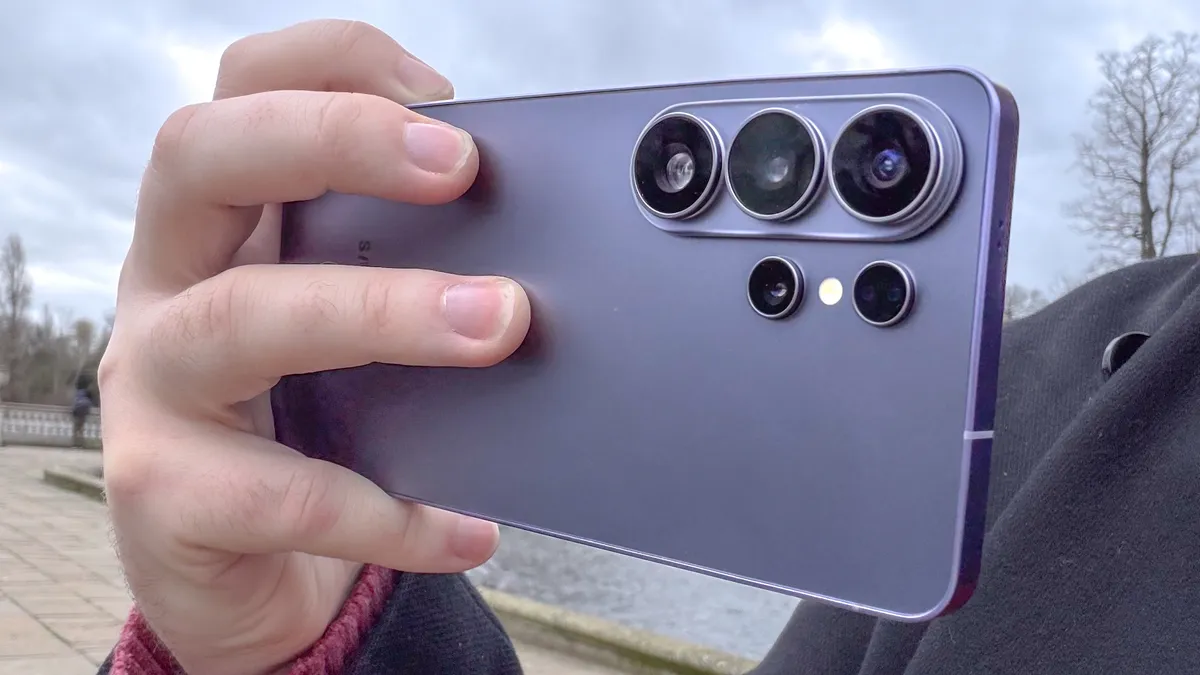
The biggest upgrade to the Galaxy S26 Ultra’s cameras come with better low-light performance for the 200MP main and 50MP telephoto lenses, thanks to wider apertures. Samsung touts up to 47% and 37% brighter images, respectively, and our results back that up compared to the Galaxy S25 Ultra.

Meanwhile, the iPhone 17 Pro Max’s biggest upgrade is a 56% bigger telephoto zoom sensor with the promise of 8x “optical quality” zoom. There’s also an 18MP Center Stage front camera that lets you take portrait or landscape selfies without having to flip the phone around. So what’s the best camera phone?
Starting with this photo of tinted daisies, I prefer the iPhone 17 Pro Max’s shot as it’s brighter and more vibrant. Samsung’s photo has more contrast and a bit more detail in the petals, but the iPhone pic is one I’d be more likely to share.
Things take a weird turn with this photo of peppers. The colors from the S26 Ultra are too oversaturated, resulting in an unrealistic image that’s somewhat blurred. The iPhone 17 Pro Max’s photo looks more natural.
How about close-ups? The iPhone 17 Pro Max wins with this shot of a flower. It’s a lot sharper in the center, even though the petals through the S26 Ultra look crisp.
In low light, the iPhone 17 Pro Max pulls ahead with a brighter image of this clock tower. You can make out more detail in the panels around the clock and on the roof, though the shot is a bit too warm.


I took this next shot with very little ambient light of a flower vase next to a lamp and candle. The iPhone’s photo is considerably brighter and the artificial flowers look fairly sharp, but the striations in the lamp look clearer through the Samsung.
The S26 Ultra wins when it comes to zoom performance. You can make out the letters in the sign at 10x much better through Samsung’s telephoto lens, as well as the paint on the posts.
At 40x Samsung surges even further ahead of the iPhone 17 Pro Max, though there’s certainly some sharpening processing going on here. Plus, the S26 Ultra can go up to 100x.
The Galaxy S26 Ultra does a pretty good job with skin tones, as you can see in this portrait shot. It’s a more even exposure and you can see more detail in my face, whereas the iPhone 17 Pro Max has more shadows. The stitching in my shirt looks sharper too through the Samsung.
On the other hand, I prefer the selfie from the iPhone 17 Pro Max because it’s brighter and has more contrast. The Samsung pic looks flatter by comparison.
Last but not least, Samsung wins in this ultrawide photo of The Vessel, a public art installation in New York City. The structure’s highlights pop more vs. the iPhone 17 Pro Max.
Winner: iPhone 17 Pro Max
Galaxy S26 Ultra vs. iPhone 17 Pro Max: Video
The Galaxy S26 Ultra’s biggest “wow” video upgrade is Horizontal lock. This will help you get much steadier footage if you happen to be in motion while recording. And there’s a night-and-day difference versus the iPhone.


In this clip walking down a park path, I purposely turned the phone 180 degrees in both directions to see how stable the video would look. And you can see that the S26 Ultra’s footage remains remarkably steady compared to the see-saw-like footage from the iPhone 17 Pro Max.


The Galaxy S26 Ultra also fares well with this low-light footage. As I pan around this restaurant with string lights and then up towards the clock tower, the panels in the tower are considerably brighter and it’s easier to make out the numbers in the clock. The iPhone’s footage was warmer but not quite as bright or sharp.


In daylight, the iPhone 17 Pro Max offered a crisper 4K video of a riverside dock. The rippling water and the dock itself just look better, but the S26 Ultra’s footage is vibrant.
Winner: Galaxy S26 Ultra
Galaxy S26 Ultra vs iPhone 17 Pro Max: Performance

We’re at the stage of smartphones where pretty much any flagship will give you the performance you need, whether it’s multitasking or playing demanding games. But there are some differences worth pointing out based on our testing.
| Row 0 - Cell 0 | Geekbench |
Galaxy S26 Ultra |
3,785 / 11,563 |
iPhone 17 Pro Max |
3,871 / 9,968 |
On Geekbench, which measures overall performance, the Galaxy S26 Ultra’s Snapdragon 8 Elite Gen 5 for Galaxy turned in a lower single-core number but a higher multii-score score than the A19 Pro-powered iPhone 17 Pro Max.
| Row 0 - Cell 0 | 3DMark Solar Bay Unlimited |
3DMark Wild Life Extreme Stress Test |
Galaxy S26 Ultra |
49.37 / 12,984 |
65.2% stability |
iPhone 17 Pro Max |
46.6 / 12,260 |
53.9% stability |
In terms of graphics and gaming, the Galaxy S26 Ultra had a narrow advantage with a frame rate of 49.37 vs 46.6 in the 3DMark Solar Bay Unlimited test.
However, even though both of these phones boast vapor chamber cooling, the iPhone 17 Pro Max delivered a higher stability score when we ran the 3DMark Wild Life Extreme Stress Test, which goes for 20 minutes. So you should expect better sustained performance from the iPhone.
| Row 0 - Cell 0 | Geekbench AI 1.5 |
Galaxy S26 Ultra |
83047 (TensorFlow Lite QNN) |
iPhone 17 Pro Max |
48549 (Quantitized Core ML/Neural Engine) |
Last but not least, the Galaxy S26 Ultra turned in a considerably higher score on Geekbench AI 1.5, although it’s not quite an apples-to-apples comparison.
Winner: iPhone 17 Pro Max
Galaxy S26 Ultra vs. iPhone 17 Pro Max: Software and AI features
The Galaxy S26 Ultra runs circles around the iPhone 17 Pro Max when it comes to AI features, as Apple is still working on the new-and-improved Siri. Some of the key new Samsung AI features that I think are useful include Now Nudge.
For example, if you get an incoming message asking about getting lunch with a friend and you start to type back you’ll see a Calendar button above the email so you can see your schedule right away.
Circle to Search also gets an upgrade. You can now circle a person and then get info on the entire look and get info on everything someone is wearing to buy it.

The most ambitious feature is Automated App Actions, which is in testing. You’ll be able to do things like order and Uber using just your voice or build out a DoorDash order via Gemini. Your phone won’t make the purchase for you but will get everything ready in the background.
And on the photos front there’s Photo Assist. You can tweak your images via prompts in pretty much any way you like and get pretty wild results. Plus, you can even add pets or people from other photos into the one you’re editing.
Even Bixby gets an upgrade with Perplexity integration. So Bixby can now help you do everything from summarize webpages to answering questions on the fly.
With iOS 26, the biggest change is the Liquid Glass design. It looks slick but some people have found screen elements hard to read. The good news is that Apple has tweaked the design through software updates.

The new Call Screening and Hold Assist are very welcome additions. Call Screening can screen calls on your behalf so you’re hit with less spam, while Hold Assist can hold on the line for you to help avoid muzak hell.

The Apple Intelligence upgrades are pretty minimal though. Visual Intelligence now lets you ask questions about whatever’s on your screen. And there’s also Live Translation in Messages, Phone and FaceTime. But we’re waiting for the new Siri powered by Gemini.
Winner: Galaxy S26 Ultra
Galaxy S26 Ultra vs. iPhone 17 Pro Max: Battery life and charging

The iPhone 17 Pro Max is the battery life champ in this round. On the Tom’s Guide Battery Test, which involves continuous web surfing at 150 nits of screen brightness, the iPhone 17 Pro Max lasted nearly 18 hours. That’s good enough to make our best phone battery life list. The S26 didn’t last quite as long, hitting 16:40 in standard mode and 16:10 in adaptive mode.
| Row 0 - Cell 0 | Hours : Minutes |
Charging % in 30 mins |
Galaxy S26 Ultra |
16:10 |
77% |
iPhone 17 Pro Max |
17:54 |
64% |
The Galaxy S26 Ultra does benefit from fast 60W charging, which enables it to reach 77% capacity in 30 minutes. That’s well ahead of the iPhone.

However, only the iPhone 17 Pro Max has MagSafe magnets built into the design for charging, which enables you to attach the phone to all sorts of accessories. With Samsung you have to buy a separate case with magnets built in.
Winner: iPhone 17 Pro Max
Galaxy S26 Ultra vs. iPhone 17 Pro Max: Verdict
This Galaxy S26 Ultra vs iPhone 17 Pro Max battle is as close as they come, with the iPhone winning by just a single point. But it’s important to look at where these phones excel to determine which is best for you.
| Row 0 - Cell 0 | Galaxy S26 Ultra |
iPhone 17 Pro Max |
Price (10) |
7 |
8 |
Design (10) |
9 |
9 |
Display (15) |
14 |
13 |
Cameras (20) |
17 |
19 |
Video (10) |
9 |
8 |
Performance (10) |
8 |
9 |
Software and AI (10) |
10 |
7 |
Battery life and charging (15) |
12 |
14 |
Overall |
86 |
87 |
The Galaxy S26 Ultra has a thinner and lighter design, a more advanced Privacy Display and a super impressive Horizon Lock for video. Plus, it blows away the iPhone on AI features and also offers faster charging.
On the other hand, the iPhone 17 Pro Max is $100 cheaper and takes better looking photos overall despite lacking Samsung’s zoom power. And it also offers better sustained performance based on our testing. The iPhone 17 Pro Max lasts longer on a charge, too.
Overall, the iPhone 17 Pro Max has done just enough to hold on to the title for best phone, but the Galaxy S26 Ultra is very much a winner and is easily the best Android phone money can buy.