I've been in the phone testing game for nearly 20 years now, and I've seen them change a whole lot since I started. From simple, pocketable communication devices to tiny laptops — and they don't seem to be slowing down any time soon. But which is the best phone that you can lay your hands on right now?
Apple's newly released iPhone 18 Pro takes the top spot again, despite a $100 price hike. It feels incredible in hand; the cameras are masterfully produced and feature a new party trick; and iOS remains a great way to use a smartphone in 2026.
There's a large elephant with a dollar sign painted on the side, though. iPhones are very expensive, and if you're looking for something cheaper, you might not like the $1000+ price of Apple's finest. Instead, you should consider the Google Pixel 10a. It's a much cheaper device running Android, but it offers a great experience for a lower price — around $500.
The best phones you can buy today
Why you can trust Tom's Guide Our writers and editors spend hours analyzing and reviewing products, services, and apps to help find what's best for you. Find out more about how we test, analyze, and rate.
Best phone overall


Apple has done it again — the Pro Max model beats everything else to sit at the top of the list. This update is less impressive than the jump from 16 to 17 Pro Max, but it still adds some nice changes that separate the two devices. The headline here? A variable aperture camera. Your iPhone photos have never looked so good in a range of different environments as a result.
Add in a sprinkling of extra battery life, a more powerful chip and a smaller dynamic island on the top of the display and you’ve an iterative update that rather than changing the formula, perfects it instead. The new colors are nice too.
If you’ve still got an iPhone 17 Pro Max, you’re not going to find much of a reason to upgrade — but users of older iPhones find the final form of Apple’s latest aluminum iPhones. Now let’s see what the announced (but not yet tested) iPhone Duo can do…
Price and value: There’s been a price hike to the tune of $100 this time around. That means that you’ll get the base 256GB storage version for $1,299, with prices rising from there. You can also save $100 and get the Pro with a smaller screen.
But there’s no getting around that this is a very expensive device, even though competitor devices are starting to catch up with the iPhone's lofty price.
Camera performance: In addition to the camera of the 17 Pro Max (which, to be clear, was also incredible), Apple has tossed in some very tasty updates to the 18 Pro Max’s collection of sensors and lenses. There’s a variable aperture lens, which can change automatically depending on the kind of photo you’re taking, or you can change the settings manually to get the best image possible.
The results are remarkable, with the iPhone performing well in low-light conditions and picking out detail very well. The zoom still isn’t quite up there with Samsung’s quite honestly ludicrous display, but the iPhone 18 Pro’s camera is still a game changer.
Battery and charging: Apple doesn’t top the battery life tree anymore — thanks OnePlus — but it is still easily some of the best around. We found the iPhone 18 Pro max lasted 18 and a half hours in our testing, beating out the previous generation by a hefty sum. It also beats out Google and Samsung’s offerings resoundingly, although falling short of the OnePlus 15 ridiculously high battery life.
Either way, you’re not going to be reaching for the charger anywhere near as often.
Overall performance: The A20 Pro chip has come to reseat Apple at the top of the pocket silicon tree, beating out Samsung’s numbers handily.
We found the phone incredibly slick and quick to use, with minimal annoying hangups when doing more intensive tasks. We especially like how well the iPhone can transcode video, taking far less time than it does on the competition. All while keeping those temperatures to a minimum.
Verdict: The iPhone 18 Pro Max is an iterative update this time around — but it still overpowers the rest of the pack to take the top spot. It’s expensive, but that camera is epic and the power and design are to be envied by just about every other smartphone around.
What's new in iOS 27? iOS 27 is here, and it comes pre-installed on the iPhone 18 Pro and Pro Max. There are a few changes here, although they're mostly cosmetic. The Liquid Glass UI has received some nice quality of life improvements, and there are some new AI features built into AI Siri. That's the biggest update overall, and it makes Siri more useful than it has been before. You can update the software on the 17 Pro and Pro Max as well, although some features aren't available on the iPhone 17. If you want the latest features you'll need either a Pro or Pro Max model.
- Read our full iPhone 18 Pro Max review
Attributes |
Notes |
Rating |
|---|---|---|
Price |
The iPhone 18 Pro Max is very expensive, although it's not the most expensive phone that Apple makes. If you want the same performance and a smaller screen, save $100 and grab the 18 Pro. |
★★★☆☆ |
Cameras |
The iPhone 18 Pros new variable aperture camera is a masterstroke. |
★★★★★ |
Power |
Apple's new A20 Pro chips are incredibly powerful, smashing just about everything else available right now. |
★★★★★ |
Battery life |
Somehow, the battery life is even better than the last time, and lasts longer than almost everyone else. |
★★★★★ |
Best camera phone


The Galaxy S26 Ultra is Samsung's latest premier Android flagship, and does a lot of things that even the list-topping iPhone 17 Pro Max can't match.
The S26 Ultra's camera system remains a highlight, boasting a 200MP main sensor and a 50MP telephoto lens with wider apertures to improve low-light photography. The zoom capabilities of the phone's dual telephoto cameras remain unmatched, producing clearer, less noisy images at a variety of distances. For videographers, the new "Horizon Lock" feature is a huge deal, ensuring footage remains perfectly level and steady even with shaky hands. However, these hardware improvements come at a physical cost: the much-enlarged camera bump, which you'll be cursing when you want to lay the phone flat on a table or toher surface.
Beyond the cameras, the S26 Ultra features an innovative Privacy Display that can block snoopers from viewing what's on your screen, though it does result in narrower viewing angles and a slightly dimmer screen compared to the S25 Ultra. Meanwhile, new agentic AI capabilities promise to anticipate user needs through features like Now Brief for contextual recommendations and automated app actions that aim to let users book rides or order food via a simple Gemini command.
While the S26 Ultra offers strong battery life and faster charging speeds, the lack of built-in Qi2 magnets for MagSafe-style accessories and the absence of a next-generation silicon carbon battery mean it has retained the same battery capacity as older models. But that aside, you can't do better than the Galaxy S26 Ultra if you want an Android phone that can tackle anything you might feasibly want a phone to do.
Price and value: The Samsung Galaxy S26 Ultra maintains its premium positioning with a starting price of $1,299 (£1,279 / AU$2,199) for the 256GB model, notably avoiding the $100 price hike seen on the standard S26 models. For this price, users receive the most advanced AI features and hardware innovations currently available in the Android ecosystem, making it a high-value choice for enthusiasts, even if it lacks some of the newer battery technologies found in rival flagships.
Camera performance: This is a major highlight, featuring a 200MP main sensor and a 50MP telephoto lens with wider apertures that deliver significantly better low-light performance than previous models. Zoom remains a primary strength, consistently outperforming the iPhone 17 Pro Max in clarity and noise reduction at high magnifications. Video capabilities are also bolstered by the new "Horizon Lock" feature, which keeps footage perfectly level during movement.
Battery and charging: Battery life on the Galaxy S26 Ultra is strong, providing reliable longevity that competes well with other top-tier flagships. Charging speeds have also seen an improvement, allowing users to power up more quickly than before. However, the lack of a silicon-carbon battery, which could have offered even higher energy density, is a pity. Additionally, Samsung opted not to include built-in Qi2 magnets in order to keep the phone thinner, meaning users will still need a compatible case to enjoy MagSafe-style magnetic charging.
Overall performance: The Galaxy S26 Ultra excels in day-to-day use thanks to its AI features, such as Now Brief and Automated App Actions, which allow the phone to anticipate user needs and handle tasks in the background. The hardware is equally impressive, featuring a thinner and lighter design that makes this large phone easier to handle than its predecessors. The S Pen adds further value by integrating with new AI tools like Creative Studio for sketching and image generation. The most innovative performance feature is the Privacy Display, which uses specialized hardware to obscure the screen from onlookers, providing a unique layer of security.
Verdict: Ultimately, the Samsung Galaxy S26 Ultra is the best Android phone currently available, driven by a marriage of hardware innovation and helpful AI. While the massive camera bump and the slightly dimmer display (a side effect of the privacy tech) are notable compromises, they are outweighed by the phone's exceptional zoom, steady video, and unique privacy features. It is the definitive choice for power users who want a high-performance "AI agent" in their pocket and are willing to pay a premium for the most complete flagship experience on the market.
- Read our full Samsung Galaxy S26 Ultra review
Attributes |
Notes |
Rating |
|---|---|---|
Price |
The Galaxy S26 Ultra starts at a premium $1,299, making it $100 more expensive than the base $1,199 Google Pixel 10 Pro XL and matching the typical high-end pricing of the iPhone 17 Pro Max. |
★★☆☆☆ |
Cameras |
Samsung’s flagship dominates with a 200MP main sensor and industry-leading zoom that produces much clearer, less noisy shots at a distance than the Pixel 10 Pro XL's 5x or the iPhone’s 8x optical-quality zoom. However, the iPhone 17 Pro Max still holds a slight edge in color accuracy and macro photography, even as Samsung’s new "Horizon Lock" provides the most stable video recording in the class. |
★★★★★ |
Power |
The S26 Ultra is hailed as the most powerful Android device thanks to its "agentic AI" and snappy daily performance, easily outperforming the Google Pixel 10 Pro XL’s Tensor G5 in raw benchmarks and gaming. While the iPhone 17 Pro Max’s A19 Pro chip typically wins in pure processing speed, the S26 Ultra's 12GB of RAM and specialized AI features make it the more versatile choice for heavy multitasking. |
★★★★★ |
Battery life |
While the Galaxy S26 Ultra offers "strong" battery life and faster charging speeds than previous models, it still struggles to match the endurance of the iPhone 17 Pro Max, which Tom's Guide recorded as the longest-lasting iPhone ever at nearly 18 hours. It comfortably outlasts the Google Pixel 10 Pro XL's 14-hour mark, though it misses out on the next-gen silicon-carbon battery technology found in some emerging global rivals. |
★★★★★ |
Best phone under $500


Everyone was fretting on whether Google would increase price the Pixel 10a this year, but the company's decision to keep its midrange phone at the same $499 price as the Pixel 9a is a welcome relief. The cost of the Pixel 10a still looks better than the forthcoming iPhone 17e that Apple's still asking for $599.
Despite the lack of new hardware upgrades, it still really is the best cheap phone around. You can't help but appreciate how the Pixel 10a evolves the design by making the camera design truly flush this time around, while its construction benefits from an upgraded IP68 rating and Corning Gorilla Glass 7i on the front to improve its scratch and drop resistance.
Meanwhile, the Pixel 10a still makes for a compelling option with its Tensor G4 chip, 6.3-inch Actua display, 5,100 mAh battery, and more AI features. I can attest that it's the budget phone to beat with the most value, for now.
Price and value: In addition to sparing your budget with its $499 price, the Pixel 10a should last you a very long time. Google provides the same seven years of software and security updates as the pricier Pixel 10 Pro and 10 Pro XL models.
If the price isn't enough to convince you, just know that there are Pixel 10a deals that discount the phone even more from its normal price, while also throwing in freebies.
Camera performance: While the flush camera design on the back of the phone is a refreshing change over other phones, the Pixel 10a cameras actually don't get an upgrade. It's still a 48MP main camera that pairs with a 13MP ultrawide, while a 13MP camera sits around the front for selfies.
I put this to this test in my Pixel 10a review and it's no surprise that I don't see a tremendous change against the previous Pixel 9a. However, it does tack on two new AI tools — Camera Coach and Auto Best Take — which are helpful in getting the best possible shots.
Battery and charging: The Pixel 10a beats the average smartphone's performance on our battery test. The Pixel 10a was able to surf the web for 15 hours and 16 minutes before tapping out, which is a surprising improvement over the Pixel 9a's time of 13 hours and 8 minutes.
Improving battery life by more than 2 hours over its predecessor shows that Google is on the right track when it comes to bolstering the battery life of its phones. I'm surprised by this because it has the same 5,100 mAh battery as before, so I suspect that the power efficiency of the software is the cause for its improved performance.
Overall performance: Speaking of performance, AI features continue to be a big part of the Pixel 10a's story gaining most of the same AI-tools first introduced with the Pixel 10 lineup. The Pixel 10a is also the first in the A-series to offer Satellite SOS to get help when there's no traditional cell phone coverage around.
But don't sleep on the phone's call management features, either, as I think they're some of the best AI features on the Pixel and unique to Google's phones. I also love the Call Screen feature that lets Google Assistant take phone calls on my behalf, complete with contextual responses I can choose.
Just be aware that some Pixel 10 AI features are missing here — notably the Pixel Screenshot app for retrieving screenshot info saved on your phone and the AI-enhancements of Pro Res Zoom.
Forget about blazing speeds, though, as that's not in the Tensor chips' locker. That said, the Pixel 10a does handily out-perform the $399 Galaxy A36, which uses a lower-powered Snapdragon chipset. However, it trails the A18's performance with the iPhone 16e.
Verdict: The Pixel 10a is a superb contender that continues to prove how budget phones can rival flagship models. Every aspect of the phone has been improved over its predecessor. From its much bright (and larger) screen, to its longer battery life, and better camera performance, it's a fantastic option for anyone. Best of all, it gets some of the AI features found with the more expensive Pixel 10 models.
What's new in Android 17? There's a range of different features available in Android 17, and they make the Pixel 10a an even more compelling buy. For one, you can now record your screen and front facing camera at the same time, and the multi-tasking has been overhauled. We've found it generally stable as well, so you won't have any issues with restarts or glitching.
- Read our full Google Pixel 10a review
Attributes |
Notes |
Rating |
|---|---|---|
Price |
Google keeps its midrange phone under $500, making the Pixel 10a one of the better values you can find if you don't want to pay flagship prices. |
★★★★☆ |
Cameras |
With the same 48MP main camera paired with a 13MP ultrawide as before, the Pixel 10a not still delivers astounding results for a budget phone. |
★★★★☆ |
Power |
The Pixel 10a recycles the same Tensor G4 chip as before, which effectively allows it to run most of the same AI features found with the rest of the Pixel 10 series. |
★★★★☆ |
Battery life |
You'll get better than average battery life with the Pixel 10a, lasting much longer as the pricier Pixel 10. |
★★★★☆ |
Best foldable phone
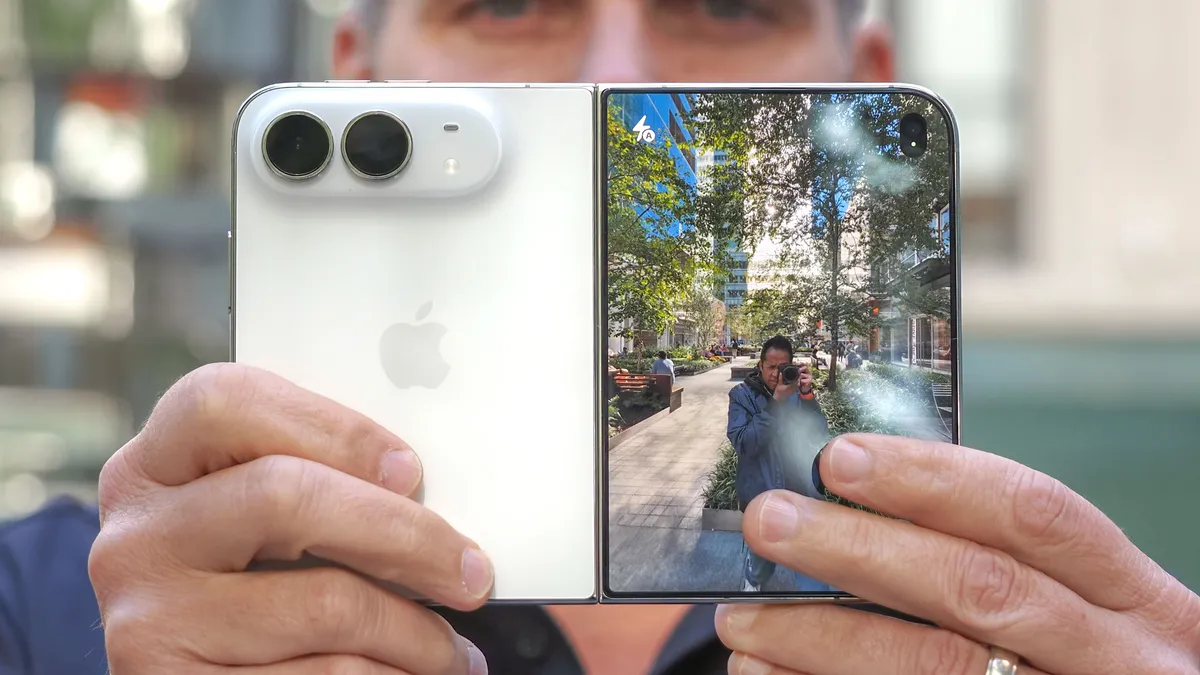


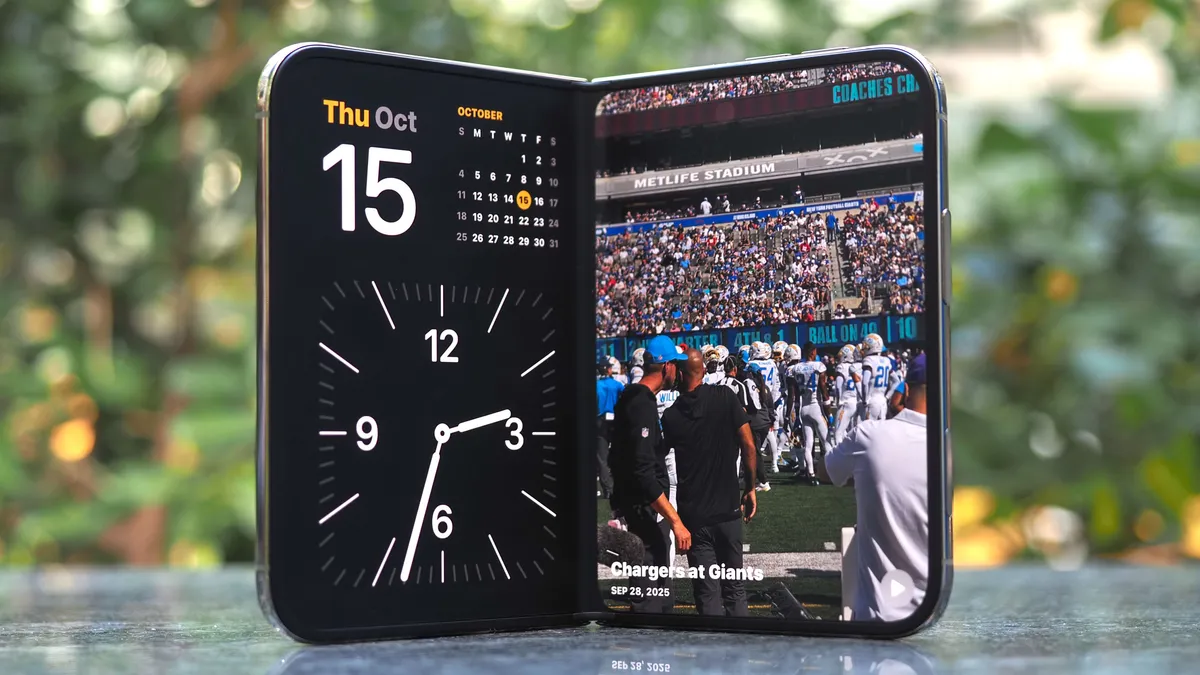


Apple has arrived on the foldable scene with a phone that takes everyone else to school. The design is different (although Apple was beaten to the punch on the passport shape), and brings Apple’s signature premium build quality to foldables. There’s a special screen inside that avoids glare when outside, and a chip that powers Apple’s most powerful handsets to date. This is a statement of intent for Apple and anyone buys one.
There are a couple of weaknesses. The switch back to Touch ID from Face ID feels like a genuine step backwards, and an entirely unnecessary one. The lack of a telephoto lens is a shame for a $2,000 device, and the fancy new screen does soften the colors a little thanks to its texture. Still, Apple’s new foldable brings the fight in all the right ways, and it's our pick for the best foldable phone that you can buy today. A $100 price gap between Apple and Samsung sure helps its case as well.
Price and value: The iPhone Duo is an expensive device, and the most expensive base iPhone to date. It starts at $1,999, and offers 256GB of storage. Each storage option up to 2TB costs a whole lot extra, landing the top of the range model at a monstrous $3,199. Stick to the cheapest option, I’d say, lest you find yourself one iPhone up and an entire used car down.
The device does feel worth it, though. The aluminum chassis is super premium, and feels lovely and weighty in the hand. The hinge is sturdy, and it looks and feels like it will stand up to plenty of abuse over the course of your ownership. The screens are incredibly bright (the brightest we’ve tested in a foldable), and the anti-glare covering works a treat at keeping sunlight at bay — but it does affect color.
The price is high, then, but the phone feels like a $2,000 device. If you want a folding iPhone, though, you haven’t really got much of an option — this is the only one (so far).
Camera performance: The performance of the main camera is very good, with some lovely color accuracy and clean lines. The selfie cameras are fine too, plenty clear and bright. There’s only one main bugbear, and that’s what’s missing.
There’s no telephoto lens. That’s a big shame, especially for a $2,000 device as we’ve got here. I’m not sure what’s worse. The bad telephoto camera of the Z Fold 8 Ultra, or no telephoto lens.
Battery and charging: Considering everything the iPhone Duo does (and its unfolded thinness), the battery life is very good. We got 13 hours and 10 minutes out of the device from full to empty, which is more than the Galaxy Z Fold 8.
Charging time is good as well, although the charging curve is different from Samsung phones. We got up to 42% from empty in 15 minutes, although it slowed down and got us 66% in 30 minutes. That’s still some speedy charging, mind you.
Overall performance: The A20 Pro chip inside the iPhone Duo is Apple’s most powerful to date, and it makes the iPhone Duo a true force to be reckoned with. Its capable of running any app you might throw at it, breezing through games and productivity applications without a hitch. This is a powerful device, make no doubt about it.
Add the 120Hz refresh rate display to the equation and you’ve got a super slick and smooth experience. It never slowed down once while we tested it, as you might hope considering the otherworldly price.
The multitasking works well on the big inner screen too, giving you more real estate to put apps side by side. We found just one key issue with the new form factor of the phone. Not every app on the App Store has been changed to fit the inner screen, so some of them look downright dreadful on the device's screen. This will be fixed in time, but it’s worth noting for early adopters.
Verdict: Apple has taken its time to join the Fold, and the iPhone Duo (despite a silly name) is the best foldable you can buy right now. It’s a powerhouse of a phone with some truly ridiculous brightness in its screen — if you’re looking for a new foldable, its the way to go.
That’s despite some small weaknesses in the camera and the sizing of apps. We can’t think of a better foldable, but you’ll be paying loads to get one.
- Read our full Apple iPhone Duo review
Attributes |
Notes |
Rating |
Price |
It costs less than Samsung's top of the range foldable, but its still expensive. |
★★★☆☆ |
Design |
Just look at that lovely aluminum and glass shell. |
★★★★★ |
Power |
The A20 Pro conquers all — this is a supremely powerful device. |
★★★★★ |
Battery life |
If you want more battery life, you should look at a non-folding phone. |
★★★★☆ |
Best cheap iPhone


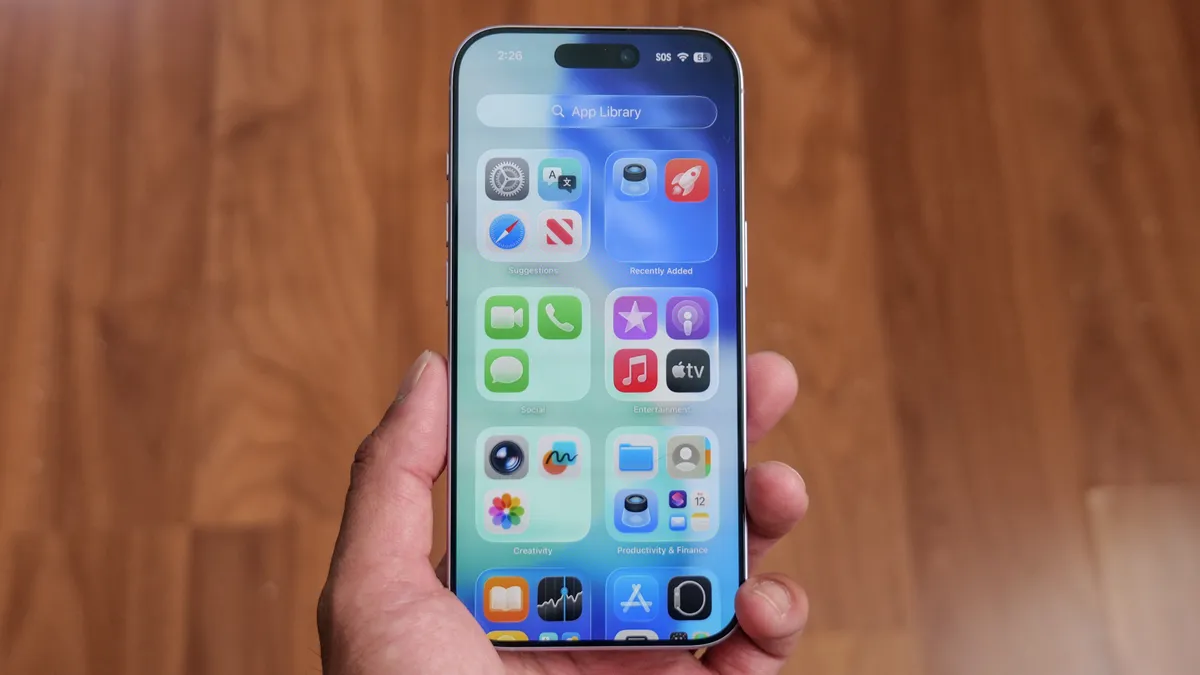


The iPhone 17e may be cheaper, but it doesn't deliver as many features as the iPhone 17. This entry-level Apple flagship also offers incredible value against the pricier iPhone 17 Pro and 17 Pro Max, thanks to all the things it has in common with those pricier models.
In fact, I argue that the iPhone 17 has more 'Pro' features than ever before. Certainly, no one would claim the iPhone 16 is an afterthought, given all the new additions.
Price and value: The $799 starting price of the iPhone 17 remains a lot to pay for most people. But it's cheaper than the $999 iPhone Air, not to mention those iPhone 17 Pro models, which start at $1,099 and only climb upward from there. Whether it's the Galaxy S25 or Pixel 10, you're going to pay $799 for an entry-level smartphone, so at least Apple's not charging you more.
The iPhone 16e costs $200 less and also supports Apple Intelligence features. But that phone comes with a single rear camera and lacks features like MagSafe support and the Dynamic Island. I think that's an awful lot to give up unless price is absolutely paramount among your concerns.
Camera performance: The 48MP main camera unlocks a lot of photography potential in the iPhone 17, but its ultrawide camera has a wider f/2.2 aperture that allows it to gather in more light than previous iPhones.
The iPhone 17 continues to offer lossless 2x zoom without the need of a telephoto camera too, which helps bridge the gap between itself and the Pro models. While the zoom 2x zoom shots are usable, its 10x zoom shots are starting to look dated compared to the Pixel 10 and its dedicated 10.8MP telephoto with 5x optical zoom.
Battery and charging: Apple's larger iPhones have more room for bigger batteries but the iPhone 17 also gets a larger one due to the extra room that's normally occupied by a SIM slot. In fact, it lasts more than 12 hours on a single charge — that's well ahead of the average smartphone, but not the Galaxy S25.
Thankfully Apple's upgraded its wired charging speed to 35W, which adds a fair back to the battery using Apple's new 45W charger.
Overall performance: The A19 chipset within the iPhone 17 is potent, proving just as capable as the A19 Pro. (Apple's Pro chipset has a little more muscle when it comes to graphics, thanks to an extra core in its GPU.) Even more impressive is how it puts up better scores in GeekBench than most Android phones running the latest Snapdragon 8 Elite chip.
This boosted chipset allows the iPhone 17 to support AI-powered Apple Intelligence features just like Apple's Pro models, though as we've noted there hasn't been a whole lot new with the iOS 26 release.
Verdict: The iPhone 17 is a better value than the iPhone 16 that came before it, thanks in part to its much smoother 120Hz refresh rate, 256GB starting storage, stronger A19 performance, and how it now carries similar features found on the 17 Pro models.
- Read our full iPhone 17 review
Attributes |
Notes |
Rating |
|---|---|---|
Price |
Sporting the same $799 as before, the iPhone 17 is a better value than ever mainly because of how it has more in common with the Pro models than ever before. |
★★★★☆ |
Cameras |
The 48MP main camera does a lot, but it still can't beat a Pro iPhone due to the lack of a dedicated telephoto lens. |
★★★☆☆ |
Power |
Apple uses a variant of its latest chipset, but the A19 manages to deliver outstanding results that narrows the gap against the A19 Pro. |
★★★☆☆ |
Battery life |
As a compact phone, the iPhone 17 offers all-day battery. |
★★★★☆ |
Best phone for battery life


The Asus ROG Phone 9 Pro is primarily a gaming phone. It has the aesthetics of one too, with far more design elements in common with the best gaming mouse than the Samsung Galaxy S26 Ultra. And compared to that flagship Android phone, the battery capacity is about 20% larger, despite the phone actually coming in 0.2 inches smaller.
Even if you're a gamer, the decision to focus the phone specifically around gaming does have some trade-offs, like less full colors in pictures and videos and only two years of full software updates (which we're nearing the end of since the phone was released in late 2024), but if it's battery life you need, this phone has it in spades.
Price and value: At launch, the Asus ROG Phone 9 Pro cost $1,100, more than double the price of the Google Pixel 10a, $300 more than the iPhone 17 and only $200 less than the Samsung Galaxy S26 Ultra. So it's an expensive phone, though most gaming devices will cost more (as the specs required for smooth gaming cost more).
That puts the ROG Phone 9 Pro in a tricky bracket, as it far exceeds any other phone for battery life, but also puts it in the same price range as the 2026 flagships, even though the phone is approaching its second birthday. Depending on how strongly you feel about the extra battery will determine how you feel about the price overall.
Camera performance: On paper, the cameras on the Phone 9 Pro are impressive. There's a 50MP main sensor, 13MP ultrawide and 32MP telephoto lens. This puts it on par with most flagship devices. But that doesn't quite translate into actual image quality, as we found while testing.
Since the phone is a few years older now, at the time of the review, we compared it against the Samsung Galaxy S24 Ultra, with its 200MP lens. You wouldn't expect the Phone 9 Pro to capture images of quite the same detail, but it held up incredibly well. It was just that the resulting images looked a bit dull compared to the colorful pictures snapped on the Samsung phone.
Battery and charging: Given that we've rated this phone at the best phone for battery life, it won't be a surprise that the longevity of the Phone 9 Pro is exceptional. We ran it through our standard battery life tests and it wiped the floor with other models, hitting almost 21 hours of power.
Even two years later, we haven't tested a phone that you can buy which gets anywhere near this. The closest is the 2026 Moto G, which survived for 19 hours and 10 minutes, compared to the Phone 9 Pro's 20 hours and 34 minutes. Even the iPhone 17 Pro Max only reaches 17 hours and 54 minutes.
The fairly mammoth 5,800mAh battery is topped up by a USB-C port on the bottom of the phone and it supports fast 65W charging. If you're using the port in bypass power mode, you can disable charging to reduce the amount of heat while you're gaming as well. Plus, the Phone 9 Pro supports wireless charging.
Overall performance: The Asus ROG Phone 9 Pro is set up for gaming, so its not a surprise that the overall performance of the device is pretty impressive. It has the Snapdragon 8 Elite chipset, one of the top of the line options in 2025, so it doesn't have difficulties with any everyday tasks and we didn't find lag during gaming.
That's also because there's an X Mode which optimizes the phone for gaming by freeing up resources for heavy tasks. It can do this automatically when the phone decides it is necessary, or you can select it to come on when you open specific apps. In either standard or X Mode, it doesn't quite keep up with the flagships, but it's incredibly close and won't give you issues as you go about your day.
Verdict: I'm hopeful that standard flagships will keep improving their battery life, but as those brands favor thinner phones with more AI, the drain on resources balances out any improvements from newer chips and larger batteries. So right now, if battery life is your main focus, the Asus ROG Phone 9 Pro is your best option.
It's not the easiest phone to recommend for most people though. It has a very specific design style and is optimized for gaming, which not everyone will need. Plus, it's disappointing that 2026 will see the end of the phone's supported software updates. Still, for the most time between charges, this is what you need.
- Read our full Asus ROG Phone 9 Pro review
Attributes |
Notes |
Rating |
|---|---|---|
Price |
It's a premium gaming phone with a price to reflect that. It may have the best battery life, but it's not going to be right for everyone at this price, especially since you could pick up the iPhone 17 for almost 30% less. |
★★★☆☆ |
Cameras |
The specs are good, but not exceptional for a phone at this price, roughly mirroring what you'd find on the Google Pixel 10a, which is half the price. Plus, we weren't over excited by the slightly limp color performance on captured images. |
★★★☆☆ |
Power |
The Snapdragon 8 Elite is one of the top chipset from 2025's Android phones and so it's not a surprise that performance-wise it holds up incredibly well against even 2026's flagship devices. |
★★★★☆ |
Battery life |
It's the battery that makes this phone worth the money. The 5,800mAh battery is huge and hits almost 21 hours of battery life, giving more than four hours more power than the iPhone 17 Pro Max. |
★★★★★ |
Best flagship phone


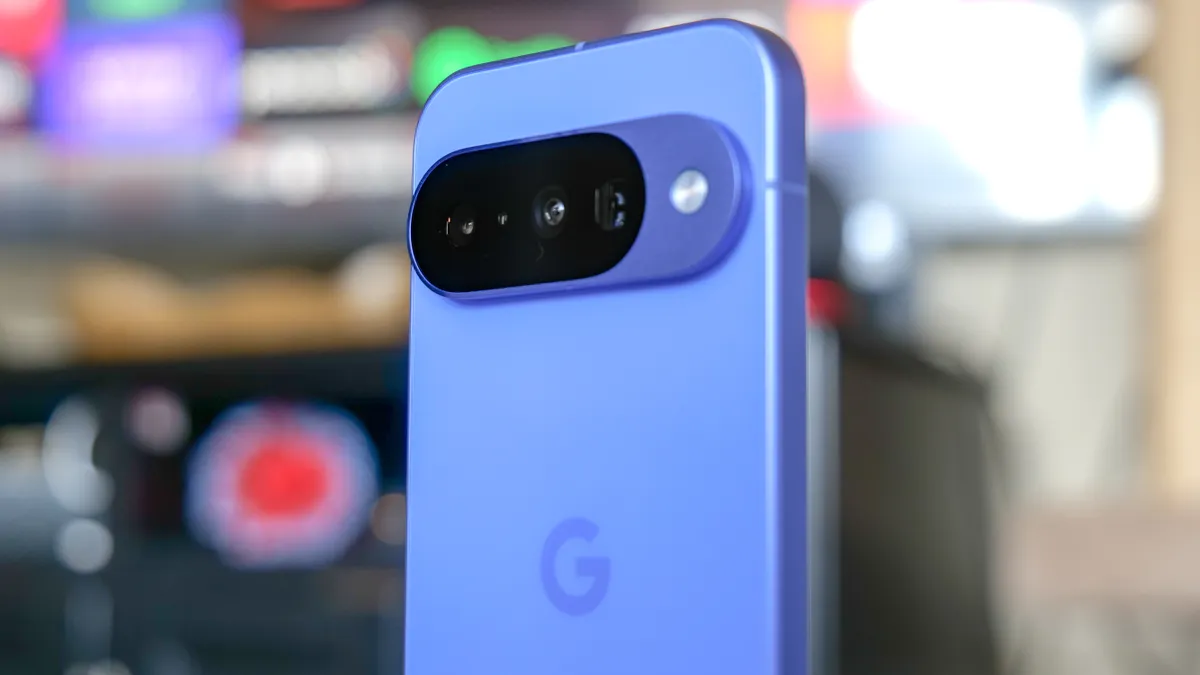


Google really sets the bar for all $799-priced flagship models, as the Pixel 10 gains several new tricks that make it more Pro-like than ever before. From its charming color options, to dedicated telephoto camera, and even extra Google AI features, the Pixel 10 is superb device worthy of our list
I tested it out and really emphasize how much of a difference a dedicated telephoto camera makes, which is made more poignant given that it's much cheaper than its Pro siblings. With a triple camera system now in place, the Pixel 10 offers much more utility for less.
Price and value: The $799 starting price of the Pixel 10 is comforting because it's the same price as last year's model, while adding that new telephoto camera, Pixelsnap support, more AI features, and a much brighter display.
What's even more impressive is the latest set of AI tools and features it brings. It gets the same smarts as the more expensive Pro models, including helpful features like Magic Cue, Voice Translation, Ask Photos, and much more.
Camera performance: While the 48MP main camera and 13MP ultrawide are brought over from the previous model, it's the new 10.8MP telephoto with 5x optical zoom that really rounds out its camera arsenal. With an optically backed lens, it lets you get closer to subjects — while capturing incredible detail. The difference is instantly noticeable compared to other phones like the iPhone 17, which leans on its main camera for all zooming.
Battery and charging: There's a modest improvement to the Pixel 10's battery life, reaching 13 hours and 13 minutes in our battery drain test. That's nearly 45 minutes longer than the prior model, and it's still more than enough juice for all-day battery life for most people.
Power users will certainly still need to top off at some point, so it's nice that Google gives it a faster 30W wired charging speed. This is in addition to Pixelsnap support, which lets the Pixel 10 work with many MagSafe and other magnetic accessories, like wallets and stands.
Overall performance: The Tensor G5 still has a lot to prove because benchmark scores put it behind many of its main rivals. However, the G5 is still faster and more power efficient than the previous Tensor G4 chip. Thankfully you won't notice any performance hiccups with most processes, as the Tensor G5 paired with its 120Hz refresh rate makes tasks look smooth and instant.
Verdict: The Pixel 10 is a compact sized phone that's perfect for content creators and photo enthusiasts now that it's adopted a dedicated telephoto camera into its arsenal. And with all of Google's AI features, it offers a robust software experience that turns complex tasks into short and easy ones — giving you more time to focus on other things. Best of all, it remains at the same $799 price as before.
- Read our full Google Pixel 10 review
Attributes |
Notes |
Rating |
|---|---|---|
Price |
There's a ton more value this year than before because of all the hardware and software upgrades it receives, while remaining at $799. |
★★★★★ |
Cameras |
The Pixel 10 hands down set the benchmark for all camera phones in the $799 price range. The addition of a dedicated telephoto camera with 5x optical zoom gives it a big boost. |
★★★★★ |
Power |
The Tensor G5 might still be underpowered against its rivals, but it doesn't change the fact that normal tasks are unhindered. |
★★★☆☆ |
Battery life |
Google upgrades it to a 4,970 mAh battery, delivering longer results than before. |
★★★★☆ |
Best phones compared
Here's a closer look at how our best phones pick compare when it comes to display brightness and battery life test results.
Phone |
Screen size |
Brightness test results (nits) |
Battery life test results (Hrs: Mins) |
iPhone 18 Pro Max |
6.9 inches |
1,899 |
18:24 |
Samsung Galaxy S26 Ultra |
6.9 inches |
1,806 |
16:10 |
iPhone Duo |
7.6-inch inner, 5.4-inch outer |
1,986 |
13:10 |
Google Pixel 10a |
6.3 inches |
1,896 |
15:16 |
iPhone 17 |
6.3 inches |
1,505 |
12:47 |
Asus ROG Phone 9 Pro |
6.7 inches |
1,676 |
20:34 |
Pixel 10 |
6.3 inches |
2,333 |
13:13 |
Also tested
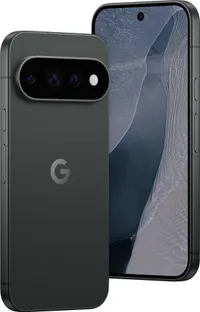
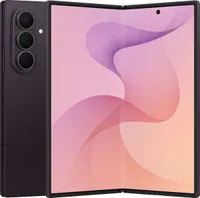
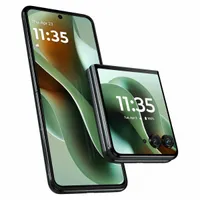
Since we review all the latest devices, there are still a handful that almost qualify as best phone contenders that don't make the cut — but they're still worth a look. Here's some of our favorite ones.
How we test smartphones
In order for a smartphone to make our best phone list, it needs to excel on several tests that we run on every handset. We perform some of these tests in our labs and some in the real world.
When it comes to performance, we rely on such synthetic benchmarks as Geekbench and 3DMark's Wild Life Unlimited to measure graphics performance. These tests allow us to compare performance across iPhones and Android devices. We also run a real-world video transcoding test on each phone using the Adobe Premiere Rush app and time the result.
To measure the quality of a phone's display, we perform lab tests to determine the brightness of the panel (in nits), as well as how colorful each screen is (DCI-P3 color gamut). In these cases, higher numbers are better. We also measure color accuracy of each panel with a Delta-E rating, where lower numbers are better and score of 0 is perfect.
One of the most important tests we run is the Tom's Guide battery test. We run a web surfing test over 5G or 4G at 150 nits of screen brightness until the battery gives out. As noted above, a phone that lasts more than 10 hour has good battery life, while phones that last around 12 hours or longer are among the longest-lasting phones we've tested.
Last but not least, we take the best phones out in the field to take photos outdoors, indoors and at night in low light to see how they perform versus their closest competitors. We take shots of landscapes, food, portraits and more, and also allow you to be the judge with side-by-side comparisons in our reviews.
For more information, check out our how we test page for Tom's Guide.
FAQs
What is the best Android phone?
After reviewing all the releases so far this year, we think the Samsung Galaxy S26 Ultra is the best Android phone available right now. It'll set you back more than $1,000 but it's easily the most comprehensive Android smartphone out there, even leap-frogging Google's own Pixel 10.
What phone has the best camera?
The Samsung Galaxy S26 Ultra is also our pick of the best camera phones available today. Its 200MP main lens, supported by two telephoto lenses (50MP, 10MP) and an ultra wide lens, alongside the newly-enlarged apertures for the main and 5x cameras and various under-the-hood tweaks, mean it simply can't be beat.
Which phone is better: iPhone or Samsung?
There's not an objective answer as to whether an iPhone or Samsung phone is better, as it depends on what you need from your smartphone. You'll want an iPhone if you value simplicity and compatibility with other Apple devices. In the U.S., Apple's popularity also means that many apps are developed for iOS only or come to the App Store before they reach Android. If you use AirPods, have an Apple TV and work on an iMac or MacBook, the iPhone is probably going to suit you most.
The same goes for Samsung; if you have a Samsung account, have used their phones in the past, and use a Samsung Watch, a Samsung phone will be best. There's also a much larger range of Samsung devices for almost every possible configuration and preference, from cheap small phones to large ones with incredible cameras.
Samsung is also steps ahead of Apple in adding AI to it's devices. Apple Intelligence is off to a very slow start (having launched in 2024 and barely changing since then). Samsung has it's own Galaxy AI package, but also incorporates a lot of Google's features, powered by Gemini.
Should I get an Android device or iPhone?
Android phones give you more choice in terms of price, size and innovative designs. However, iPhones offer speedier software updates, better games and apps and better security and privacy. See our iPhone vs Android face-off for more on the strengths and weaknesses of the two mobile platforms.
When do new phones come out?
It helps to have some idea as to when new phones are on their way if for no other reason than you don't unwittingly buy a device that's about to be made obsolete. (There's an argument to be made for buying a phone as its successor is getting announced should the older model see a price drop.) Phone makers tend to keep launch dates close to the chest, but they also have a habit of releasing new models at the same time of the year. Here's out best guess as to what's coming next for the most anticipated phones of 2026.
Is it better to buy an unlocked phone?
Most shoppers in the U.S. buy new phones through their wireless carrier. But an unlocked phone gives you the freedom to buy the device without any sort of contract and then bring it to the provider you want to use. And these days, it's pretty easy to bring an unlocked phone to any phone carrier.
That said, some phones cost more when you buy them unlocked. For example, Apple tacks $30 on to the price of the latest non-Pro iPhone for an unlocked model. Best Buy typically takes money off the price of a phone when you activate it with a specific carrier at time of purchase.
How big of a phone should I get?
Fans of the best small phones will have a hard time finding devices with screens smaller than 6 inches today, though a few still exist. Thanks to shrinking bezels, most phones with screens around 6.1 inches are fairly compact. If you prefer a big phone, you'll want something with a screen that's 6.5 to 6.8 inches. Anything bigger, and you'll likely want to turn to a foldable phone, where the device opens up to reveal a larger display.
What should I consider when looking at camera features?
Most phones will come with at least two rear cameras — a main lens and an ultrawide shooter, usually. Telephoto lenses offering an optical zoom are often reserved for more expensive flagship phones. Don't pay attention to the megapixel count. Instead, look at camera face-offs between phones to see the photo quality and look for special features like Night Mode to get better quality in low light. Also see our best camera phone roundup for more on the devices that really excel when taking photos.
What do I need to know about smartphone battery life?
Generally, phones with larger batteries (measured in mAh) offer the longest battery life, but that's not always the case. That's why we run our own battery test, in which we make phones surf the web until they run out of power. The average phone runs out of juice after about 11 hours in our test, while devices with the best phone battery life we've tested tend to reach the 16-hour mark with some phones lasting longer than 24 hours.