Club Benefits





It's time to choose a mattress but before you get into the details like firmness and if you need a sleep trial (short answer; yes) you have one big decision to make: do you want a hybrid or a memory foam mattress?
We've tested over 100 hybrid and memory foam beds to find the best mattress you can buy online so we're familiar with the pros and cons of both types (we've even watched them being made in a mattress factory.) Memory foam mattresses tend to 'hug', hybrids bounce, and one sleeps cooler while the other absorbs your partner's fidgeting.
Memory foam vs hybrid mattress: Key differences
What is a memory foam mattress?
- Memory foam mattresses are built with multiple layers of foam
- They're known for their body-contouring and motion isolation
- But they can sleep hot and sometimes lack edge support
You'll find memory foam in all kinds of beds but when we talk about memory foam mattresses, we're referring to beds made entirely of layered foams.
The best memory foam mattresses are known for their body-contouring, as the materials mold to your shape to create a cradling effect that can reduce pressure at the joints. They can also deliver excellent motion isolation; dense foams capture and stop disruptive movement in its tracks.

However, some find the slow-moving foam embrace stifling (it can have a quicksand effect), and all-foam beds do have a reputation for sleeping hot. They also tend to be weaker at the edges, which can lead to you sliding out of bed in the morning.
What is a hybrid mattress?
- Hybrid mattresses combine springs with layers of comfort materials
- They're typically airy and breathable with a responsive finish
- However, they can be bouncy which often results in motion transfer
Hybrid mattresses contain springs alongside other materials. The spring layer (or layers) typically sits at the base while comfort layers lie on top. These comfort materials are often memory foam but they can also be made of latex, wool and other cushioned materials.

The best hybrid mattresses deliver responsive support, as the springs lift and hold the body throughout the night. Springs also enhance cooling, as hot air can circulate and escape. Due to the variety of materials used, hybrid mattresses are a versatile bed type.
However, bounciness can result in motion transfer — when your co-sleeper changes position, the springs starting bouncing and you might find it wakes you up. Hybrids are also more expensive overall than all-foam beds, which might impact your bottom line.
Memory foam vs hybrid mattress: Price
- Hybrids typically cost more than the equivalent memory foam
- But both mattresses are sold to suit any budget
- Benefits such as trial depend on the brand, not the mattress type
As a general rule, memory foam mattresses are cheaper than hybrid mattresses. This means that if you have a memory foam and a hybrid mattress of equivalent quality, the memory foam bed will typically be cheaper because hybrids incorporate a greater ranger of materials.
However, if you want to know how much a mattress costs, the reality is that you can find memory foam and hybrid beds for every budget.
The best cheap mattresses do tend to be all-foam and if you're looking for a good bed under $300, memory foam favorites from Siena and Zinus are among your best bets. Cheaper hybrid beds – like the Allswell and Linenspa – do exist but they rarely offer the same performance level as a budget all-foam.

On the other hand, the best luxury mattresses tend to be hybrid beds that pair heavy-duty springs with sumptuous comfort layers and pricy materials such as organic cotton and wool. That said, brands such as Tempur-Pedic prove memory foam mattresses can be just as indulgent (and expensive.)
Similarly, mattress benefits depend on the brand, not the basic material. The industry standard is a 10-year mattress warranty and a 100-night sleep trial, across memory foam and hybrid beds.
Overall, it's not the type of mattress but the quality of the material and construction that determines the price of a bed. And shopping the sales, such as Black Friday and the Memorial Day mattress sales, can often net you a saving and the bed you have your eye on.
Memory foam vs hybrid mattress: Materials
- Memory foam mattresses are exclusively made of foam
- Hybrid mattresses feature a mix of springs and comfort materials
- Both are available in specialist builds for cooling, pain relief etc.
When we use the term 'memory foam mattress', we're referring to beds made entirely of foam. These use different types of foam to create comfort and support, typically following a basic construction pattern: a thick layer of dense polyfoam at the base, a transitional layer of sturdy polyfoam in the middle, and one or more layers of contouring memory foam at the top.

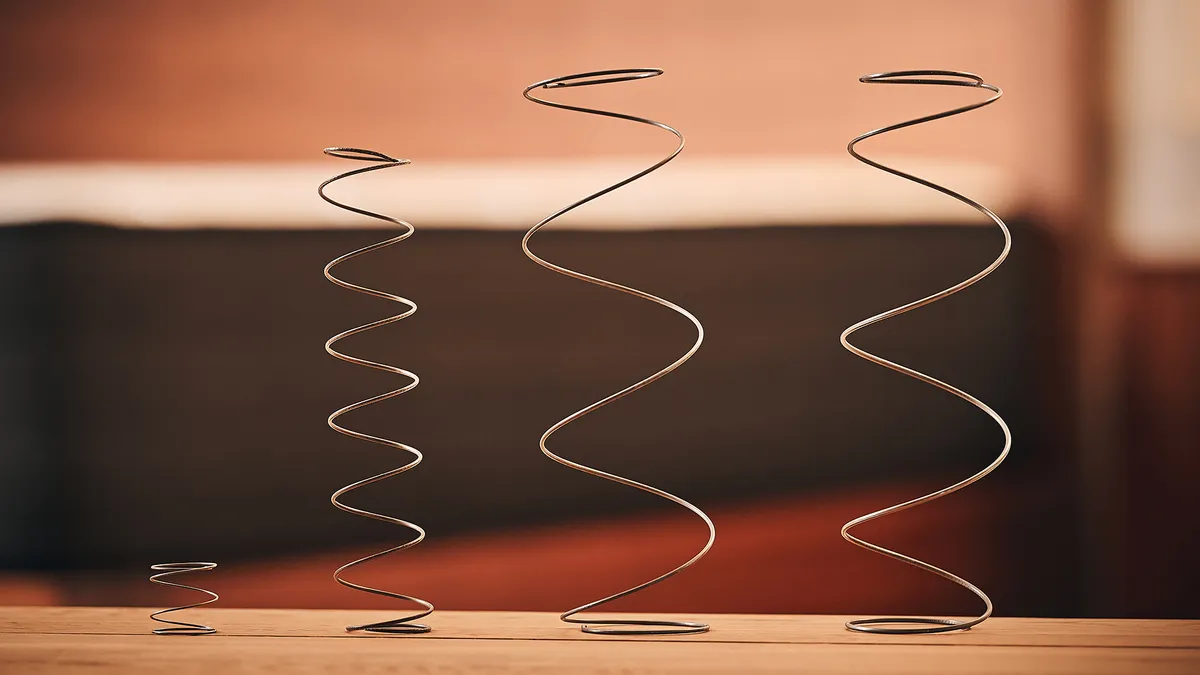
Hybrid mattresses have a similar construction but the key difference is instead of polyfoam, the support base consists of a springs. This is followed by a transitional foam layer and finished with comfort materials; often memory foam but sometimes latex foam, cotton, wool, horsehair, fiberfill, or other cushioning materials.
But that's just the basic construction of the best mattresses in a box; brands will use their own specialized builds to target different comfort needs. Reinforced springs or foam rails can be used to create edge strength, cooling materials can enhance heat dissipation, and zoned high-density foams can improve lumbar support, to give a few examples.
Memory foam vs hybrid mattress: Performance
- Memory foam has body contouring, hybrids are better at support
- Hybrids sleep cooler, memory foam is better at absorbing motion
- With good care, both types can last for 7 years+
We've tested over 125 mattresses here at Tom's Guide and we use a rigorous mattress methodology to help us stand key areas of sleep comfort. During our testing, we've noticed several performance trends among memory foam and hybrid mattresses.
Value for money
A good mattress lasts for around six to 10 years and investing in quality can keep you sleeping comfortably for longer.
A hybrid built with sturdy springs can maintain shape and support for over 10 years but eventually the coils will start to weaken. Modern springs are less creaky than the innersprings of the past but they aren't indestructible and regular usage will lead to sagging.


Memory foam responds to heat and pressure – which is responsible for that signature 'hug' – but over time, this will cause permanent indentations to form. Regularly rotating your mattress can extend its lifespan by ensuring pressure isn't concentrated in one point. (This problem also impacts hybrid mattresses with memory foam layers.)
Proper mattress care helps your bed last longer and it doesn't have to be difficult. Simply pulling back the covers in the morning to allow moisture to escape is the first step. Using a mattress vacuum regularly and cleaning up spills immediately are other easy tasks to prevent wear and tear.
Temperature regulation
Your body naturally cools as you prepare to sleep, which is why we recommend an optimal bedroom temperature of 65 to 70°F (18 to 21°C) and why overheating is such a sleep saboteur. Beds can trap heat but a mattress with good temperature regulation help excess warmth disperse.
The best cooling mattresses are hybrids, as the open spaces in springs allow air to circulate and heat get out. Memory foam mattresses instead tend to trap warmth, as hot air gets stuck in the dense foams.
However, cooling materials are continuously developing and things like gel foams, copper infusions and phase change covers help modern foam mattresses sleep cooler. But overall, hybrids have the cooling edge.
Pressure relief
Pressure relief is responsible for that 'aah' feeling when you climb into bed and it's formed of two components. First is contouring, which helps evenly distribute weight across the body. Second is support, which keeps the body lifted to reduce strain. Typically, memory foam mattresses excel at the former while hybrid beds are better at the latter. But that's just part of the story.
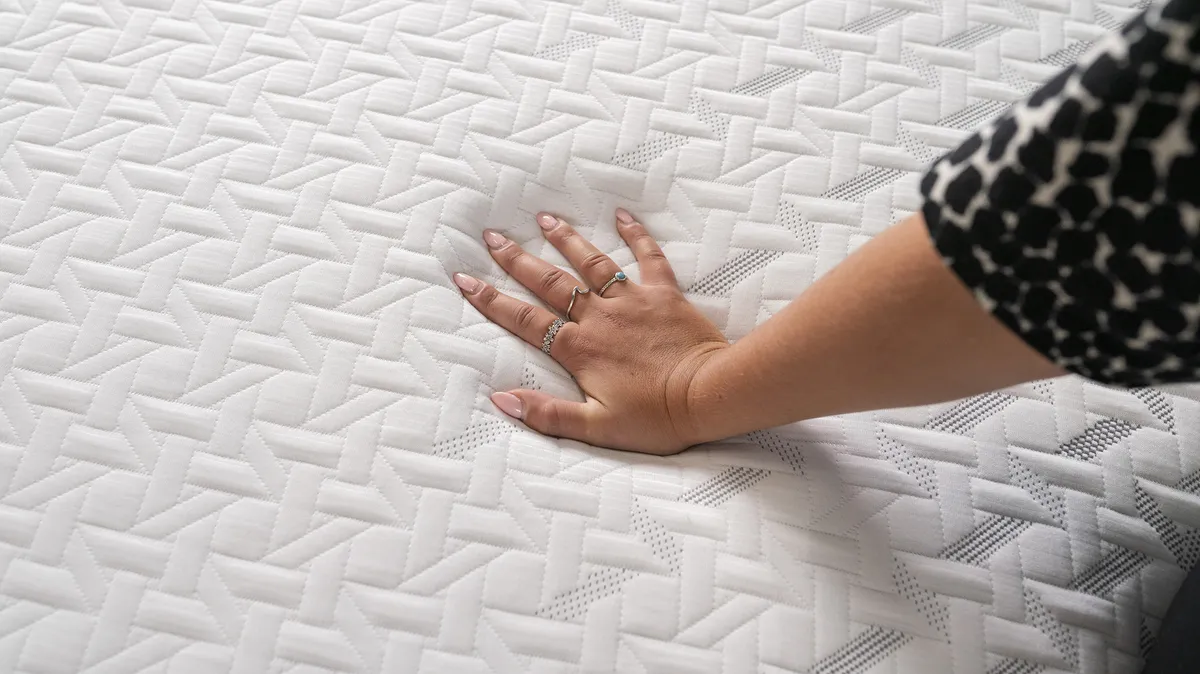
Memory foam is known for its slow-moving 'hug', as it gradually conforms to the body to reduce pressure build up at the shoulders, hips and knees (a must in the best mattresses for side sleepers). However, top memory foam mattresses also feature a strong support core to hold your spine in neutral alignment.
Hybrid springs lift the body up and flex in response to weight. Hybrids are also more reactive than memory foam as the springs move when you move. But thick comfort layers can also provide ample body contouring, so you'll still get that 'hug' but with a bit of bounce beneath.
Motion isolation
Motion transfer refers to that disruptive feeling when a person on one half of the bed moves and it bounces across to your side. Motion isolation stops that movement in its tracks, absorbing vibration so you can sleep undisturbed.
It's an area where all-foam beds tend to come out on top, as the dense foams are better at eating up shock. On a hybrid bed, bouncy springs make it much easier for motion to travel.
However, hybrid mattresses can improve motion isolation with a few key features. First, individually wrapped springs means one bouncing coil won't set the others shaking. Second, thick comfort layers can help muffle movement before it gets to the springs below.
Edge support
Strong edge support serves several functions in a mattress. It allows you to stretch out across the entire sleep surface, it provides a stable base to sit on and, if you have limited mobility, sturdy edges give you something to push against when getting in and out of bed.

Hybrid mattresses tend to deliver the best edge support thanks to that stable spring base. Reinforced perimeter springs and foam railings can be used to improve support even further. (Our top rated mattress for edge support is the Saatva Classic, a hybrid with sides so strong you can park a truck on them.)
It's harder to create sturdy edges on an all-foam bed and softer memory foam mattresses in particular tend to suffer from 'sagging' sides. If you want an all-foam bed but prioritize edge support, it's better to go firm — the Plank Firm mattress is a good example.
Memory foam vs hybrid: Which mattress should you choose?
Choose a memory foam mattress if...
✅ You want a full-body hug: With nothing but foam all the way down, memory foam mattresses deliver head-to-toe contouring and zero bounce. The result is a cradling feel but some people can find it makes changing position tricky.
✅ You wake up every time your partner moves: Co-sleepers often benefit from the superior motion isolation of memory foam mattresses, as the slow-moving and dense materials absorb disruptive movement. They also won't develop squeaky springs, a problem that can afflict older hybrids.
✅ You're on a smaller budget: If you're working with a tight budget, you can typically get a good memory foam mattress for less than the equivalent quality hybrid. That's particularly good news if you need a mattress for a spare room regularly inhabited by picky in-laws.
Choose a hybrid mattress if...
✅ You like a bed with a bit of bounce: Responsive mattresses are easier to move around on and often ensure you have support even if you toss and turn throughout the night. Even the softest hybrids tend to have a bit of boing due to those coils.
✅ You often wake up sweating: Hybrid mattresses are inherently better at temperature control than all-foam because the springs allow for better airflow. So if you wake up kicking the covers off, we recommend a hybrid.
✅ You want strong edges: A hybrid mattress isn't guaranteed to have good edge support but these beds can use reinforced springs and foam railings to keep the perimeter nice and stable. This allows for full use of the sleep surface and an easier time getting in and out of bed.

Follow Tom's Guide on Google News and add us as a preferred source to get our up-to-date news, analysis, and reviews in your feeds. Subscribe to Tom's Guide on YouTube and follow us on TikTok. Finally, you can visit our dedicated Tom's Guide Savings Squad hub for expert help on getting the best products for less.