If you're buying a new mattress for the first time in a while, you might not be aware of motion isolation; it's likely you're focusing on whether the mattress feels comfortable and offers the right support. But motion isolation is an important term to familiarize yourself with, particularly if you share a bed.
Good motion isolation means that a mattress can absorb movements and stop them transferring across the surface of the bed, which is why co-sleepers in particular benefit from it. We've tested the motion isolation of over a hundred beds while finding the best mattresses you can buy online and during our testing, it's often the all-foam beds that offer the best motion control.
Here, we'll explain what motion isolation is, which mattress materials do the best job of providing it and how you can improve it in your current bed. Whether you're on the hunt for a bed right now, or are holding out for the Black Friday mattress sales, we've got everything you need to know about motion isolation covered below...
What is motion isolation?
Motion isolation essentially refers to how well your mattress can absorb movement and prevent it from transferring to other areas of the bed.
If your partner jumped into their side of the bed in the middle of the night, would you feel it on your side? If the answer is no, you're most likely sleeping on a bed that isolates motion well.
But if you can feel every single shift and shrug of your co-sleeper, you're probably using a mattress with poor motion isolation.
If you are a restless sleeper who moves around frequently in the night, a mattress with good motion isolation will ensure that the movements on your side of the bed will present minimal disruption to anyone you're sharing it with.
Why is motion isolation important when buying a mattress?
A mattress with good motion isolation is going to have a significant impact on your sleep quality if you share a bed. Not convinced? Consider: have you ever been woken up by your partner tossing and turning during the night?
A bed that has poor motion isolation isn't going to be able to absorb those restless movements, which means they transfer across the mattress and disturb the person who is otherwise sleeping soundly.

In fact, one study showed that mattresses with high motion transfer negatively impact sleep architecture, increasing light sleep and decreasing deep sleep. This is turn means you're more likely to be woken up by factors such as noise and light.
In contrast, a mattress with good motion isolation will absorb and isolate movement, keeping them confined to the side of the bed they originated on. This is particularly important if you and your partner have a different sleep schedules, different body weights or different sleep style.
For example, if you're getting in and out of bed at different times, one of you has a tendency to move around in their sleep, or you share with a combination sleeper who shifts between sleep positions, you need a mattress that can effectively absorb those movements.
What are the best mattress materials for motion isolation?
Is memory foam good for motion isolation?
In short: yes. Memory foam is generally considered the best choice if you're looking for a mattress that offers good motion isolation. That's because it's a dense, slow-moving foam that can effectively absorb vibrations from movement.
One of the primary features of memory foam is that when you apply pressure to it, it moulds to the shape of you body. When the pressure is lifted, it gradually returns to its original shape. This slow movement means it can dampen movement to prevent it transferring across the mattress.

Memory foam mattresses also have all-foam constructions, combing memory foam comfort layers with other types of foam. This means no bouncy coils (found in innerspring and hybrid mattresses) to transfer movement.
We expect good motion isolation from the best memory foam mattresses, but even the all-foam beds in our best cheap mattress guide often score highly for their ability to isolate motion.
Is natural latex good for motion isolation?
Natural latex foam is derived from the sap of rubber trees, mixed and baked into a foam. It's created by one of two methods: Talalay and Dunlop. While Talalay is softer, bouncier, more breathable and typically used in comfort layers, Dunlop is denser and generally found in support layers.
When it comes to motion isolation, natural latex is never going to beat out memory foam due to its natural bounce and responsiveness. However, latex has good "point elasticity", which means it should only compress under the point your body comes into contact with it. So one person's movements shouldn't impact a co-sleepers.
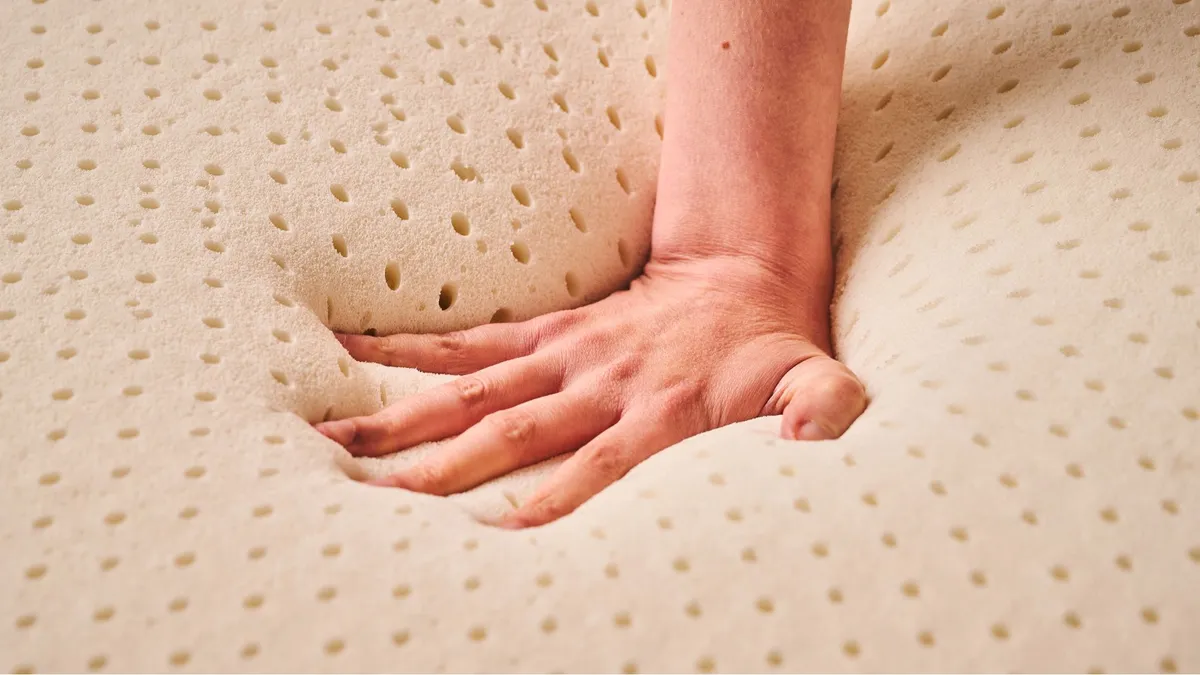
However, the effectiveness of latex at isolation motion also depends on factors like the firmness, type of latex used and the construction of the mattress.
For example, some of the best organic mattresses made with latex have incredible motion isolation, like the PlushBeds Botanical Bliss Organic Latex Mattress. This features cotton and wool above the latex comfort layers, to help absorb excess movement.
But many latex mattresses are hybrid mattresses, combining responsive latex with a bouncy spring base. These latex mattresses tend to have poor motion isolation.
Are mattress springs good for motion isolation?
It's easy to write off mattress springs as the worst possible choice for motion isolation. It's true that you're much more likely to feel the movements of your partner when sleeping on a traditional innerspring mattresses. Coils are known for their fast response, meaning when you move, they move with you (which can set the whole mattress moving.)
Cheap innerspring mattresses often use interconnected coils, which means movement from one spring is transferred all across the bed. They also lack the comfort foam layers that help absorb and isolate motion.
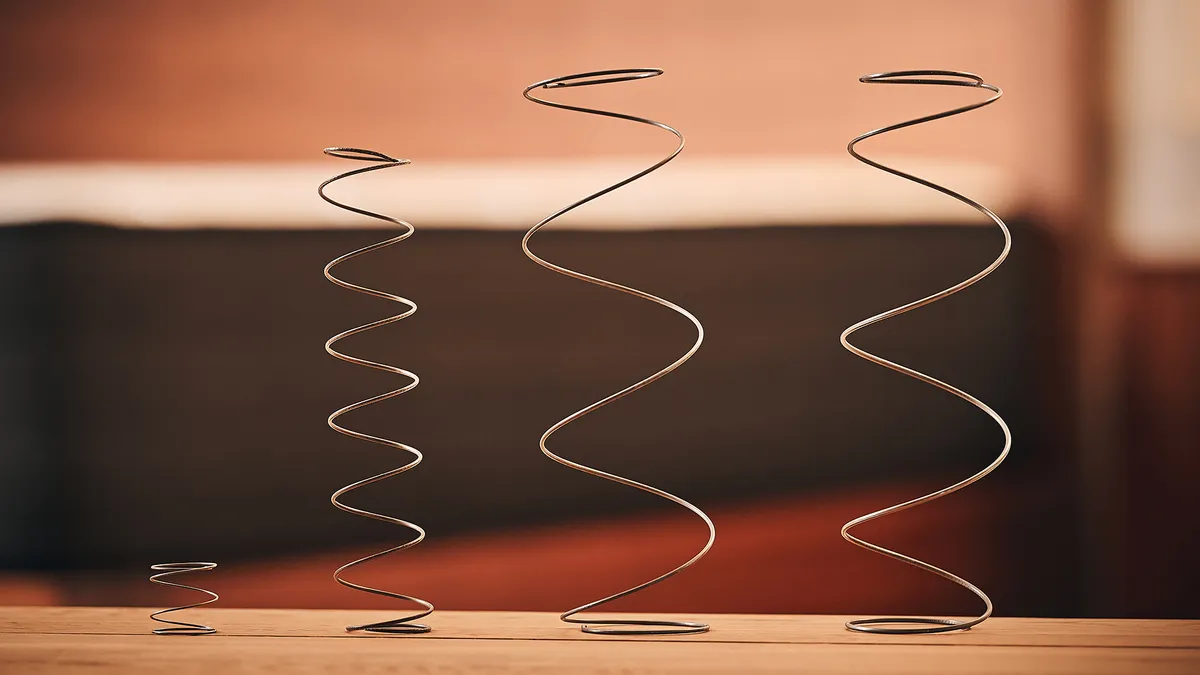
And overall even the best hybrid mattresse, pairing springs with comfort layers, perform worse at motion isolation than a comparable all-foam bed. However, some hybrids can do a great job at isolating motion, and two factors typically impact this.
One is including individually-wrapped coils — each spring is encased in fabric — which helps reduce motion transfer as the coils can move independently from one another. Another is including slow-moving foams in the comfort layers, which improves motion isolation.
Can you improve motion isolation in a mattress?
If you don't want to buy a whole new mattress but you're tired of being woken up by your partner's late night trips to the bathroom, we recommend adding a thick memory foam mattress topper to your existing bed.
As we mentioned above, memory foam does an excellent job of dampening movement and thicker mattress toppers (generally around 4 inches deep) made from this material can help improve motion isolation in a mattress that is particularly responsive.

However, if you are shopping for a new bed and find one that suits all your needs except motion isolation, consider buying a split king (or a split queen, but these are less common).
These are comprised of two separate twin XL mattresses essentially pushed together on the same base. Because you're sleeping on two independent mattresses, there's no way for each sleeper's movements to transfer across the surface.
What is the best mattress for motion isolation?
Our process for evaluating motion isolation is a key part how we test and review mattresses.
As well as asking our review panel to assess the motion isolation performance during the three-week testing period, we use a slam ball drop and accelerometer to measure the initial impact absorption of a mattress plus how long it takes for the movement to stop.
These two factors are combined to create an overall score out of five. The mattresses below are among our favorites for bed sharers: