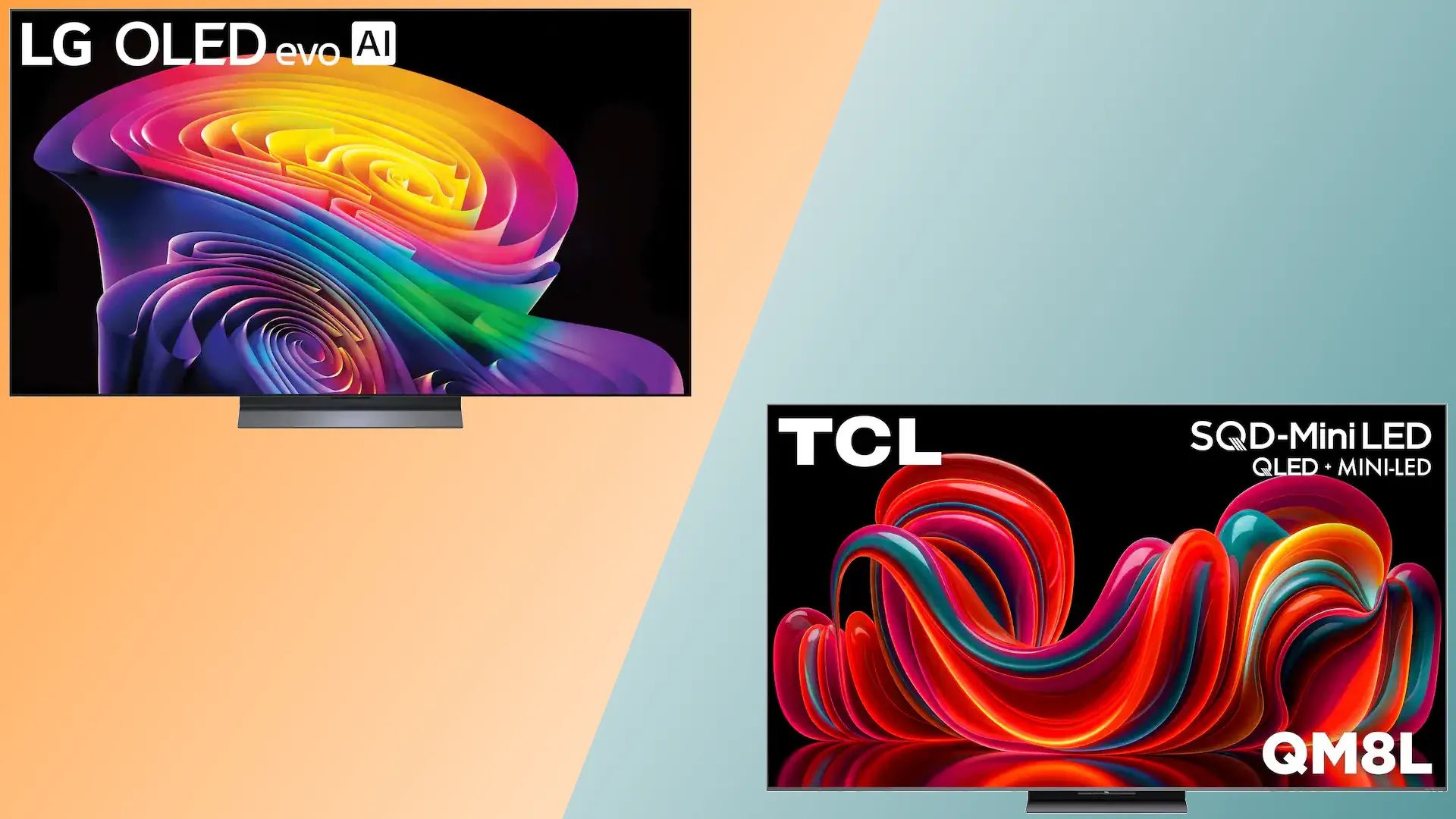
The C6 OLED is LG's newest, mid-range OLED for 2026. It's the latest in a long line of massively popular, award-winning OLEDs that sit in the sweet spot between value-forward pricing and incredible performance.
The TCL QM8L is also a brand-new TV, but it leverages a new type of Mini-LED display that TCL is calling Super Quantum Dot (SQD). It recently launched for a relatively high price tag, but you can already find it on sale for a lower price than the LG C6.
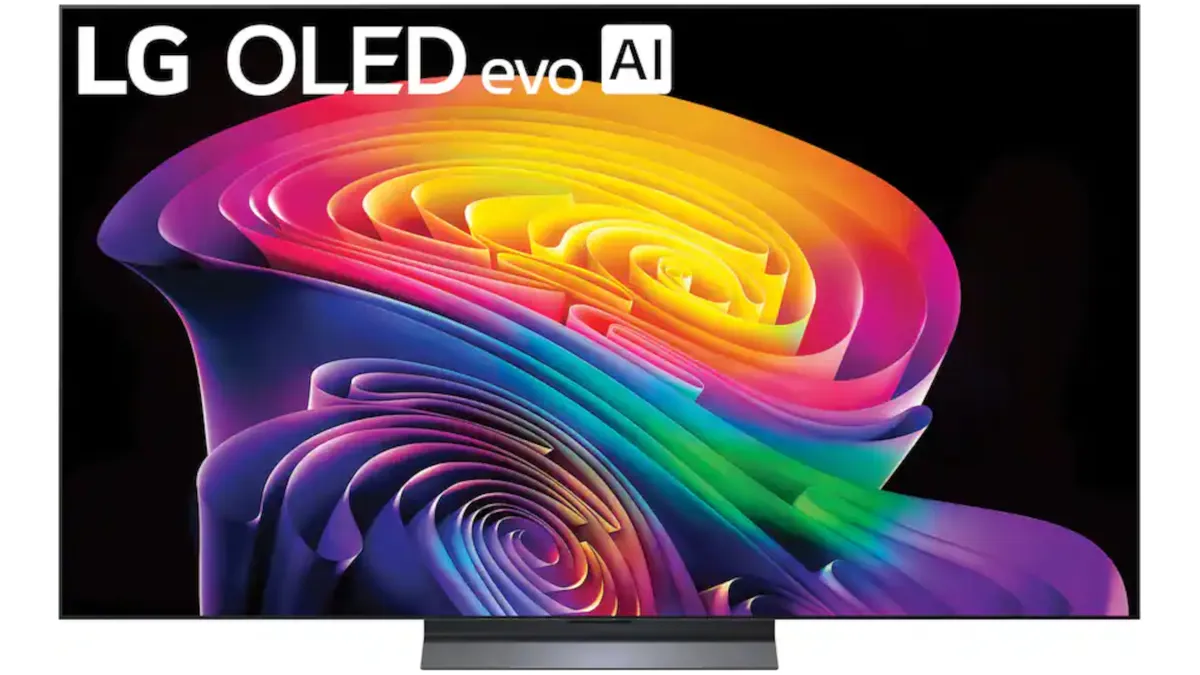
The LG C6 delivers an excellent blend of performance and value. That said, it's an incremental upgrade over its predecessor, and the TCL QM8L is a better fit for bright-room viewing.
If you're looking to upgrade your TV this year and you've got an eye for premium performance, there's a good chance you'll be choosing between these two sets. Here's how the C6 and QM8L compare — from performance to features and price.
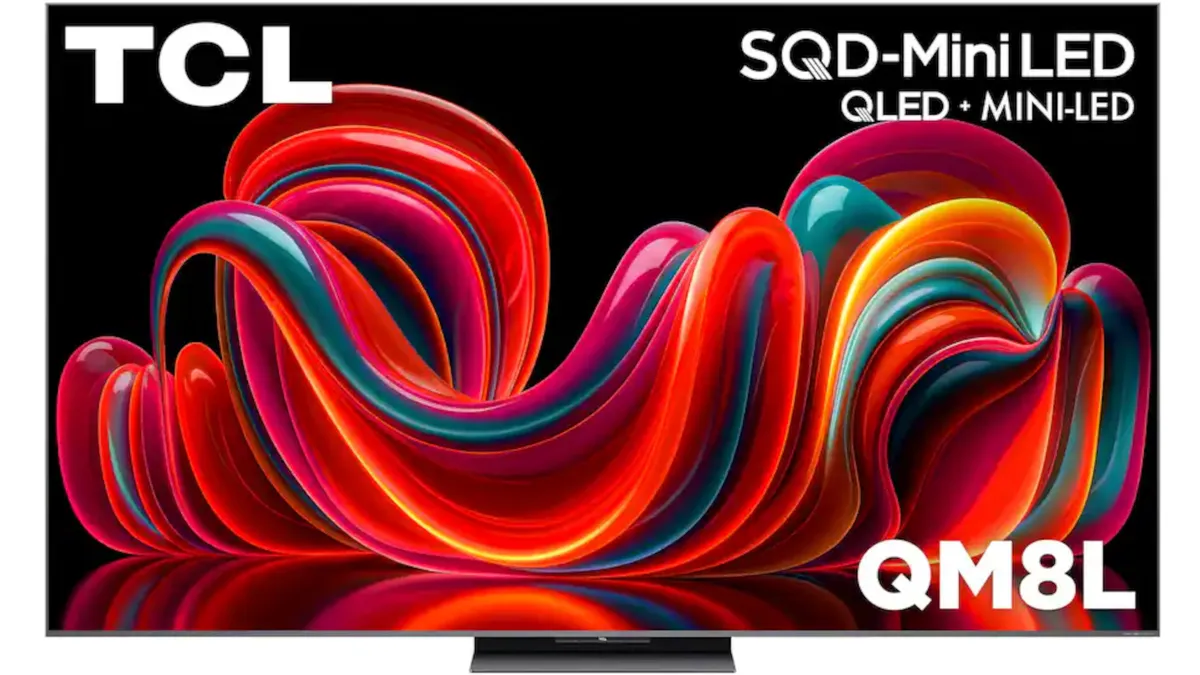
The QM8L is brighter and more colorful than the LG C5, but its presentation isn't as accurate as LG's mid-range OLED. Right now, the QM8L is more affordable than the C5 in many sizes, as both models are new for 2026.
LG C6 vs TCL QM8L: specs compared
| Header Cell - Column 0 | LG C6 |
TCL QM8L |
|---|---|---|
Sizes |
42", 48", 55", 65" |
65", 75", 85", 98" |
Ports |
4x HDMI 2.1 |
4x HDMI 2.1 |
Resolution |
3,840 x 2,160p |
3,840 x 2,160p |
Refresh rate |
165Hz |
144Hz |
HDR |
Dolby Vision, HDR10, HLG |
Dolby Vision, HDR10+, HDR10, HLG |
Smart TV software |
webOS 26 |
Google TV |
ATSC 3.0 support? |
No |
Yes |
Processor |
a11 AI Processor 4K Gen3 |
TSR AI Pro Processor |
Let's start with size availability between the C6 and QM8L. The QM8L is available in all of the most-popular sizes for an LED TV except 55 inches. We've tested the 75-inch version of the QM8L, and the smallest size in the series is 65 inches.
The C6 is also available in 77- and 83-inch versions, but these sizes are classified as an altogether different model: the LG C6H. If you want a 77- or 83-inch C6, you're technically buying the C6H OLED.
We should point out here that, while haven't tested the C6H in our labs yet, LG promises better performance on these sets as they're equipped with LG Display's newest RGB Tandem OLED. The 42- to 65-inch versions of the C6, on the other hand, leverage a standard WOLED display. That's not such a bad thing, as the numbers below will prove to you, but it's worth knowing what you're paying for.
Both TVs support Dolby Vision, but the QM8L also supports the royalty-free version of Dolby Vision, HDR10+. Of the two, Dolby Vision remains the most popular among streaming platforms and physical media.
Like all LG OLEDs, the C6 does not support ATSC 3.0 support. The QM8L does. This feature allows over-the-air broadcasts to be piped-in at native 4K resolution via antenna. 4K, over-the-air broadcasts are still few and far between, but for folks who watch TV via antenna, ATSC 3.0 is a very nice feature to have.
Both sets serve up four HDMI 2.1-compatible inputs and support 4K gaming at 120Hz. With a gaming PC linked up, 4K games can be pushed up to 165Hz on the C6 and 144Hz on the QM8L.
Winner: LG C6
LG C6 vs TCL QM8L: design
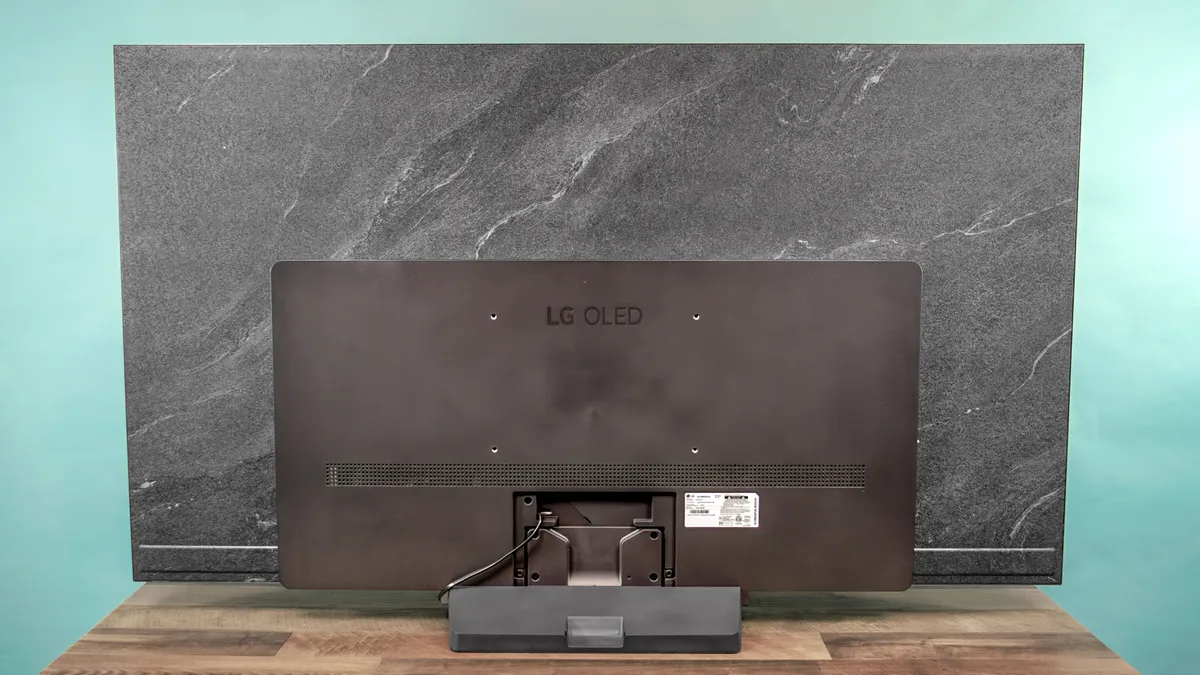
The C6 (seen above) follows the design approach of its predecessor, the LG C5. Its wedge-shaped stand attaches itself to the TV's chassis, and the stand's shape keeps the C6's screen relatively close to its surface. It's an elegant look, but you folks with tall soundbars should make sure that there's enough clearance. (I also appreciate the marble-like finish on the back of the panel even though it's less likely to be seen.)
Thanks to the nifty, narrow nature of OLED displays, the C6's panel is super-thin across most of its form. Its chassis bulges out around the panel's midsection, but even with this compartment, the C6 is a slim customer.
The C6 arrives with the newest version of LG's Magic Remote, which can be used to point and click at the screen. The remote also comes with a directional pad and scrolling wheel if you decide to forgo its Wiimote-like functionality.
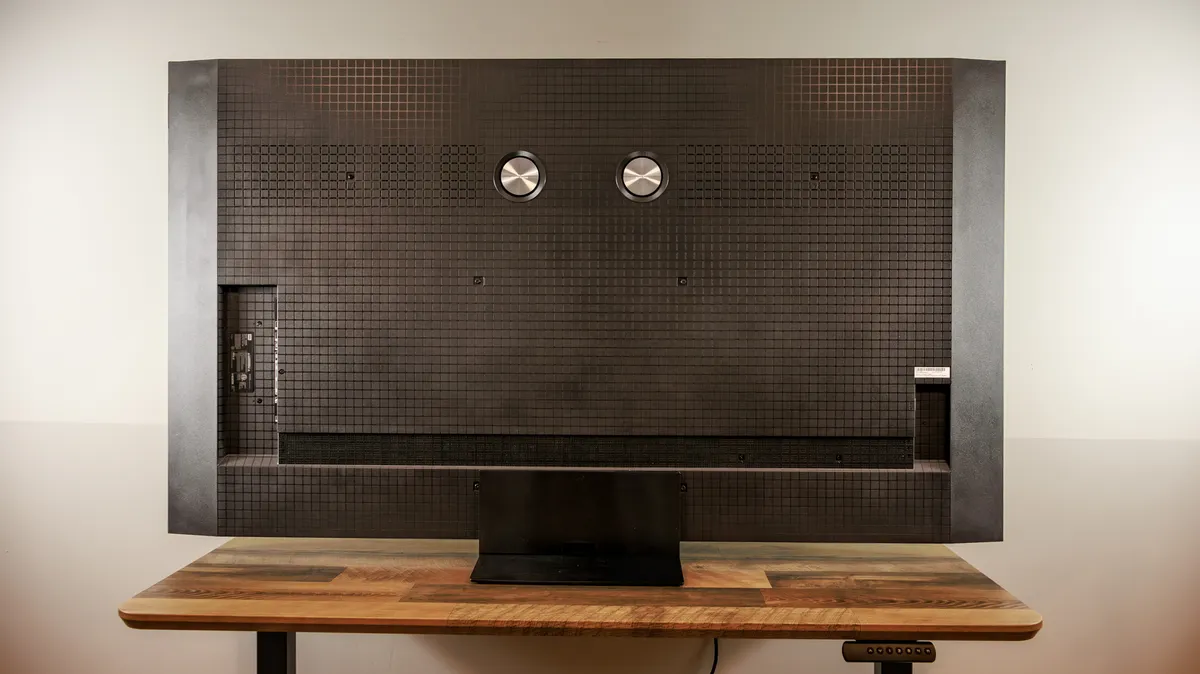
While the C6 is a wafer-thin screen with a modest chassis attached to it, the QM8L (seen above) is more along the lines of a heavy, thick slab. TCL's latest take on a Mini-LED display leads to a beefier panel than what we typically see on QLED TVs.
I wouldn't call the QM8L's look distracting, but for folks after a TV that quietly blends in with its surroundings will almost certainly appreciate the look and feel of the C6 more. Though, for what it's worth, I find the crosshatched etching on the back of the QM8L to be a nice touch.
Unlike the C6's motion-activated remote, the QM8L arrives with a slim, standard remote with a sensible selection of buttons on its face. I prefer the QM8L's backlit buttons over the C6's motion controls, but your mileage may vary.
Both sets feature thoughtful designs. But as much as I appreciate a backlit remote control, the LG C6 strikes a better pose.
Winner: LG C6
LG C6 vs TCL QM8L: performance
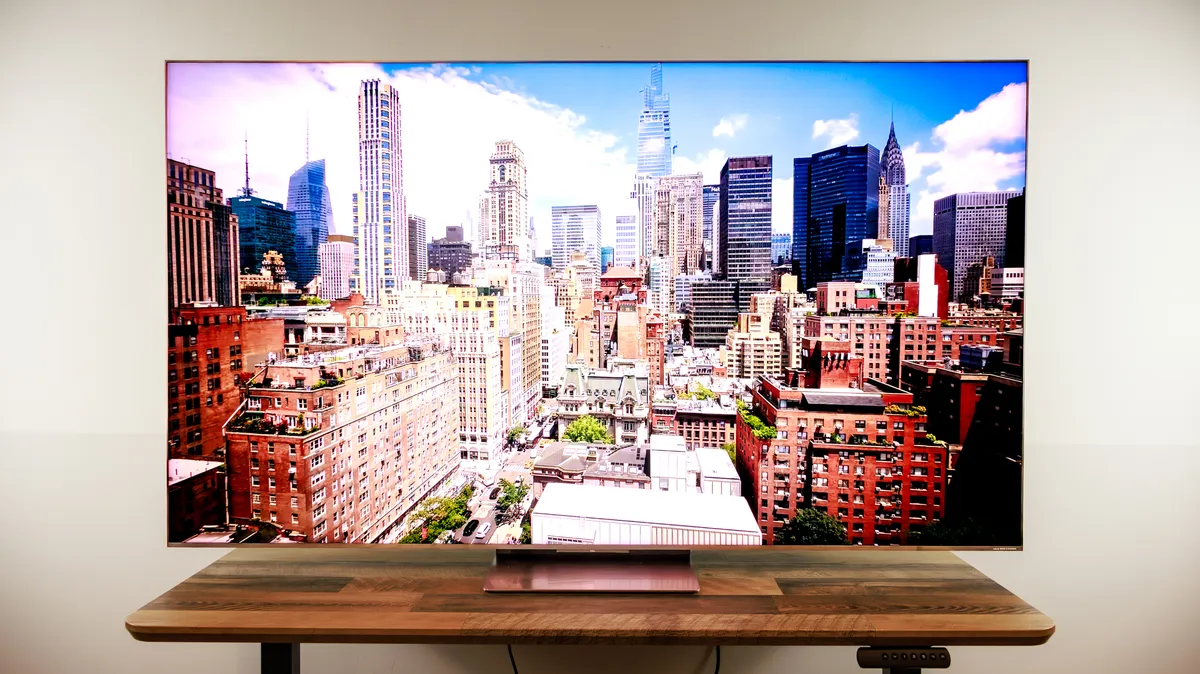
Before we dive into which of these TVs is the better performer, let's compare their test results. (Both TVs were in their respective Filmmaker picture modes when these tests were taken.)
| Header Cell - Column 0 | LG C6 |
TCL QM8L |
|---|---|---|
SDR Brightness (10%, in nits) |
355 |
229 |
Delta-E (lower is better) |
1.5 |
3.7 |
HDR Brightness (10%, in nits) |
1,355 |
3,719 |
UHDA-P3 Gamut Coverage |
99.77% |
97.97% |
Rec.2020 Gamut Coverage |
75.92% |
90.34% |
Input latency (milliseconds) |
9.1 |
9.5 |
There's a lot to unpack here. The first thing that ought to jump out at you is brightness. Despite offering slightly brighter highlights during SDR content, the C6 is nowhere near as bright as the QM8L. In fact, during regular, everyday content, the QM8L's average picture brightness (that is, the luminance of the entire picture) is much higher than that of the C6.
During HDR content, the QM8L delivers intense, room-filling brightness, too. Specular highlights (like a glint of sunlight reflecting off a sword) are nearly three times brighter on the QM8L than the C6.
The advantages associated with added brightness carry over into the QM8L's color performance. Thanks to TCL's SQD technology (a new spin on quantum-dot color), the QM8L covers a whopping 90% of the BT.2020 color space. Were you to view the C6 and the QM8L side by side, there's a good chance you'd notice the latter's punchier color first.
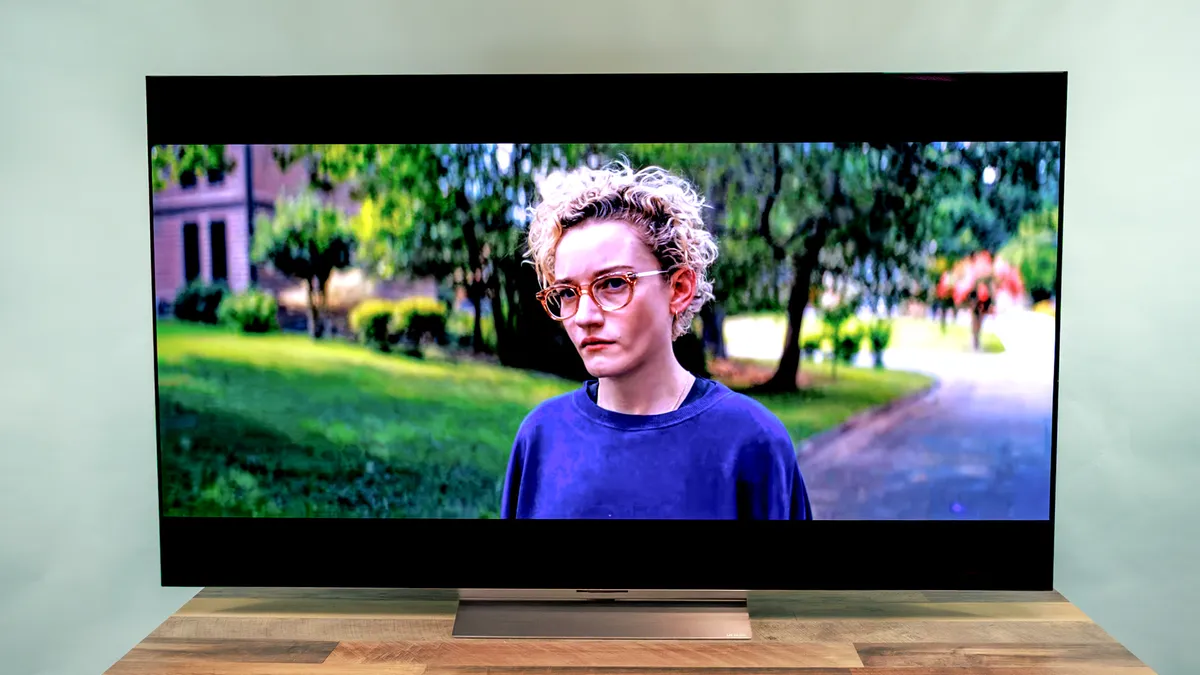
There's a very good argument to be made that the C6 is the better-performing TV.
This all points in one direction: From a purely performance-related standpoint, the QM8L is an all-around better choice for people with sun-soaked living spaces, or for folks who just want their next TV to provide a bright and bold cinematic picture.
But there's a very good argument to be made that the C6 is the better-performing TV. Its OLED-driven picture results in perfect black levels and pixel-level dimming. Despite its lower brightness ceiling and relatively limited color palette compared to the QM8L, the advantages of OLED display technology are massive.
Since specular highlights can be controlled with razor-like precision, HDR highlights on the C6 tend to stand out more. This allows for a deeper, detail-rich picture — a presentation that, at times, looks more realistic.
In addition, in its most-accurate picture mode, the C6 is much more dialed-in in its out-of-the-box state. You can see this in our test results, as the C6's Delta-E (a figure that describes color error) is lower than the QM8L's.
The ever-important performance category is a draw. The QM8L is a brighter, more-colorful TV that will stand up better during daytime viewing, but the C6 is a much better option for A/V enthusiasts who value reference accuracy.
Winner: Draw
LG C6 vs TCL QM8L: smart platform and features
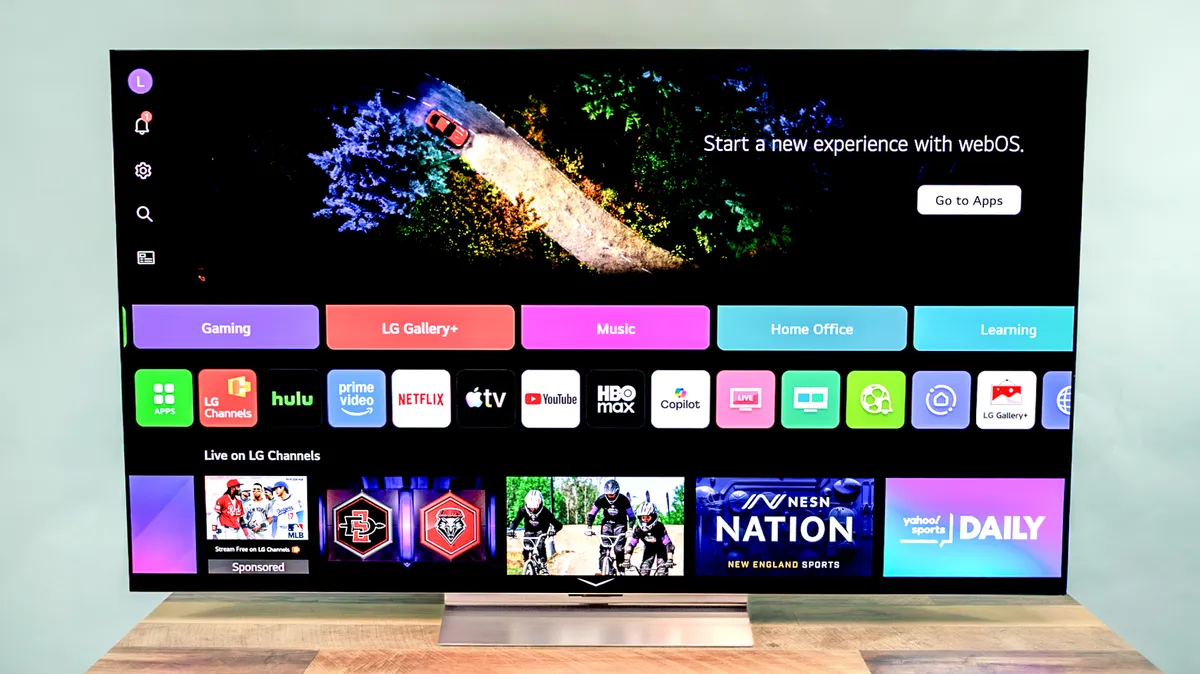
The C6 arrives with the newest version of LG's webOS right out of the box. It's a similar experience to last year's version of webOS, but LG has also added some new, AI-based features this year. Unfortunately, my colleague Dylan Haas referred to them as "meaningless" if you don't already incorporate AI into your daily life (and I'm inclined to agree).
As far as smart platform software goes, LG's webOS isn't my first choice. I find its interface to be cluttered and navigation to slow down occasionally. That said, most users will see no problem using it as their daily driver, should they decide to forgo a dedicated streaming device.
You're getting a full spread of HDMI 2.1-compatible inputs on both TVs, which is good news for dedicated gamers. On LG's side, the C6 arrives with almost every gaming-related feature under the sun, including support for 4K gaming at 120Hz (and up to 165Hz), Variable Refresh Rate (VRR) and AMD FreeSync Premium.
One of its best gaming-related features is the inclusion of LG's Game Optimizer mode. This dedicated gaming menu puts all of your most-important settings all in one place, and it automatically appears when accessing the primary settings menu during gameplay.
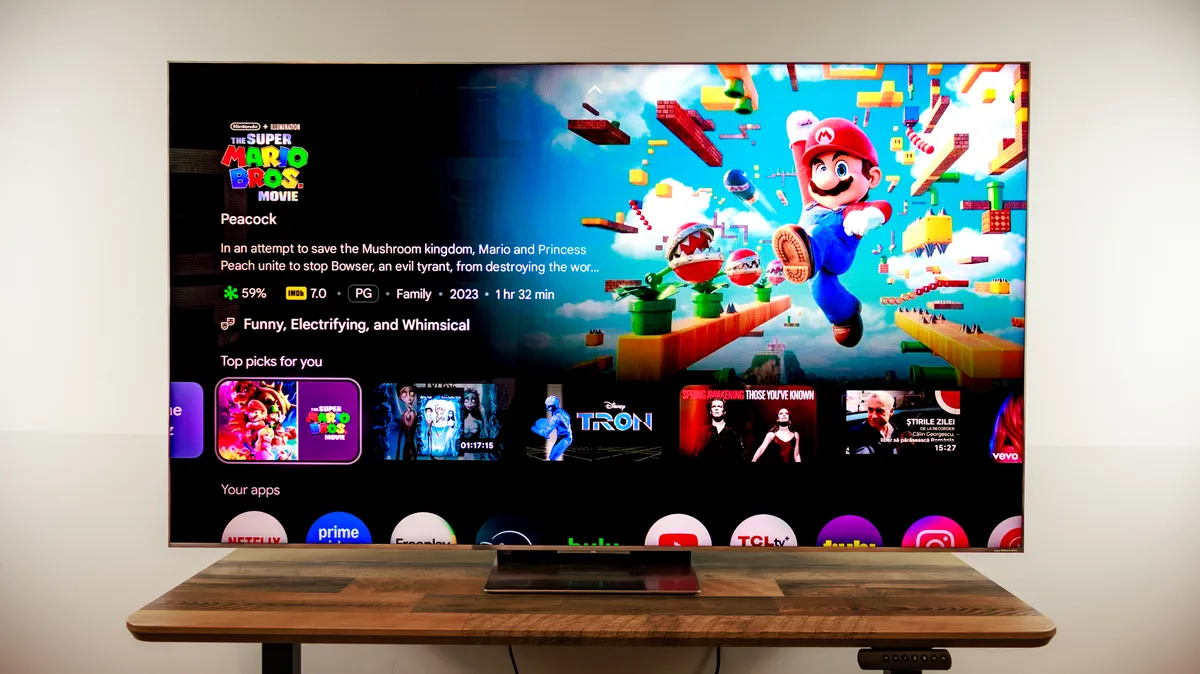
The TCL QM8L is built around the Google TV smart platform. Pound for pound, I prefer Google TV over LG's webOS software suite, as its interface is easier to navigate. Along with Roku, Google TV is one of my top picks for built-in streaming.
For gaming, the QM8L is loaded with upside, though it's not quite as complete an experience as the C6. It, too, arrives with VRR, FreeSync Premium Pro and support for 4K gaming at 120Hz, but while the C6 stretches all the way up to 165Hz during PC gaming, the QM8L tops out at 144Hz. Fortunately, this will only be relevant for a small slice of shoppers.
Having used it for a while, I can say that LG's Game Optimizer mode is quite nice to have in one's back pocket. The C6 has the edge here, but if you're not a gamer, there's a higher likelihood that the QM8L's inclusion of Google TV will be better for you in the long run than the C6's reliance on webOS.
Winner: LG C6
LG C6 vs TCL QM8L: outlook
| Header Cell - Column 0 | LG C6 |
TCL QM8L |
|---|---|---|
Specs (25) |
24 |
23 |
Design (25) |
23 |
22 |
Performance (25) |
23 |
23 |
Features (25) |
24 |
23 |
Total Score (100) |
94 |
91 |
Setting aside price, the C6 is an all-around better choice for home theater enthusiasts, picture purists and gamers. It's not as bright as the QM8L (nor as colorful), but if your goal is to splash out on an impressive, accurate picture, the C6 is the superior pick. (And, while we've yet to test this, I suspect that the above is especially true for the 77- and 83-inch versions of the C6H, which purportedly offers better brightness and color.)
The QM8L is a safer pick for people who watch a ton of TV during the day, or for folks who just want a bright, visually arresting picture when the lights are off. As a Mini-LED TV, its ability to control contrast isn't nearly as impressive as the C6, though it is packed with nearly the same set of gaming features.
If you still can't choose between the two, perhaps you'll be swayed by their respective price tags. Today, you can spring for a 65-inch C6 for $2,699 on Amazon. The 55-inch LG C6 can be had for $1,999.
The QM8L just launched at $2,499 for a 65-inch version, but it didn't take long to go on sale. Right now, you can get the 65-inch TCL QM8L for $1,799 at Best Buy. The 75-inch QM8L is just $1,999 at Best Buy at the time of publishing — the same price as the 55-inch C6.
In the coming months, both TVs will likely drop in price. For a brighter, more-affordable experience, the QM8L will remain the better option. For a more precise picture with better gaming features, the C6 will continue to be the way to go.

Follow Tom's Guide on Google News and add us as a preferred source to get our up-to-date news, analysis, and reviews in your feeds. Subscribe to Tom's Guide on YouTube and follow us on TikTok.
More from Tom's Guide