Tom's Guide Verdict
Out of every all-foam mattress we've tested, the Nectar Premier Memory Foam is our favorite. It provides exactly what a memory foam mattress should: shoulder-soothing comfort for side sleepers, support for back sleepers, and a body-hugging softness without the typical heat build-up. The slow-moving foam means you won't feel your partner's movements, making it ideal for couples, although cheaper all-foam rival the Siena Signature did have a higher score for dampening motion. Still, you'll always pay under $1,000 for a queen Nectar Premier, which is good value given its quality. Its maximum weight capacity is 650lbs, though, so couples with a heavier combined weight should look to the Plank Firm. Meanwhile, stomach sleepers should check out the Siena Signature for firmer support.
Pros
- +
Comforting body-hugging feel
- +
Ideal for side and back sleepers
- +
Dampens partner's movements
- +
Doesn't trap body heat
- +
Under $1,000 for a queen
Cons
- -
Too soft for most stomach sleepers
- -
Max weight capacity of 650lbs
Why you can trust Tom's Guide Our writers and editors spend hours analyzing and reviewing products, services, and apps to help find what's best for you. Find out more about how we test, analyze, and rate.
Nectar Premier review results
Overall score: 3.7 out of 5
| Product | Temperature control (Score) | Pressure relief (Score) | Motion isolation (Score) | Edge support (Score) | Value for money (Score) |
|---|---|---|---|---|---|
| Nectar Premier | 3.5 | 3.24 | 4 | 4 | 4 |

We conduct seven robust tests in our lab to capture objective data on the four areas of a mattress that most affect your sleep comfort: pressure relief, temperature regulation, motion isolation and edge support. We also sleep on a mattress for at least three weeks before subjectively rating it. This data is fed into a scoring system, along with feedback captured by our testing panel, to create an overall score. Read our full mattress methodology.
Nectar is one of the most well-known online mattress brands, famous for producing both memory foam and hybrid beds that often appear in our best mattress guide. That's why we decided to test and sleep on the company's current bestseller: the Nectar Premier Memory Foam Mattress.
While we've tested its more premium sibling, the Nectar Luxe mattress, and its cheaper rival, the entry-level Nectar Classic, we were eager to test middle-child Nectar Premier due to its popularity, all-foam design, and permanent mid-range price that keeps a queen under $1,000.
However, plenty of brands offer mid-range, all-foam beds — from Casper to Purple — so we decided to see what all the fuss is about. After vigorous testing and re-testing, here are our unfiltered thoughts on the Nectar Premier Memory Foam Mattress.
Nectar Premier Memory Foam Mattress review 2026: Price
- A queen regularly sells for a mid-range price of $949
- Comes with free shipping and free returns
- Also includes a one-year trial and lifetime warranty
The Nectar Premier pretty much always costs $949 (thanks to a regular Nectar mattress sale freezing most of the prices), placing a the Nectar Premier in the mid-range price tier. This puts the Premier in between Nectar' entry-level Classic and the premium Nectar Luxe.
The Premier's mid-range price means its in good company with other mid-range mattresses-in-a-box, such as the Casper One Mattress and the DreamCloud Classic Hybrid (which was our mid-range mattress winner).
Like the DreamCloud, the Nectar Premier comes with competitive benefits: free shipping, free returns (a surprising rarity in the mattress world), a year-long trial, and a lifetime warranty. These benefits are especially good when you compare it to the average benefits that the Casper boast: a 10-year warranty and 100-night sleep trial.
However, if you want the premium perk that is white glove delivery, you’ll have to pay $199. There are also much cheaper all-foam mattresses on the market, such as the Zinus Green Tea and EGOHOME Black 12" (see the Also Recommend section below), but don't expect the same competitive extras.
While we know that the prices of the Nectar Premier rarely budge by regularly tracking mattress sales, this isn't necessarily a bad thing, as you can by outside major sale events without worrying whether you'll miss out on a better deal.
Nectar Premier Memory Foam Mattress review 2026: Design
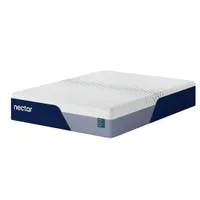
- 13 inches tall made up of five layers and topped with a cooling cover
- Underpinned by an eight-inch stablilizing foam for motion isolation
- Foams are CertiPUR-US certified and materials are fiberglass-free
There are five layers in the Nectar Premier Memory Foam mattress in total (including top and bottom covers) and it’s one of the brand’s most popular designs. With a structure that we found both luxurious and supportive, our tester felt it is a contender for our best memory foam mattress guide.

At the top of the mattress is a cooling cover that's designed to wick away moisture and keep your temperature regulated while you sleep. The material is designed to be breathable and has a cool-to-touch cover that feels smooth and tactile. It's made from a poly-blend fabric with cooling polyethylene fibers, and while it’s not removable, it has antimicrobial properties to keep things hygienic and can be spot cleaned if needed.
Beneath that is what sets the Premier apart from the Classic. A two-inch layer of pressure-relieving memory foam to help support the body in the key pressure points such as the hips, shoulders and knees.
This is an extra one inch of cushioning compared to the Classic. Next is a three-inch responsive support foam that offers dynamic support to help keep your spine aligned. A generous eigh-inch stablilizing foundation foam layer completes the mattress, which is designed to limit motion transfer from side to side, while a durable bottom cover with shift-resistant fabric keeps everything in place.
The entire mattress is also fiberglass-free and its foams are CertiPUR-US certified.


Nectar Premier Memory Foam Mattress review 2026: Sleep comfort
From the first night I was struck by how plush the Nectar Premier Memory Foam Mattress felt. I'd previously been sleeping on the DreamStage Value Hybrid mattress, which is firmer and bouncier, so the Nectar took me by surprise. However, I quickly found its dense foams offer great support in most sleep positions.
I felt most comfortable on my back and side, and found switching between the two easy. The Premier doesn't have that "quicksand" feel of some all-foam beds, which can make it harder to change position. Fellow mattress tester, Emily Peck, was also impressed with the "thick and luxurious-feeling structure" when side and back sleeping.
That said, as a front sleeper, I'm partial to the Siena Signature Mattress — the firmest of our five top-rated mattresses — as its sturdier feel provides more support to the hips and lumbar. But if you're a side sleeper, you'll much prefer the contouring comfort of the Nectar Premier.
Temperature control: 3.5 out of 5

Temperature regulation refers to how well a mattress can maintain a comfortable (neutral) sleeping climate through the night. It’s important: if a mattress retains too much heat, it can disrupt your sleep and lead to night sweats. The best cooling mattresses feature state-of-the-art cooling tech, but many mattresses nowadays will contain at least some form of temperature control.
The Nectar Premier is made of memory foam, which has a reputation for allowing heat to build up. However, Nectar has infused the cover with cooling polyethylene fibers in an attempt to offset the heat-trapping tendencies of this material. When I slept on it, I found the Premier stayed neutral and provided me with comfortable nights uninterrupted by overheating.
Nectar claims the cover is cool-to-the-touch, and I was surprised in our testing studio by how cool the cover felt for a memory foam mattress. At home, though, it felt more neutral: I never felt as though I was sliding into a cold bed — the cover always warmed quickly to my body temperature.

Temperature sensitivity varies from person to person, so to back up our hands-on testing we conducted objective data-driven thermal imaging tests in our lab. Over a 30-minute period, we recorded how much heat was absorbed when our tester lay on the mattress for 15 minutes, and then how quickly it returned to its original temperature when the tester stood up.
Our thermal imaging camera showed that the Nectar Premier reached a maximum temperature increase of 8.1°F within the first two minutes of them lying down.
That's a good result. If we compare the Nectar to its four main competitors in our best mattress guide, the Saatva Classic and DreamCloud Classic performed slightly better: they remained cooler, increasing by a lower maximum temperature of 6.3°F and 7.3°F respectively (but as breathable hybrid mattresses, we expected them to have less heat build-up). But another all-foam mattress, the Siena Signature, absorbed more heat, becoming 9.8 degrees warmer.
How the Nectar Premier regulates heat versus its rivals
This shows how effectively our five top-rated mattresses absorbed, managed, and dissipated heat during our lab-based temperature regulation test
| Timestamp (minutes) | Nectar Premier (°F) | DreamCloud Classic (°F) | Saatva Classic (°F) | Siena Signature (°F) | Bear Elite Hybrid (°F) |
|---|---|---|---|---|---|
| 0 | 0 | 0 | 0 | 0 | 0 |
| 1 | 8 | 7.3 | 3.5 | 8.1 | 8.2 |
| 2 | 8.1 | 7.1 | 6.3 | 8 | 9.5 |
| 3 | 6.76 | 6.9 | 5.5 | 8.6 | 9.2 |
| 4 | 5.6 | 7 | 5.4 | 8.4 | 9.3 |
| 5 | 5.7 | 7.1 | 4.6 | 8.1 | 9.8 |
| 6 | 5.3 | 7 | 4.6 | 8.6 | 8.9 |
| 7 | 5 | 7 | 5.8 | 9.2 | 9.3 |
| 8 | 6.2 | 6.2 | 5 | 8 | 10 |
| 9 | 7.4 | 6.5 | 5.4 | 8.4 | 10 |
| 10 | 6.4 | 6.7 | 5.5 | 7.9 | 9.6 |
| 11 | 6.2 | 6.1 | 5.1 | 8.3 | 9.4 |
| 12 | 5.9 | 6.5 | 4.8 | 8.2 | 9.3 |
| 13 | 6.1 | 6.5 | 4.7 | 9 | 9 |
| 14 | 6.3 | 6.7 | 5 | 9 | 10.1 |
| 15 | 6.6 | 6 | 5.2 | 9.8 | 10.5 |
| 16 | 3.9 | 3 | 5.3 | 3.6 | 3.3 |
| 17 | 2.8 | 2.3 | 2.3 | 3.4 | 1.1 |
| 18 | 1.9 | 1.5 | 1.4 | 3.1 | 0.2 |
| 19 | 2.3 | 1 | 1 | 2.2 | 1.2 |
| 20 | 2.1 | 0.4 | 0.8 | 2.2 | 1.4 |
| 21 | 1.6 | 0 | 0.5 | 2.3 | 0.2 |
| 22 | 2 | -0.4 | 0.4 | 1.6 | 0.2 |
| 23 | 2.1 | 0 | 0.3 | 1.8 | -0.3 |
| 24 | 2.5 | 0.2 | 0 | 2 | -0.4 |
| 25 | 2.4 | 0 | -0.9 | 1.8 | -0.1 |
| 26 | 1.4 | -0.7 | -1 | 2.1 | -0.7 |
| 27 | 1.6 | -0.7 | -1.2 | 2.1 | -0.8 |
| 28 | 1 | -0.6 | -1.3 | 2.1 | -0.7 |
| 29 | 1.1 | 0 | -0.5 | 0.4 | -1.3 |
| 30 | 0.3 | -0.3 | -0.6 | 1.5 | -1.1 |
However, when our tester left the mattress, the Nectar Premier demonstrated the slowest cooling rate of our top five (0.9°F/min). It took 15 minutes to return to its original temperature. By comparison, the fastest mattress to return to its original temperature was the Bear Elite, which did so within three minutes. So, while the Nectar Premier didn’t absorb as much heat as some of the mattresses we tested, it was one of the slowest to release it.
Overall, it received the second lowest score for temperature regulation of our five top-rated mattresses (3.5 out of 5), with only the Siena Signature coming in lower (3.3 out of 5).
However, that still nets it a ‘good’ rating from our scoring rubric — which accurately reflects my experience when I slept on it. We’re comparing the Nectar with the best of the best here, but compared to the average mattress it regulates temperature well and that's reflected in the score. I would recommend it to any sleeper who doesn't sleep chronically hot.
How the Nectar Premier regulates heat versus its rivals
This shows how effectively our five top-rated mattresses absorbed, managed, and dissipated heat during our lab-based temperature regulation test
| Timestamp (minutes) | Nectar Premier (°F) | DreamCloud Classic (°F) | Saatva Classic (°F) | Siena Signature (°F) | Bear Elite Hybrid (°F) |
|---|---|---|---|---|---|
| 0 | 0 | 0 | 0 | 0 | 0 |
| 1 | 8 | 7.3 | 3.5 | 8.1 | 8.2 |
| 2 | 8.1 | 7.1 | 6.3 | 8 | 9.5 |
| 3 | 6.76 | 6.9 | 5.5 | 8.6 | 9.2 |
| 4 | 5.6 | 7 | 5.4 | 8.4 | 9.3 |
| 5 | 5.7 | 7.1 | 4.6 | 8.1 | 9.8 |
| 6 | 5.3 | 7 | 4.6 | 8.6 | 8.9 |
| 7 | 5 | 7 | 5.8 | 9.2 | 9.3 |
| 8 | 6.2 | 6.2 | 5 | 8 | 10 |
| 9 | 7.4 | 6.5 | 5.4 | 8.4 | 10 |
| 10 | 6.4 | 6.7 | 5.5 | 7.9 | 9.6 |
| 11 | 6.2 | 6.1 | 5.1 | 8.3 | 9.4 |
| 12 | 5.9 | 6.5 | 4.8 | 8.2 | 9.3 |
| 13 | 6.1 | 6.5 | 4.7 | 9 | 9 |
| 14 | 6.3 | 6.7 | 5 | 9 | 10.1 |
| 15 | 6.6 | 6 | 5.2 | 9.8 | 10.5 |
| 16 | 3.9 | 3 | 5.3 | 3.6 | 3.3 |
| 17 | 2.8 | 2.3 | 2.3 | 3.4 | 1.1 |
| 18 | 1.9 | 1.5 | 1.4 | 3.1 | 0.2 |
| 19 | 2.3 | 1 | 1 | 2.2 | 1.2 |
| 20 | 2.1 | 0.4 | 0.8 | 2.2 | 1.4 |
| 21 | 1.6 | 0 | 0.5 | 2.3 | 0.2 |
| 22 | 2 | -0.4 | 0.4 | 1.6 | 0.2 |
| 23 | 2.1 | 0 | 0.3 | 1.8 | -0.3 |
| 24 | 2.5 | 0.2 | 0 | 2 | -0.4 |
| 25 | 2.4 | 0 | -0.9 | 1.8 | -0.1 |
| 26 | 1.4 | -0.7 | -1 | 2.1 | -0.7 |
| 27 | 1.6 | -0.7 | -1.2 | 2.1 | -0.8 |
| 28 | 1 | -0.6 | -1.3 | 2.1 | -0.7 |
| 29 | 1.1 | 0 | -0.5 | 0.4 | -1.3 |
| 30 | 0.3 | -0.3 | -0.6 | 1.5 | -1.1 |
Pressure relief: 3.2 out of 5


Pressure relief refers to how well a mattress cushions and soothes key pressure points (the body parts that most push into the mattress when you’re lying down). It happens through a combination of contouring and support. Contouring allows a mattress to adapt to your body, redistributing your weight to relieve pressure, while effective support prevents key areas, such as your hips, from sinking in too deeply.
Most memory foam mattresses excel at contouring, and the Nectar Premier is no exception. There’s a lot of cushioning in the upper foam layers but the base support foam keeps the body lifted. Overall, I experienced an excellent blend of comfort and support when I slept on the Nectar Premier.
However, I did feel some pressure building up when I slept on my front. This was mostly around my knees, which sank further into the bed than the rest of my body and led to some discomfort. It also meant I sometimes woke up in the night and had to change positions.
I felt much more comfortable sleeping on my side, although after a full night doing this I sometimes woke up with a numb arm. However, a lightweight side sleeper on our testing panel was pleased with how soft and cushioning the Premier felt when side sleeping.
This shows just how subjective comfort can be, which is why we run objective pressure relief tests so that we can accurately compare mattresses using verifiable data.
Nectar Premier: pressure relief test results
The deeper the indentation and faster the response time, the better the ability of a mattress to relieve pressure
Hip indentation (25kg)
| Product | Value (inches) |
|---|---|
| Saatva Classic | 4.75 |
| DreamCloud Classic | 4.5 |
| Siena Signature | 4 |
| Nectar Premier | 4 |
| Bear Elite Hybrid | 3.875 |
Our scoring system determines a mattress with good pressure relief as one that a) sinks at least 3.5 inches when a 25kg weight is placed on its surface for five minutes (indicating that it gives good contouring) and b) recovers quickly when the weight is removed (indicating that it can adapt quickly to provide support).
The weight sank 4.25 inches when we placed it in the shoulder region of the Nectar Premier and 4 inches in the hip region. This suggests a good amount of contouring.
However, it was the slowest of our five top-rated mattresses to recover when we removed the weight: 3.5 seconds in the shoulder region, and 5 seconds in the hip region. By contrast, the best-performing mattress for pressure relief, the Saatva Classic, recovered instantly. (Read our Saatva Classic mattress review for the full test data.)
That’s why the Nectar Premier received an overall score of 3.2 for pressure relief: it’s good, but not quite as good as close rivals like the Saatva Classic (5 out of 5) or Bear Elite Hybrid (4.6).
If you want a more supportive memory foam mattress, consider the Siena Signature. It’s firmer than the Nectar and sank just 3 inches in the shoulder region, receiving a slightly higher overall pressure relief score of 3.7.
Alternatively, if you want a more contouring, softer memory foam mattress you’ll really sink into, I suggest the Zinus Green Tea Mattress. However, I sometimes felt ‘stuck’ when I slept on the Zinus. The Nectar’s lack of deep sink means you can change position easily, which is good for combi-sleepers who like to move around.
Firmness

A mattress's firmness is subjective: your body weight, sleeping position and other factors can all affect your perception of firmness. That’s why we create a collective rating by asking each member of our testing panel to score firmness out of 10 on a standardized firmness scale: 10 indicates a hard mattress; one indicates a marshmallow-soft mattress.
Nectar rates the Premier as a 6.5 (medium-firm) out of 10 and our testing panel largely agreed with this medium-firm rating — although I'd perhaps lean slightly firmer at 7 out of 10. The upper foam layers immediately contour to the touch points, but after that initial sink, the support foams keep your body lifted and aligned. It's also easy to push into the Nectar Premier with your hand: you have to apply minimal pressure to make an indentation.
Surprisingly, our lightweight side-sleeping panelist (who prefers a plush mattress and finds a lot of beds too hard) rated the firmness on the lower end of medium-firm. A combination side-and-back sleeping tester also found the mattress to be softer than expected, proving firmness truly is subjective.
That said, I do think the Nectar Premier is too soft for stomach sleeping, to the point where it could result in some lower-back pain. Its softness meant I was inclined to sleep on my side, often finding myself rolling into that position. That's a huge contrast from my natural preference to sleep on my front.
This medium-firm rating is reflected in our pressure relief tests: the 25kg weight sank 0.5 inches further than it did on the firmer Siena Signature mattress, which we gave a firmness rating of 8 out of 10. However, if you want something plusher, perhaps consider the Bear Elite Hybrid, which we rated 6 on the firmness scale.
Motion isolation: 4 out of 5


If you share a bed, good motion isolation is a must. Motion isolation refers to how well a mattress prevents your partner's movement (such as getting out of bed or tossing and turning) from transferring to your side of the mattress and interrupting your sleep.
All-foam beds such as the Nectar Premier tend to have good motion isolation, as the slow-moving foam layers can isolate movement well. I'm a solo sleeper, but our bed-sharing testers experienced little disturbance when someone got in or out of bed, indicating a very good ability to prevent motion transfer.
Nectar Premier: motion isolation test results
The lower the initial impact of the ball, the better the mattress is at dampening the original force, meaning there's less motion to transfer
Initial impact
| Product | Value (m/s2) |
|---|---|
| Siena Signature | 5.527 |
| Saatva Classic | 7.863 |
| Nectar Premier | 7.961 |
| DreamCloud Classic | 7.965 |
| Bear Elite Hybrid | 8.976 |
Our lab-based motion isolation tests reflected this. We dropped a 5kg slam ball on one side of the Premier and measured its impact via an accelerometer on the other side.
Compared to the rest of our five top-rated mattresses (all of which performed well), the Nectar Premier did an average job of absorbing the initial impact, chalking up an initial impact rate (IIR) of 7.961 m/s2.
The Siena Signature absorbed the most impact from the slam, with the smallest IIA (5.527m/s2), while the Bear Elite absorbed the least (8.976 m/s2) — meaning it started the test with the greatest force to transfer across the mattress.
The Nectar then did a very good job of dampening the impact, taking an average time of 2.5 seconds for the motion to stop completely. The Siena was faster, at 1.14 seconds, whereas the Bear Elite took 3.5 seconds.
These two data points combined back up my opinion that most bed sharers will sleep comfortably on the Nectar. Tossing and turning could be a little more disruptive if you're a light sleeper, but overall I think this bed is a good choice for co-sleepers.
Edge support: 4 out of 5


If you've ever felt you were going to roll out of bed when sleeping close to the edge, or dipped uncomfortably when sitting at the foot of the bed, this means your mattress had poor edge support. Edge support refers to how sturdy the edges of your mattress are, and a mattress with good edge support will benefit those who sleep close to the perimeter and anyone who needs to push against the sides to get in and out of bed.
To measure the edge support of the Nectar Premier, we placed a 25kg weight on the side and foot of the mattress and measured the compression. On the foot, the weight sank 4.625 inches, while it sank 4.25 inches on the side.
This isn't the sturdiest edge support we've seen: the weight sank 3.06 inches on the Siena Signature, for example. Nectar's deeper measurement suggests the sides provide slightly less support than a very firm mattress like the Siena (particularly as there's more sink compared to on the main sleeping area), but overall this is a very good result.
These test results reflect my experience sleeping on the Nectar Premier. The edge support was good, though not the best I’ve ever tested. Initially I felt as though I was sinking into the top layers, but I was then able to balance easily on the side of the mattress and the edges felt stable beneath me when I pushed off the bed. I also felt comfortable sleeping right up to the perimeter.
In terms of sitting on the edges (for example, to put your socks on) the biggest issue I faced was due to the height of the mattress. I had to perch if I wanted to sit on the side and this meant I felt unbalanced. However, this wouldn’t be a problem for taller people or anyone with a shorter bed frame.
Nectar Premier: edge support test results
Less compression at the foot of the bed means more support for sitting
Compression at foot of bed
| Product | Value (inches) |
|---|---|
| Siena Signature | 3.06 |
| Saatva Classic | 3.625 |
| Nectar Premier | 4.625 |
| DreamCloud Classic | 5.125 |
Nectar Premier Memory Foam Mattress review 2026: User reviews
- Rated 4.5/5 stars from over 8,000 Nectar shoppers
- Rated 4.3/5 stars from 8,500+ Amazon reviews
- Rated 3.8/5 from 15,000 consumers at Trust Pilot (overall brand rating)
Nectar highlights on its website that the Premier is the brand's best-selling memory foam mattress, and that it’s also "the USA's most awarded mattress."
At the time of writing, this mattress has an overall rating of 4.5 out of 5 stars from over 8,000 reviews, with the majority of customers awarding it 5 stars. You can filter reviews according to sleep style, temperature, bed size, and age range to find experiences that are in line with yours.
Among the many rave reviews are customers saying that it provides ‘the perfect level of comfort’ and that it has helped reduce their back pain. On the other hand, some customers claim the mattress doesn't quite offer enough support to provide meaningful relief for their lower back aches.
You'll also find reviews for the Nectar Premier Memory Foam on Amazon, where it has a 4.3/5 star rating from over 8,500 reviews at the time of writing. Again, most shoppers find it to be the right level of comfort for their needs, but some claim it's too soft. Temperature regulation is also a mixed bag, with some sleepers claiming it holds heat.
There are plenty of reviews on Nectar Sleep to browse through on the TrustPilot website. At the time of writing, Nectar has an overall "Great" rating of 3.8 out of 5 stars. The 15,000 reviews, however, refer to a range of Nectar mattresses and are written about the brand in general and are not all solely related to the Premier Memory Foam mattress.
Nectar Premier Memory Foam Mattress review 2026: Should you buy it?
The Nectar Premier Memory Foam is for anyone looking for cushioning comfort mixed with support, temperature control, and ease of movement — particularly side, back, and restless sleepers.
It scored high for motion isolation (with its dense foam not allowing anyone's sleep to get interrupted by a restless partner's movements) and for its balance of comfort and support — the Premier is particularly good at relieving pressure points for side and back sleepers. Its edge support didn't perform the best in our tests, but we didn't feel as if we were going to roll out of bed when sleeping close to the sides.
The Nectar Premier Memory Foam's temperature regulation left us non-hot sleepers feeling comfy throughout the night, but the cheaper Siena Signature performed similarly in that department at a lower price. Still, the Siena doesn't provide anywhere near the amount of cushioning as the Nectar Premier does, making it a much better option if you're a side sleeper.
Overall, the Nectar Premier Memory Foam Mattress will appeal to most sleep styles, apart from dedicated stomach sleepers. Like the DreamCloud Classic Hybrid mattress ($699 for a queen), it's crowd-pleaser: the softness will soothe side sleepers' shoulders and hips, while there's enough lumbar support to keep back sleepers lifted and aligned.
Couples, meanwhile, will like how you can sleep up to the edge if a partner takes up too much space, and restless co-sleepers won't wake anyone up with their wriggling. The Saatva Contour5 mattress also excels here and comes with a luxurious feel but a higher price tag — a queen is $2,999 at MSRP.
While we recommend this cooling-cover mattress to shoppers who are put off by memory foam's reputation for sleeping warm, we don't recommend it to anyone who regularly overheats at night or experiences chronic night sweats. The Cocoon by Sealy Chill mattress is a better cooling alternative. It's also not the best all-foam bed for those who are working with a tight budget — the Zinus Green Tea Memory Foam delivers exceptional pressure relief at a lower price — and I would not suggest this to anyone who sleeps on their front.
So, if you're looking for a firmer, cheaper memory foam bed that's perfect for stomach sleeping and under $500, I advise that you check out the Siena Signature. Otherwise, the Nectar Premier strong all-round performance and classic foam feel makes it our favorite all-foam mattress.
Nectar Premier Memory Foam Mattress review 2026: Alternatives to consider

If you're a side sleeper but feel the Nectar Premier sounds too firm for your sleep preferences or outside your budget, then look to budget brand Zinus's flagship design. In our Zinus Green Tea Memory Foam mattress review, we found the all-foam budget bed to provide ultra-plush relief to side sleepers' shoulders, hips, and knees. Frequent sales mean you'll likely never have to pay over $500 for a queen, and expect a 100-night sleep trial, too.
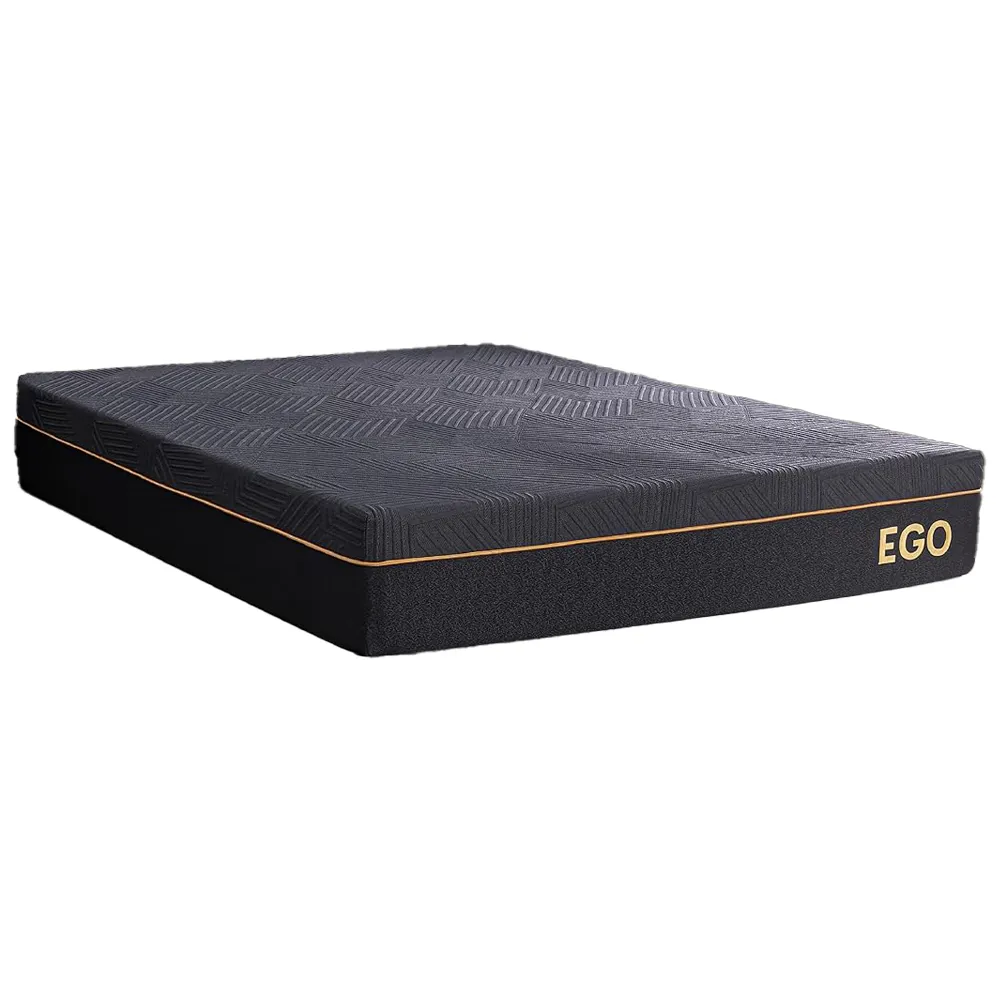
EGOHOME is a relatively new mattress brand, but the impressive comfort it offers through its hybrid and memory foam designs means its already a worthy, cheaper rival of Nectar. Our EGOHOME Black 12" Memory Foam Mattress review offers a similar all-foam design but for less, but we'd argue the edge support and versatility for all sleep positions is much better in the budget EGOHOME Black. Right now, you can get 47% off the MSRP, bringing the price of a queen down to $369 (was $699).

If you find the side-sleeper support of the Nectar Premier appealing, then why not go the whole nine years and choose No 1 side-sleeper pick Helix Midnight Luxe? This hybrid mattress offers pillow top comfort to soothe side sleepers but enough lumbar support to keep back sleepers ache-free, too. As a luxury mattress, it will typically cost you $1,918 for a queen, but our Helix Midnight Luxe mattress review asserts this price is completely justifies for the plush quality.