When it comes to capturing faraway targets, the Galaxy S26 Ultra is more than equipped to handle them. That’s because, just like its predecessors, Samsung’s new flagship packs a 100x Space Zoom that gets you closer to the action.
Now, as much as I love how its 200MP main camera was upgraded with a wider f/1.4 aperture to make it better for astrophotography, it still can’t achieve the zooming performance of DwarfLab’s Dwarf Mini smart telescope when imaging farther deep space objects such as galaxies, nebulae, star clusters, and more.
I’ve been using the Dwarf Mini for nearly two months now, and the best part about this smart telescope is how unbelievably compact it is. I thought the previous Dwarf 2 and Dwarf 3 smart telescopes were tiny in comparison to other telescopes, but this one blows them away — all while still capturing some of my favorite astrophotography shots of the year.
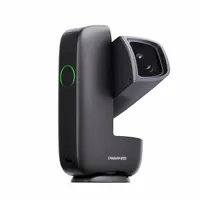
It’s so small that it fits in my pocket (sort of)


If you know someone who does a lot of photography, then you know how immense some setups can be once they’re put together. The beauty of the Dwarf Mini is its ultra-compact design, which is small enough to hold in one hand. In fact, it’s smaller than the 2-liter soda bottles you’d find in grocery stores — and way smaller than traditional smart telescopes like the Unistellar Odyssey Pro I’ve tested.
That telescope weighs 8.8 pounds, which is a lot to lug around if you plan to travel to remote places. In contrast, the Dwarf Mini tips the scales at just 1.85 pounds. To put that in perspective, that’s approximately the same weight as four Galaxy S26 Ultras. The point is, you won’t look at smart telescopes the same way again once you’ve carried the Dwarf Mini.
Simple setup, anyone could do it


You might think those stunning images of distant galaxies and nebulae could only be captured by renowned orbital telescopes like the Hubble or the James Webb Space Telescope, but you can get them with the Dwarf Mini as well. Best of all, you don’t need to be an astrophotography expert because the Dwarflab app makes the process practically dummy-proof.
Once I turned it on and set it up on a tripod, the app communicated with the Dwarf Mini to perform all the calibration and tuning. After that was finished, it was just a matter of me browsing the native sky atlas within the app to tell the telescope what to capture.
Once I decided, I just pressed the button to start the imaging process — and the Dwarf Mini took care of the rest. It’s truly a "set it and forget it" gadget. That’s how easy it is to use.
Stunning images without any touchup


Depending on what I’m trying to capture, a good result can take anywhere from minutes to hours. For example, it takes less than five minutes before M42 The Great Orion Nebula begins to take form. Other targets, however, can take much longer before details are exposed.
More important, though, is that it delivers outstanding results automatically. It removes the manual labor of having to stack photos separately on a computer because everything is done on-device, so that a final, stacked image is delivered as a JPEG. Just check out some of the deep-space targets I’ve captured straight out of the Dwarf Mini.


Even though it seems to tailor the experience to beginners, DwarfLab recently updated the app with advanced stacking tools that further enhance the images — and the results are even more spectacular. If you think the unedited shot of the Great Orion Nebula looked good, just check out some of the before-and-after images in the gallery to see how much better they can get.
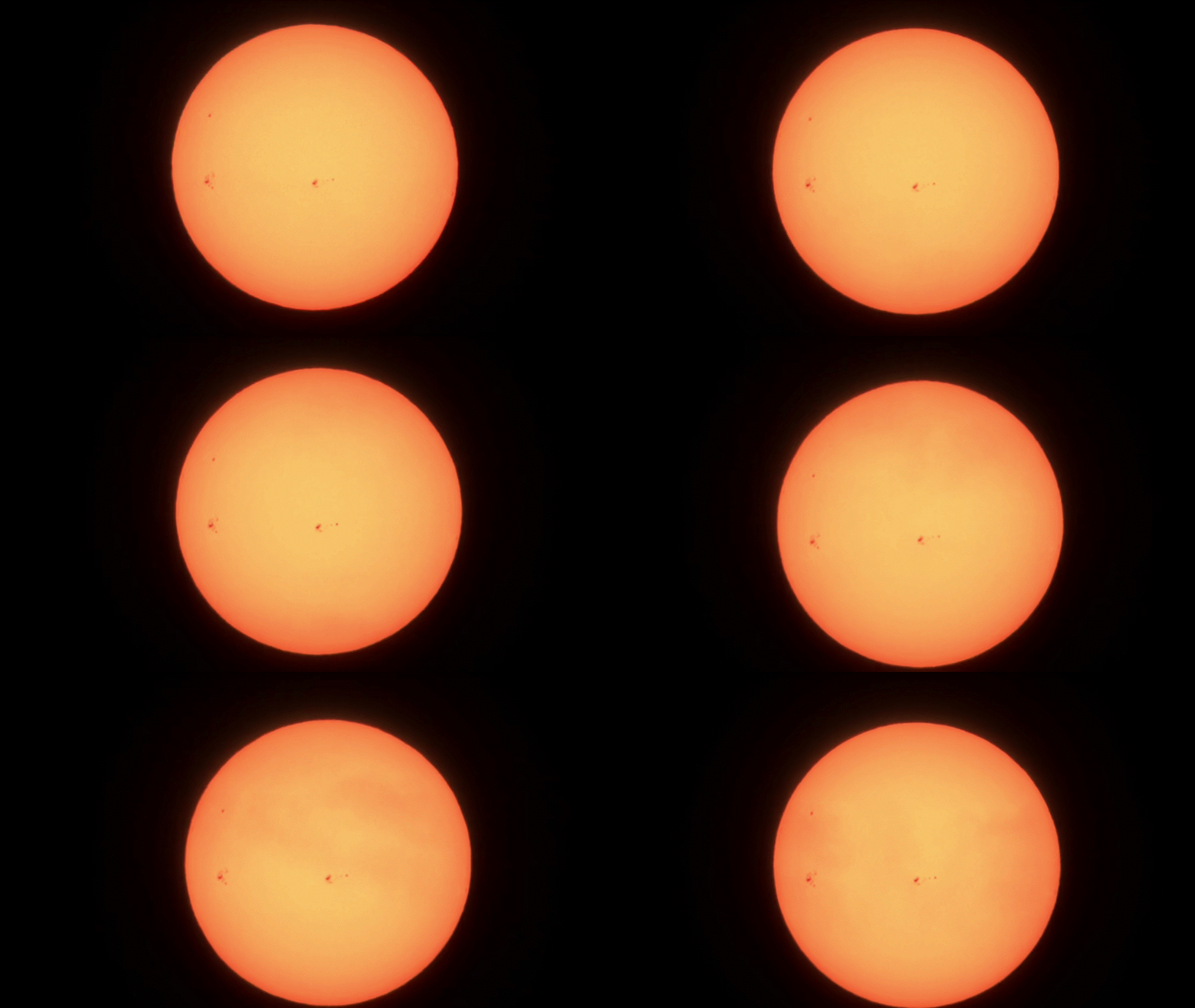
Additionally, the Dwarf Mini isn’t just reserved for the night. It comes with a solar ND filter that lets me capture the sun during the daytime. Not only is it capable of capturing sunspots in great detail, but I also love how I can create a time-lapse as well — all while the telescope keeps the sun centered in the frame.
You could spend thousands building a rig for astrophotography, or even shell out for the Galaxy S26 Ultra, but the Dwarf Mini offers incredible value at just $399. It’s hard to beat considering what it does and how tiny it is compared to any other telescope out there.

Follow Tom's Guide on Google News and add us as a preferred source to get our up-to-date news, analysis, and reviews in your feeds.
More from Tom's Guide