In case you missed it, on February 26th GoPro suffered a major blow in its legal fight with Insta360 — two titans of the action camera world. American manufacturer GoPro was the complainant in a patent infringement investigation against Chinese manufacturer Insta360 via the U.S. International Trade Commission (ITC). Just in case you fancied some rather heavy reading, it's investigation No. 337-TA-1400.
As part of its complaint, GoPro asserted that Insta360 infringed on its patented technical design (or utility patents) in five areas, falling under stabilization, horizon levelling, distortion correction and aspect ratio conversion. These complaints threatened Insta360's wider lineup of cameras.
GoPro also alleged that Insta360 infringed the design patent (the general design and styling) of the Hero lineup of cameras. This design claim related only to Insta360's Ace lineup of cameras.
According to Insta360's press release and the ITC's final decision document (which I've read), the ITC's final public determination is that on all five utility patent claims, Insta360 either: didn't infringe GoPro's patent; there was no valid patent in place; or both. According to Insta360's representative, the Commission even reversed a previous judgment by an Administrative Law Judge (ALJ) that the brand had infringed GoPro's patent relating to distortion.
I've read the ITC's public final determination, although it's currently under seal and not yet publicly available online at the time of writing.
A small win for GoPro
There is a small win for GoPro, though. The ITC also ruled a violation of GoPro's D'435 design patent — essentially saying that Insta360 copied design (or styling) elements of GoPro's Hero cameras.

According to the ITC final report, the Commission has determined that an LEO (Limited Exclusion Order) be enacted, which restricts the import by Insta360 of certain products that infringe the patent.
However, while this patent infringement was upheld, this claim is in regard to older Insta360 Ace Pro / Ace models, not the brand's wider lineup of cameras. The infringement was not upheld for any of Insta360's current products on sale, as newer updated models (presumably the Ace Pro 2) were not deemed to have infringed GoPro's patent.
That's why I've been contacted by Insta360's representatives boisterously celebrating their victory, despite the small win for GoPro.
GoPro released its own press release celebrating this mini victory, although it remained tight-lipped about the other five counts that weren't upheld. I've reached out to GoPro's representatives for further comment on the other rulings, but have yet to hear back.
The stakes were high

Now, the ins and outs of this legal kerfuffle are pretty dry, but for Insta360 the stakes were actually pretty high. Firstly, if the technical patent claims had been upheld, Insta360 may have faced a lot more trouble and been hit very hard financially. Any such decision would likely have affected more of the cameras in its current line up, as they share many core utility systems, such as stabilization.
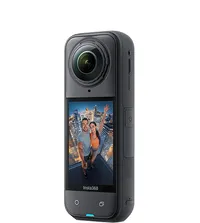
If Insta360's primary money-spinners — 360-degree cameras like the Insta360 X5, with which the company has the market cornered — were affected, that would've been really quite serious for the Chinese manufacturer.

This could've been a huge deal reputation-wise, too. When it comes to international trade, tensions are rather high between the U.S. and other nations at the moment — tariffs et al — and especially so with Chinese manufacturers. The third manufacturer in today's three-way action camera rivalry, China's DJI, is currently facing an increasingly pessimistic battle against the U.S. government over drones. What's more, since the application of tariffs in recent years, DJI has actually pulled official support and first party sales of all its new products in the States.
In other words, it's a sketchy time to be a Chinese camera manufacturer selling in the U.S. right now. The last thing Insta360 needed was to arouse any undue public (or even governmental) attention by being seen to have ripped off GoPro.
What this means for the industry (and you)
What this means for the industry and you is that competition in the action camera market is still going to be fierce, and that's a good thing. If Insta360 had lost this battle, it might've restricted the choice available to American consumers. Insta360's Ace Pro 2 camera is a moderate (although not serious) threat to the GoPro Hero13 Black, and offers some notable benefits such as higher resolution recording, a more-user-friendly app and better thermal performance.

Insta360's small action cameras, though, like the Insta360 Go 3S and Insta360 Go Ultra, are major rivals to GoPro's small cameras, the GoPro Hero and GoPro LIT Hero. Having tested them all personally, believe me, the GoPros don't compete with Insta360's products on much except price.
Importantly, because Insta360's X-line of 360 cameras aren't affected, you can still buy the undisputed king of 360 cams, the X5. The GoPro MAX2 is good, but it's clinging to the coat tails of the X5. You still have the choice to buy the best, if you want.
If Insta360 had been forced to withdraw those products — and with DJI in the position it currently is — consumers would be left with the choice between DJI products that come with no official support or first-party aftercare, or frankly inferior GoPro cameras.
It's about innovation

As someone who covers this industry day in, day out, though, there's a more subtle but important issue at play here: innovation.
"Insta360’s technology is built on true innovation... True innovators compete by building better tools," Insta360 rather venomously said today in response to the ruling. "The future of this industry should be shaped by better products, not legal tactics that protect market share at the expense of consumers."
In its own press release, Nicholas Woodman, GoPro's founder and CEO retaliated, "Innovation is at the heart of everything we do at GoPro. When competitors imitate instead of innovate, we have no choice but to take action to ensure creators everywhere benefit from products built on original ideas, not imitation."
In my opinion, Insta360 is right here. In reality, GoPro hasn't been a major innovator in this industry for years, even when it comes to its core Hero action cameras. It's been happy to sit back and modestly update the same formula for release after release, resting on its laurels and reputation as the first ever action camera brand (indeed, many people wrongly use "GoPro" as a synonym for "action camera").
Meanwhile, DJI and Insta360 have pushed the market forward. The latest DJI Osmo Action 6 is better than GoPro's Hero13 Black in virtually every way: resolution; battery life; sensor size and low light performance; connectivity; waterproofing; you name it.
Insta360, on the other hand, is constantly leading the market with its 360 cameras, giving us exciting new products and leaving both GoPro and DJI playing eternal catch up.
If Insta360 had lost this legal battle, the innovation it brings to the U.S. market may have vanished. In conjunction with DJI's current U.S. woes, that would stall progression in the industry, stopping exciting new products reaching consumers — that's you!

Follow Tom's Guide on Google News and add us as a preferred source to get our up-to-date news, analysis, and reviews in your feeds.
More from Tom's Guide