




I don't envy the Xiaomi 17 Ultra making its debut during MWC 2026. It comes hot on the heels of a different brand's ultra flagship, which is no doubt hogging some attention that Xiaomi would otherwise be getting. But fortunately for the 17 Ultra, it's not really playing in the same league as the Samsung Galaxy S26 Ultra.
Xiaomi's ultra phones are designed to be content creation machines, and with the addition of a variable zoom telephoto camera, the 17 Ultra takes new strides in that area. While I am a bit disappointed that the 17 Ultra doesn't follow from the Xiaomi 17 Pro and its rear display design, its singular obsession with camera hardware arguably justifies leaving it out.
So how good is it? Let me show you.
The Xiaomi 17 Ultra is all about cameras
Xiaomi's new ultra phone features a 1-inch 50MP main camera, far larger than a typical smartphone camera. A larger sensor generally means higher quality images, so having a sensor close in size to an actual DSLR camera is obviously a big plus point for the Xiaomi 17 Ultra.

There's also a 200MP telephoto with adjustable zoom level, between 3.2 and 4.3x zoom. The Xiaomi 15 Ultra from last year had two zoom cameras to cover the same magnification levels, so combining these two sensors in one is quite a feat of engineering. And since this camera has a huge number of megapixels to play with, Xiaomi offers a max of 17.2x hybrid lossless zoom by cropping in on the hi-res sensor's output.
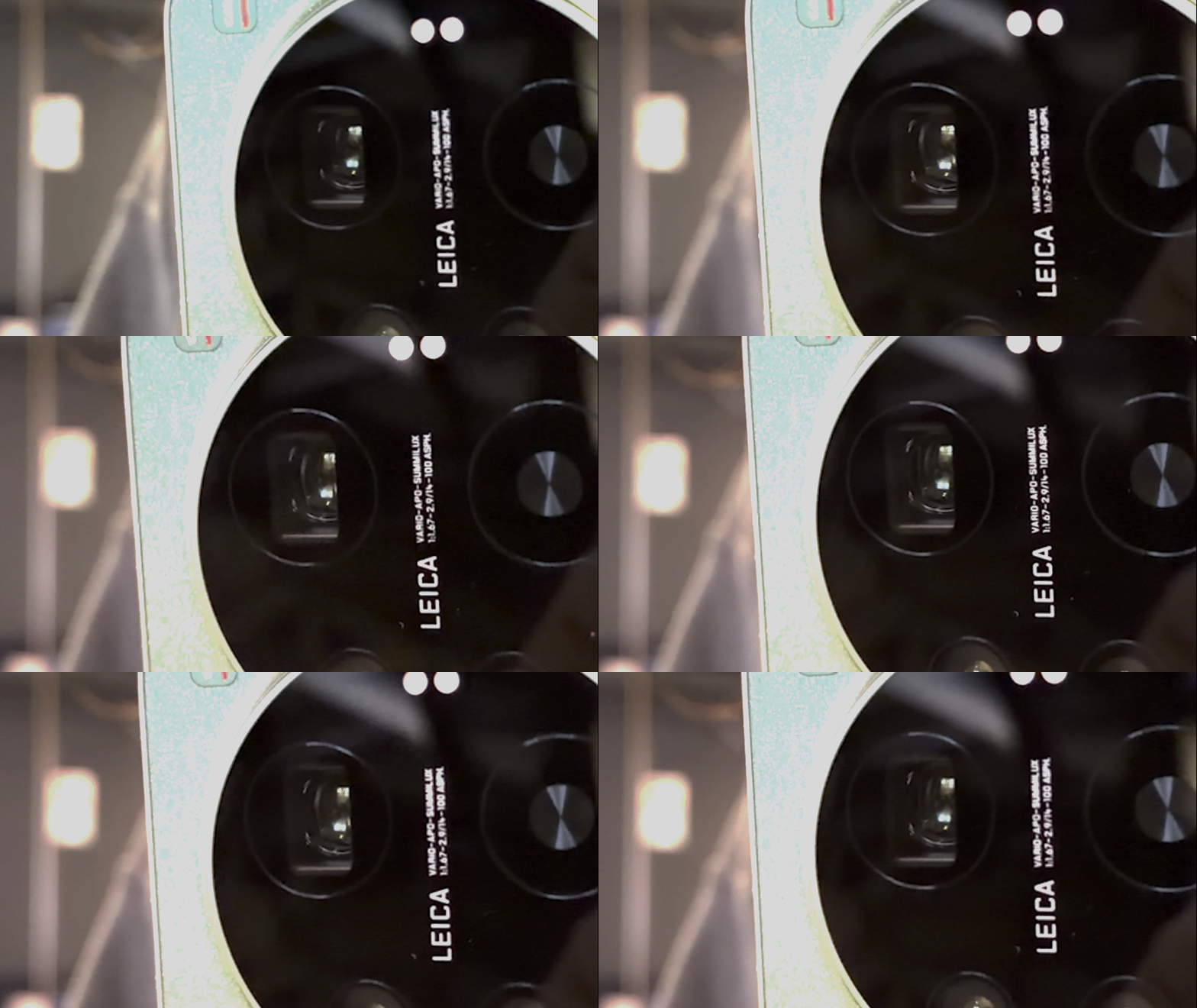
And if that wasn't versatile enough for you, you can also use the telephoto camera for macro photography - often a better option than the ultrawide camera mode that most other phone makers use for this purpose.
Joining these two headliner cameras are a 50MP ultrawide camera and a 50MP front camera. But these have seen some alteration in a sense too, since the 17 Ultra's whole rig has been tweaked by Leica as part of Xiaomi's partnership with the camera company.
Photo samples
So let's get into some samples taken against the brand new Galaxy S26 Ultra and the faithful iPhone 17 Pro Max.
First, this comparison between the Xiaomi 17 Ultra and iPhone 17 Pro Max, showing a square near Kings Cross. I think the iPhone's overall color balance is better, but the Xiaomi's more interesting, dynamic lighting is fun too.
This Xiaomi vs. Galaxy S26 Ultra comparison is a lot closer. There's perhaps more detail in the Xiaomi's image of this church, but Samsung's typically vivid colors have an appeal too.
At night, back against the iPhone 17 Pro Max, we see how the Xiaomi's large sensor benefits low-light image capture. The glow that the lights cast on the surrounding branches on the right are a detail that the iPhone doesn't really show.
Samsung phones take some of my favorite selfie portraits. The Xiaomi does a decent job of matching what the Galaxy S26 Ultra has produced, except my skin texture is weirdly flat, and it's not cut my glasses out from the background as neatly as the Samsung has.
Using the ultrawide mode of the Xiaomi and iPhone, we see how dark the iPhone's normally strong-performing sensor is compared to the Xiaomi. Perhaps that's more the fault of these metal sculptures I'm using as subjects, but it does to show that Xiaomi's camera performance claims are not hot air.
The Xiaomi 17 Ultra and Galaxy S26 Ultra both effectively have two telephoto cameras. It just happens that the Xiaomi combines its cameras into one. Anyway, zooming in on one of these paparazzi dogs, we can see so much more color in the Xiaomi's image, even if the Samsung still provides a reasonable amount of detail.
It's a shame for the Xiaomi that its 4.3x max optical zoom doesn't match the Samsung's 5x. But even if it can't get in quite as close, the big sensor behind the lens still produces an impressive image.
The iPhone 17 Pro Max's 4x telephoto camera is more on par with what Xiaomi has. Except in the color department, where we see in this zoom shot of the mural atop the Camden council building that there's a lot that the Xiaomi grabs and the iPhone does not.
That goes at 8x too, where both phones have to switch to hybrid zoom. The Xiaomi's image is perhaps sharper than it should be, but it catches the eye a lot more than the iPhone's does.
Lastly, here's a macro shot of some carved letters on a wooden bench. Xiaomi's bringing the color here again, and makes the crevices in the wood much more obvious. But perhaps the Samsung still gives a better impression of the overall detail we're zooming in on.
What else is it capable of?
Let's quickly check out the other highlights of the Xiaomi 17 Ultra's spec sheet. First off, we have its design, which has been lightened and thinned since last year's Xiaomi 15 Ultra despite the upgrades the 17 Ultra has received, to make the lightest Ultra Xiaomi phone yet. This is due in no small part to its fiberglass back and aluminum frame, an unusual combo on any phone, let alone a flagship device.

The 17 Ultra's up for grabs in either Black, White, or the entrancing Starlit Green you see in these images. I would never have thought I'd like the look of a literally glittering phone, but I am quite fond of this one. I'm also fond of the fact that the Xiaomi 17 Ultra's IP68-rated for water and dust resistance. It's good to know that this phone will stay safe even if it takes a dive into the kitchen sink.
The screen, a 6.9-inch OLED panel with 1 - 120Hz and a listed 3,500 nits peak brightness, is probably my favorite feature of the phone aside from the cameras. It's big, super-smooth when needed, and looks great even when just swiping through the menus. That's partly to do with Xiaomi's HyperOS 3 software too, which has some of the cleanest, snappiest animations I've seen on a phone.

Xiaomi went for the Snapdragon 8 Elite Gen 5 chipset in the 17 Ultra, an appropriately top-tier chip that offers the best performance you're likely to find on any Android phone this year. It's joined by a spacious 16GB RAM and either a similarly generous 512GB or 1TB storage.
The last highlight is the 6,000 mAh battery, which, thanks to its silicon-carbon construction, meant I could easily get two days of moderate use from the Xiaomi 17 Ultra without charging. The phone supports 90W wired charging and 50W wireless charging, which should fill up the battery rapidly, if you have the correct charger to hand.
Accessories
As this is meant to be a phone for discerning photographers, Xiaomi has created two different peripherals especially for the 17 Ultra. The first of these is the Photography Kit, which is a case that gives the 17 Ultra a camera-like grip for easier handling, plus buttons on the top edge for more convenient photo and video taking.

The second is the Photography Kit Pro. This comes in two parts - the case and the grip. The case is familiar other than the removable camera surround, which you can swap for a rotating one that can be fitted with a standard DSLR filter to give extra texture to your images. The grip adds the same camera buttons as the standard Photography Kit, along with a zoom lever and a built-in battery to give your 17 Ultra some extra survivability.

While it's impressive how much proper camera tech Xiaomi is trying to fit onto its phone, I do wonder who would want to carry these extras around with them on a daily basis. Maybe if the price is right I'd be tempted to add this onto my own hypothetical purchase, but these accessories seem to exist more for the sake of showing off than actual practical need.

Final thoughts
Assuming it's available where you live (if that's Europe, it's possible, if it's North America, it's very unlikely), the Xiaomi 17 Ultra could be a reasonable choice if you want the ultimate camera experience that still fits in a single pocket. But as much as we've focused on the cameras (and deservedly so - they're really good cameras), it's Xiaomi's efforts to improve other elements of the phone that have impressed me more.

Enlarging the battery and slimming the once-bulky design, while also making the display larger and keeping the chipset and RAM up to par, helps give you more than a single reason to consider the Xiaomi 17 Ultra. It's a smart move - if you want to buy a camera, then buy a camera. The Xiaomi 17 Ultra wants to be as much like a real camera as possible, but remembering its core function at the same time should make for an ideal balance.
Let us know if you'd like a full review when we're back from Barcelona. But for now, check out what else we've seen at MWC 2026.

Follow Tom's Guide on Google News and add us as a preferred source to get our up-to-date news, analysis, and reviews in your feeds.
More from Tom's Guide

