If you keep waking up at 3 a.m. or you're struggling with another type of insomnia, you’re not alone. In fact, 12% of U.S. adults have been diagnosed with chronic insomnia, and learning the dos and don'ts of sleep hygiene is key to getting out of this situation.
Sleep hygiene refers to the habits you stick to most days and nights (like a relaxing bedtime routine) and how they can affect how fast you fall asleep, and your chances of sleeping through the night. It sounds simple, but there are some sleep hygiene mistakes you might be making that are causing your 3 a.m. wake-ups and insomnia.
As part of our Sleep Awareness Week coverage, I’ve spoken with Dr Lindsay Browning, chartered psychologist and globally renowned insomnia expert at Trouble Sleeping, Dr. Michael Genovese, Chief Medical Advisor at Ascendant, and Dr. Chelsie Rohrscheib, Head of Sleep Research at Wesper, to find out the biggest sleep hygiene mistakes we’re making and how to fix them starting today.
Key take-aways: At a glance
- Reset your body clock: Good sleep hygiene anchors your circadian rhythm (internal clock), signalling your brain to release melatonin (the hormone that regulates your sleep-wake cycle) at the right time so you fall asleep faster and stay under.
- Keep a consistent sleep schedule: Going to bed and waking up within the same one hour window every day, even on weekends, is the most effective way to stop 3 a.m. wake-ups.
- Avoid 3 a.m. triggers: Common mistakes like drinking alcohol at night or consuming big, carb-rich meals in the evening cause blood sugar fluctuations that can wake you up in the middle of the night.
- Natural light is a sleep aid: Getting outside within 30 minutes of waking up is like a 'reset button' for your brain, making it much easier for you to fall asleep quickly that night.
- Have a two-hour bedtime buffer: To beat insomnia and stop waking up at 3 a.m., avoid eating heavy meals and using bright screens and lights at least two hours before bed. Together, this will lower your core temperature and ensure your body produces the right amount of melatonin.
- Master the 7:1 Sleep Rule: Once you've fixed these nighttime wake-up triggers, use the 7:1 rule to ensure your sleep schedule is on point.
7 Sleep hygiene mistakes that cause 3 a.m. wake-ups and insomnia
1. Staying indoors all day

THE MISTAKE: Now, as a remote worker, I’m certainly guilty of this — especially during the winter. But not venturing out into natural daylight can damage our sleep quality.
“Most of us are aware that you should avoid bright lights and screens the hours leading up to bedtime, but the opposite is also true during the day,” syas Dr. Rohrscheib.
“Our circadian rhythm, our internal clock that tells us when to be asleep and awake, is regulated by sunlight exposure,” she explains. “Not getting enough natural light during the daytime, especially in the morning, can be detrimental to the way our brain controls and times our sleep, leading to poor sleep quality at night.”
Our bodies won’t release enough melatonin — the hormone that makes us sleepy — in response to darkness in the evening if we haven’t had enough light during the day. This can therefore cause insomnia — both trouble falling asleep and staying asleep.
THE FIX: Getting sunlight in the morning is the most effective for your circadian rhythm. Stepping outside after you wake up, even just for a 10-minute coffee, can help keep your body clock in check, making it easy to sleep better every night.
2. Checking the time when you wake up at 3 a.m.
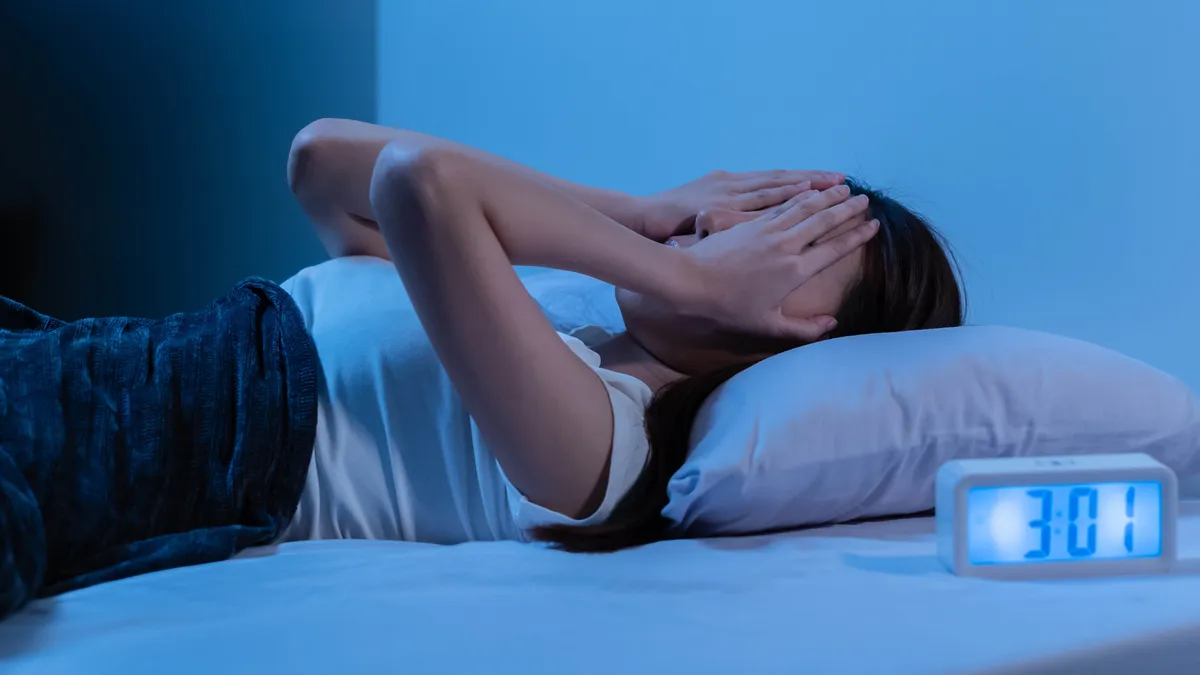
THE MISTAKE: Dr Browning explains that waking up in the early hours of the morning is a completely normal part of sleep, and most sleepers don't remember these nighttime awakenings the next morning as they're too short to be noticeable.
However, sleepers are more likely to realize these brief awakenings if they're aware of the time.
"If you look at the clock as soon as you’ve woken up and see that it’s three in the morning, you will likely start making mental calculations of how long you’ve slept for and how long it is until morning, adding to any anxiety about not sleeping," the sleep psychologist reveals.
She adds that checking the time can make your brain more alert and even wake you up even more.
"Whereas if you are not focused on checking the time, you may simply drift back to sleep again without remembering that you woke up," she explains.
THE FIX: "Simply turn your clock away from you during the night so that you can’t see it from the bed," advises Dr. Browning. "If it’s not sounding, then it’s not morning yet and you can simply go back to sleep."
3. Taking stress and anxiety to bed

THE MISTAKE: Whether you work from home and find yourself migrating to your bedroom during the day, answer work emails from your phone before bed or scroll through stressful and stimulating content as part of your nighttime routine — associating your bedroom with stress is a huge sleep hygiene mistake.
“Stress has a major negative impact on sleep quality,” says neuroscientist Dr. Chelsie Rohrscheib.
“Not finding time to relax and unwind in the hours leading to sleep can increase your risk for insomnia and poor sleep quality.” She adds.
THE FIX: An hour before bed, curate a calming nighttime routine. This not only reduces stress, but it can act as a signal to your mind and body that it’s time to wind down and switch off.
4. Eating big, carb-heavy meals at night

THE MISTAKE: Whether it’s a busy schedule or just your preferences, many of us tend to eat dinner between the hours of 7pm and 9pm. However, eating in the evening might be why you’re struggling to sleep through the night.
Eating big, carbohydrate-heavy meals late at night “can cause blood sugar fluctuations and indigestion,” says Dr. Genovese. This “pulls you out of deep sleep cycles prematurely.”
Acid reflux, caused by indigestion, or GERD is also a common cause of waking in the night. On top of this, digesting food keeps the body hot and alert, making it more difficult to fall asleep in the first place.
THE FIX: Follow the 10-3-2-1 rule. This means no caffeine 10 hours before bed, your last meal (or alcoholic beverage) three hours before, no work two hours before, and no screens one hour before. If you do have to eat later, ensure it’s a light, balanced meal.
5. Consuming caffeine after midday

THE MISTAKE: This might seem like an obvious one. Of course you should avoid caffeine in the evening you’ll find it difficult to sleep. However, it’s not just evening caffeine you should avoid.
“Caffeine has a half-life that can keep it in your system for up to twelve hours, so consuming caffeine after noon can make it much harder to fall and stay asleep,” explains Dr. Genovese.
So if your previous caffeine cut-off was 2 or 3pm like many people, it might still be too late and why you can’t sleep at night.
THE FIX: This one’s simple: stop consuming caffeine after midday! And we’re not just talking tea and coffee. There are many surprising sources of caffeine to watch out for, like dark chocolate.
6. Drinking alcohol close to bedtime

THE MISTAKE: A super common habit that destroys sleep quality is having an evening nightcap. Even if it’s just a small glass of wine or a dash of whisky, one drink is enough to wake you up in the middle of the night.
“While alcohol acts initially as a sedative, it actually causes a rebound effect as it clears from the blood and triggers a spike in alertness,” says Dr. Michael Genovese, who’s also a Diplomate of the American Board of Psychiatry and Neurology.
This “leads to middle of the night wakings and prevents you from entering deep REM sleep,” he adds. Our sleep is made up of stages that we cycle through, including light, REM and deep sleep. We have to have enough of each stage to feel physically and mentally refreshed in the morning.
Alcohol keeps us in light sleep, and as Dr. Genovese says, makes it much easier to be woken in the night.
THE FIX: We’re not telling you to quit cold turkey and go sober. But if you find yourself waking often in the night, swap your nightcap for a nighttime tea. These contain sleep-inducing ingredients like chamomile and can be drunk as part of a calming nighttime routine.
7. Exercising at night

THE MISTAKE: A healthy lifestyle, including regular exercise, is essential for quality sleep. However, timing is everything.
“Exercising too close to bedtime can lead to poor sleep at night,” says Dr. Rohrscheib. “Exercise temporarily releases cortisol and endorphins, which are stimulating and wake-promoting,” she explains.
“Working out within 3 hours of sleep can cause insomnia and sleep fragmentation for individuals that are prone to sleep issues,” the sleep expert adds.
THE FIX: Absolutely keep up with your fitness regime, but try to schedule your workouts for the morning or early afternoon. If you can get outside, even better — that way, you can get your dose of natural light, too.
What to do if you wake up at 3 a.m.

If you're finding yourself waking up at 3 a.m. no matter what you do, there are some things you can do to make nocturnal awakenings less frustrating.
"Stay calm and tell yourself that brief wakings are a normal part of sleep, avoid clock watching, and give yourself a chance to gently fall back to sleep again rather than thinking of it as a problem that needs solving," Dr Browning advises.
Another way to cope with sleep disturbances is the 15-minute rule (which certified sleep coach Claire Davies swears by), which involves getting up, leaving the bedroom, and performing a mundane task (such as folding laundry or some at-home vagus nerve stimulation) for 15 minutes in a dim room.
"So while getting out of bed might be the last thing you feel like doing when you can’t sleep, it’s a proven training technique for managing insomnia," says Davies.
The bottom line
The main takeaway is that, while struggling to fall back asleep can be a nightmare, you shouldn't let nighttime awakenings make you feel worried.
"Remember that waking up in the night is not a catastrophe for your sleep," assures Dr Browning. "As long as you get back to sleep relatively quickly, this kind of brief awakening is very normal and not usually a cause for concern."