Everyone knows how bad a bad night's sleep feels. But despite growing awareness of the importance of sleep health, a recent survey from Resmed found for 53% of us, good sleep only happens at most four times a week. Fewer than one-third claimed to sleep well every night.
Despite this, 53% of respondents rated sleep quality as the most important behavior for health and longevity. That ranks it above diet and exercise.
"You need to sleep better every single day because your brain actually depends on this. Your heart depends on this," emphasizes Dr. Carlos Nunez, Chief Medical Officer at Resmed.
So we know sleep is important for health and recognize it needs to be a priority for a long life, yet many of us are still missing out on those celebrated 7-9 hours most nights. Why?
From stress to electronics, I spoke to Dr. Nunez about the how to navigate the barriers to good sleep — and why it's so important this Sleep Awareness Week 2026.
Key takeaways
- The sleep awareness-action gap means that while many of us know sleep is important, few of us actually take steps to make sleep a priority.
- Anxiety, poor sleep hygiene and underlying conditions are among the key roadblocks to good sleep.
- A lack of understanding can also hold people back, as many don't realize the full consequences of bad sleep.
- Taking control of your sleep via bedtimes, environment, and routine can help you achieve consistently better rest.
What are the barriers to good sleep?
Stress and anxiety

Whether it's racing thoughts keeping you up or cortisol spikes jolting you awake at 3 a.m., stress has an insidious impact on good rest.
"We often stress about work and life, and it interferes with sleep," notes Dr. Nunez.
It's a wide reaching problem; a massive 39% of respondents to the ResMed survey said 'stress or anxiety' were contributing to their poor night's sleep.
In addition, a further 22% and 19% noted 'work responsibilities' and 'household responsibilities' respectively as a key barrier — you can bet those issues come with a dose of stress.
Bad sleep hygiene
21% of respondents to the Resmed survey identified 'use of electronic devices before bed' as a reason for their poor sleep, even though good sleep hygiene encourages putting away screens if you want to get your eight hours.
[Your phone] is activating you like a slot machine
Dr. Nunez
"What we're finding is the dopamine activation when you're doomscrolling through TikTok and you get in that rabbit hole that the algorithm has perfectly tuned for you, it's activating you like a slot machine," explains Dr. Nunez.
While blue light from screens can also add to your sleep woes, he notes that all the blue light glasses in the world can't protect you from the bigger problem — the dopamine spike of scrolling.

"Every swipe that you respond to is another hit of dopamine. It's another thing that excites you," he says. "All of a sudden, you finally put that that screen down and you're too excited to go to sleep. It may take you half an hour, 45 minutes to finally drift off."
Sleep disorders
Sleep disorders such as sleep apnea, restless leg syndrome and insomnia all impact your ability to consistently enjoy good rest.
However, although it's estimated around 30 million people in the US have sleep apnea (with some researchers putting the number as high as 80 million), only six million are diagnosed.

As Dr. Nunez points out, sleep conditions are often undiagnosed due to a lack of access to sleep specialists.
"Most people don't walk into a sleep specialist office off the street. They often get referred by their primary care," he says. But he notes that sleep can be overlooked by primary care physicians, allowing sleep problems to remain, quite literally, in the dark.
As a result, your sleep suffers and you can't work out why.
The gap between awareness and action
We all know sleep is vital — no one drops off at the end of the day as a hobby. Over half of respondents to the Resmed survey ranked sleep as a key pillar to long-term health, compared to 46% who prioritized eating a balanced diet and 41% who ranked regular exercise first.
It's great that there's growing awareness, sleep does feel like it's finally having its moment, but that gap is still there
Dr. Nunez
However, while 53% of us recognize sleep as a top priority, the exact same number struggle to sleep well regularly — 53% claimed they get a good night's sleep at most four nights a week.
Dr. Nunez describes this as the "gap between awareness and action."
"I think the biggest problem is there's awareness and then there's understanding," he explains. "You know you should be getting good sleep, but you can't exactly put your finger on why, because the average person can't tell you 'poor sleep increases my risk of dementia and Alzheimer's later in life'."

This lack of understanding allows bad sleep habits to grow and sleep to get pushed down the list of priorities, until you — like so many — find you struggle to sleep on a regular basis.
How to tell what's keeping you awake at night
Understanding the barrier that's keeping you from good sleep can help you remove or navigate that obstruction and, ultimately, achieve better rest. Plus get the health benefits that come with it.
"The main advice I give everybody is: make sure that you have control over your sleep," says Dr. Nunez.
Make sure that you have control over your sleep
Dr. Nunez
Taking control of your sleep (and we'll give you the doctor's tips to go about it below) will often expose the holes in your routine and you might, even inadvertently, fix your sleep as you go.
Dr. Nunez also says to consider investing in one of the best sleep trackers, to help identify reoccurring issues.
"What's so good about having a wearable on all the time is that you can correlate that bad sleep to 'you know what? I didn't make it to the gym on those days where I slept poorly, or I ate bad on those days when I didn't sleep well'," he explains.
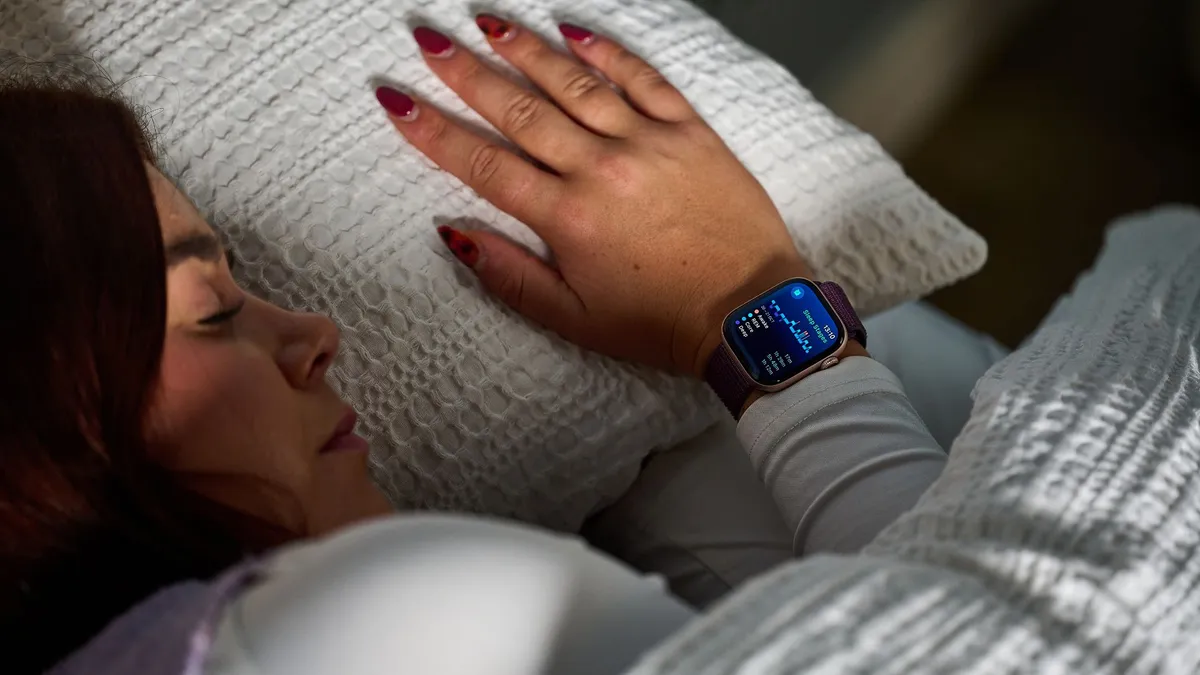
"It's not as good as going for a sleep test but it's enough for people to understand at least the basics," he adds. "When I get to sleep, when I wake up, and what that means for me during the day."
He also recommends speaking to your loved ones, who might recognize symptoms of sleep disorders you've missed. For example, your kids might point out your terrible snoring or your wife might make it clear your dreams of playing football are resulting in real-life restless legs.
Finally, he advises that if your doctor doesn't raise sleep concerns, make sure to bring it up yourself — and ask for a referral, if necessary.
How to get better sleep every night
Improving your sleep hygiene will allow you to take control over your rest and can help both solve problems and expose issues. Here's how Dr. Nunez suggests you go about it.
1. Stick to a regular sleep schedule
Your circadian rhythms thrive on regularity, which is why a set bedtime and wake time are essential pillars to good sleep.
The more consistent you are, the better your body is going to be at sleeping
Dr. Nunez
"Are you going to bed at the same time every night and waking up at the same time every morning, every night, seven nights a week?" asks Dr. Nunez. "The more consistent you are, the better your body is going to be at sleeping."
Known as the 60 minute bedtime rule, going to bed within a one hour time frame (for example, between 9.30 p.m. and 10.30 p.m.) has even been linked to a longer lifespan.
But for Dr. Nunez, the benefits are more immediate. "For the majority of people, that's what they need to get that uninterrupted sleep."
2. Create the right bedroom environment
Your next focus should be on your sleep environment, which can either help or hinder your sleep consistency.
"Your bedroom or where you sleep, has to be conducive. So make sure it is dark, make sure it is quiet," Dr. Nunez advises.
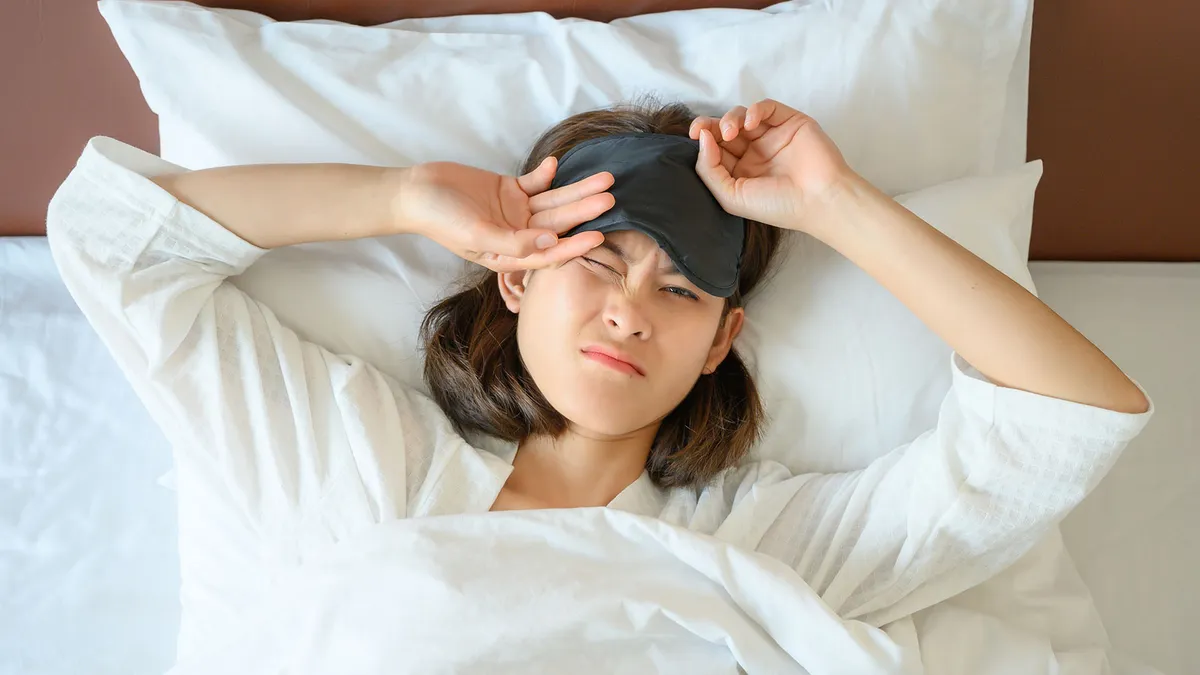
Using blackout curtains or wearing a sleep mask can help you escape lights that might otherwise encroach on your peacefully dark room. Dr. Nunez even recommends blocking out pesky LED lights — chargers, power strips, etc. — that might add an unwelcome bright spot.
He also notes you need to find the ideal bedroom temperature, typically 65 to 70 F (18 to 21 °C).
"The room should be cool, not warm," says Dr. Nunez. "Your body temperature, when it starts to drop at night, signals to your body that it's time to go to sleep."
And don't forget the best mattress for your needs, as this acts as a foundation to good rest.
3. Create a wind-down routine
Your bedtime routine works alongside light, temperature and timing to tell your body clock that it's time to go to sleep.
Building a relaxing routine can also help you let go of stress before bed, which is why it's one of Dr. Nunez's top recommendations for those who find anxiety is keeping them awake.

So what do you do during your bedtime routine?
"What I suggest for most people is no screens, none of that activation at least an hour before bed," says Dr. Nunez. "Spend that hour winding down. Your body needs that time to calm down, to prepare for that dark, cool bedroom that's quiet."
Screen-free activities include reading, meditating, gentle exercise for sleep and even dark showering.
4. Prioritize sleep
Don't let sleep be something that just happens to you at the end of the day. Taking purposeful steps towards getting better sleep can help in numerous ways from an improved immune system to strengthened memory.
Sleep is foundational to health
Dr. Nunez
"We have to prioritize sleep," warns Dr. Nunez. "Sleep is foundational to health."
And building a daily routine the prioritizes sleep friendly habits — like cutting out caffeine in the afternoon and getting sunlight in the morning — will help you get the rest, recovery and energy you need.
5. Speak to your doctor
"If you suspect you may have a sleep disorder — insomnia, sleep apnea, restless leg syndrome — that's when you talk to your physician," says Dr. Nunez.
If you've been experiencing sleep deprivation for three months or your lack of sleep is beginning to impact your daily life, speaking to a healthcare provider can help you find a long-term, targeted solution.