I’m not alone in struggling with 3am wakeups. In fact, when I spoke to family, friends and colleagues, almost all of them had described experiencing something similar at some point.
But what frustrated me most was the inability to fall back asleep. This meant sometimes I’d be awake and staring at the clock right through to 7am when my alarm finally sounded.
Not only did this greatly reduce the number of hours of sleep I was actually getting, risking long-term sleep deprivation, but it was also leading to greater stress and anxiety around bedtime in general.
My first plan was to get to the bottom of why I was waking up. Next, I needed to find relaxation techniques that actually worked. Here’s how it went.
Why I was waking up at 3am
While there are many reasons for waking up in the early hours, after speaking with experts, it seemed stress and anxiety were to blame for my disrupted sleep, and behind this is the Cortisol Awakening Response (CAR).

“CAR is a natural surge of the hormone cortisol that happens within the first 30-45 minutes after waking,” Dr Carleara Weiss, PhD, MS, RN, a Sleep Science Advisor at Aeroflow Sleep, previously explained to us.
Despite CAR usually occurring around 30-40 minutes after waking, our levels of cortisol start increasing from around 3am. This means people with already heightened levels of cortisol (like those experiencing stress or anxiety) may wake prematurely with this rise.
Cue a racing heart, busy mind and clammy hands while I stare at the clock ticking away next to me.
The 3 best relaxation techniques that help me fall back asleep
To avoid sleep deprivation and worsening stress, I had to figure out a way quickly to fall back asleep.
Luckily, as someone who writes about sleep, I was able to ask the best experts in the industry what they recommend.
After trying just about everything, these are the three relaxation techniques that genuinely help me fall back asleep in minutes.
1. Cognitive shuffling
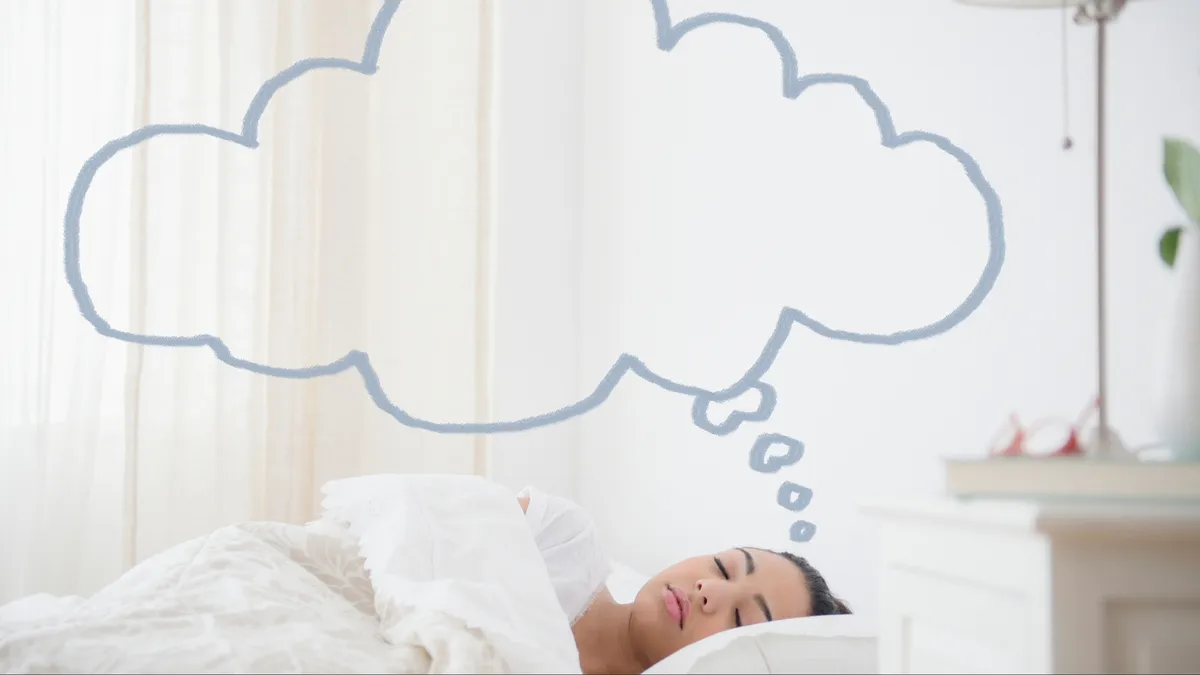
"'Cognitive shuffling' is essentially focusing your mind on something that's mildly engaging enough but doesn't provide stimulation,” Dr Burns says.
An easy way to do this is to imagine random words and objects and visualize them, before moving onto another object that is unrelated to the last. If you find this tricky, use the first letter of a specific word to help. For example:
Mall, manatee, mug, map…
Ant, apple, attic…
Top, tail, tick…
Trainers, tickle, table…
Rain, rabbit, ruby…
Eggs, elephant, ears…
Sausage, socks, seat…
Switch, store, scissors…
“What makes it effective is that this process simulates how your mind goes to sleep, in an unstructured, linearless manner without any emotional context,” explains Dr. Jordan Burns, D.C., Licensed Chiropractor and Sleep Health Expert at Amerisleep.
“By diverting your attention to neutral or even boring mental activity, you allow yourself to enter sleep faster because the thoughts that prevent you from falling asleep will gradually dissipate,” Dr. Burns, the author of 'Supercharge Your Sleep,' says.
When I use this 5-minute sleep hack at night, I fall back asleep in literal minutes. It’s magic.
2. Slow breathing

We all know the feeling of waking up with a racing heart. If your 3am wakeup is caused by a cortisol spike like mine, it's likely you'll also experience some nighttime anxiety.
Breathing techniques can be used to not only slow the heart rate, but also relax the body and mind enough to fall back asleep.
“This technique works by sending signals to your nervous system and lowering heart rate – thus eliminating activation caused by waking up in the middle of the night,” explains the doctor.
“What's unique about breathing exercises is that it's one of the few practices where you can impact your nervous system immediately,” he says. “Breathing techniques are designed to get you back to the parasympathetic stage.”
Thinking too much about breathing can make your brain become even more activated
Dr. Jordan Burns, D.C.
This is the state of our nervous system responsible for ‘resting and digesting’ instead of ‘fight or flight’.
While different breathing techniques work more effectively for different people, I found simply taking slow, deep breaths and not focusing my mind too much on a specific breathing technique worked best. For me, restricting breath as you do with techniques like the 4-7-8 method only exacerbated my anxiety.
“Thinking too much about breathing can make your brain become even more activated,” Dr Burns explains. “My recommendation in this case is to try using gentler breathing techniques to achieve a similar effect.”
3. Using a sleep mask and earplugs

It might sound obvious, but keeping a sleep mask and a good set of earplugs by my bed has been invaluable in helping me fall back asleep fast.
“Just a bit of noise or light can make your brain maintain alertness,” Dr Burns explains. “Creating an ideal sleep environment is crucial to help your brain enter sleep once again.”
And one of the most important aspects of using a sleep mask for me is not being able to check the time.
“Not looking at the clock can also significantly help solve the problem of insomnia,” Dr. Burns says, “since it's one of the most common reasons why people become activated during nighttime awakenings.”

I’m sure we’re all familiar with counting down the hours until our alarm goes off. It’s counterproductive and often leads to an active, anxious mind that makes it more difficult to fall asleep again.
Blocking out sound and light means I can prevent my brain from becoming too stimulated and awake at 3am, and often I drift back to sleep quickly. Check out our guide to the best sleep headphones if you need to invest in a new pair.
Other reasons for 3 a.m. wake-ups
While it’s all well and good knowing how to fall asleep quickly again, it’s important you get to the bottom of your 3am wakeups so you can address the root cause.
While mine was anxiety and stress induced, these are some other common reasons you’re waking up at 3am:
- Drinking caffeine in the afternoon: Caffeine can stay in the system for at least 10 hours, blocking adenosine which is essential in helping us fall asleep and stay asleep.
- Drinking alcohol in the evening: Alcohol blocks REM sleep and makes it more difficult to access deep sleep. Being in lighter sleep stages throughout the night means you’ll wake up more.
- Eating meals late in the evening: Keeping our digestive system active late at night means your mind and body won’t switch off, and you’ll stay in lighter stages of sleep.
- Going to bed at different times: By keeping an irregular sleep schedule, you risk disrupting your circadian rhythm (your internal body clock). This leads to difficulty falling asleep and staying asleep.
- Not getting enough sunlight: This internal body clock is regulated by natural light. If you don’t get enough sunlight, you won’t produce enough melatonin (the sleep hormone) during the night to keep you in the deep stages of sleep.
- You’re overheating: An increase in our core body temperature happens naturally in the morning as a cue for us to wake up. If this is happening too early in the morning, then you’ll likely wake up prematurely.

Follow Tom's Guide on Google News and add us as a preferred source to get our up-to-date news, analysis, and reviews in your feeds. Subscribe to Tom's Guide on YouTube and follow us on TikTok.