I've tried just about everything to fix my sleep. And specifically, to ward off my nighttime anxiety because nothing keeps me awake more, and wakes me up at 3 a.m., than a racing heart and a crowded mind.
But even though I was doing everything in my power to improve my sleep, I still wasn't sleeping well and every day I was waking up exhausted. I had a hunch my sleep schedule had something to do with it, so for Sleep Awareness Week 2026 I put the viral 1-hour sleep rule to the test.
For something so easy and basic, I can't believe how effective it is. Now, I'm falling asleep within minutes and waking up naturally without an alarm at 6.30am, full of energy. Here's how it works and what happened when I tried it...
Key take-aways: At a glance
- The one-hour sleep rule refers to going to bed and waking up within the same one-hour window each day.
- It's part of the 7:1 Sleep Rule: go to bed and wake up within the same hour each day, and get at last seven hours sleep a night, for at least 5 nights a week.
- Major new science says that maintaining a regular sleep schedule can increase life expectancy by up to 4 years.
- It helps you fall asleep faster because your brain learns when it's time to sleep, so you drop off quicker.
- Sleep regularity also helps you to avoid waking up at 3 a.m. because you'll be producing more melatonin at the right time, which helps override any surges in cortisol that could wake you up.
My story

I’ve experienced anxiety and low mood since being a teenager. But it’s only in my adult years it seems to have taken a toll on my sleep.
Going to bed with a racing heart makes it nearly impossible to fall asleep. If my body is in flight or fight, my mind is unlikely to switch off — in fact, it stays on high alert, looking out for possible dangers.
Going to bed with a racing heart makes it nearly impossible to fall asleep
And, when I eventually did fall asleep, waking up in the early hours of the morning became common.
Ultimately, this lead to poor sleep quality, meaning I’d stay in bed in the mornings trying to get those extra hours in that I’d lost in the night. I'd also try going to bed hours early, again searching for more sleep. This was especially bad at weekends, where my lack of an alarm meant I could sleep for over 9 hours a night.
But little did I know, my late wake-ups over the weekend and schedule shift during the week were wreaking havoc on my circadian rhythm — my internal body clock — and making my anxiety worse. I was stuck in a cycle.

How sleep regularity eases anxiety
Sleep regularity, referring to how consistent your sleep and wake times are, is fast being proven as one of the most important factors in determining our health. And not just physical health. In fact, an irregular sleep schedule is one of the key differences between an insomniac and someone getting enough sleep.
A 2025 study found that regular sleep patterns are associated with a reduced risk of depression and anxiety.
In fact, regardless of whether you’ve had enough sleep, if you keep a regular bedtime, you’re 38% less likely to experience depression and 33% less likely to experience anxiety.
If you keep a regular bedtime, you’re 38% less likely to experience depression and 33% less likely to experience anxiety
“Creating a routine with a regular bedtime helps to develop a regular sleep wake cycle and rhythm,” Dr Hana Patel, a NHS GP and resident sleep expert at Time4Sleep, says.
This will programme your body to sleep better during the night, Patel adds, helping you to feel more rested during the day and therefore boosting mood.
But what’s the science behind it? According to the study, irregular sleep patterns destabilize our circadian rhythm.
The result of this is that our release of dopamine and serotonin – mood-regulating hormones – are impacted. This can cause symptoms of anxiety and depression.

But, like my own experience, it’s a difficult cycle to break considering the new Resmed survey reports that a huge 39% of people don’t get quality sleep because of stress or anxiety — making mental health the biggest barrier in getting good sleep.
And ‘catching up’ on sleep, like I was doing, isn’t a solution. A 2024 study looking at over 60,000 participants found that sleep regularity is actually more important than sleep duration for our health — especially as a predictor of mortality.
The higher the regularity of sleep, the less likely you are to die from all causes, including cancer.
In fact, keeping a consistent sleep schedule has been proven to add four years to your life expectancy.
How I applied the 7:1 rule to my sleep
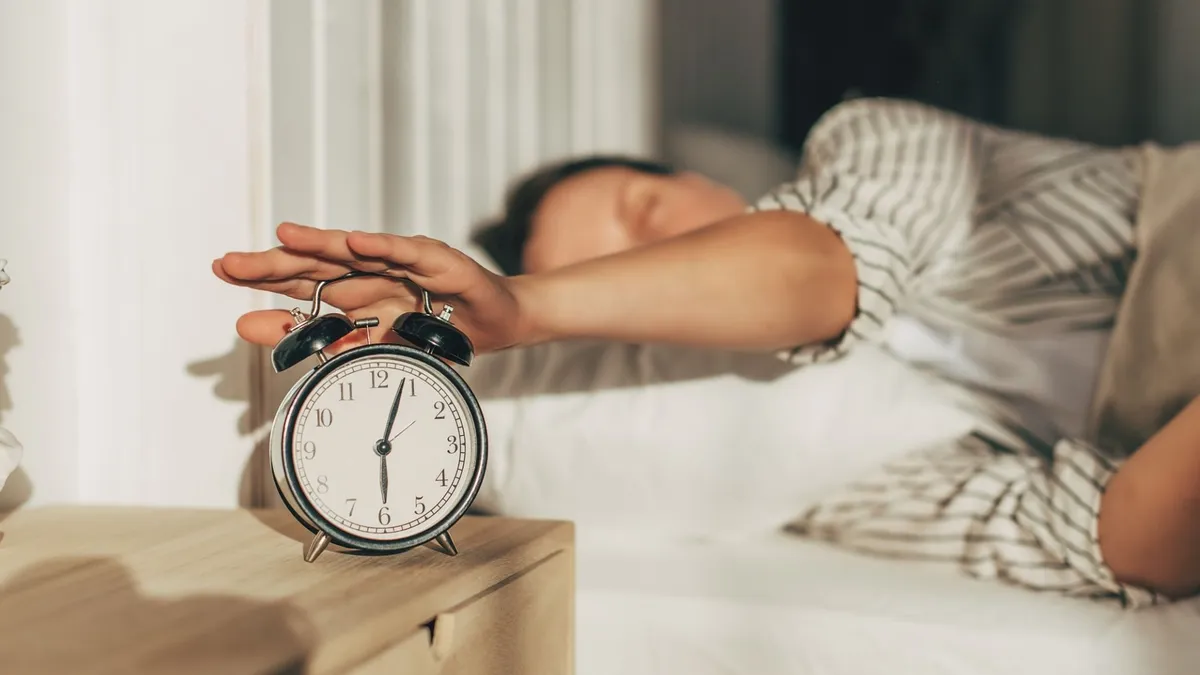
The 7:1 rule refers to getting at least seven hours a night, while making sure you go to bed in the same one-hour period every night, and wake up in the same one-hour period every morning.
I started by initially deciding on an anchor time. This is a fixed, non-negotiable time within my 24-hour circadian cycle.
For me, this was a wake-up hour of 6.30am and 7.30am. I’m naturally a morning person, and this is when my productivity is at its best. Without fail, even if I felt like I hadn’t slept, I made sure I woke up between those times and started my day.
My circadian rhythm is the strongest it’s ever been
And I worked backwards from that. If I’m getting up at 6.30am, I need to go to sleep at least seven hours before that, so my bedtime hour became 10.30pm-11.30pm.
Having this hour leeway was super effective for me — it took the pressure off needing to fall asleep or wake up at a really specific time. Instead, I could become gradually accustomed to a healthier, more consistent sleep schedule.

Initially, waking up at 6.30am felt incredibly difficult. I was sluggish, slow and all I wanted to do was snooze my alarm and stay in my warm bed. But when I fell asleep super fast in the evening, I saw the benefit.
After about a week, my routine felt completely normal. I wasn’t oversleeping, I was waking with energy and my days felt longer and more productive (without energy dips in the afternoon). Soon, I didn’t even need to set an alarm.
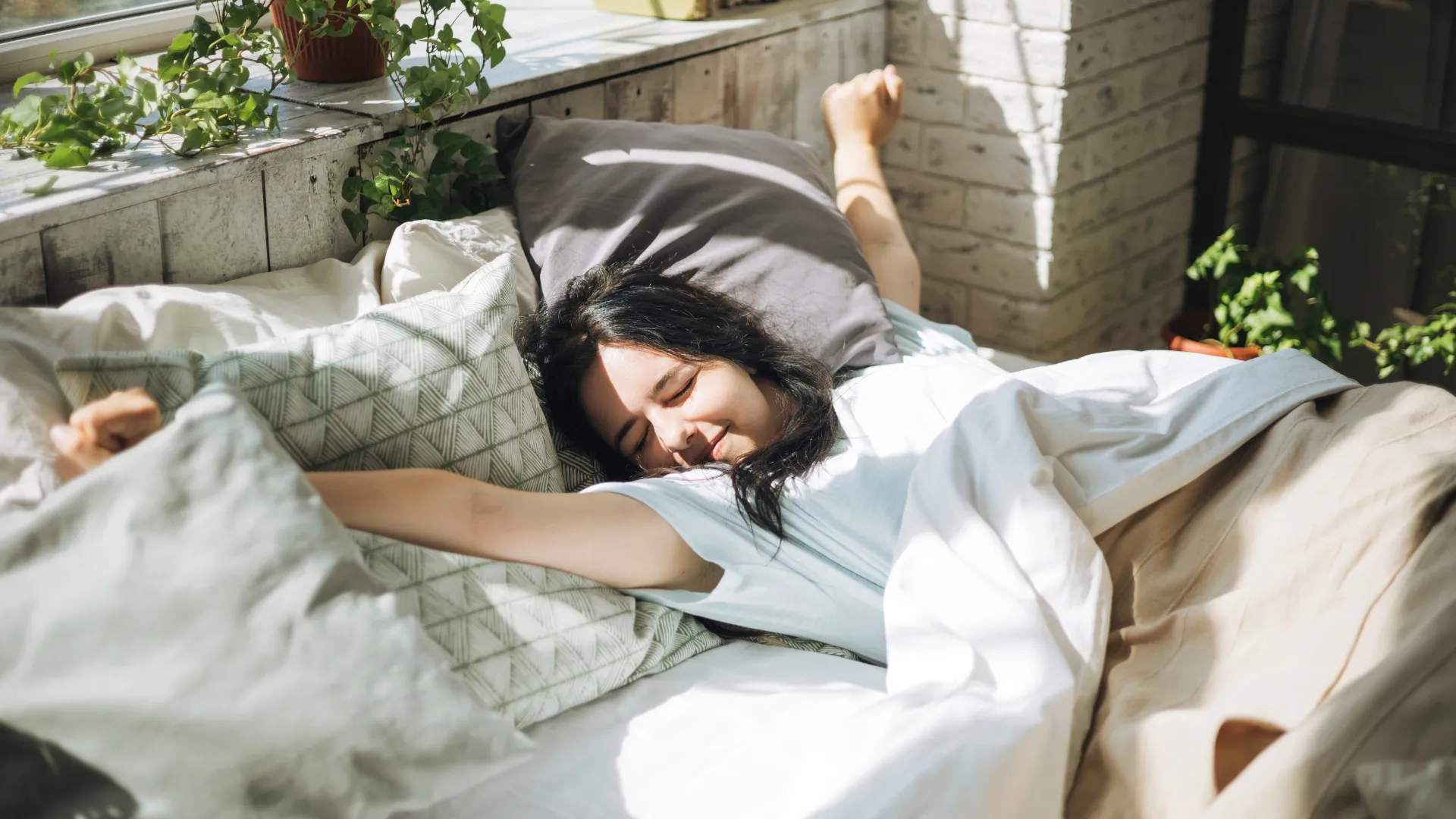
Now my circadian rhythm is the strongest it’s ever been. I can fall asleep easily at 10.30pm and wake up naturally at 6.30am.
The 3 a.m. wake up connection

People experiencing anxiety are more likely to wake up at 3am. Cortisol — our stress hormone — naturally begins to rise at around 3 a.m. to 4 a.m. in order to help wake us up in the morning.
However, if your baseline level of cortisol is already higher due to stress and anxiety, this natural rise is likely to wake you up.
A way to reduce this impact is to ensure you’re producing enough melatonin – the sleepy hormone — and evidence points towards sleep regularity improving melatonin production.
By having a clear anchoring time and fixing my circadian rhythm, I stopped waking up at 3 a.m. Presumably, because the release of melatonin was better regulated, meaning I had high enough levels of this hormone to sleep through the night.

Relaxation tech for better sleep
There are certain products and techniques you can use alongside the 7:1 rule that will help ease your anxiety and stress. Some the Tom’s Guide team have tested and recommend include:
- Vagus Nerve Stimulators: These devices are designed to pulse on the vagus nerve, found in the neck. The vagus nerve is key in the parasympathetic nervous system response, which is responsible for ‘rest and digest’ instead of ‘fight or flight’. Using devices like the Pulsetto can help calm the body and mind, reducing stress and anxiety before bed.
- Breathing exercises: Breathwork is a very effective way of calming the nervous system and stimulating the vagus nerve. This method is free, and while it takes practice, you can do it on the move, wherever you are trying to sleep. A calming wind-down routine helps you wake up fresh by improving your overall sleep quality.
- Sunrise alarm clocks: Despite the name, these smart light clocks often also have a sunset feature. Personally, I rely on the sunset feature of my Lumie Bodyclock Shine 300 to ensure I actually do go to sleep, rather than stay up scrolling on my phone. The light in the morning is excellent for gradually letting me wake up, rather than being rudely awakened in the middle of a deep sleep stage.
- Cooling mattress: Another cause of nighttime awakenings is an increase in body heat. This is a natural indicator for our bodies to wake up. Keeping your sleep environment cool by investing in the best cooling mattress or best mattress topper for you.

Follow Tom's Guide on Google News and add us as a preferred source to get our up-to-date news, analysis, and reviews in your feeds.