Blackout curtains can create an environment proven to help you fall asleep fast, but science warns they could also be the reason why you're waking up tired. However, the good news is that a simple habit could help give you a morning energy boost, and it only takes seconds.
While blackout curtains are commonly used for blocking sleep disrupting light, with 270 million blackout curtains installed in the US in 2023, physician Dr. Fábio Luiz Vieira, founder of My Brazilian Doctor, warns they may disrupt our circadian rhythm and cause morning fatigue
"Sleep quality is largely determined by darkness at night and light in the morning." says Dr. Vieira. "Waking in darkness can delay circadian signaling and reduce morning alertness."
Key take-aways: At a glance
- Studies show that blackout curtains create a dark environment to boost melatonin, a hormone which helps us fall asleep.
- However, blackout curtains block out morning light, which the body uses as a signal to produce cortisol, a hormone that help us feel awake and alert upon waking.
- When cortisol is reduced due to a lack of daylight in the morning, this can lead to morning fatigue, plus a delayed wake-up time and bedtime.
- To increase alertness in the morning, aim to open your blackout curtains immediately upon waking, urge experts.
- Using a sunrise alarm clock has been proven to increase cortisol and serotonin production, a get-up-and-go hormone combination.
How blackout curtains can cause morning tiredness

Research has shown that those who sleep in a room affected by light pollution are more likely to experience sleep deprivation and anxiety. Meanwhile, a 2021 study found that being exposed to even a small amount of light while sleeping can lead to more nighttime awakenings.
Waking up in the dark means our bodies aren’t given the signal to stop producing sleep hormones
James Wilson, Bensons for Beds
That's where blackout curtains and blinds can step in. Blackout curtains have become a popular sleep tool to reduce the affects of light pollution, creating a dark environment free of sleep-disrupting light.
"Blackout blinds can be beneficial, particularly if you live in environments with lots of light exposure," says James Wilson of Bensons for Beds.
"If we’re woken in the night for whatever reason, the complete darkness helps us to settle back into to sleep more easily than if we were exposed to light," the sleep practitioner adds.
However, while blackout curtains create a sleep-inducing environment at night, they can also create an environment that decreases energy levels in the morning.
Research has found that the addition of blackout curtains can disrupt our natural circadian rhythm, which is our body's internal clock. Study participants reported feeling more alert at night and sluggish in the morning when sleeping in a room with blackout curtains.
This lead to an out-of-sync sleep schedule, characterized by delayed wake-up times and bedtimes.
But why does waking up in darkness cause morning tiredness? Dr. Vieira explains that it's all to do with how darkness increases the production of sleep-promoting hormone melatonin.
"Light is the primary cue for suppressing melatonin and activating the brain’s wake systems," the doctor explains.
Studies have even highlighted how our biological clock relies on light to know that it's daytime, with sunlight boosting cortisol, a hormone that promotes energy and alertness.
According to Wilson, blackout curtains remove a natural (and crucial) wake-up cue.
"Waking up in the dark means our bodies aren’t given the signal to stop producing sleep hormones and to start producing cortisol, which helps us start the day," he warns.
3 quick and easy ways to boost morning energy
While blackout curtains can play havoc with your sleep schedule, Hannah Shore, Head of Sleep Science at MattressOnline, highlights how they're still important — especially during the summer months.
"If we don’t have these, we would be waking up when the sun rises, which can be as early as 4:30am in peak summer," she warns.
Luckily, sleep experts say that there are quick and easy ways to enjoy the sleep-promoting benefits of blackout curtains at night and in the early hours of the morning, without skipping the energy-boosting sunlight when you need to get up.
1. Open your curtains as soon as you wake up

The quickest and easiest way to feel energized in the morning is to head over to your window as soon as you wake up and draw back the curtains.
"Blackout curtains are best combined with intentional morning light exposure, such as opening curtains immediately upon waking, to maintain circadian alignment," advises Dr. Vieira.
In fact, Ruth Jones, a Senior Sleep Writer here at Tom's Guide, swears by this five-second morning habit.
"I needed blackout curtains to fall asleep in a room plagued by streetlights, but the lack of morning sunlight left me groggy and fatigued," says the sleep writer.
To remedy her morning fatigue, Jones says she would open her curtains as soon as her alarm beeped.
"At the first chime, I'd fling my curtains back before hitting snooze, allowing the natural daylight to slowly rouse me; I was awake and alert before the second alarm could start," she tells me.
2. Invest in a sunrise alarm
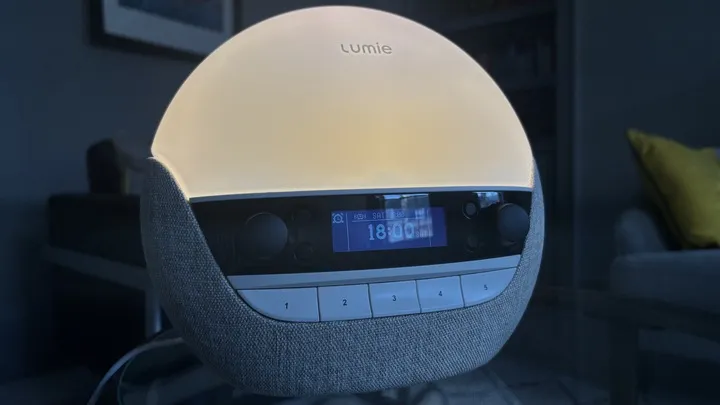
After testing my first wake-up light for my Lumie Bodyclock Luxe 700FM sunrise alarm clock review, I am now someone who preaches about how refreshing it is to wake up to a gentle, gradually-brightening light instead of a harsh iPhone alarm.
Sunrise alarms work by mimicking a sunrise, and this dawn simulation has been shown to increase cortisol.
"If you're using blackout blinds, I always reccomend coupling them with one of the best sunrise alarm clocks to wake up by light as well as an audible alarm," advises Wilson.
3. Go for a walk in the first hour of the day

Another morning habit I swear by is a quick walk in the morning light. Not only is a morning stroll a great way to get a boost of Vitamin D, it's also proven to be a great way to boost sleep quality and increase energy levels.
To feel more refreshed in the morning, all you need to do is head out the door between 30 and 60 minutes after your alarm.
"Getting access within the first hour of waking every day, so long as it is the same time, will help to set your body clock, which in turn can make it easier to fall asleep and wake up in the future," says Shore.
3 products that boost morning energy




Follow Tom's Guide on Google News and add us as a preferred source to get our up-to-date news, analysis, and reviews in your feeds.