I recently got my first ever Apple Watch, and while it has a multitude of functions, I've primarily been using it as a sleep tracker. Each night, it's given me high sleep scores (even up to 92 out of 100), despite the fact that I average around six hours of slumber a night.
However, the expert-backed 7:1 sleep rule has shown that sleeping for at least seven hours a night and following a consistent sleep schedule can decrease mortality risk by 24%— which could add up to four years to your life.
That's why I've decided to use one of the best sleep trackers to help me stick to a regular nighttime routine and increase my average sleep duration from six to seven hours. Here's a breakdown of how I'm using the Apple Watch's sleep tracking to meet the 7:1 sleep rule...
- Read more: These 5 overlooked Google Clock app features helped me quit bedtime doomscrolling to get more sleep
Key takeaways: At a glance
- Recent research shows that that getting 7 hours of sleep and falling asleep within the same 1-hour window — dubbed the "7:1 sleep rule" — can lower mortality risk by 24%.
- While my Apple Watch has awarded me sleep scores of up to 92 for less than seven hours of sleep, I'm using its key features to follow the 7:1 sleep rule.
- Functions such as its Sleep Focus mode, Sleep Schedule and Wind-Down Feature help me maintain a consistent sleep schedule and build a calming nighttime routine.
- The Vitals App offers a panoramic view of my overall health, informing me of any sleep issues and their causes, while also illustrating how the 7:1 sleep can improve health and wellbeing.
What is the 7:1 Sleep Rule?

Experts have long recommended that adults should sleep between seven and nine hours a night for optimal health and wellbeing, and a groundbreaking study has recently echoed this advice.
The research, conducted by the the London School of Economics and Political Science (LSE) and insurance company Vitality, found that getting 7 hours of sleep and going to bed within the same 1-hour window can lower mortality risk by 24% if practiced at least five nights a week, .
And it's not the only research that shows how important getting at least seven hours of sleep is to our lifespan. Last year, research conducted by the Oregon and Health and Science University found that getting less than seven hours of sleep can have a worse effect on longevity than a poor diet or lack of exercise.
The 3 key Apple Watch features I'm using to follow the 7:1 Sleep Rule
The Apple Watch's sleep tracker can give you a detailed breakdown of your four sleep stages each night: the N1 and N2 light sleep stages (lumped together as 'core sleep' on the Apple watch), deep sleep, and REM sleep.
However, it's not simply a sleep tracker, it's also a sleep-boosting device that can help you maintain good sleep hygiene.
For instance, Sleep Focus and Schedules on watchOS (the Apple Watch's operating system) can help you keep to a consistent sleep schedule; going to bed within a 1-hour window.
Then there's the Wind Down feature, which can help you stay away from sleep-disrupting habits and distracting iPhone features to reduce revenge bedtime procrastination and help you fall asleep by your chosen time.
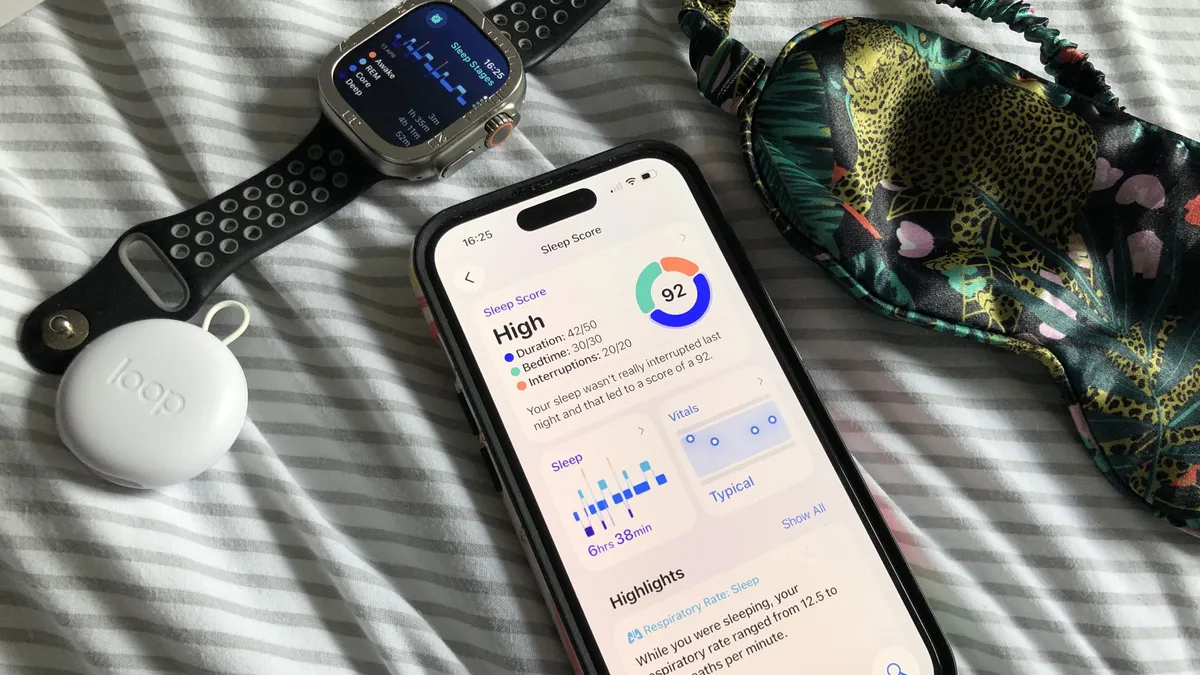
However, if sticking to a consistent sleep routine isn't giving you the sleep duration you want, you can identify how long it takes you to fall asleep by using the Health App, which can distinguish between the time you spent in bed vs the time you actually spent asleep.
With all Apple Watches that operate on the watchOS 11 (such as the Apple Watch Ultra that I'm using), you can access the Vitals app only on your Apple watch.
The app, which acts as a snapshot of all your health metrics (it condenses all the vital health data from your iPhone's Health app into a daily health summary), validates the rule as I notice it shows improved Heart Rate and Respiratory data whenever I edge closer to meeting the 7:1 rule.
1. Sleep Focus and Schedules
One of the most important things you should do before tracking your sleep (besides enabling sleep tracking and, y'know, remembering to put your Apple Watch on) is to make sure your watch and phone is in Sleep Focus mode.
This mode prepares your watch for tracking, can silence distracting notifications from your chosen apps (from social media to work emails), and dims and simplifies your watch face and phone lock screen. (My phone's lock screen wallpaper is covered in snoozing emoji faces when Sleep Focus mode).

You can manually activate the Sleep Focus mode via the Control Center of your watch or iPhone, but my Focus mode turns on automatically thanks to the Sleep Schedules function.
This function allows you to set your preferred bedtime and wake-up time, which then creates bedtime reminders and morning alarms.
Both the Sleep Focus mode and Sleep Schedules are helping me to stick to 7:1 sleep by encouraging me to go to bed and wake up within a 1-hour window. This sleep regularity is resetting my circadian rhythm, preparing my body clock for sleep at the right time.
2. Wind Down feature

While the Apple Watch's sleep schedule creates a sleep plan for you, the Wind Down feature helps you stick to the plan by limiting distractions (in a similar way to the Sleep Focus mode) and preparing you for sleep by launching relaxing activities like mediation for calming music.
The great thing about this feature is that you can turn it on just minutes or even hours before your bedtime, and it also activates the Sleep Focus mode outside your sleep schedule.
Mine is set 30 minutes before bed, but a one or two hour wind down is great if you want to stick to the 10-3-2-1-0 rule for longer sleep and consistent routines.
3. Vitals app
Launched in 2024 as part of the watchOS 11 update, the Vitals App provides a condensed view of your health metrics (a.k.a. vitals), such as respiratory rate and blood oxygen levels, as well as your sleep duration.
These metrics give me key insights into my sleep and potential sleep disorders. For example, my blood-oxygen levels are consistently high, meaning I can rule out sleep conditions such as sleep apnea as a cause if my sleep data shows frequent awakenings.


The Vitals App can show you when your metrics are "within typical range" or when your health metrics are higher or lower than usual. The Vitals App can also suggest reasons behind the change. For example, if your heart rate becomes more elevated, the app suggests it could be caused by consuming too much caffeine.
On the flip side, when you follow the 7:1 sleep rule and improve your sleep, your health metrics may improve, such as a lowered heart or respiratory rate.
Why I’m not chasing perfect sleep
It would be remiss of me not to mention one important thing to remember when tracking your sleep with an Apple Watch: Don't use it to chase the perfect sleep because the perfect sleep doesn't not exist.
Becoming fixated with your sleep data will likely exacerbate any sleep issues you're experiencing — this phenomenon even has a name: orthosomnia.
The study behind the 7:1 sleep rule emphasised focusing on the rule for five days a week to help you reap the longevity-boosting benefits, so don't beat yourself up if you sleep in on a Saturday morning or experience a bout of the Sunday scaries. It's all about trying to improve your sleep when you're able (and willing) to.
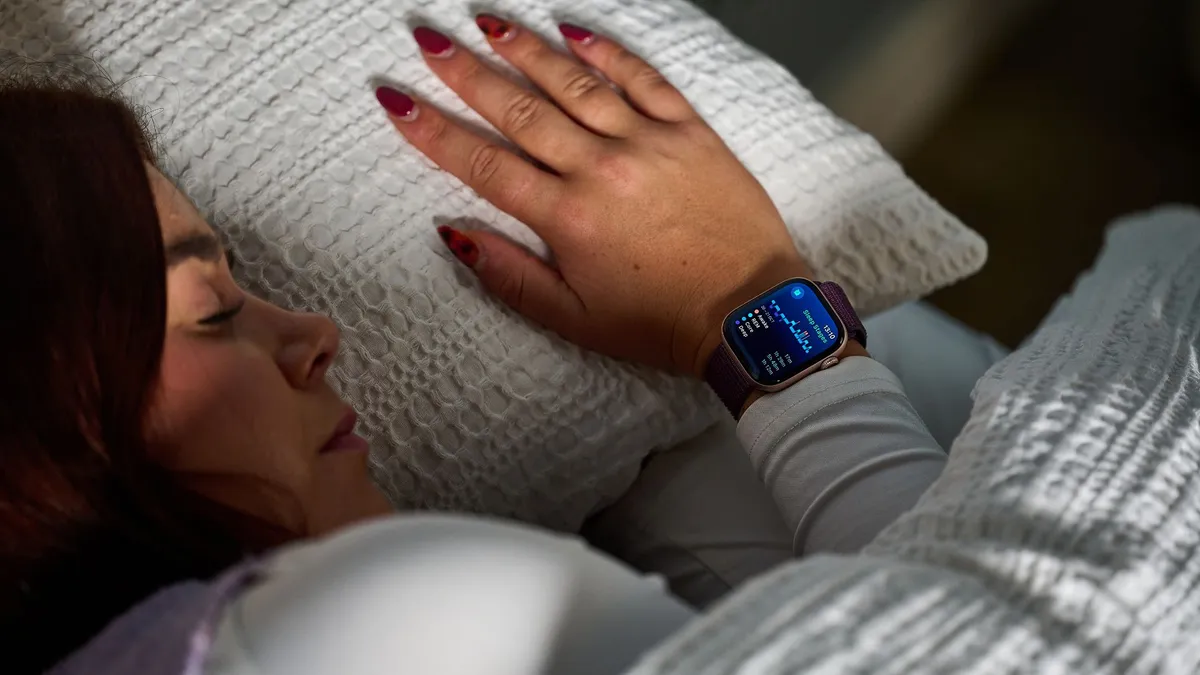
Besides, tracking my sleep has actually made me feel less worried about my sleep.
Despite an average sleep duration of less than seven hours a night, I'm consistently achieving high sleep scores (sometimes in the 90s), experiencing a normal amount of short nighttime wake-ups, and seeing health metrics that indicate I'm not experiencing any sleep disorders.
Science has even shown that some people are just "short sleepers", thriving on six hours a night without any health drawbacks.
All in all, I'm happy with my sleep, but I'm more than happy to improve it, too.