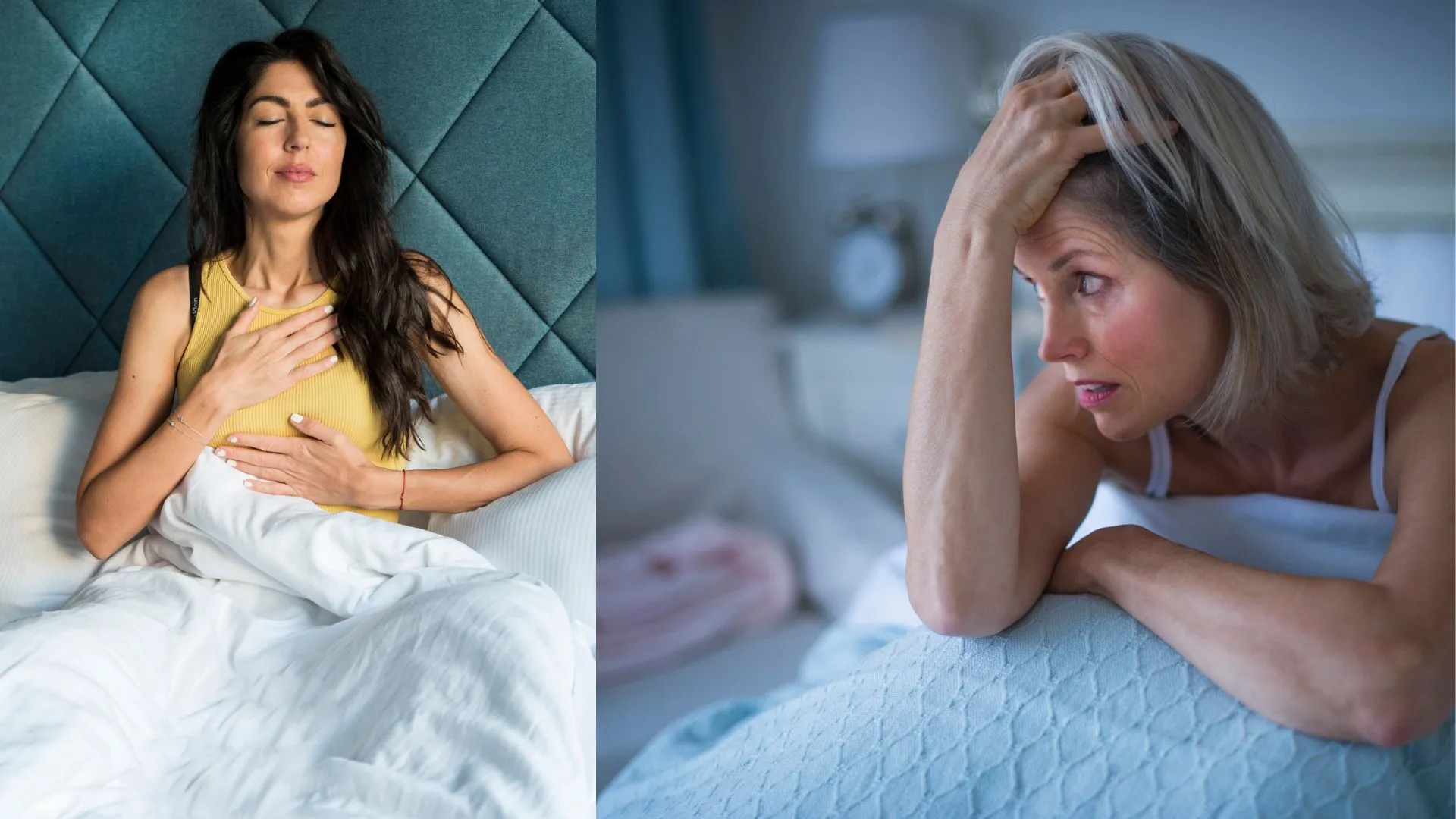
I’ve long struggled with anxiety at night and recently it feels like it has been getting worse.
Whether it’s returning to my regular work schedule after the Christmas break or the fact I’m now responsible for two tiny little lives (I got kittens for the New Year), but I’ve found myself waking up in the middle of the night with a racing heart and mind.
And I’ve noticed that one piece of advice every expert gives me doesn’t work: breathing methods. Specifically, the 4 7 8 breathing method.
So, if you’re anything like me and experience anxiety at night, I’m sharing the one psychological hack that really works — plus 3 other top tips for falling asleep fast.
Why the 4 7 8 breathing method doesn’t work for me
So I’ve woken up in the night. A common occurrence since becoming a kitten owner (is the heating too high for them? Are they too cold? Did I put enough food down? Do they have enough toys? The list goes on…)
But I don’t panic, because this is where my job comes in handy. As the Sleep Features Editor for Tom’s Guide, I’m always interviewing experts and doctors to find out about our sleeping brain and ways to get even better rest.

So my first instinct is to try and stimulate my parasympathetic nervous system — the one responsible for rest and digest, compared to the sympathetic (the fight or flight response).
Certain types of breathing methods can do this by slowing your heart rate, reducing anxiety.
So first, I go for the 4 7 8 breathing method. Breathe in for 4 counts, hold for 7, breathe out for 8. Easy enough, right? Wrong. A few seconds into the breath hold and I feel like my lungs are going to collapse and my heart is going to explode.
So I try box breathing. Breathe in for 4, hold for 4 and breathe out for 4. No luck. My anxiety was actually getting worse, and I was verging on a panic attack. Time for my trusty hack…
The psychological hack I use instead to fall asleep fast
When I found out about cognitive shuffling, I was a little sceptical. How could simply thinking of random objects be effective? But then I tried it and fell asleep in minutes. Now it’s my go-to anytime I need to fall asleep quickly.
It basically aims to mimic the natural way your brain behaves when you fall asleep. You’ve probably experienced the nonsensical thoughts that come right before you drop off. When this happens, the part of your brain that tries to rationalize your ideas essentially ‘switches off’, telling your body that it’s safe to fall asleep.
Cognitive shuffling fast-tracks this process. By thinking of random objects and picturing them in your mind confuses your brain. It’ll be unable to determine a link between the images and therefore figure out a train of thought, and then ‘switch off’.
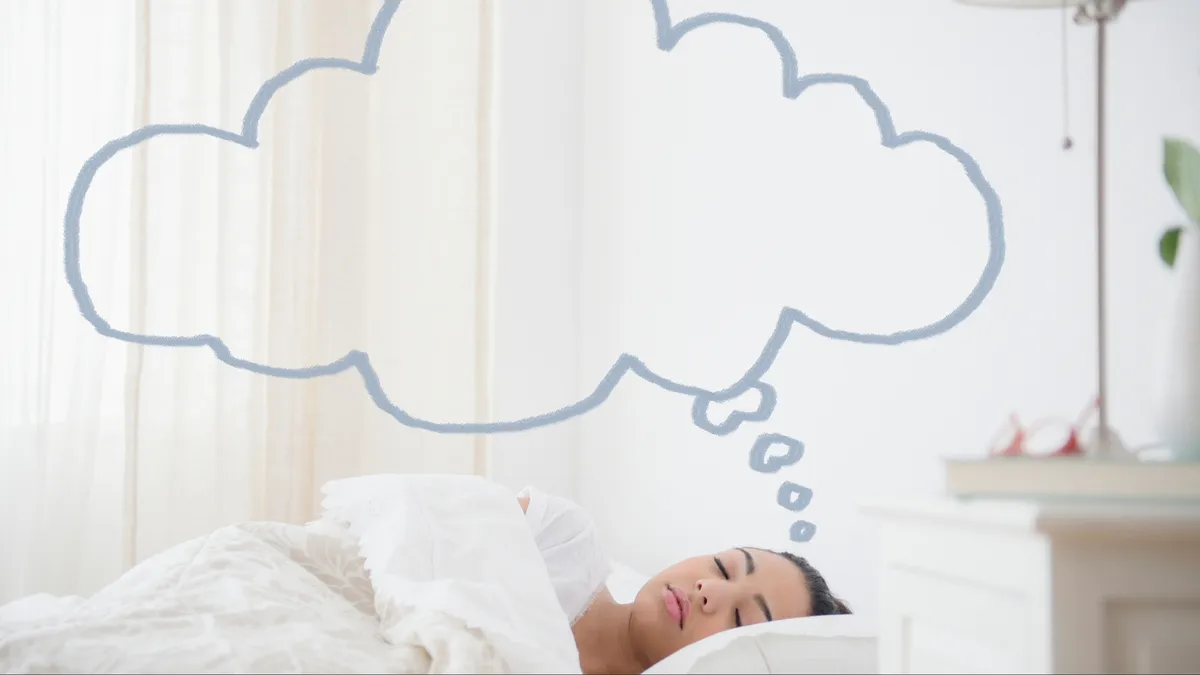
To try it out for the first time, work through the letters in a specific word to give the thoughts some structure. For example:
Sausage, sun, stick
Leopard, lunch, lavendar
Egg, elephant, ear
Elevator, engine, eagle
Puppy, pea, poppy
Why do we get anxious in the night?
If you’re anything like me, I can go all day and evening without feeling anxious. But as soon as I wake up in the night, it’s almost guaranteed.
“Our bodies also experience natural changes in hormones, like a decrease in cortisol,” Dr Hafeez previously explained to us, saying this “can make us more sensitive to anxiety at night.”

But as well as a decrease in cortisol, your anxiety might be caused by a cortisol spike at around 3am. Our cortisol levels gradually rise in the early hours of the morning to eventually wake us up at the right time.
So if you wake up prematurely with rising cortisol levels, you’re likely to feel more stressed and anxious.
She also explains that we usually have enough distractions during the day to avoid feelings of anxiety, but “the quietness of nighttime can amplify feelings of isolation or uncertainty, making it harder to shake off anxious thoughts.”
Other tips to fall asleep fast when you’re anxious
Try a body scan
If you can’t focus your mind enough for breathing methods, then a body scan can work wonders.
This is when you think about each part of your body, starting with your toes, right up to the top of your head. As you think about each part, you tense the muscles and hold them tensed for a moment before releasing them. It's also known as progressive muscle relaxation.
This helps to get you out of your own head and more into your body, connecting the mind and body. It’s a good distraction on its own, or you can pair it with slowed breathing to make it more meditative.

Military Sleep Method
As you can imagine, any sleep method designed for use in military situations is going to be good for reducing anxiety. The Military Sleep Method is a visualization technique, rather than a breathing exercise.
You can picture yourself in two scenarios: In a black velvet hammock in a pitch black room, or lying on a canoe on a crystal clear lake. Imagine everything you can about the environment. If your mind wanders, repeat ‘don’t think, don’t think, don’t think’ for 10 seconds.
This should help distract your mind from anxious thoughts and help you feel calm and safe.

Exhale breathwork
Anouska Shenn, a certified breathwork teacher, and founder of The Office Yoga Company, says that “For dealing with anxiety in the moment, I recommend techniques that are exhale-emphasised and have no breath-holds.”
“For example, pursed lip breathing, which involves breathing in through your nose, and breathing out slowly through pursed lips.”
“Pursing the lips can help us to take longer exhales, because the air is released more slowly,” she explains.