The idea of running a desktop experience from a phone is nothing new, with Samsung launching DeX back in 2017 and removing the need for a special adapter two years later. More recently, we saw Google jump onto that bandwagon, offering an official desktop mode for Pixel phones. In both cases, all you have to do is plug a monitor into your phone's USB-C port and let the phone do its thing.
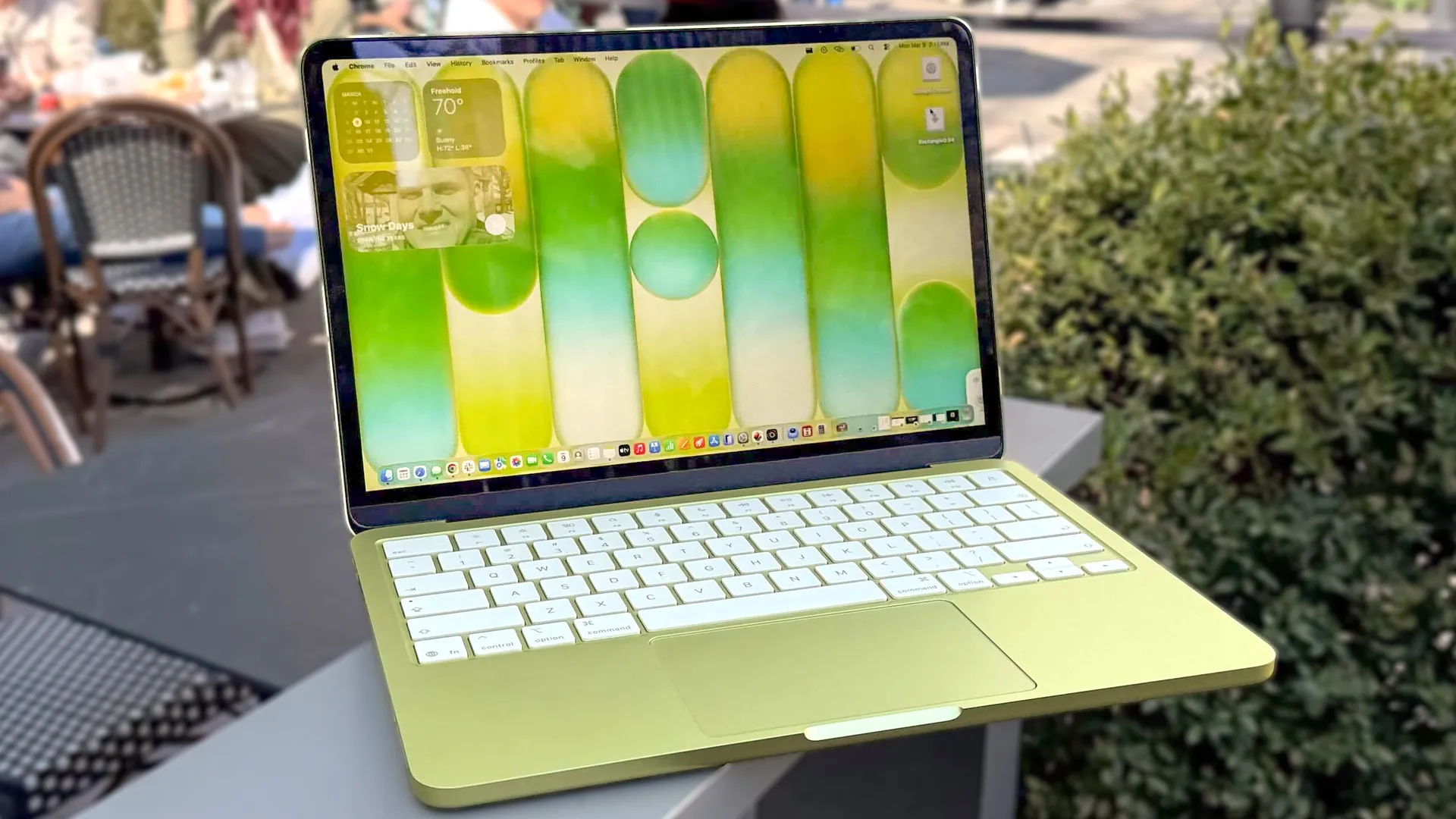
With the recent release of the MacBook Neo, I realized it was about time Apple followed the Android example. Because if Apple can deliver a fully-fledged laptop running on the same hardware as the iPhone 16 Pro, there's no reason why iPhones (and iPads) couldn't also offer some kind of DeX-like experience. Especially in time for the launch of this Fall's iPhone 18 Pro lineup.
MacBook Neo is an excellent machine

The MacBook Neo seems too good to be true at first glance. Not only is the $599 price tag extremely cheap by Apple standards, it's also a phenomenally good machine. Suspiciously good, considering a bunch of the compromises Apple had to make to it.
As we noted in our MacBook Neo review, the new laptop is perfectly capable of handling a typical daily workload. Running Chrome with multiple tabs open, editing photos, streaming music and handling all those things that you absolutely need your laptop to be able to handle.
The Neo's not so great for heavy processes, like video editing, but it's a solid laptop experience for a machine that uses the same performance hardware as 2024's iPhone 16 Pro.
All of that performance comes out of the A18 Pro chipset that debuted in 2024's iPhone 16 Pro along with 8GB of RAM. Single-core and multi-core benchmarking scores trump those of the Surface Laptop Go 3 and the MacBook Air M1, while also outperforming the iPhone 16 Pro by a few hundred points.
| Row 0 - Cell 0 | Geekbench (single/multi-core) |
MacBook Neo |
3535/8920 |
Surface Laptop Go 3 |
2179/6920 |
MacBook Air M5 |
4168/17067 |
MacBook Air M1 |
2347/8342 |
MacBook Air M2 |
2582/9824 |
iPhone 17 Pro |
3834 / 9988 |
iPhone 17 Pro |
3,400 / 8,341 |
Unsurprisingly, the MacBook Neo doesn't quite match the performance of the iPhone 17 Pro — which features the newer A19 Pro chipset.
If Apple can offer a solid desktop experience running on what is essentially iPhone hardware, why can't an iPhone simulate a desktop experience all on its own?
I say all this because Macs and iPhones are very different kinds of devices, built for different things. But maybe the line between these devices don't have to be quite so defined. If Apple can offer a solid desktop experience running on what is essentially iPhone hardware, what's to say that an iPhone couldn't simulate a desktop experience all on its own?
More so when you consider that the A18 Pro is 18 months old, and newer chips offer more power.
Really, by offering the MacBook Neo, Apple has made a very strong case to add some kind of desktop experience to its mobile devices.
How an iPhone desktop mode could coexist

As is the case with all Apple products, you do have to consider where this fits into the grand Apple ecosystem. After all, Apple already offers a series of desktops, laptops and tablets that could theoretically function in the same way. Plus, the line between an iPad and a laptop is getting increasingly blurred, especially given the rumors of the first touchscreen MacBook coming later this year.
The last thing Apple wants to do is introduce a feature that could cannibalize sales from its existing product lineup. But the thing to remember about phones offering a desktop mode is that it isn't really replicating the experience you'd get from a laptop, desktop or even a tablet. You're just offering a way to emulate it in very specific circumstances.
You can take a laptop out into the world and work wherever you like, because it offers a built-in keyboard, trackpad and display. The same is true for tablets, provided you supply the keyboard. But have you ever tried working on an iPhone? Unless you provide a monitor and keyboard, maybe a mouse too, that iPhone is not replacing your MacBook anytime soon. You could carry those things around, but at that point, you might as well just buy a laptop and be done with it.
Desktop mode is the tool that can fill in the gaps, operating in places where another alternative isn't as useful or convenient. For working in places where you know there will be the appropriate hardware, such as a new office, a hotel business center or the local library. But without subjecting yourself to using a shared, public computer.
You plug your own device in, work with your own files and accounts, all with direct access to the existing Apple product ecosystem. Plus, there's the comfort and security of knowing that nobody else has access to any of it.
Most importantly, it all comes from a device you already have and carry around. There's no need to make any additional purchases or set up new accounts, and no need to weigh yourself down with extra equipment. Simply plug in your phone and slip it into your bag or pocket when you're done.
Bottom line

Admittedly, phones that have their own desktop mode are pretty niche. For years, Samsung was the only player of note, and there were times when DeX felt like it had been completely forgotten and was only included out of a sense of obligation. But with Pixel phones now offering their own (equally impressive) desktop mode, we might actually see some major updates to what mobile desktop software can do.
Now is the time for Apple to get in on that action. Not just because they offer some of the best performing phones on the market, but also because they've cornered every other personal computing niche that they might as well plug up the few remaining gaps.
The only downside is that only a handful of iPhones and iPads would be able to support such a feature. Since Apple has limited the USB-C port on iPhone 17 and iPhone Air to USB 2.0 speeds and capabilities, there's no way either of them can plug into an external display this way.
Either Apple upgrades non-Pro iPhones going forward, or it limits desktop mode to the USB-3-equipped Pro and Pro Max models. I know which option I'd pick.

Follow Tom's Guide on Google News and add us as a preferred source to get our up-to-date news, analysis, and reviews in your feeds.
More from Tom's Guide