




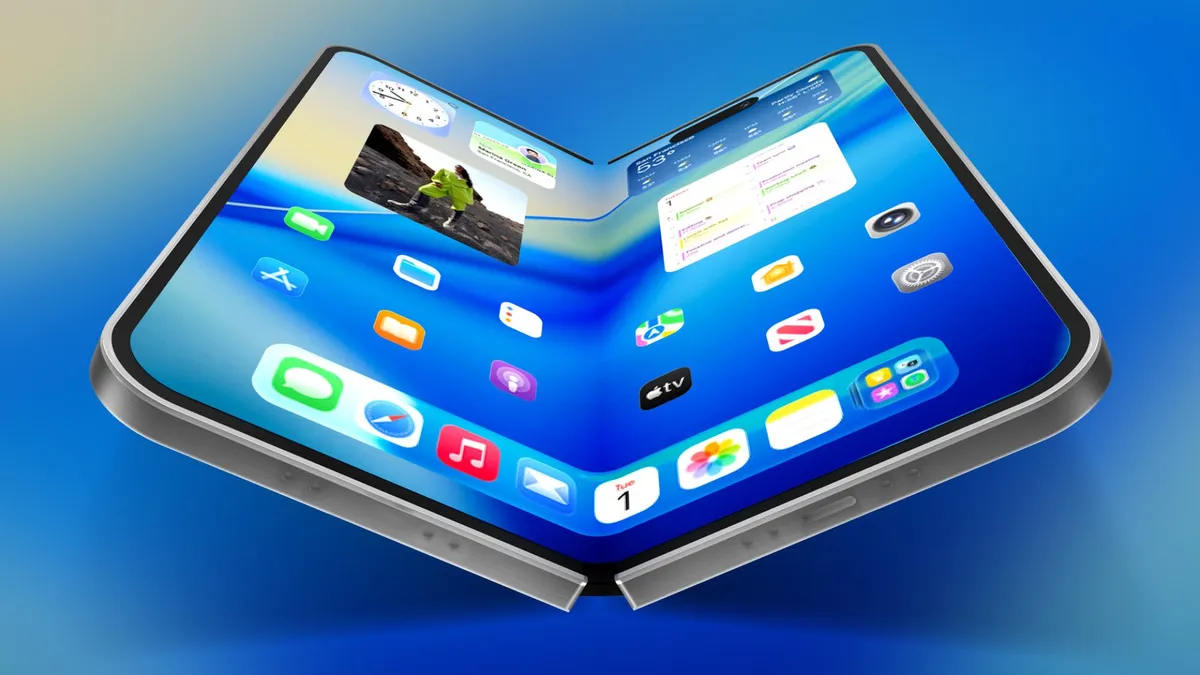
The long-rumored iPhone Fold is finally expected to launch this September, and there's a big potential change for the design that I actually prefer when it comes to smartphones.
One of the big aims when it comes to modern smartphones is the push to make them thinner than ever. Apple is reportedly making this a focus for the iPhone Fold, and one method that the company could use is to bring back Touch ID and get rid of Face ID, which has been the staple on iPhones since the iPhone X back in 2017.
Apple’s aim is reportedly to have the iPhone Fold measure between 4.5-4.8mm thick, and removing (or reducing the size of) the TruDepth camera array could go a long way to achieve that. However, where would Apple place the Touch ID? While it is possible that it could follow other Android devices and place it under the screen, it appears that Apple could be incorporating it directly into the power button, similar to what we have seen in the iPad Air and iPad Mini.
Now, there are some noticeable issues with Touch ID, but in the long run, I feel like I ultimately prefer this option for several reasons.
I find Touch ID to be more reliable than Face ID
There are some arguments that Face ID is, generally, more reliable than Touch ID. However, my experience with generations of phones has called this into question. For one thing, when I recently shaved my face for Movember, my Face ID decided it was not the look for me and consistently avoided working. Asking around, I also found that others had a similar issue when it came to new haircuts or wearing glasses, and lord help you if you're in the dark.
Touch ID doesn’t have these same issues, and in my mind, it tends to work in more situations than Face ID alone. This is primarily because it doesn't have to use a camera to work. Plus, as your fingerprint doesn't really change, it should always work as intended. On top of that, with the ID being on the power button, it actually removes a step when trying to use your phone.
Now, that isn’t to say Touch ID always works perfectly, as it can fail, and it’s heavily reliant on the button working properly. There’s also a bit of concern around security, as it is possible to accidentally unlock your phone in your pocket. Although I think this is less of an issue than many might think.
Focusing on thinness (with a reasonable compromise)
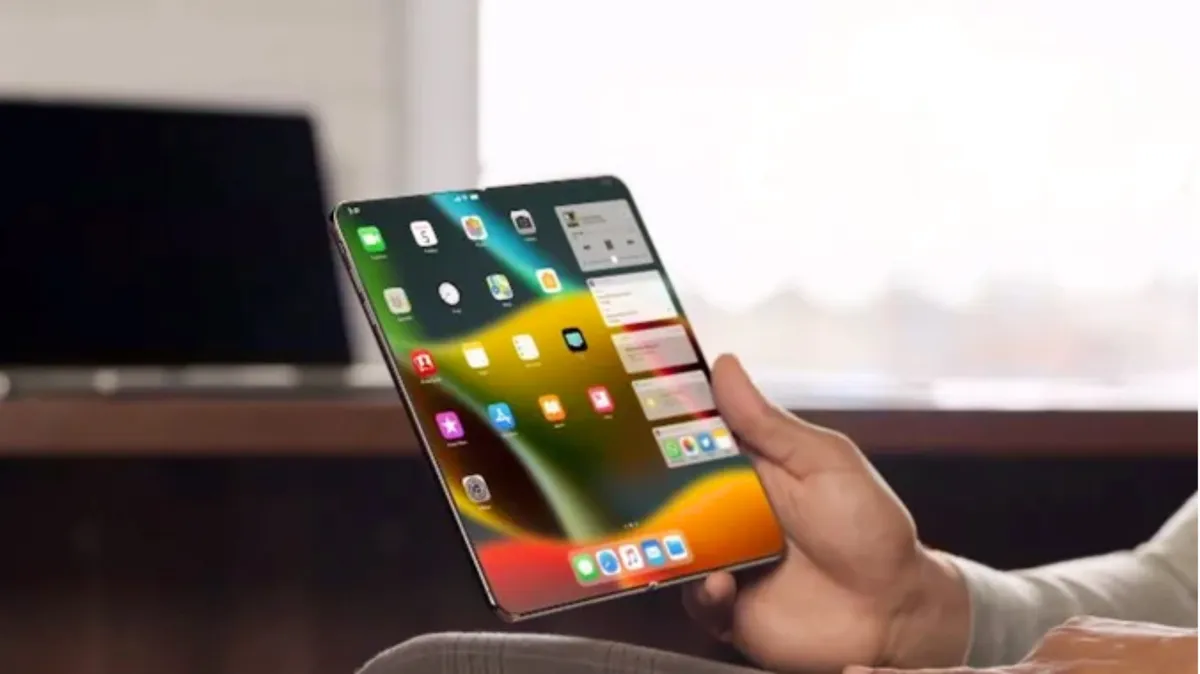
While there are some issues with Touch ID, there’s no getting past the fact that a thinner foldable phone is generally better. I have been relatively critical when it comes to phone makers' focus on making phones thinner. As we saw with the iPhone Air and the Galaxy S25 Edge, thinner phones didn't really take the market by storm due to factors like missing features/hardware and the price.
However, when it comes to foldable phones, it feels like the opposite is true, at least from what I’ve gathered using the older Galaxy Z Fold 5. Here’s the thing: foldable phones, especially book-like foldables, are basically like having two phones that combine into one. The larger screen is obviously useful, but having double the width means you're also dealing with double the thickness, which can be a big problem.
The solution to this problem is to make the foldable phone thinner as we've seen with the Galaxy Z Fold 7. Unlike with other phones, this is actually easier to do with foldable phones as you can use the width to avoid having to make room by removing a lot of the hardware. For instance, the iPhone Air had to make a lot of space for the battery, which led to the phone only having a single camera.
Even with the extra space available in a foldable phone, however, there are still limitations. In the case of the iPhone Fold, placing a Face ID system in both the main display and the front screen would likely massively impact the thickness of the phone with the hardware we currently have.
There are still questions around the iPhone Fold

The reality is that having the Touch ID makes the most sense right now, and will likely offer the best overall experience on the new iPhone Fold. Going with Touch ID also frees up more space on the screen as you don't need a cutout, which, when coupled with the rumored creaseless display, could offer an unparalleled display.
However, it does raise a question about what this could mean for the Dynamic Island. For reference, Apple’s replacement for the notch does more than just offer helpful information like timers and what song you’re playing, it also hides the selfie camera and Face ID. If there is no Face ID, then Apple can get away with having the Dynamic Island be noticeably smaller, which is rumored to be the case for the iPhone 18 series.
For now, all we can really do is wait for the official iPhone Fold release, which is rumored to be happening around September, with the iPhone Fold launching alongside the iPhone 18 Pro and iPhone 18 Pro Max. Until then, let me know which one you prefer: Touch ID or Face ID?

Follow Tom's Guide on Google News and add us as a preferred source to get our up-to-date news, analysis, and reviews in your feeds.
More from Tom's Guide

