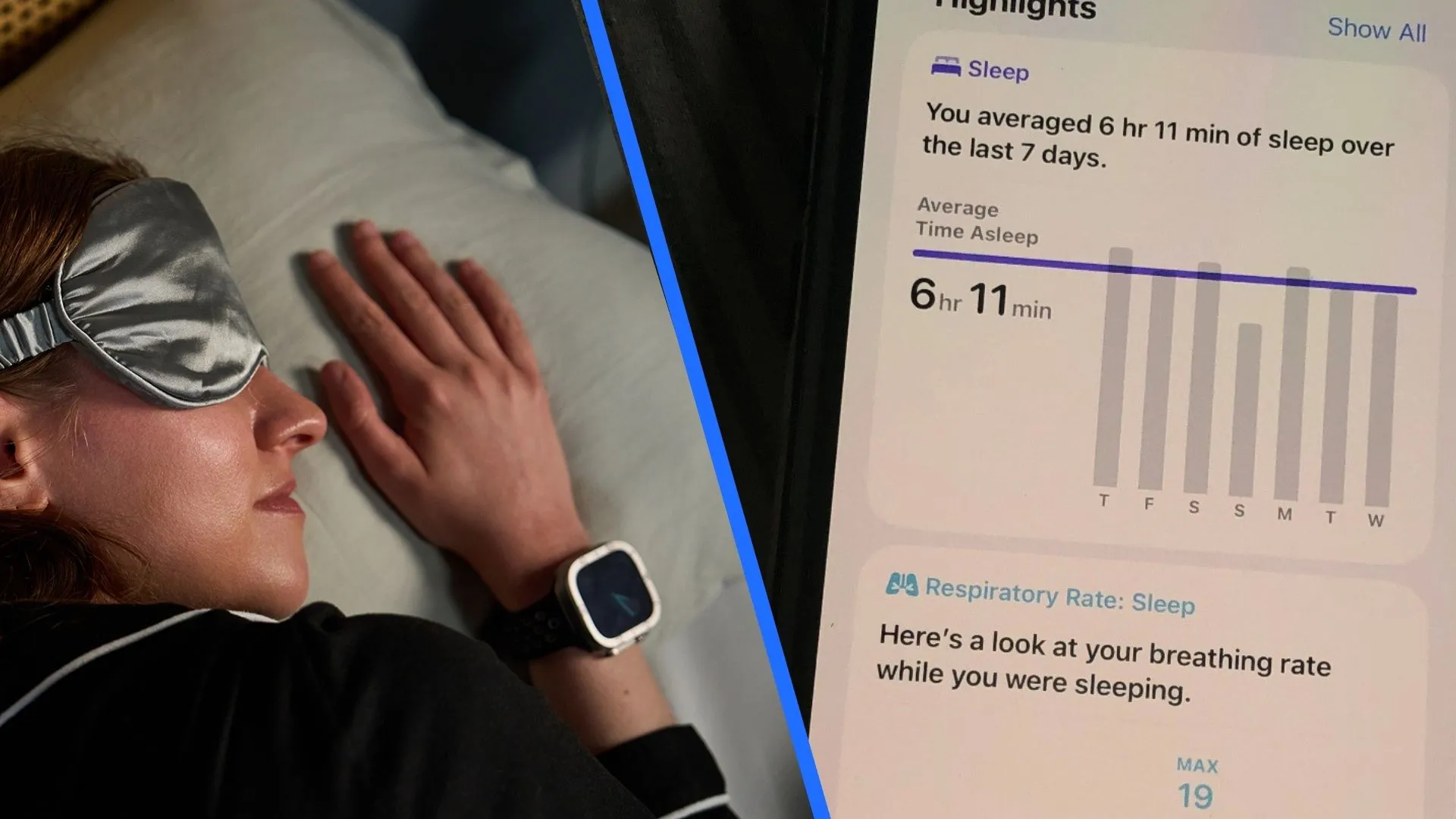
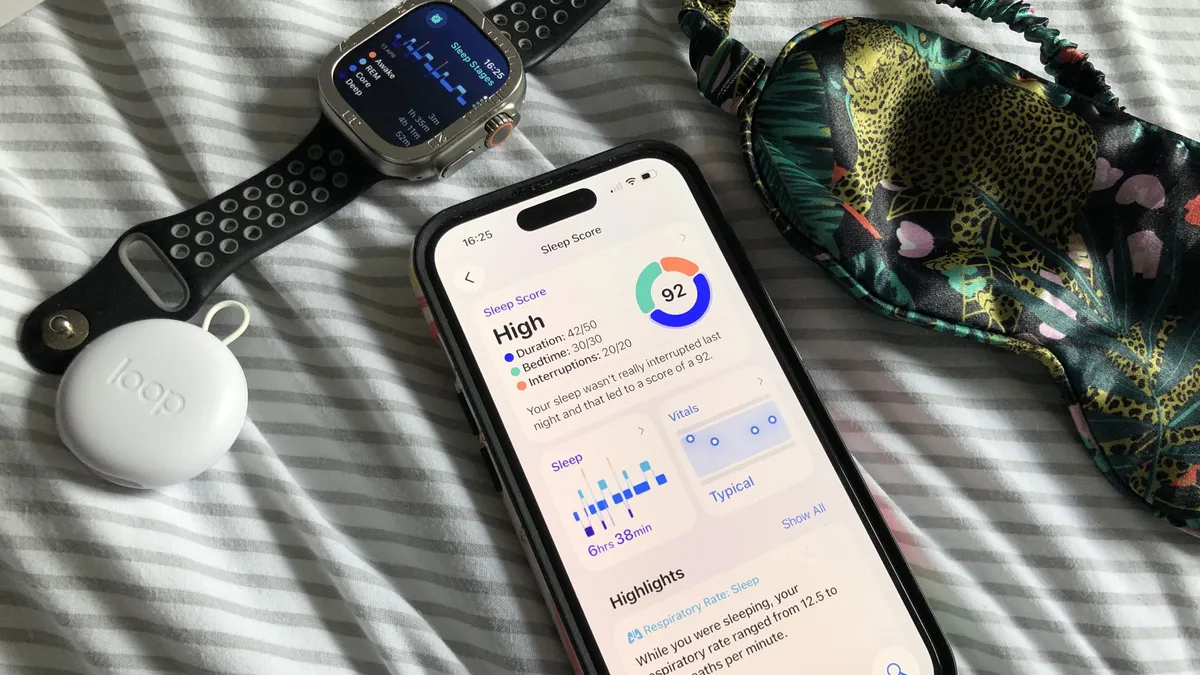
I recently started tracking my sleep with an Apple Watch, and it's told me something I already knew: I sleep for around six hours a night. While expert guidelines recommend that adults should sleep seven or more hours a night for optimal health, my sleep tracker consistently awards me high sleep scores.
So, does this mean six hours of sleep is enough?
To find out, I recently showed my Apple Watch's sleep tracking data to board-certified sleep medicine physician and medical director at Dreem Health, Dr. Joshua Roland. My aim was to find out if I could be part of a small percentage of people whom research finds are genetically predisposed to sleeping less than seven hours a night.
Here's what Dr. Roland had to say about my sleep, the rare short sleeper trait, and whether sleeping for six hours is ever enough. He also breaks down the ramifications of sleeping six hours a night, plus the benefits of sleeping for seven hours or more.
Key takeaways: At a glance
- My high sleep scores from my sleep tracking device don’t mean my average sleep duration of six hours is enough — most research still supports seven hours as the minimum for long-term health.
- Only a very small number of people are true 'short sleepers' genetically; for most, consistently getting less than seven hours is linked to higher health risks and reduced life expectancy.
- Chronic sleep deprivation impacts the whole body, including cardiovascular, immune, and hormonal systems — even if you feel mentally fine in the short term.
- Sleep quality matters (stages, consistency, few awakenings), but it doesn’t replace sufficient duration; the best outcomes come from both good quality sleep and at least seven hours of sleep a night.
My average sleep time and sleep scores
When I began tracking my sleep, I knew I'd be getting sleep duration averages of around six hours — maybe even five or four on nights when I'm pulling an all-nighter or experiencing a bout of insomnia.
My average sleep duration varies. Some weeks my average sleep time is around 6 hours and 11 minutes. Other weeks, particularly during my menstrual phase, I get an average of 5 hours and 52 minutes. Basically, I'm getting nowhere near the amount of sleep that sleep experts recommend.
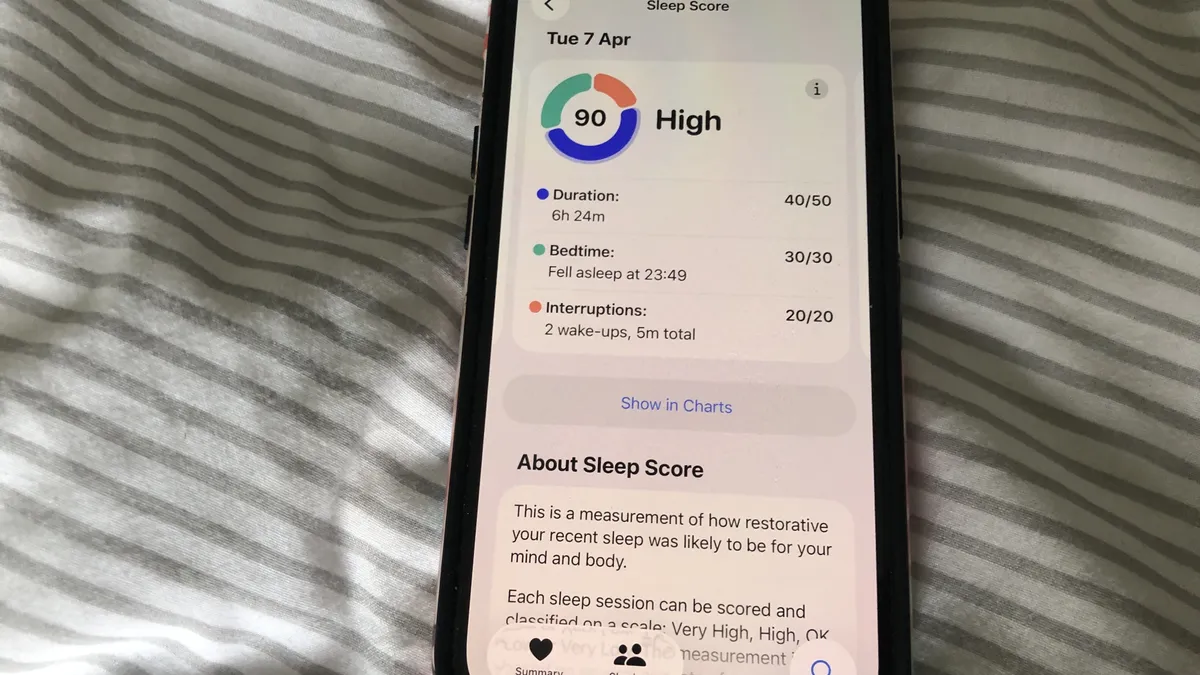
However, my Apple Watch sleep scores are consistently high. For example, on Tuesday, April 7, I was awarded a high score of 90 on just 6 hours and 24 minutes of sleep. On Wednesday, April 15, I got an 86 on 6 hours and 2 minutes of sleep. So, what gives?
Is 6 hours of sleep enough?
While there has been research that found six hours or more of sleep is actually markedly better at reducing the risk of serious health issues, compared to less than six hours sleep, Dr. Roland says that there's an overwhelming amount of studies that warn seven hours is actually the minimum.
"There's definitely variation, genetics and age and health conditions that affects the sleep need but, as a ballpark, we recommend at least seven to eight hours minimum for most people," he tells me.
"Genetically, maybe some people can get away with six, but probably very few can chronically get away with it without it impacting health and cognitive function," he adds.
So, how does sleeping for less than seven hours affect our health? Dr. Roland points to recent research that highlights sleep deprivation's impact on life expectancy, such as a 2025 study that reported sleeping less than seven hours decreases your life expectancy more than poor diet or lack of exercise.
"Studies on duration show that mortality goes up if it's less than seven," he says.
The sleep expert also points out that even those who don't feel the effects of less than seven hours of sleep "cognitively" may be overlooking the effects a lack of sleep can have on the body.
"If you go a long time where you're not sleeping enough, you might feel like you're getting used to it, but sleep is such an ingrained part of our biology that every organ system needs sleep to recover and repair," he warns.
"Even if you feel OK mentally, your cardiovascular system, your immune system, your endocrine system, pretty much every system in the body needs sleep to restore itself and recover from day-to-day damage," adds the board-certified doctor.
Dr. Roland warns that, while a night or two of sleeping less than seven hours is unlikely to do any substantial harm, years of sleep deprivation can accumulate serious sleep debt.
"Over the course of years, it takes a major toll on life expectancy and long-term health if you're not getting the sleep you need," he warns.
But what about those who experience short sleeper syndrome? Do they need at least seven hours of sleep for their bodies to recover, even if they have an innate tendency to sleep for less?
"In a lot of ways, the short sleeper syndrome is kind of a sleep myth as short sleep is usually behaviorally driven," he argues.

According to Dr. Roland, modern life, from social obligations to media consumption, have driven us to stay up late and follow an "unnatural" schedule which shortens our sleep.
"The way we live now is very different than our ancestors lived for millions of years, and our bodies aren't built to live this way quite yet. " he warns.
The sleep medicine physician also explains that there are certain groups of people who need more sleep than others.
"Anyone growing or recovering needs more sleep, so infants, kids, teenagers, even some in their twenties need higher than that, along with anyone recovering from illness or requiring more energy for athletic performance," explains Dr. Roland.
The benefits of sleeping for 7+ hours a night
Okay, so we've established how sleeping for less than seven hours a night can affect our overall and long-term health, but what are the benefits for sleeping seven hours or more?
Dr. Roland says that one major benefit of sleeping for at least seven hours is increased metabolism.
"The way we regulate glucose and really most hormones in the body are regulated on based on sleep, he says.
In fact, a study found that sleeping for around 7 hours and 18 minutes every night may be the ideal amount of time for reducing the risk of insulin resistance, which can lead to type 2 diabetes.
Another benefit is a boosted immune system, as Dr. Roland explains.
"A boosted immune system is important to fight off disease and can look at our cells and identify cancer cells," he tells me.
However, probably the most talked-about benefits is increased life expectancy.
Earlier this year, a groundbreaking study by Vitality and The London School of Economics and Political Science (LSE) discovered that getting at least 7 hours of sleep and going to sleep within a 1-hour window can help you live up to four years longer. This has led to a gold-standard sleep guideline: the '7:1' sleep rule.
3 sleep scores just as important as duration
While it's clear that I need to boost my average sleep duration for better long-term health, what isn't as clear is why I'm consistently achieving high sleep scores.
As it tuns out, sleep duration isn't the only sleep metric that's worth paying attention to. Here, Dr. Roland explains why sleep quality, a consistent sleep schedule, and the number of nighttime awakenings are just as important as sleep duration.
1. The quality of my sleep
After looking at my sleep tracking data, Dr. Roland says one major factor for my high sleep scores is the quality of my sleep.
"It's not just how much sleep you get, it's also the quality of your sleep," he tells me.
"You can be getting a good 8 hours of sleep, but if it's poor quality sleep, it's not the same as getting a good healthy 8 hours of sleep," Dr. Roland adds.
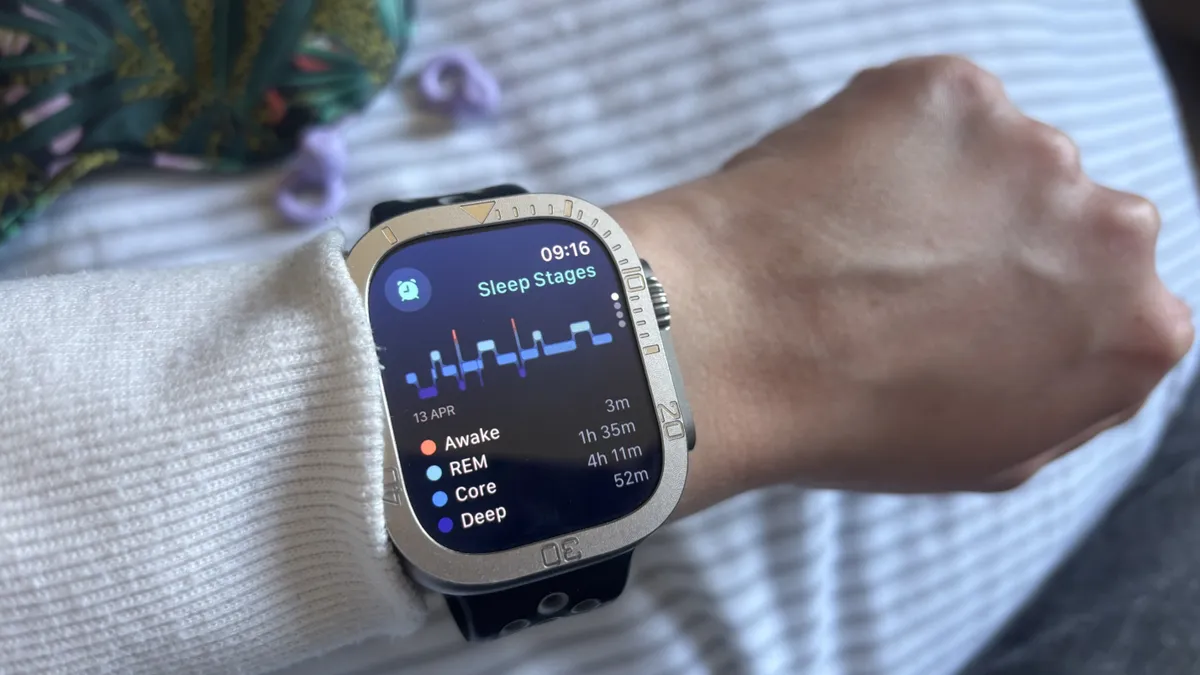
One of the key metrics I always pay attention to is my sleep stages (in other words, the type of sleep I'm getting throughout the night): core (light sleep), deep sleep, and REM sleep. According to Dr. Roland, these sleep stages all serve specific functions that are crucial for optimal health.
"REM sleep is really important for cognitive functioning, and deep sleep is important for the immune system," he explains. "In nights that you didn't have as high a score as others, you had a little bit less REM sleep and deep sleep and that's because those are important for health."
2. Number of nighttime awakenings
Waking up during the night is a normal part of sleep (most of the time, we have no memory of it the next day), and my sleep tracking data shows that my nighttime awakenings are minimal and last no more than a minute.
However, waking up at night can become an issue if nighttime awakenings become frequent.
"If sleep is fragmented, you're not getting the uninterrupted sleep that allows you to get the amount of REM sleep and deep sleep the way that you should," warns Dr. Roland.
3. Consistent bedtime
My sleep score is always boosted when I go to bed within a 1-hour window, and that's because a consistent sleep schedule is in line with my circadian rhythm.
"Your body is on a 24 hour cycle, and even if you're taking a long sleep period during the day, it's not quite the same as a consistent sleep period where your entire body is resting and synchronised," explains Dr. Roland.
Bottom line
After looking at my sleep data, Dr. Roland has left me some words of advice — and it turns out I'm not wired to be sleeping as little as I am after all.
"My guess is you probably need a little bit more than you're getting, so try to get to bed 15 minutes earlier for a couple of weeks, and add another 15 minutes if that's going well," he advises.
"See if you can shoot for a half hour to an hour earlier," he adds.
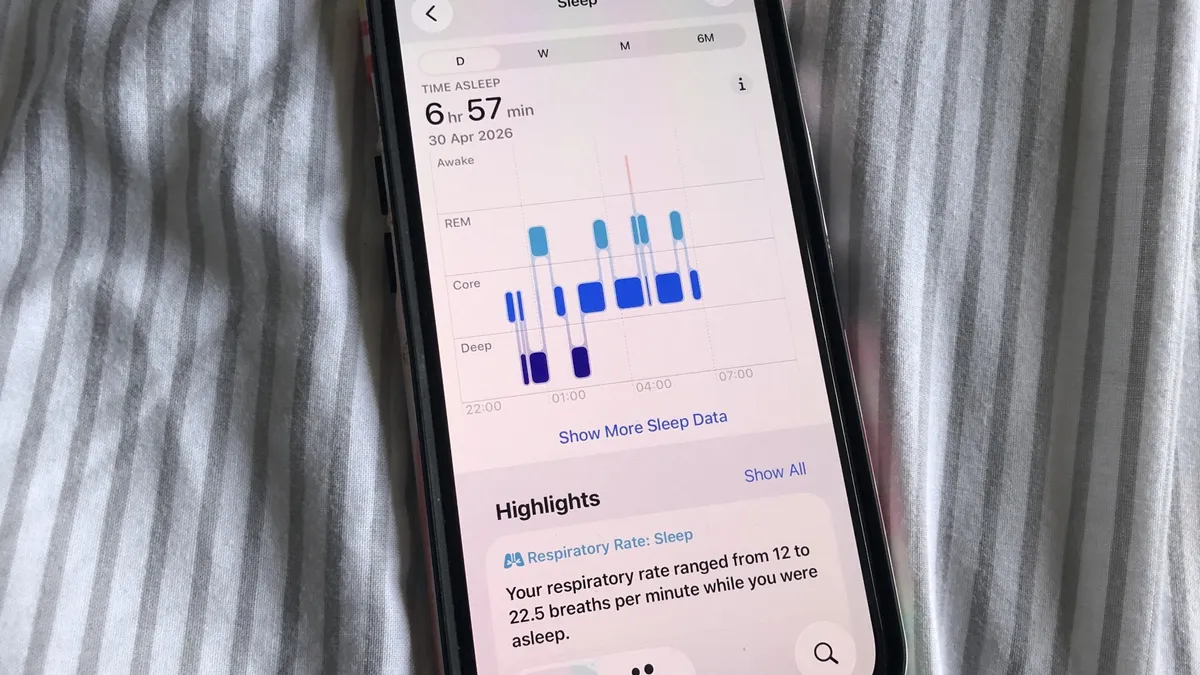
However, he also advises that I don't push myself by trying to extend my sleep duration too much.
"You don't wanna create a goal that's really high and then get stressed out over trying to get eight hours when you're averaging six," he warns.
As for whether six hours is enough, Dr. Roland says that for the majority of people, it's a hard "no".
"The literature really points to at least seven hours for long-term health and longevity the board-certified doctor explains. "For most people, six hours is not enough for overall health, lifespan and the body to repair itself.”
Tech that helping me get enough sleep