I didn’t think it was going to be easy for any other foldable to beat the Razr Ultra 2025’s record-setting battery life performance, but it goes to show how silicon-carbon batteries are rewriting the way phones last on a single charge. After putting the latest Motorola Razr Ultra 2026 through the Tom’s Guide battery drain test, it proved to me that this new battery tech is a winning formula.
Just last week, I raved about the Razr Fold’s class-leading battery life performance among notebook-style foldables. But while it set a record, I pointed out how much better it would’ve been if it were using a carbon-silicon battery instead — something that the Razr Ultra 2026 clearly benefits from having.
Quite simply, the Ultra 2026 is the foldable phone with the longest battery life we’ve ever tested.
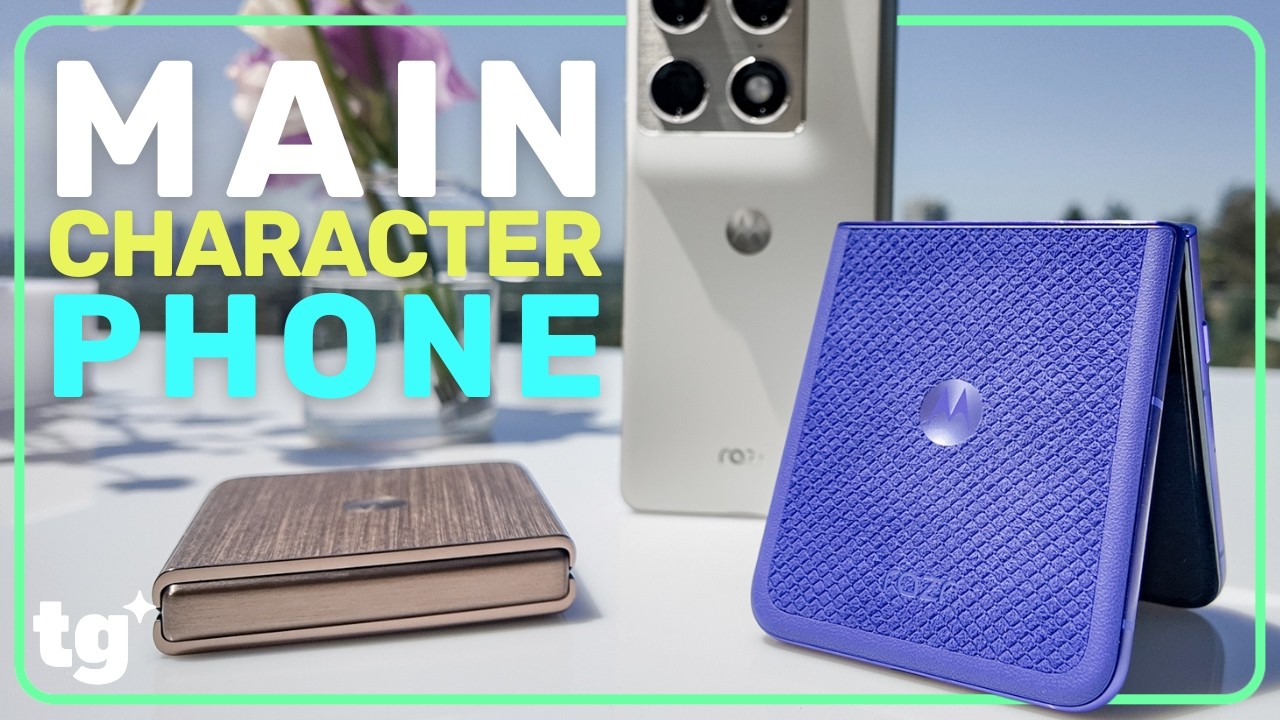
How we test battery life performance

Every phone I review on Tom’s Guide is put through the same battery drain test. We set the display to 150 nits using a light meter to ensure consistency, then run a custom script to simulate continuous web surfing over a 5G connection until the battery dies.
If you look at our best phone battery life guide, you’ll see that some phones are marked with an asterisk — signaling that they were tested using the latest version of our battery benchmark. The Razr Ultra 2025 was evaluated using the previous version of this test, where it achieved an average battery life of 15 hours and 42 minutes in its default “Smart and Balanced” mode.
The results: It’s a record
| Row 0 - Cell 0 | Battery size (mAh) |
Battery life (hrs:mins) |
Charging % in 15 minutes |
Charging % in 30 minutes |
Razr 2026 |
4,800 mAh |
14:43 |
42% |
71% |
Razr Plus 2026 |
4,500 mAh |
14:13 |
36% |
72% |
Razr Ultra 2026 |
5,000 mAh |
16:20 |
42% |
74% |
Razr Fold |
6,000 mAh |
14:44 |
42% |
75% |
Galaxy Z Flip 7 |
4,300 mAh |
12:24 |
29% |
55% |
Since innovation for lithium-ion battery tech has peaked, the only way for phones to last longer has been to pack larger batteries — which is why we’ve seen only incremental increases in battery capacities over the last handful of years. However, the inherent problem is that as capacities grow, so do phone size and weight.
Silicon-carbon batteries change the game by cramming more charge into the same amount of space — without adding substantial thickness or weight. The entire Razr 2026 lineup clearly exhibits this, as every model gets a capacity bump without being any heavier or thicker than its predecessor.

Motorola fashioned a 4,700 mAh battery into the Razr Ultra 2025, but has increased it to a 5,000 mAh capacity for the Razr Ultra 2026. This amounts to a 6.38% difference, which doesn’t look like a whole lot on paper. But when combined with a more power-efficient Snapdragon 8 Elite chip, it propels the Razr Ultra 2026 to a record-setting mark.
Specifically, it clocked an average time of 16 hours and 20 minutes. That turns out to be an increase of 38 minutes, or a 4% jump in longevity compared to the results of the Razr Ultra 2025. While that might not seem massive, if the Razr Ultra 2025 were put through our newer version of the test, I suspect its time would be significantly lower.
Nevertheless, our battery drain tests reveal that the Razr Ultra 2026 has the longest battery life of any foldable phone we’ve ever tested — even beating out the notebook-style Razr Fold in the process. Compared to its most direct rival, the Galaxy Z Flip 7, it exposes a massive gap in battery tech. Frankly, it doesn’t bode well for the rumored Galaxy Z Flip 8, which isn’t likely to adopt a silicon-carbon battery anytime soon.
Bottom Line

In my day-to-day use, I’m finding the Razr Ultra 2026 easily sitting above 40% each night right before bedtime. Even though it doesn’t achieve the same true two-day battery life I got with the OnePlus 15, it’s still deeply impressive for a foldable phone that’s slimmer and far more compact.
However, I can’t help but wonder how much longer it could last if Moto had opted to use the latest Snapdragon 8 Elite Gen 5 chipset — as opposed to recycling the same one that powered last year’s model. If it had, I suspect it could have easily gotten closer to the 20-hour mark. Either way, it shows how battery tech and chipsets go hand-in-hand when it comes to endurance.

Follow Tom's Guide on Google News and add us as a preferred source to get our up-to-date news, analysis, and reviews in your feeds. Subscribe to Tom's Guide on YouTube and follow us on TikTok. Finally, you can visit our dedicated Tom's Guide Savings Squad hub for expert help on getting the best products for less.
More from Tom's Guide