







The best smartwatch is almost always the one that works with your phone. Over the past few years, brands have moved away from universal compatibility and toward platform-specific watches which will only work if you use a particular phone.
One of the remaining holdouts is Amazfit, who launched the excellent Active 3 Premium that works on iPhone and Android. It's half the price of Apple or Google's watches, but you wouldn't know it from it's impressive fitness tracking features.
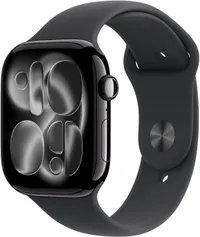
It's incredible value, but if you're looking for the closest integration you can get with your phone or smart features like emergency or health alerts, then I'd recommend the Apple Watch Series 10 (iPhone) or Google Pixel Watch 4 (Android) right now.
The best smartwatches you can buy right now
Why you can trust Tom's Guide Our writers and editors spend hours analyzing and reviewing products, services, and apps to help find what's best for you. Find out more about how we test, analyze, and rate.
Best smartwatch overall
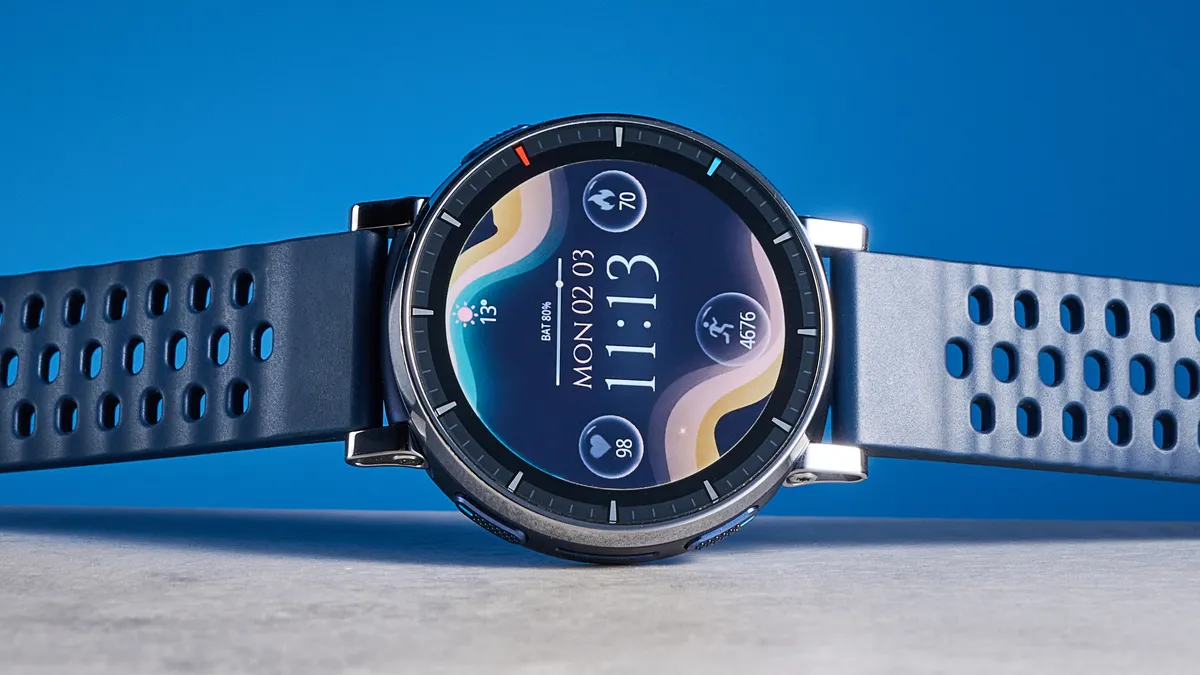

The Amazfit Active 3 Premium is the smartwatch I recommend for most people, and not just because it works with whichever phone you have. It's a fantastic fitness-tracking watch that easily holds it's own against the Apple Watch Series 10 and Google Pixel Watch 4, without locking you to a specific platform or phone.
It is also incredible value — coming in at around half the price of the two flagship watches — and all the features are free with no subscription (unless you need Zepp Aura, the sleep-focused AI wellness app that generates audio to relax you). It has offline maps, tracks more than 170 activities and comes with built-in GPS.
It has a smaller footprint (wristprint?) than many other smartwatches, with a 1.3-inch display, compared to the 1.6-inch Apple Watch Series 10. It's not a huge amount on paper, but it makes a big difference, as it felt smaller and less noticeable on our wrist. It's a shame it doesn't come in a few more vibrant colors, though.
While you don't get the smarts of Apple and Google's watches (emergency alerts, on-watch calls, third-party apps), fitness and activity tracking is where the Active 3 Premium really shines, with metrics to rival the best Garmin watches, like heart rate, blood oxygen, stress levels, cycle tracking, sleep quality and skin temperature.
The data all syncs to your phone and you can view it and get insights in the Zepp app, available for Android and iPhone. If you ever used a Fitbit before the Google takeover, the Zepp app is the closest thing to that now-gone experience; easy to understand, straightforward to use, and guides you through all the different metrics.
This is particularly helpful if you're just getting into running, as the running features on the Active 3 Premium are almost as detailed as those you'd find on Garmin watches, yet everything is explained clearly, even for more complex topics like your lactate threshold and ground contact time, which assess how your foot strikes the floor.
Amazfit says that the Active 3 Premium should last 12 days between charges. Like most other smartwatches, that doesn't work out in the real world; we found that it'd generally last just over a week or eight days. That's down a bit on the spec, but still miles ahead of the 18-hour battery life on the Apple Watch Series 10.
- Read our full Amazfit Active 3 Premium review
Best smartwatch for iPhone

After testing it out, we can confidently say that the Apple Watch Series 12 is the best Apple Watch on the market for most people.
It's made some real upgrades compared to the Apple Watch Series 11, with an improved heart rate sensor as well as a new Readiness score that helps you understand when to rest. This feature has been seen in other brands, but never in Apple products until now.
The Apple Watch Series 12 has improved its sensors, too, with a new “32-petal design,” whereas the older watches had a two-petal design (referring to the spoke-like lines coming out of the electrode). Plus, the green LED lights, which measure your heart rate by shining light into the skin, are bigger and more powerful — although the glaring green light commonly complained about in other Apple Watch models is gone.
The biggest, flashiest upgrade is its new Audio Intelligence features, including Live Rewind and Siri Recap.
Live Rewind allows you to double-click on the Digital Crown of your Apple Watch and get a 15-second recap of what was just said around you, while Siri Recap records ambient audio every 15 minutes to create an itemized summary of your day. This is definitely a trickier sell, and something we were unable to try out during our testing. Only time will tell how much users actually use these features, and they have been a little controversial already, despite Apple emphasising privacy during the launch of these features.
Overall, I think the continuous heart-rate sensing and better recovery information will make the most impact on users' day-to-day experience of the watch, even if they won't generate as many headlines.
The two areas where the Apple Watch Series 12 falls down slightly is the fact that it still has just 24 hours of battery life (compared to the 50 hours you get with the Apple Watch Ultra 4), and the fact that it functionally looks the exact same as the Apple Watch 11.
Still, if you're looking for a smartwatch that will help you make actionable changes to your health, the Apple Watch Series 12 is a great choice.
- Read our full Apple Watch Series 12 review
Best smartwatch for Android

Google's attempts at hardware have been mixed, but fortunately the company really excelled with the Pixel Watch 4, and we found that is easily the best Android smartwatch you can buy right now. It is, finally, Google's answer to the Apple Watch but for Android phones, with only a few small features locked to Pixel phones.
The headline feature at launch was access to Google's AI platform, Gemini, but I wouldn't buy the watch for that (it's not very useful). Instead, it's main strengths are that you can pair and use the watch with any Android phone, and the Fitbit-powered fitness tracking features are some of the most accessible around.
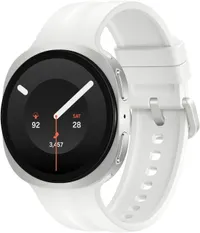
The watch has dual-band GPS for improved outdoor location tracking (this is useful in densely-packed cities or remote green spaces), and when we tested the Pixel Watch 4 against a manual step tracker and the Samsung Galaxy Watch 8 (its closest competitor), the Pixel Watch 4 was just 29 steps out from the manually tracked total.
Unusually, the Pixel Watch 4 actually exceeded our battery life expectations during testing. Google reckons you get 40 hours from the larger 45mm edition, but we found it came closer to 60 hours. It's a rare, and welcome, surprise, and means it lasts almost three times as long as the Apple Watch Series 10.
The thing I really like about the Pixel Watch 4 is that Google could have tied many of the features just to Pixel phones (in the way that Apple and Samsung often do), but the only Pixel-exclusive features are: call screening, secure phone unlock and the ability to use your watch as a remote viewfinder for your phone's camera app.
And while it doesn't come naturally to me to praise Google (have you seen the Google Graveyard of all the products and services it discontinued?), I do think it's genuinely a huge step forward that the Pixel Watch 4 has a replaceable battery and display, so you can send the watch in for repair to extend its life, a first for Pixel Watch.
- Read our full Google Pixel Watch 4 review
Also consider
If you're after the best smartwatch for your phone, the three models I recommend above are going to cover most use cases, whichever phone you have. But there are a lot more smartwatches around right now.
Not every model can be the best, but some come pretty close. If you need a few more options, these are the smartwatches I still think are worth your money, and may fill a need we didn't cover in the wearables from Amazfit, Apple or Google.
How we test the best smartwatches
We reviewed the first Apple Watch more than a decade ago, and we've been testing the best smartwatches ever since. The devices have got more complex, last longer and have way more features now, but the core of our testing has remained the same: we wear the watches, just as you would, to see how they hold up in the real world.
We look at how easy it is to set up, whether it has compatibility issues with specific phones and spend hours poking around in the software, looking for settings, apps and other features that make the device worth your money. Over the years, these watches have transitioned from phone companions to health and wellbeing trackers.
So we also focus on how these tools work, whether the tracking is accurate, how it compares to the competition and whether there's value in measuring what the company says you should. We wear the best smartwatches out on runs, during workouts, while sleeping and going about our day to see how they cope.
Over the past few years, brands have added more safety features to their watches, like irregular heart beat notifications, sleep apnea alerts, crash and fall detection and hypertension alerts. These are things we can't practically test, so we can't verify that these work as intended or described.
In the U.S., health features are regulated by the FDA, so there is some degree of verification, but because we can't check that ourselves, I wouldn't recommend that you buy any of these watches specifically for these safety features. At the very least, they should be secondary to some other safety check.
It's not something you can predict, but sometimes a health issue does come along when you're testing a smartwatch. This happened to one of our writers — her Garmin watch alerted her to a potential heart problem she didn't know about, and that prompted her to go to the hospital to get checked out.
How to choose the best smartwatches
Before you go too far into your journey for a new smartwatch, first you need to work out which ones will work with your phone. The Apple Watch only works with iPhones, and some Android-focused watches have features that are exclusive to specific phones (I'm thinking of offerings from Google and Samsung here).
There are plenty of options that'll work with both platforms, but they generally aren't the flagship models that get a lot of attention every summer and fall. Just like the watch I rate as the best smartwatch right now, the Amazfit Active 3 Premium. It's more of a fitness smartwatch, but can do a lot of what the others can do for a lot less.
And that's one of the other big choices you have to make; do you want a fitness watch that has smartwatch features, or a smartwatch as a companion to your phone that can track your fitness? These sound similar — and they are — but the difference is how much of the focus is put on either the smartwatch or fitness features.
Fitness smartwatches evolved from the best fitness trackers, with larger displays and more sensors. The best smartwatches started life as Bluetooth-connected extensions of your phone and over time became devices that keep you connected to your digital life, even when you're away from your phone working out.
The Apple Watch Series 10 and Google Pixel Watch 4 are the best compromise between the two, but there are plenty of other options in our Also Consider section that also straddle that line or lean one way or the other. Though, if you need a cellular connection in your watch, those are pretty much limited to the flagship models.

