







The best Apple Watches are designed to be seamless companions for your iPhone, mirroring notifications, tracking your activity and sleep and keeping tabs on your health. The first model was launched more than a decade ago, and Apple has kept improving the watch to the point where it's easily one of the best smartwatches.
You might expect me to say that the best Apple Watch is the most recent model, the Watch Series 11. But I actually recommend the Apple Watch Series 10 to most people instead. It has the same software as the newer watch, almost all the same features and the main difference is that the battery is slightly improved on the Series 11.
So while Apple would probably love for you to buy the latest release, I think the cheaper Series 10 is the better option at the moment. If you want to keep the cost down more, then I'd say you should check out the 2025 Apple Watch SE 3. It's the best budget Apple Watch and has most of the core smart, health and fitness features.
Apple announced two new watches at it's 2026 Fall event: the Apple Watch Series 12 and Apple Watch Ultra 4. The biggest changes are a new, more frequent heart rate sensor and the inclusion of Apple's new AI-backed Siri. We've only had a short time with both watches, but my early impressions are that last year's models remain good value for similar features. But I'll update this guide once the full reviews are in.
The best Apple Watch models you can buy right now
Why you can trust Tom's Guide Our writers and editors spend hours analyzing and reviewing products, services, and apps to help find what's best for you. Find out more about how we test, analyze, and rate.
Best Apple Watch overall
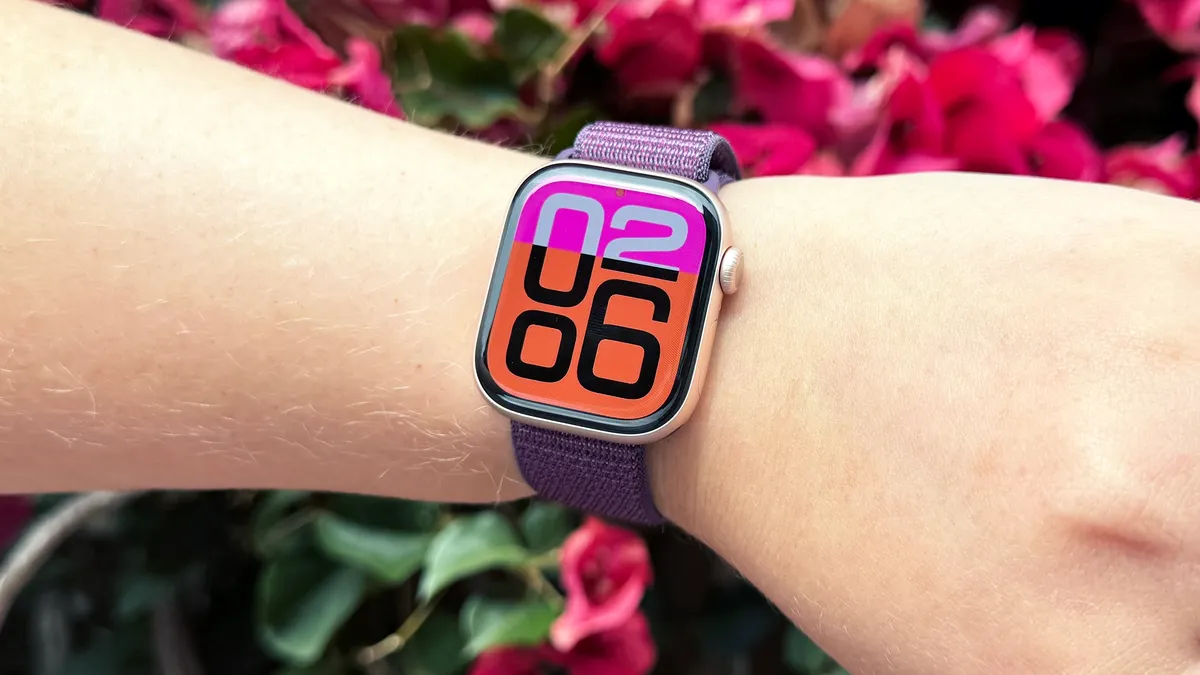

The Apple Watch Series 10 is not the newest in the range, but it remains the best option at the best price almost two years after it's release. There are two reasons for this; the newer Series 11 has almost exactly the same hardware, including the S10 processor, and the Series 10 can upgrade to the newest software, watchOS 26.
Combined, this means that the watch is almost identical to it's newer and more expensive sibling. To my mind, the Series 10 was the culmination of several years where Apple refocused the watch from a wearable companion for your iPhone, to a far more useful and comprehensive activity, health and wellbeing tracker.
Of course, it still does all the smartwatch things I love about the Series, like being able to take calls from your wrist, mirror notifications and download Watch-specific apps. And it was on the Series 10 that Apple finally added a speaker which you could use for calls and listening to audio, like music or podcasts, out loud from your watch.
It launched in September 2024 with watchOS 11, but has since been upgraded to watchOS 26 (Apple switched to year-based naming conventions for software in 2025), so it has the same software experience, the latest Liquid Glass elements (a visual design that makes the background look like blurred glass) and new features.
The most exciting upgrades that came with watchOS 26 are the wrist flick gesture for dismissing notifications, and hypertension alerts. This feature won't tell you if your blood pressure is high, but uses heart rate data to infer when you might want to talk to a doctor about your blood pressure.
The biggest letdown of any Apple Watch is always the battery life. The Series 10 officially clocks in at 18 hours, but you may find it lower in practice. Technically, the Series 11 can reach 24 hours, but even though that's a hugely welcome increase, it still means charging it every day, which is one reason I still recommend the Series 10.
- Read our full Apple Watch Series 10 review
Best budget Apple Watch


Unlike with the flagship watch, Apple only releases a new version of it's more affordable model every few years, leading to a three-year gap between the Apple Watch SE (2022) and it's successor, the Apple Watch SE 3. And this newer version has more sensors, an improved processor and the most recent software and features.
So this time, I'm not going to suggest buying the older one, because the Watch SE 3 is a fantastic value option in its own right, bringing much of what we loved about the Series 10 into a cheaper watch. In fact, unless you need (or want) some of the Series' health-focused features, I'd be tempted to recommend this watch above all others.
The SE 3 uses the same S10 processor as the Series 10 and Series 11, runs watchOS 26 and lasts up to 18 hours between charges. It is one millimeter thicker than the Series 10, but it's not especially noticeable. If you spend a lot of time outside you may notice that the display is not as bright, and that can make it tricky to see in direct sunlight.
The biggest difference between the SE 3 and Series 10/11 are the health features. The SE 3 uses Apple's second-gen optical heart rate sensor, last found on the Apple Watch Series 5 back in 2019. Using older hardware keeps the price down, but it also means that the more complex health features can be locked to the more expensive watches.
So the SE 3 doesn't support ECG readings for keeping tags on your heart health, blood oxygen measurements, watchOS 26's hypertension alerts or sleep apnea monitoring. The second-gen sensor does mean it can track your heart rate, including while working out, and combine that with other data for cycle tracking.
Those features are advisory-only, so they can't diagnose conditions, just suggest when you should discuss them with your doctor. If you think you'd find those alerts useful, then you'll want the Apple Watch Series 10 or Ultra 3. For everyone else, you can save a lot of money for almost the same experience with the incredible value SE 3.
- Read our full Apple Watch SE 3 review
Best Apple Watch for battery life
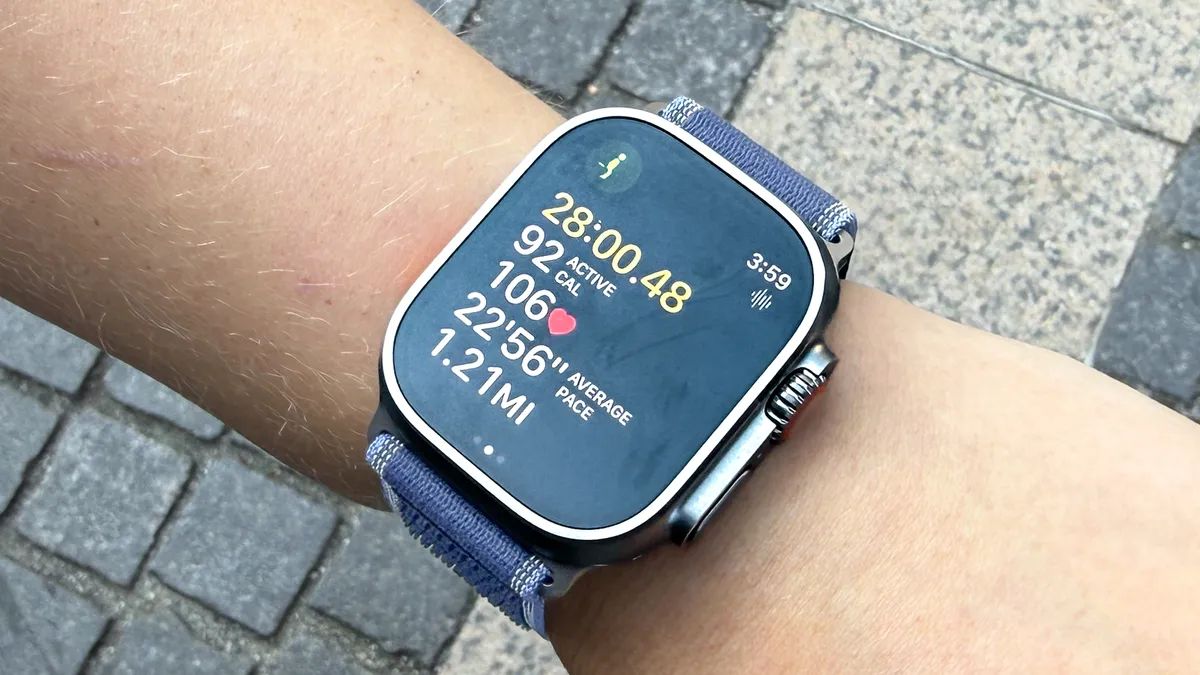
The biggest criticism of the Apple Watch has always been its battery life. Until last year's Series 11, the rated battery life of pretty much every model has been 18 hours, so you have no option but to charge it every day. It stings, as the Android alternative, the Google Pixel Watch 4, lasts up to 60 hours, almost three times as long.
The Apple Watch Ultra 3 is the exception. It is marketed as Apple's version of a rugged outdoor watch with a larger display, and it is, primarily, but it also has the best battery life of any Apple Watch, hitting 42 hours. In the real world, you'll get less than this, especially if you're outside in the sun and need brightness on full.
Still, it's a huge jump up from the Series 10 and Series 11, and an improvement on the 36 hours Apple estimated for the older Ultra 2. While I was definitely excited to see an Apple Watch that can actually last more than a day, and there's a lot to love about the Ultra 3, it's not quite as straightforward as 'you should buy this for the battery.'
There's no getting around the fact the Ultra 3 is a large watch. It's wider and thicker than the others in the range, and it weighs almost twice as much as the Series 11 (61g versus 37g for the 46mm Series 11). So it's bigger, heavier and, well, more noticeable on your wrist. Whether this is a problem depends on what you want to use it for.
The Ultra 3 is Apple's adventure watch, and it's closest alternative to one of the best Garmin watches hardware-wise. Away from the physical design, it runs the same software as the other Apple watches, so it has similar features. But there are a few outdoor-focused exclusives that you can currently only get on the Ultra 3.
This model added satellite connectivity so you can send emergency alerts when you don't have cell coverage, and it supports 5G connections (the first Apple Watch to do so) allowing for faster connections when you're away from your iPhone. And my favorite one: it has a customizable physical button on the side.
- Read our full Apple Watch Ultra 3 review
Also consider
How we test the best Apple watches
We've been testing smartwatches for more than a decade, and even reviewed the first Apple Watch back in 2015. As the watches have changed, so have our testing methods, but the core has stayed the same; we wear them.
Often we get our first hands-on time with the new Apple watches each year at the Apple Event in September. This gives us a sense of what the watches feel like, how the company has changed the bands, and the types of materials used in the design.
We give our first take during or just after the event, and then spend the next week (at least) with the watches. Since none of them last more than a few days between charges, this gives us plenty of time to see how the battery holds up in the real world.
Once the watch is paired to our iPhone, we try out the smart features, existing and new. We check to see if the performance of things like notifications, call handling and third-party apps is different (hopefully improved) compared to older models.
Since the Apple Watch Series 6, the company has turned the watch from an extension of your phone to a fully-fledged health and fitness tracker. So that's where we put a lot of our time too, testing out the workout features and health notifications.
Some of most significant features, like irregular heart beat notifications, hypertension and sleep apnea alerts and crash detection aren't things we can practically test. So we can't verify that these work every time as intended.
Of course, health features are regulated by the FDA, so you can have some reassurance that those will function as advertised, but we can't confirm that. Though, sometimes a health problem comes along when you're reviewing a watch.
One of our writers had a heart issue while testing a Garmin watch, which promoted her to go to hospital for investigations. It's rare, but if this happens, we'll always talk about it, so you know how the feature works in the real world.
How to choose the best Apple Watch
If you're trying to decide between Apple Watch models, it's because you want a smartwatch for your iPhone that closely integrates with Apple's devices and services. The company keeps the range pretty slim, with certain models designed for specific use cases or prices.
The flagship device is always part of the Series range. The most recent is the Series 11, although it's nearly identical to the Series 10, which is why I currently recommend the older model. But it's the best all-round and most versatile Apple Watch.
It has the health-tracking features you don't find on the budget SE 3, but is lighter and smaller than the adventure-focused Ultra 3. All three have similar smartwatch features, though the Ultra 3 has improved 5G connectivity if you choose the cellular variant.
So the main differences between them generally come down to size, health features, battery life and brightness. The Ultra 3 is brightest, followed by the Series 10/11 and then the SE 3. If you're outside in sunshine a lot, the SE 3 is a tricky choice.
The Series 10/11 and Ultra 3 all have Apple's health-focused features like an ECG, blood oxygen monitoring, hypertension alerts and sleep apnea warnings. The SE 3 has an older heart rate sensor, so doesn't have these features.
If you need the longest-lasting Apple Watch, that'd be the Ultra 3, which almost doubles the battery of the others. The compromise is that it's quite a lot bigger and twice as heavy as the Series 10.
While the Apple Watch is incredibly popular, and a fantastic choice if you have an iPhone, it's not your only option. Many of the best smartwatches work with iPhones too, so if none of the models quite hit the mark, you do have other choices.
What is watchOS 26?
Apple's smartwatches run watchOS, a customized operating system designed for the wrist-worn wearable, just like the company has iOS for iPhones, iPadOS for iPads and macOS for Mac computers and laptops.
Each year, the company releases a refreshed version of each platform. The newest hardware will launch with the latest software, and several generations of older devices are often eligible to upgrade to the newest version.
The Apple Watch Series 10 launched with watchOS 11 in 2024, while the Series 11, SE 3 and Ultra 3 all shipped with watchOS 26. Despite the naming, Apple didn't release 15 editions of watchOS in a year, but changed naming conventions in 2025.
The aim was so align software numbers with the year they'll be primarily used in. So watchOS came out in late 2025, and most of its useful life would be in 2026, so it was called watchOS 26. But it wasn't just newer devices that got this version.
Almost as soon as the 2025 watches were available to buy, anyone with an Apple Watch back to the Series 6 (released in 2020) could upgrade to watchOS 26 and get access to the Liquid Glass design overhaul and a range of new features.
Generally, the latest version of watchOS brings the same experience to all watches. The only exception is if a new feature has a particular hardware requirement, like we saw with the Apple Watch SE 3, which has an older heart rate sensor.
So although it ran watchOS 26 at launch, you can't get health-focused features like the ECG app or blood oxygen readings on the watch. The SE 3 is pretty much the only outlier though, as all watches (except the SE (2022)) launched since 2020 have the compatible third-gen sensor.
Apple launches new watches every September, and the update cycle starts again with older watches gaining access to the latest software. This year, the company will officially launch watchOS 27, but only for six models; the Series 9 and above.

