About four and a half years ago, I bought the LG C1, a popular, mid-range OLED and one of the best LG TVs of its day. At the time, I had been testing and reviewing TVs for over seven years. Since then, I’ve covered every C1 successor — from the LG C2 to the LG C5.
Now that the LG C1 and I are nearing the half-decade mark of our relationship, I thought it’d be interesting to unpack it all — the good, the bad and the quirky. I’m trying to figure out how much longer this partnership will last, and more importantly, whether or not my next TV will be an LG OLED.
What I like about the LG OLED experience

All of the elements that made the LG C1 an attractive option five years ago are still in play today. Like all of the C Series OLEDs that succeeded it, the C1 blends three key things: excellent picture quality, an immense selection of features and a price tag that isn’t nearly as high as its performance would suggest.
Let’s start with picture quality. An OLED TV’s bread and butter in 2026 is the same as it was in 2021: contrast.
The C1’s self-lit pixels allow for perfect black levels, surgical contrast control and wide, accommodating viewing angles. This is why I chose the C1 in 2021 and why I recommend OLED TVs to people in 2026.
The C1’s self-lit pixels allow for perfect black levels, surgical contrast control and wide, accommodating viewing angles. This is why I chose the C1 in 2021 and why I recommend OLED TVs to people in 2026. (I’ve especially appreciated the C1’s ultra-wide viewing angles, which allow my partner and I to follow baseball games from the kitchen without looking at a washed-out picture.)
In the years since I welcomed the C1 into my home, OLED TVs have only gotten brighter. The LG C5 — the only TV in the last year to receive our five-star rating — is nearly twice as bright, at least when it comes to specular highlights.
But despite its relatively limited brightness, you can’t take the “OLED” out of the LG C1. When I pop in a 4K Blu-ray and dim the lights, the C1 is just as magical today as it was when I first unboxed it. There’s a certain depth to an OLED-driven picture that even the best Mini-LED TVs can’t quite match, and it all comes back to the fact that every pixel is self-illuminating.
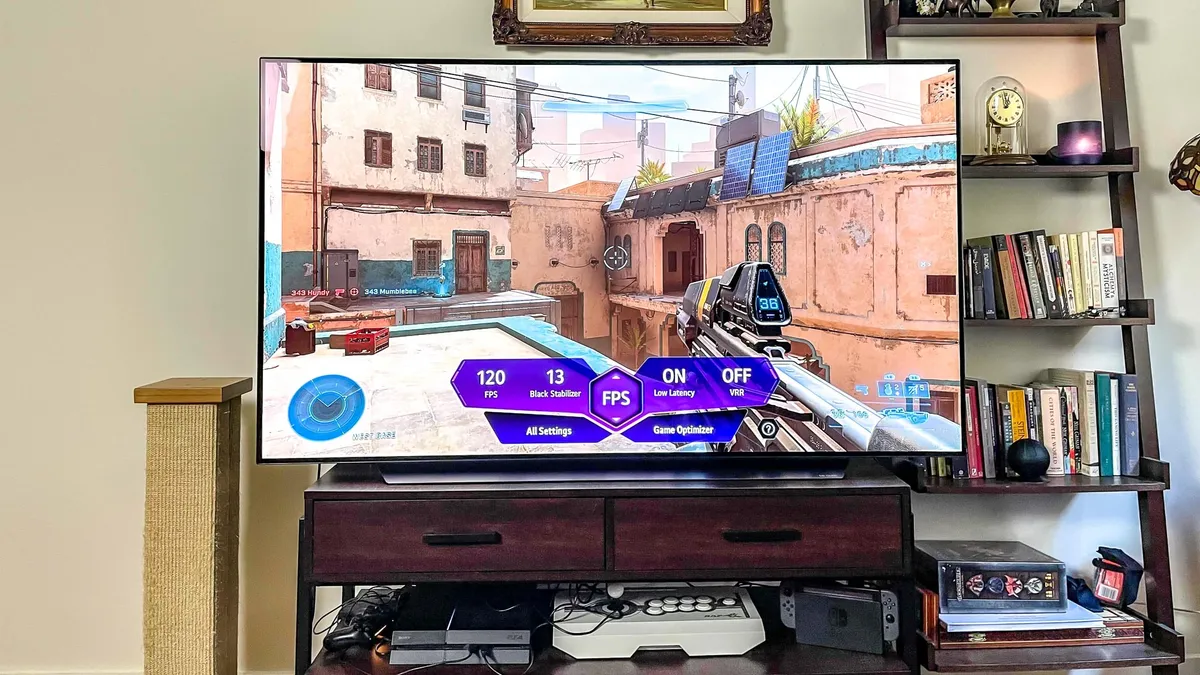
Another reason for choosing the C1 was its exhaustive array of features. It was one of the best gaming TVs of its day, offering a full slate of HDMI 2.1-compatible inputs, LG’s customizable Game Optimizer mode and ultra-low input lag. I’m happy to say that the C1 has lived up to its reputation as a powerful gaming machine.
All told, I suspect I do more gaming on my C1 than I do movie-watching. The C1 and my Xbox Series X synergize better than pretty much any other pair of products in my home.
The C1’s terrific picture quality and laundry list of gaming features arrived at my doorstep for a price that didn’t set my hair on fire. Sure, it was pricier than the average mid-range TV in 2021, but I was willing to buy in based on what I knew about its performance. I was counting on the C1 not to let me down.
Complaint #1: a panel on the fritz

It was almost an exact year after the C1 was delivered to my home that it partially broke. About two weeks after my C1’s one-year brand warranty expired, I turned it on to see a bright, vertical line on the left side of the panel. It was an entire column of defective, white pixels.
What resulted was a months-long journey to convince LG that I qualified for a panel replacement. I won’t keep you in suspense: I was eventually able to receive a new panel for no added cost — but getting there wasn’t a smooth road. Here’s a brief rundown of the obstacles I met along the way:
- I first needed to prove to LG Customer Service that my C1 truly was busted. This involved letting someone connect to my TV remotely in order to run diagnostics while I photographed the screen and sent back photos.
- I then needed to convince someone that I ought to be grandfathered into the one-year warranty window having just missed it by a couple of weeks.
- LG agreed to honor my warranty, but rescinded the offer when they noticed a boilerplate Geek Squad logo embedded in my emailed receipt from Best Buy. The mere presence of this logo was sufficient evidence for LG that I purchased a Geek Squad warranty along with my C1.
- Getting LG to back down from this Geek Squad claim took several rounds of phone calls and, eventually, an escalation to a higher Customer Service division. This is the point at which my case was assigned a representative who helped see it through to its resolution.
- A local, authorized LG service provider ordered a replacement panel, delivered it to my home and installed it. Unfortunately, this panel was a lemon.
- With the help of my LG Customer Service representative, a second panel was delivered and installed successfully.
While I’m happy (and lucky) that my case was ultimately resolved, it probably won’t surprise you to learn that the process felt a bit like getting lost in a house of mirrors. The panel hasn’t had any issues since, but like almost all OLED panels from this era, it’s a bit quirky.
Complaint #2: pink tinting

Pink tinting is far less of an issue today than it was just four or five years ago.
I’ve been reviewing OLED TVs for over a decade. I’ve seen almost every OLED TV from LG, Samsung and Sony throughout that period. In 2021, OLEDs like my LG C1 were more susceptible to some funky-looking panel artifacts.
The photo above has been adjusted to emphasize the issue, you can see my C1 is saddled with some pink tinting near the sides of the screen. I chose a solid, gray-colored screen to draw the tint out, but it can have a small, subtle impact on low-saturated content, especially black-and-white content.
This was a common artifact for LG Display’s WOLED panels during the era that the C1 was manufactured. It has to do with the structure of the display and the materials used, and some panels are worse than others — akin to the so-called dirty screen effect found on LCD/LED displays.
Fortunately, the pink tinting is far less of an issue today than it was just four or five years ago. The LG C2 and C3 — among the first to carry LG evo technology — demonstrate pink-and-green-colored tinting when light-colored content is viewed off-axis, but in my experience, the effect is more reflective in nature, not deep-set and lumpy in its appearance.
Complaint #3: webOS is kind of a bummer

It’s official: I decided to replace webOS with Roku. The decision arrived after a long, hard-fought campaign to force myself to use — and to enjoy using — my C1’s built-in smart platform. Reader, I failed.
In fairness, much of my malaise comes down to my TV’s nearly five-year-old processor, now dutifully lugging around several years’ worth of firmware updates. Beyond the occasional sluggishness, however, I just don’t gel with the visual layout of webOS and its reliance on the LG Magic Remote that shipped with my TV.
I don’t need my TV to guess my taste in movies and to recommend stuff to watch.
Unfortunately, it doesn’t seem as though LG is pushing webOS in a direction that will ultimately draw me back in. With the C5 (and the upcoming LG C6), there is a heavy emphasis on AI-based features — chatbots, personalized settings and the like.
Look, I may be in the minority here, but I have no interest in troubleshooting TV problems by way of an LLM-powered chatbot. I don’t need my TV to guess my taste in movies and to recommend stuff to watch, nor do I need my TV to get all spicy with the picture and sound settings on its own accord.
Whether or not you want to participate in these features is a matter of preference. For me, this type of experience — where you’re in constant dialogue with your TV’s software — is not what I’ll be looking for in my next TV.
Will my next TV be an LG OLED?

Sometime in the not-so-distant future — perhaps this year, maybe in another four — I will use my LG C1 for the last time. My only hope is that I get to decide when this time comes rather than be surprised by it.
Despite the faulty panel fiasco, I do love my LG C1. Its ultra-thin panel has marveled guests and its incredible, HDR-enabled picture has breathed new visual life into some of my favorite movies. I’ve racked up thousands of hours of “Red Dead Redemption 2” on this TV, blown away by how remarkable New Hanover looks and plays on an OLED-driven display.
When taking stock of these three complaints, I need to be honest in weighing them. If future versions of webOS still bum me out, I need to remember that it was remarkably easy to replace that software with something I prefer.
The C1 didn’t make lifetime LG TV-owner out of me, but somehow, a broken panel couldn’t get in the way of my love for it, either.
When grumbling about the magenta-colored tinting that sometimes haunts the C1’s corners, I need to remind myself that I’m picky. I’m an eagle-eyed, TV-reviewing freak. More to the point, newer LG OLEDs aren’t really saddled with this issue.
The year-old, busted panel? OK, that one is pretty inexcusable. That said, I assume this random bit of bad luck only befalls a small percentage of OLED owners every year. Hardware failures aren’t exclusive to LG OLEDs, either — even the best OLED TVs just give out sometimes, regardless of the brand.
I would absolutely buy an LG OLED again. But when it comes to whether or not I will, only time will tell.
My willingness to buy another in the future seems just as significant to me as my uncertainty. The C1 didn’t make lifetime LG TV-owner out of me, but somehow, a broken panel couldn’t get in the way of my love for it, either.

Follow Tom's Guide on Google News and add us as a preferred source to get our up-to-date news, analysis, and reviews in your feeds.
More from Tom's Guide