In 2025, the LG C5 OLED was our best-reviewed TV of the year. It earned this title because it combined incredible picture quality with a bevy of useful features for a relatively affordable price.
This year, the LG C6 is poised to replace the C5 as the brand’s newest mid-range OLED TV in 2026. We’re still months away from the release of the C6, but right now, plenty of people are already trying to calculate if it’ll be worth the cost. After all, both the C5 and the C6 will occupy shelves for the rest of the year — and the C5 will be an order of magnitude cheaper for most of that time.
With that in mind, let’s take a look at what we know about LG’s newest C Series OLED so far and get a sense of how it compares to its predecessor. We can’t evaluate performance until we formally test the C6, but we can still glean valuable information from what’s already out there.
LG C6 vs C6H

Before we start comparing notes between the C5 and the C6, we have to talk about a key way that LG is shaking up its mid-range tier in 2026. In recent years, the C Series came in sizes ranging from 42 to 83 inches, including a 77-inch model.
This year, however, the standard C6 series will only be available in 42-, 48-, 55-, and 65-inch variants. The 77- and 83-inch versions are slightly different models altogether, dubbed LG C6H.
The C6H leverages LG Display’s new Tandem OLED panel.
The main difference between the smaller-sized C6 and the larger-sized C6H will come down to performance. The C6H leverages LG Display’s new Tandem OLED panel, which features Hyper Radiant Color technology. If you buy a C6 between 42 and 65 inches, however, you’ll be getting a standard WOLED display.
The C6H will presumably be brighter and more colorful than the standard C6. For now, I’ll focus mostly on the standard C6 lineup and how it compares to the C5.
LG C5 vs C6: specs compared
| Header Cell - Column 0 | LG C5 |
LG C6 |
|---|---|---|
Sizes |
42", 48", 55", 65", 77", 83" |
42", 48", 55", 65" |
Ports |
4x HDMI 2.1 |
4x HDMI 2.1 |
Resolution |
3,840 x 2,160p |
3,840 x 2,160p |
Refresh rate |
144Hz |
165Hz |
HDR |
Dolby Vision, HDR10, HLG |
Dolby Vision, HDR10, HLG |
Smart TV software |
webOS 25 |
webOS 26 |
ATSC 3.0 support? |
No |
No |
Processor |
Alpha 11 gen 3 |
Alpha 9 gen 8 |
LG C5 vs C6: Design

Our hands-on time with the new C6 involved wall-mounted units, so there’s not much we can say about the sturdiness of the setup when the panel is attached to a stand. The C5, however, is one of the best-constructed TVs available today, as it blends a lightweight design with an elegant profile, leaving a fair amount of room for a slim soundbar.
LG hasn’t made major changes to the overall design of the C Series OLED in some time, so I expect a similar-looking stand when the C6 finally ships. I also expect the C6 to make use of the same lightweight material that’s adorned both the C5 and the LG C4 in recent years.
LG C5 vs C6: Performance
As mentioned, you’re bound to see the biggest leap in performance when moving from the LG C5 up to one of the two confirmed C6H models that tap LG Display’s Tandem OLED panel. If you’re choosing a 42-, 48-, 55-, or 65-inch model, the difference in performance between the C5 and C6 won’t be as apparent.
The C5 wrings a ton of brightness out of its relatively basic WOLED panel. In our tests, we clocked the C5’s highlight brightness at around 1,100 nits in HDR.
When combined with the perfect black levels and pixel-level dimming that OLED displays are known for, 1,000+ nits of brightness is plenty. That said, folks chasing the brightest picture who are already committed to buying a 77- or 83-inch OLED will want to take a hard look at the upgraded C6H.
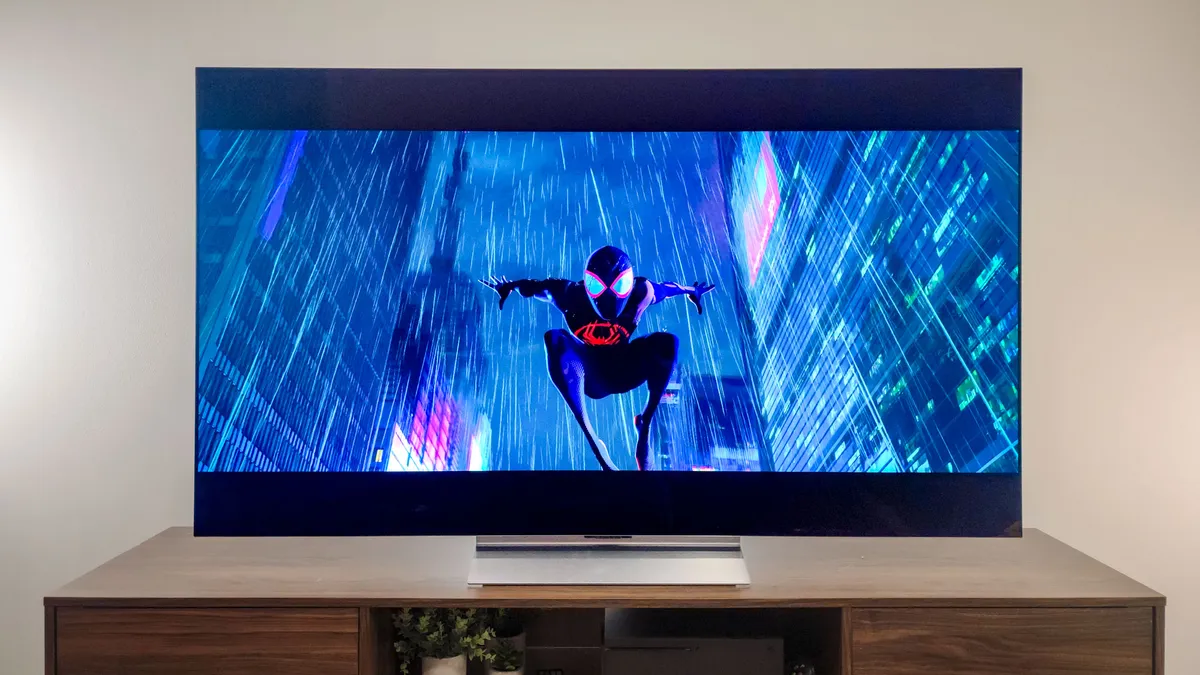
On the LG C5, specular highlights — like sparks, shimmers, and reflections — jump off the screen, allowing for a tremendous sense of visual depth. I expect the C6 to be at least as bright as the C5, and if recent years are any indication, it might be slightly brighter than its predecessor — at least when it comes to HDR highlights.
Just as its predecessors delivered the gaming goods, the C6 will almost certainly prove one of the best gaming TVs of the year. Like the C5, the C6 is equipped with four HDMI 2.1 inputs, LG’s Game Optimizer mode, and nearly every enhancement a console gamer could want in 2026.
One key upgrade on the C6 is its support for 4K content at 165Hz, up from 144Hz on the C5. I suspect this will mostly be relevant to PC gamers looking for a gaming TV.
LG C5 vs C6: Outlook
We won't be able to make more definitive statements about the C6's design, performance, and value until it officially launches later in a few short months, but I can confidently say that the 42- to 65-inch versions of the C5 will be a better value proposition for at least the first half of 2026.
Consider this: Last year, the 65-inch C5 debuted at $2,699. Right now, you can find the 65-inch LG C5 for just $1,396 at Amazon. That's what almost a year on shelves will do to TV pricing.
If the LG C6 launches at $2,699 — or really, anywhere near that price — I'll probably spend the next several months recommending that most people save a ton of cash on the very-similar LG C5. Come fall, the gap between the C6's price and that of the C5 will have shrunk considerably.
I suppose the C6 could surprise me and justify its higher price right out of the gate. Another thing to consider is how the C6H changes the equation, particularly for big-screen shoppers.

Follow Tom's Guide on Google News and add us as a preferred source to get our up-to-date news, analysis, and reviews in your feeds.
More from Tom's Guide