OLED TVs attract a ton of attention — and for good reason. Thanks to their backlight-free hardware, these premium sets are capable of performance feats that even the best Mini-LED TVs can’t pull off.
It’s not just the best OLED TVs that impress, either. The self-lit pixels of an OLED display have such a tremendously positive impact on picture quality that even entry-level OLED TVs are downright luxurious.
Despite the high percentage of high-performing OLED TVs, there is such a thing as an OLED not worth buying. With that in mind, here are three entry-level OLED TVs I’d buy right now — and one model I’d avoid.
1. LG B5
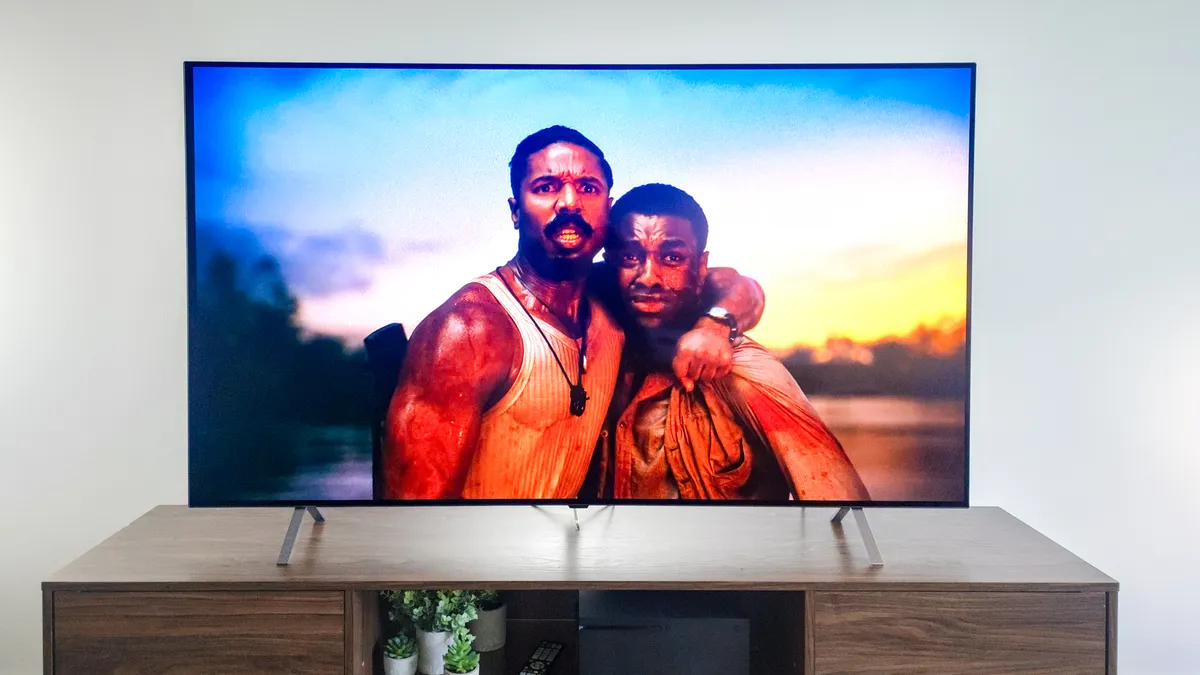
LG’s latest entry-level OLED TV isn’t just one of the most affordable ways to secure a new LG OLED, it’s also one of the best LG TVs, period. You just have to factor in its price and overall value.
The B5’s entry-level hardware can’t compete with the likes of the LG C5 and the G5 OLED, but it’s still an exceptionally engineered TV that offers most of the same features you’ll find in those higher-end models.
The tradeoff — a tradeoff that’s more or less standard across all affordable OLED TVs — is that the B5 isn’t as bright or colorful as the mid-range C5 and the flagship G5. That added brightness admittedly goes a long way toward creating a sense of depth and realism, particularly during newer, HDR-mastered content.
Its relatively low price and wide range of sizes are two of the reasons why I’ve frequently recommended the B5 to friends, family and colleagues.
But limited brightness is less of a deal-breaker when dealing with OLED displays. The B5’s ability to render perfect black levels means that our eyes perceive higher brightness, and this is especially true if you’re watching in a dimly lit or darkened room.
As mentioned, the B5 arrives with a ton of the same features you’d enjoy on the C5 and G5. It’ll make the most out of current-gen consoles and comes with LG’s webOS smart platform built right in.
Its relatively low price and wide range of sizes are two of the reasons why I’ve frequently recommended the B5 to friends, family and colleagues in recent months. The 48-inch version of the B5 is just $649 at Best Buy right now, which is a fantastic price on a screen size big enough for smaller spaces.
As you’ll soon learn, every OLED TV that I’d deem affordable for its class compromises somewhat on performance and features. But the B5’s compromise includes some of the lowest prices you’ll find in the OLED class.
2. Samsung S85F

If you’re willing to spend a bit more than you would on the LG B5, Samsung’s rival entry-level OLED TV is another viable option for OLED-shoppers looking to save money. Depending on the screen size, you might appreciate the S85F’s higher-level performance.
The 55- and 65-inch versions of the S85F make use of Samsung Display’s quantum dot-enhanced OLED display. Think of it as a souped-up version of the LG B5’s standard OLED display, as the addition of a quantum dot layer allows for brighter, purer color and higher overall brightness.
Like the B5, the S85F is also packing an array of streaming- and gaming-related features. The only notable missing feature is Dolby Vision support, which no Samsung TV offers. Another caveat is that the 77- and 83-inch versions of the S85F don’t leverage QD-OLED panels.
Many would view the S85F series’ pricing to be closer to mid-range status than entry-level, but it’s still relatively low for an OLED TV in 2026. The 55-inch Samsung S85F is $1,199 at Best Buy right now — about $300 more than the 55-inch B5. If you do a good amount of TV-watching during the day (or in a relatively brightly lit room), the S85F’s punchier picture at the 55- and 65-inch size point might be worth the added cost.
3. Panasonic Z85A

As an older model, you can get the Z85A for much lower than its debut price.
This swanky Panasonic OLED launched in 2024, but it has successfully stayed on shelves all the way into 2026. As an older model, you can get the Z85A for much lower than its debut price.
Despite the fact that this OLED series has seen a couple of trips around the sun, I still recommend it to people hoping to save money on an OLED TV. Like the B5, the Z85A makes fine use of a standard WOLED-style panel. Also similar is its thorough collection of gaming features and Dolby Vision support.
The Z85A’s value really starts to reveal itself when you factor in current prices. Right now, the 55-inch Panasonic Z85A is just $747 at Amazon — slightly less than the 55-inch LG B5 and very low compared to the 55-inch Samsung S85F.
One important thing to keep in mind is that the Z85A leverages Amazon’s Fire TV smart platform. It’s not my favorite, but Amazon is rolling out Fire TV updates in 2026 to select Fire TV devices, and the Z85A’s software could see a UI makeover and a performance boost as a result.
An OLED I’d avoid: Sansui OLED
When the Sansui OLED made its debut, it carried a similar price tag to the now-two-year-old Panasonic Z85A. This made it a pretty intriguing option for folks shopping for an OLED TV on a budget.
These days, however, it’s much harder to find at its original, low price. But that hasn’t stopped people from reaching out to me and asking about whether or not it’s worth it.
Provided you can find either the 55- or 65-inch Sansui OLED (B&H is selling the 55-inch Sansui OLED for $549), I still don’t recommend picking it up. Unlike the first three OLED TVs on this list, the Sansui OLED doesn’t pack a ton of value once you square its price with the TV’s significant shortcomings.

As we reported in our Sansui OLED review, this set doesn’t get very bright at all — even during HDR content. As a result, it lacks the cinematic appeal of the LG B5, the Samsung S85F and the Panasonic Z85A.
In addition, we found that the Sansui OLED’s implementation of Google TV to be frustrating, as the TV’s limited processing power made navigation sluggish. It just isn’t worth the trouble.
As mentioned, the 55- and 65-inch Sansui OLEDs aren’t easy to come by. Nevertheless, I still bump into it from time to time when browsing TV stock at big-name retailers.
If you’re aiming to save money on an OLED-driven picture, stick with the first three picks on this list. There is such a thing as an OLED TV that compromises too much on performance. Fortunately, they’re getting harder to come by.

Follow Tom's Guide on Google News and add us as a preferred source to get our up-to-date news, analysis, and reviews in your feeds.
More from Tom's Guide