




If you're looking for a TV to put in a shared room, dorm or bedroom, the best 55-inch TVs are a great option. They're more compact than 65-inch models (the most common size in stores), so can fit into tighter spaces, but give more screen estate than 50 or 48-inch options.
And at this size, you don't have to make compromises on brightness like you do on the smaller (and power-limited) models. That's why I know the LG C5 is easily the best 55-inch TV you can buy. It's last year's model (the C6 exists now), but because it's dropped in price so much, it's one of the best value and most versatile options.
As wonderful as the C5 is, it's still on the pricey side. Fortunately, the Hisense QD7 is an incredible TV that punches well above its affordable price tag, which is why I believe it's the best budget 55-inch TV you can pick up right now without compromising on performance, so you can watch movies, sports and shows without breaking the bank.
Lots of new TVs now come with AI features, and many Google TV-powered sets have Gemini (Google's AI) baked in — don't buy a TV based on these. The AI apps aren't useful, and software will change over the life of the TV, so pick a model that has the hardware and performance that you need.
The best 55-inch TVs available right now
Why you can trust Tom's Guide Our writers and editors spend hours analyzing and reviewing products, services, and apps to help find what's best for you. Find out more about how we test, analyze, and rate.
Best 55-inch TV overall


You might have seen that LG released the C6 in early 2026, and wonder why last year's C5 is at the top of this roundup instead of the newer (and presumably better) model. We tested the C6, and it is a great TV, but the upgrades from the C5 are relatively small, and now that you can buy the C5 at around half its launch price, it's the better option.
It's not a compromise either: the C5 really impressed us from the moment we pressed the power on. The image is vibrant, the colors look exceptional, and it was just so easy to get immersed on the stunning scenes on the TV. And because everything looked so good, it's the perfect option for movies, games and sport.
The impressive contrast mean you see each scene properly, helped by the fact that we found the C5 handled all shades of black well — particularly useful given all modern movies are extremely dark. The TV is bright, making it a good choice for naturally brighter rooms, but Dark Room Mode helps if you're a fan of late-night viewing.
Plus, the C5 has a 120Hz refresh rate, making it a great choice for fast-moving scenes, like in live sport. Helpfully, this is also the same rate consoles output at, so the C5 is a good choice for gamers too (though you might want to look at the Samsung S90F for its dedicated Gaming Hub).
The only thing we didn't like so much on the C5 was the remote. The design is unusual and takes some getting used to. LG fixed this with the C6, but it's definitely not worth an extra $1,000 compared to the C5, which is the most fantastic TV in all other respects, and would make a great addition to your home.
- Read our full LG C5 review
Best budget 55-inch TV


As impressive as the LG C5 definitely is, I sometimes find it hard to recommend spending that kind of money on a new TV when the Hisense QD7 is right there and such incredible value. It is easily the best budget 55-inch TV around right now, and unless you need a higher refresh rate, it's an excellent pick for most people too.
The QD7 has quantum dot crystals, which absorb some of the backlight and re-emit it as green and red light. This improves the contrast and vibrancy, leading to a surprisingly sharp image, as we found while watching "Bridgerton" and "Spider-Man: No Way Home," which both looked great, especially in Filmmaker mode.
And the TV can dim each LED individually, leading to improved local dimming during darker moments, which helps too. So when we tried watching famously visually moody franchises like "Dune" and "Stranger Things," you could easily pick out details in even the most shadowy scenes.
Here are the (few) compromises: the QD7 runs Amazon's Fire TV software, which is slow and filled with ads for Amazon products. It's annoying, but once you've installed your streaming apps, not a dealbreaker. And while the 60Hz refresh rate is pretty good, we did find that it lead to a bit of blurring during sport or fast-paced movies.
Whether you can live with these depends on what you want to do with the TV (you'd definitely be better of with the Samsung S90F if you want to game, for example), but for most people this is going to be a trade off worth making because the picture is incredible, and such a rare find at this price.
- Read our full Hisense QD7 review
Best 55-inch TV for gaming

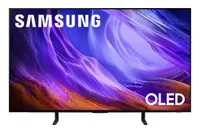
The Samsung S90F is a terrific TV, but then so are the LG C5 and Hisense QD7. What sets the S90F apart is the brand's focus on gamers, adding useful software features and hardware boosts — the 120Hz refresh rate, a dedicated Gaming Hub and four HDMI 2.1 ports — which combine to make this the best 55-inch TV for gaming.
Though it also has another thing going for it; it's low input lag. We measured this at just 9.1ms, and you're looking for a number under 10ms for competitive online games. Meanwhile, the LG C5 hit 9.1ms in a specific boosted mode, but it's native input lag is 12.9ms. Of course, these are fractions of a second, but it does make a big difference.
The S90F runs Samsung's Tizen smart TV platform, which comes with a Gaming Hub. If you plug a console into one of the HDMI ports, the TV recognizes it, and even stores a list of titles you've played recently. If you jump back in through the Gaming Hub, it automatically enables the TV's Game Mode too for improved performance.
The 120Hz refresh rate makes it ideal for console gamers, as the current generation hardware outputs as 120Hz, so if you go higher, you're paying for a refresh rate you don't need. PC gamers might prefer one of the best gaming TVs though, as those can reach up to 165Hz, so those are a better option if you want to use a gaming PC.
This is all fantastic in theory, but it would be a waste if the S90F didn't also make everything look so good. The picture is impressively clear, vibrant and colorful. It handles contrast brilliantly, so whether you're playing gritty games with lots of dark blacks and shadows or kaleidoscopic, it's an exceptional TV.
- Read our full Samsung S90F OLED TV review
Also tested
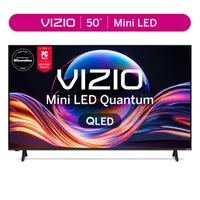
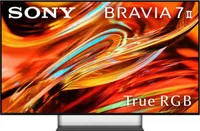
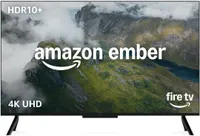
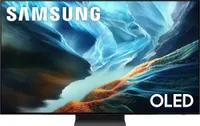
How we test the best 55-inch TVs
There are two parts to our TV testing process; the lab and real world settings. Each TV we review comes into our lab first for objective benchmark testing. We use specialized equipment for this, including a colorimeter, pattern generator, spectroradiometer and calibration software.
You can read more about how we test TVs, but the main reason we go this route is to gather consistent and objective data about each set. This makes it possible for us to compare between models, see what's changed when a new version gets released and check how the manufacturer's performance claims hold up.
Having specific data also means we can factor that into how we decide which TVs suit particular use cases. If we take gaming TVs as an example, input lag is incredibly important here. Though for TV show or documentary watching, perhaps the color accuracy is the most crucial aspect.
Once we have everything locked into our spreadsheets, we get to do the fun part — use the TVs. We set them up just as you would to see how they perform in the real world. Brightness data is useful, but we also need to find out how the TV holds up in a bright room, and whether the anti-glare or reflective coating actually helps.
We put on sports, movies, TV shows and play games, keeping a critical eye on the TV's performance (not the media itself). This allows us to see whether the TV makes the colors pop on something like "The Super Mario Bros. Movie" and how well it can handle the shadowy blacks of "The Batman", or pretty much any Christopher Nolan movie.
How to choose the best 55-inch TVs
I get that you're on a guide to the best 55-inch TVs, but before you go deep in your research it's worth taking a moment to think about exactly why you want this specific size TV.
You may have checked out our guide to choosing the perfect TV size for your room and found that 55 inches is exactly what you need for your space. Or maybe you heard that the best 50-inch TVs have a few tradeoffs (like reduced brightness) and want the smallest option with the biggest performance.
Price might also be a factor, as 55-inch TVs are pretty much identical to the best 65-inch TVs, but smaller and cheaper, so why not save some money when you don't need the larger screen. These are all great reasons to choose a 55-inch set, I just want you to be sure it's really what you need before you hand over your money.
Once you're set on the size, think about what you want the TV for. Is it for background viewing (in which case, price is going to be factor over specs) or for playing games (where high refresh rates and HDMI 2.1 ports are important). Is the set going into a bright room? Then you'll need a TV with high brightness measurements.
Generally, all the attributes that make a good TV mean that it'll be good for watching films and TV shows (though keep an eye on how it handles blacks and contrast), but refresh rates and contrast are especially important for live sports, so keep that in mind if you plan to watch the summer's games.

