




Our daily habits, including how much daylight and exercise we get, can influence our sleep — and so can our diets.
From blood sugar balancing to keeping our circadian rhythm in check, our diet, good or bad, has a huge influence on sleep duration and quality. This can be even more important around the holiday season, with a change in routine, more alcohol and sweet treats and probably later nights.
But there are some Christmas leftovers, including turkey, that can actually promote better sleep and increase deeper sleep.
We've spoken to two nutritionists and looked deeper at the latest studies, to find out the best foods to eat over the holiday season to help sleep come naturally (and deeply) during your Christmas break.
How does our diet impact our sleep?
Certified nutritionist, Monica Kranner explains that food can either “cue your body for deep rest or disrupt the entire night.”
So, why is this?
“Certain foods support the production of calming neurotransmitters like serotonin and melatonin, while others overstimulate the nervous system, spike blood sugar, or trigger digestive discomfort that interferes with rest,” she explains.
“Eating foods that quickly raise blood sugar, such as sugary foods or carbohydrate-rich foods, before bed can mean a steep rise in blood sugar,” adds Hannah Love, a qualified nutritional therapist and registered nurse.
“Your body produces insulin as a result of this rise. Often your body overcompensates, and this can lead to a dip in blood sugar levels overnight (called reactive hypoglycaemia).”
The 3 Christmas leftovers that can help you sleep tonight
1. Turkey
There’ll no doubt be some turkey left over after Christmas day — and guess what? Nibbling on it on Boxing Day can make you sleep more soundly.
The meat provides the raw materials your brain needs to switch into sleep mode
This is because the meat provides “the raw materials your brain needs to switch into sleep mode,” Kranner explains.
She adds that this is because turkey is rich in “tryptophan, an amino acid the body uses to make serotonin (your calming neurotransmitter) and melatonin (your sleep hormone).
“Pairing tryptophan-rich foods with a small amount of healthy carbohydrates helps the brain absorb tryptophan more efficiently—encouraging relaxation, drowsiness, and restful sleep.”
Other tryptophan-rich foods include chicken, eggs, tofu, oats, nuts, seeds, and dairy.

2. Nut roast
If you’re a veggie, then a nut roast, full of ingredients such as walnuts, pecans, Brazil nuts, cashews, almonds and hazelnuts, may be on your dining table on Christmas day, instead of turkey.
But instead of throwing away any leftovers, make sure you box them up to reap all their health benefits; they’re packed full of protein, healthy fats and amino acids.
The best nut sources are walnuts and almonds
For sleep, they also contain two vital minerals: “Most nuts are high in magnesium, which studies have shown promote relaxation and improve sleep quality by regulating neurotransmitters that affect sleep cycles,” explains Love.
“Melatonin is also found in small amounts, but the best nut sources are walnuts and almonds.”
She adds that their healthy fats can balance “blood sugar levels, reduce inflammation and give slow energy release, which are all good to help support healthy sleep.”

3. Roasted veggies
If you’re going to eat some leftover turkey or nut roast you may as well add some veggies to your plate too.
Kranner says they are a “fantastic sleep-supporting option because they contain nutrients that nourish the nervous system, without the heaviness of a large evening meal.”
She advises you add the below to your plate for better sleep this Christmas:
Leafy greens (spinach, chard) as they are:
- High in magnesium and calcium
- Relax muscles and support melatonin production
Sweet potatoes, carrots, squash - because they:
- Provide gentle, complex carbohydrates
- Support serotonin release and help you feel calmer in the evening
Broccoli, asparagus, Brussels sprouts:
- Rich in B vitamins
- Support neurotransmitter production needed for relaxation
Peas and beans:
- Provide plant protein and fibre
- Help keep blood sugar stable throughout the night

Dieting rules to live by for better sleep
Don’t eat your last meal right before bed
Indigestion, yes, that annoying feeling in your chest, can feel worse when you’re trying to sleep — but leaving at least three hours between your last meal and sleep could help you avoid this (as well as the symptoms of GERD).
“Eating too close to bedtime forces the body to digest food just as it’s trying to switch into repair and recovery mode,” explains Kranner.
The expert adds that this can lead to:
- Indigestion, heartburn, or bloating
- Increased body temperature (which makes falling asleep harder)
- Elevated blood sugar
- Reduced melatonin production
Avoid high-sugar snacks in the evening
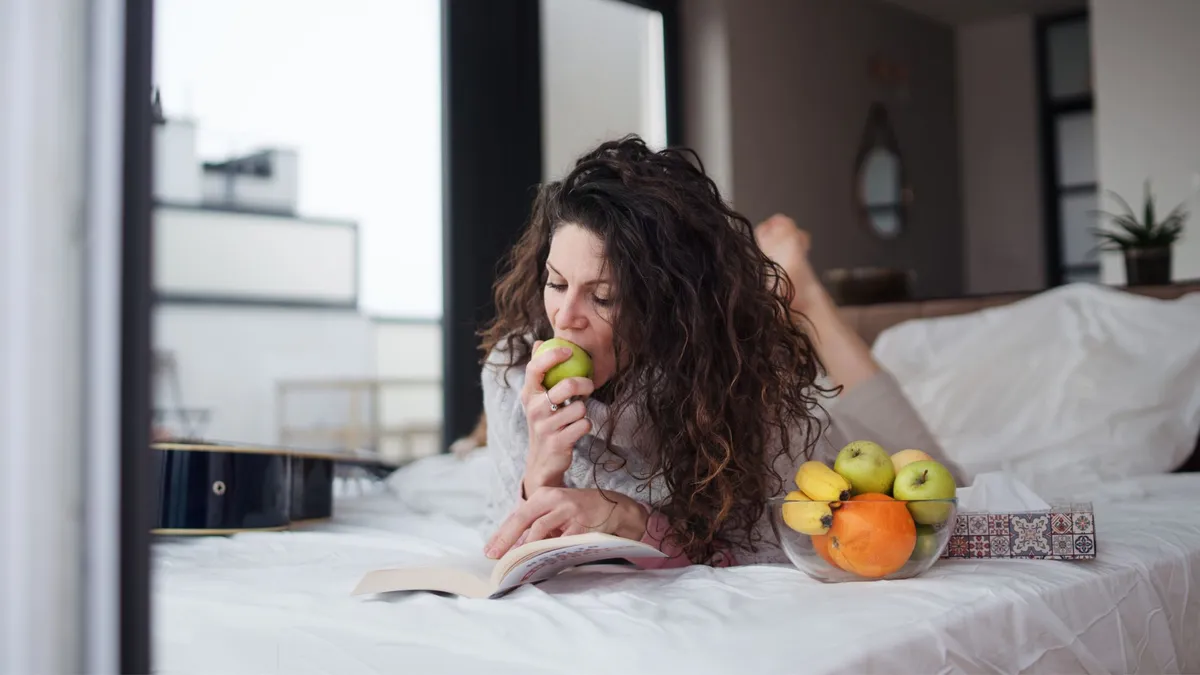
If you tend to have a sweet tooth just before you go to bed, this could be a factor to your poor sleep. In fact, a 2016 study showed that those who have a diet high in sugar sleep less deeply.
Kranner explains that by putting down those sugary snacks, you’ll avoid a blood sugar spike just before bed, which is followed by an “inevitable crash."
"That crash triggers stress hormones like cortisol and adrenaline, precisely what you don’t want in the evening,” she adds.

Eat more protein
Studies have proven that more protein, whether it's lean meats, tofu or fish, in your diet can increase deep sleep.
Having protein at your evening meal keeps your body “calm, steady, and supported for restorative sleep, and it provides the building blocks for enzymes involved in overnight fat metabolism,” explains Kranner.
She goes on to add that protein provides the amino acids needed to make calming neurotransmitters: “not only tryptophan, but also glycine, glutamine, and others involved in relaxation.”

