We all know that sugar and caffeine can make it harder to fall asleep, but how many of us actually know what a sleep-friendly diet looks like?
However, researchers from the University of Chicago Medical Center are claiming that you can improve your sleep quality through food and drink alone.
And the best part? The diet change is simple and involves a lot of produce probably already on your shopping list.
According to researchers, the key to better sleep lies in a diet rich in fruits, vegetables and wholegrains. By increasing your intake of these healthy snacks every day, you could see a 16% (on average) improvement in sleep quality within 24 hours. In plain English, that means less sleep disruptions and more deep sleep.
This all seems a little too good to be true, so with the help of Courtney Pelitera, a Registered Dietician at Live it Up, I put the diet to the test for one week to see if it actually could improve my sleep.
Here's what happened...
Highlights
- The study found that those who ate more fruit, vegetables, and complex carbs experienced more deep sleep and less wake-ups in the night.
- Consuming five cups of fruits and veggies a day could see an average 16% improvement in your sleep quality.
- Fresh and frozen fruits and veggies work, and heavily-processed crackers can be quickly swapped for seeded wholegrain varieties.

The simple diet change that can improve sleep quality by 16% in 24 hours
The CDC recommends consuming three cups of vegetables and two cups of fruit (equating to five total cups of fruit and veg) a day to support healthy immune function.
A recent University of Chicago study shows that this same recommendation also supports your sleep.
Researchers found that adults who followed the five-a-day recommendation, plus consumed complex carbohydrates such as whole grains, improved their sleep quality by 16% in one day compared to those who did not.

These adults experienced more deep sleep and less nighttime awakenings.
"16% is a highly significant difference," Esra Tasali, MD, director of the UChicago Sleep Center, told ScienceDaily. "It's remarkable that such a meaningful change could be observed within less than 24 hours."
According to the American Heart Association, examples of one cup of fruit include one large banana, an apple, an orange, eight large strawberries, or 22 grapes. As for vegetables, one can look like a medium potato or one large bell pepper.
How eating more fruit and veg improves sleep quality
A study published in 2024 reported how a plant-based diet improves sleep quality through less fragmented sleep and improved sleep duration.
According to researchers at Columbia University, the link between better sleep quality and eating more fruits, veggies and wholegrains lies in the carbohydrates found in these foods, which helps the brain absorb tryptophan.
Tryptophan, an amino acid, boosts the production of melatonin, the sleep-regulating hormone. A number of fruits, veggies and wholegrains also contain magnesium, a vital mineral that acts as a calming agent for the central nervous system. This is why magnesium is often referred to as a natural sleep aid.
Foods naturally rich in magnesium include spinach, almonds, black beans, avocado, banana, chia seeds, and swiss chard. Many of these foods are also rich in vitamin B6, which is also being studied as an important vitamin for improving sleep patterns.
How my sleep changed after one week
In one week, I found that increasing my diet of fruit, vegetables, and wholegrains improved my sleep a lot.
As I was reaching for more complex carbohydrates like nuts and seeds, I was less likely to reach for candy and other sweet snacks that would make it harder to fall asleep and cause nighttime awakenings thanks to blood sugar spikes and stimulants.
On days when I would practice good sleep hygiene and only ate healthy snacks alongside fruit, vegetables, and complex carbohydrates, my sleep benefited greatly.

Here are the ways my sleep improved compared to the week before:
- Less sleep disruptions: I found myself sleeping all the way through the night, without that dreaded 3am awakening.
- Waking up earlier: As I was getting more uninterrupted sleep, I found myself waking up on time without feeling groggy.
- Fell asleep faster: Snacking on fruit, veggies and wholegrains throughout the day meant I wasn't reaching for any quick, sugary snacks close to bedtime. Not eating anything stimulating too close to bed meant I decreased my sleep onset latency, and helped me avoid overthinking before sleep.
However, I found that eating complex carbohydrates and the recommended amount of fruit and vegetables helped me sleep, the diet's sleep-friendly effects couldn't shield me from the sleep-disrupting effects of unhealthy habits.
When I fell victim to some sleep-disrupting habits (such as eating too much dark chocolate close to bedtime while working late) despite also consuming the recommended amount of fruit and vegetables, I found it harder to fall and stay asleep.
So what did I learn? Eating more fruit, vegetables, and complex carbohydrates really can improve your sleep in less than 24 hours — as long as you practice good sleep hygiene beside it.
How I increased my fruits, veggies and wholegrains for better sleep
Getting enough fruit, vegetables, and whole grains can be tough especially when unhealthy snacks dominate the grocery store aisles.
That's why I called upon Registered Dietician Courtney Pelitera to offer me some advice on how I can meet the five-cup-a-day recommendation and consume more whole grains.
Here's what happened...
1. I switched refined carbs for whole grains

The first thing Pelitera told me to do was ditch refined carbohydrates for complex ones. These have more fiber, which is great for gut health, blood sugar control, and satiety.
"A great example of this is switching a white bread in toasts or sandwiches to a whole grain or whole wheat option," she said. "This could also apply to things like tortillas, pastas and crackers."
So, I tweaked one of my favorite snacks, chips and guacamole, by replacing the chips with wholegrain, seeded flatbread.
2. I supercharged my breakfast

According to Peliera, breakfast is a great meal to squeeze in as many fruits and wholegrains as possible.
"My favorite examples of this are an oatmeal bowl topped with chopped apples and walnuts, and a yogurt bowl topped with berries and high fiber granola," shared the Registered Dietician.
I sprinkled apple and walnuts on my porridge, and topped my Greek yogurt with blueberries and granola (containing mixed seeds, nuts, and raisons).
3. I snacked on veggies and whole grains

Snacking during the working day can lead to unhealthy habits, especially as there are cookie jars on every floor of my office building. But snacks don't have to be unhealthy.
"Snacks are a great opportunity to get some extra fruits, vegetables, and whole grains in your day," Pelitera told me.
"A great example would be a little snack plate with cucumbers, carrots and hummus. Or an apple with a side of nuts or seeds."
So, I opted to keep apples, tangerines, and carrot with hummus dips by my desk during work hours, plus some mixed seeds and nuts for snacking.
4. I added veggies to meals I already make

Many people think that you have to learn new, healthier recipes to increase your fruit and vegetable intake. However, Pelitera says the change can be much simpler...
"Add vegetables to a meal you already make regularly. A couple of examples here would be adding vegetables (broccoli, peppers, spinach) as a topping on your pizza."
I sprinkled steamed broccoli on a frozen pizza. It was a quick and easy lunch on a working day, and a hack I'll definitely try again.
5. I used frozen fruit and veg
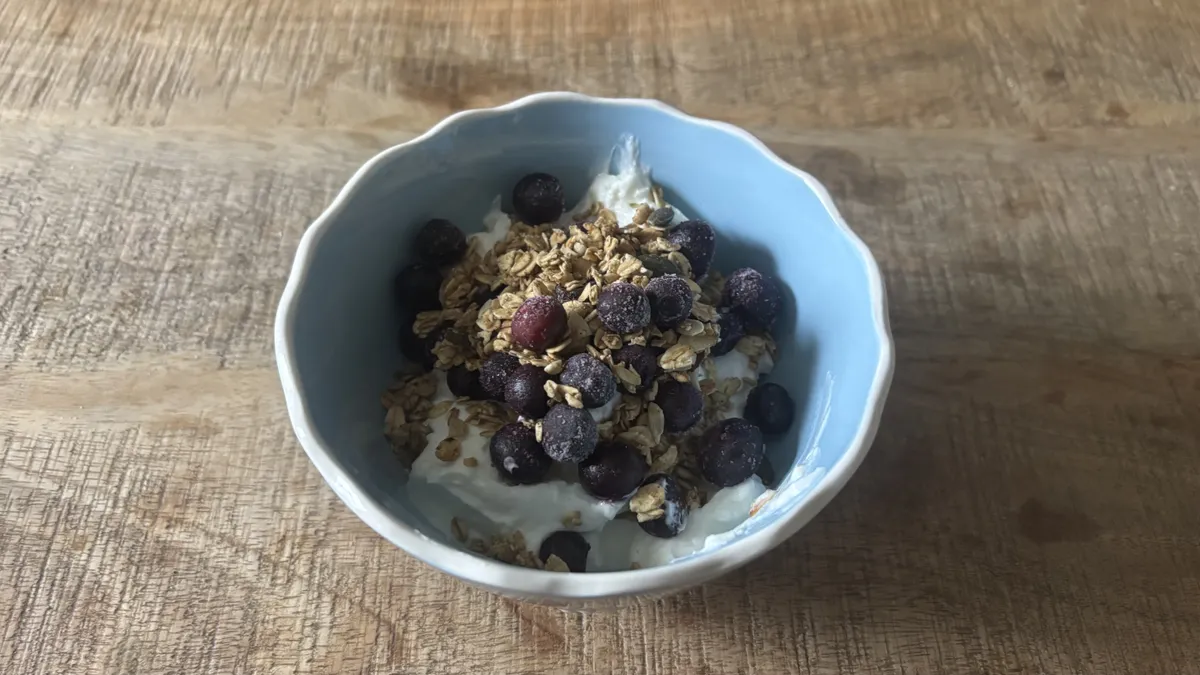
Frozen fruit and vegetables are just as nutrient-packed as their fresh versions, and often they're cheaper too.
"These have just as much (sometimes even more) nutrients than fresh since they are packed at the most ripe time," Pelitera explains.
"Adding frozen vegetables to my work lunch container is my favorite hack when I don't have a refrigerator available to keep my food cold."