Tracking your workouts, runs and steps may be the main reason you asked your Santa for a smart watch this Christmas (if it's not logged on Strava, it didn't happen, right?). But you can actually use your shiny new top smart watch to sleep better at night too.
I spent the last year testing the best sleep trackers on the market and found many popular smart watches from the likes of Apple and Garmin came out on top. Along the way, I've learnt how to use data collated by these trackers to achieve better rest at night.
You may have heard a sleep expert or two warning that tracking your sleep too religiously can cause more harm than good, leading to orthosomnia, i.e. the unhealthy obsession with achieving 'perfect' sleep.
So, I'm here with a run down on how sleep trackers can actually improve your sleep rather than harm it, with expertise from Tim Rosa, CEO of Somnee and former CMO at Fitbitand, and Dr. Nerina Ramlakhan, sleep expert at Oak Tree Mobility.
What are the benefits of sleep tracking?
From awareness to accountability, there are many benefits of tracking your sleep. It can help you understand your body and what you need to do to improve the quality of your sleep, if that is a concern.
"Check in with yourself before you check your data"
Dr. Nerina Ramlakhan
"Keeping track of metrics like sleep onset and time spent in the different sleep stages can give people a better idea of what they can do to work on their sleep hygiene, and understand how a range of daily habits, such as activity levels, diet, alcohol consumption, phone usage, light exposure, and more, might be impacting their sleep," Rosa explains.
But, he warns, "Sleep tracking can also be a double-edged sword, oftentimes creating score anxiety as many trackers focus on reporting rather than fixing." His best advice? "Choose wearables that offer some sort of solution along with the data." Our testing shows Garmin, Apple, Oura and Whoop all provide trusty sleep advice and actionable tips based on your personal data.
How to use your sleep tracker effectively
1. Wear it consistently and accurately
For the most accurate sleep data, you must ensure your smart watch is securely fitted through the night with sensors in the right place to track your biometrics.
Plus wearing your smart watch consistently helps its built-in algorithm learn about your habits and body. This way, the software can give valuable, personalized health (and sleep) tips.

For example, the Oura Ring (okay, it's not a smart watch, but its a wearable that works in the same way) takes anywhere between 40 to 90 days to calculate your chronotype and give reliable insight on how well your actual sleep timing line up with your body's preferences, based on your chronotype.
This information can help you establish a sleep schedule that aligns with your natural body clock, so you're energized when you need to be and feel sleepy when you hit the hay.
2. Take notes
While you're getting to know your smart watch and personal sleep habits, it's worth keeping your own sleep diary charting your perceived sleep quality from night to night. Think: Did I toss and turn before falling asleep? Did I wake up during the night? Do I feel refreshed this morning?
This can help you gauge whether your smart watch is working as it should, picking up on nighttime awakenings or accurately predicting when exactly you fell asleep.
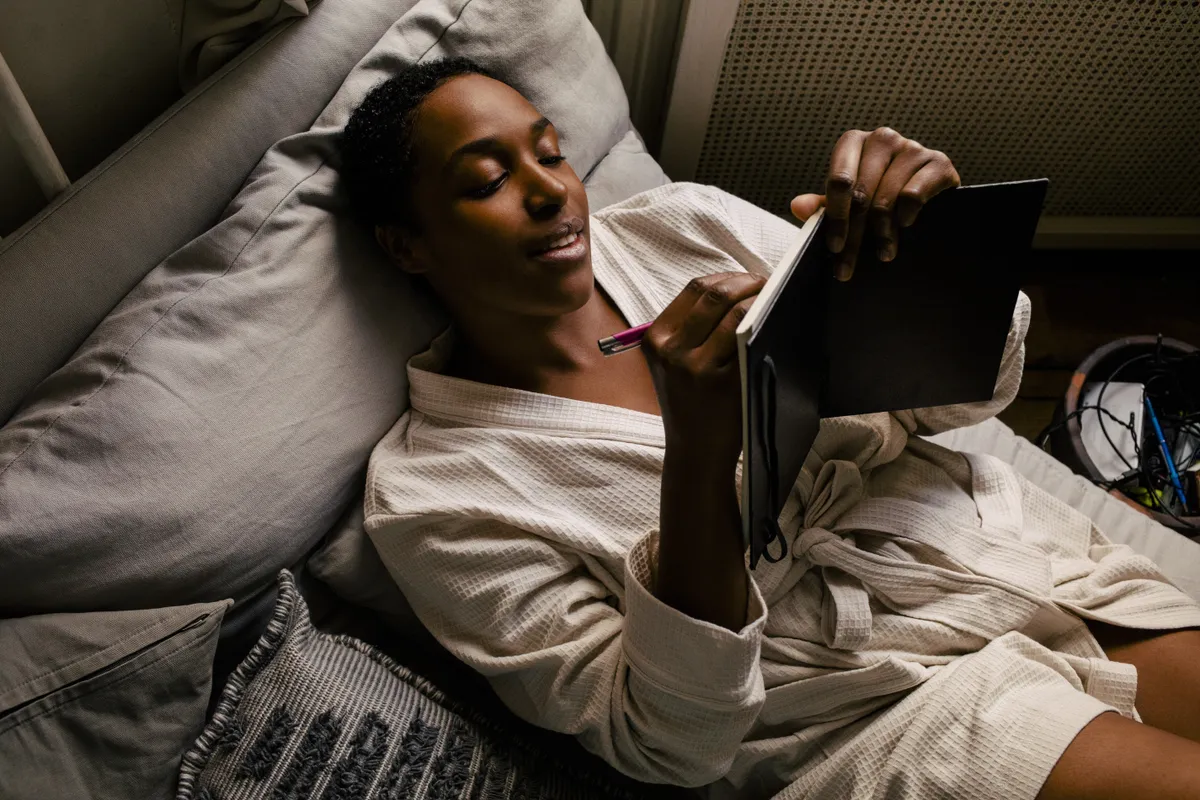
"Effective sleep trackers can help users evaluate how their routines and lifestyle might be negatively or positively impacting sleep," Rosa explains. So, it's also worth noting your daytime habits in this diary, especially ones that are known to impact sleep quality (uh-hum drinking alcohol, napping, eating late at night, exercising etc). This way, you're more aware of how these habits can boost or sabotage your rest.
And if you change any of these elements in your life, Dr. Ramlakhan says, "it can be helpful to see this reflected on the tracker" — those sleep data improvements could be just what you need to stay motivated around making healthier choices.
3. Focus on trends, not scores
The good news is I'm not going to tell you to nail every single sleep metric and ace a 100 sleep score every night. The new year and the lofty resolutions that come with it can feel overwhelming enough as it is.
Dr. Ramlakhan echoes this, advising: "An important thing is not to get too obsessed with the numbers, and take a break from tracking if you find yourself in that position." Instead, be observant of trends between your daytime choices and nighttime sleep capability.

But equally, it's no good huffing at your under-par sleep score without looking at the data that goes into it. Understanding what terms like sleep latency (the time it takes for you to fall asleep) and sleep efficiency (the percentage of time you're actually asleep while in bed) mean, and how sleep cycles and sleep stages work, can help you learn how you can improve your sleep.
Using the notes in your health diary, you can get a good picture of how your daily habits affect your sleep quality, and hopefully make healthier choices.
4. Trust your body
While collecting sleep data and using it to optimize your sleep habits and environment (more on how to do exactly that below) is all well and good, it's important not to get too caught up in the graphs and figures.
Ultimately, getting a solid seven to eight hours shut eye and waking up feeling energized for the day indicates you slept fine and dandy, no matter what your smart watch says. Even these tech-packed gadgets and AI algorithms can get it wrong sometimes. As Dr. Ramlakhan advises: "Check in with yourself before you check your data."
Rosa also emphasises how important it is to consult your body rather than your tracker. He says: "One of the often overlooked aspects of sleep tracking is gauging 'how you feel' after waking up versus what a specific number tells you." In short, don't make your sleep a numbers game.
You've got your sleep data, now what?
1. Establish and stick to a sleep schedule
In my opinion, the main benefit of sleep tracking is how it can help you establish and maintain a consistent sleep schedule where you go to sleep and wake up at the same time night in, night out.

Our sleep editors vouch that sleep regularity is the single most important sleep-well factor, after all. Having a device log exactly when you fall asleep and wake up in the morning helps keep you accountable around these consistent timings.
Allowing your smart watch's compatible app to send bedtime reminders can help, too. I find seeing that notification mid-scroll encourages me to put my phone down and properly wind down to fall asleep at my intended bedtime.
2. Optimize your bedroom
Many top draw smart watches including newer model Apple Watches (Series 8 and above) can track your wrist temperature while you sleep. Therefore, these devices can inform you of whether temperature changes are the cause of sleep disruptions.
If so, you can work on keeping your bedroom at the optimal sleep temperature between 65 to 70 F (18 to 21 °C). That may involve cracking open the window through the night, turning off the thermostat or investing in a cooling fan.
Smart watches can also detect environmental noise using their built-in microphones and decibel (dB) level apps. This means you can see if noise — a snoring partner or noisy neighbour, perhaps — is causing sleep disruptions and decide whether it's worth investing in a pair of the best sleep headphones to comfortably block it out.
3. Make healthy choices
You may have thought that good sleep starts in the evening, but in my sixteen months as a sleep writer, I've heard from countless sleep experts who all make it clear how influential your daytime habits are on your nighttime sleep quality.
That means everything, from what you do first thing in the morning to how you spend your lunch time and what you eat you at tea time, can impact how quickly you fall asleep and well you sleep through the night.

As mentioned above, your sleep data can visually show you exactly what habits disrupt your sleep. If your data shows booze or caffeine are negatively impacting your sleep, you're more likely to feel motivated to cut down in the name of better rest and recovery (and a higher sleep score).
On the sleep experts black list is staying indoors all day, eating large meals close to bedtime and scrolling in bed. That said, a daily walk, along with a balanced diet, bedtime tea and calming nighttime routine all get the green light.