Grinding on four hours sleep is so 2010s. Nowadays, America's highest performing individuals are putting their sleep health first — hallelujah, say the experts.
But of course, they aren't sleeping on any old mattress; hell, they're not even buying the best mattresses online. They're inventing a new wave of tech out to 'optimize' sleep, that includes high-cost mattress systems and wearable gadgets.
Back in 2017, a study undertaken by the Division of Sleep Medicine at the Harvard Medical School found that around half of all CEOs get less than six hours sleep a night. Now, the tables have turned and those at the top are getting the best sleep out of us all, thanks to an ever expanding ecosystem of tech designed to deliver great sleep.
But which ones do the top performers truly rely on and which consumer products are worth your investment in 2026? And, most importantly, can you even pay for better sleep? Let's dig in...
- Read more: I let my bedside lamp track my sleep for 3 weeks — and it's the next frontier of sleep tech
The cost of a good night's sleep
"Sleep gadgets worth hundreds, if not thousands, of dollars per product are in vogue"
The Silicone Valley sleep hype is at an all time high. According to PitchBook data analyzed by the Wall Street Journal, the world's top billionaires have poured more than $5 billion into longevity startups over the past 25 years.
That includes various tech that promises to help you fall asleep fast and get the best sleep of your life, all while boosting your health and lifespan.
By now, we've got customizable mattresses costing anything between $1,000 and $10,000, AI sleep trackers, sleep headbands at $400+, and $900 devices that manipulate the brain to rest.
Essentially, the simple act of sleeping has developed into a multi-billion dollar industry backed by some of the most influential figures in technology and health, and supported by wellness warriors across the globe (and social media).
The favorite sleep gadgets going into 2026...
As billionaires and wellness enthusiasts alike strive for perfect sleep, and are willing to pay for it, sleep gadgets worth hundreds, if not thousands, of dollars per product are in vogue. Here are the ones we're predicting will be in the spotlight in 2026...
Smart mattresses
At the heart of the sleep tech ecosystem lies smart beds and mattresses. The smart bed market was valued at $3.38 billion in 2024 and is projected to reach $5.51 billion by 2032, growing at a CAGR of 6.30% from 2026 to 2032, as per Verified Market Research.
And the best smart beds and mattresses come Silicone-Valley approved with big names including Mark Zuckerberg and Elon Musk vouching for Eight Sleep specifically.
Eight Sleep already have a portfolio of heating and cooling, sleep tracking vibrating mattress covers, adjustable bed bases, a hydro-powered blanket and climate control pillow.

With this sleep set up, you can fine tune the temperature of your whole bed, get personalized sleep insights without any wearables, adjust the position of your bed and wake up gradually via in-bed vibrations rather than a jolting alarm. It does everything to help you sleep comfortably and wake up refreshed.
But, in August last year, the New York company, founded by Matteo Franceschetti, Massimo Andreasi Bassi and Alexandra Zatarain, revealed they had raised $100 million in Series D funding from a group of strategic investors.
With the tech billionaires and huge investments on their side, Eight Sleep's technology is sure to level up in 2026.
Sleep trackers
Our sleep tech reviewers name the Oura Ring 4 the best sleep tracker you can buy in 2026 and it turns out this smart ring is highly regarded by tech's elite as well. Mark Zuckerberg told Forbes he uses an Oura Ring to measure his sleep cycles and heart rate, and make sure he's getting eight hours sleep a night.
What's more, sleep evangelist and co-founder of Huffington Post Arianna Huffington is an advocate of the Oura Ring, too. "I love my Oura ring and being able to track my sleep," she writes on LinkedIn.

While we're unlikely to see a Oura Ring 5 in 2026, judging by the brand's typical three-year cycle (Generation 3 came out in 2021 and Generation 4 in 2024), we're sure to see upgrades elsewhere (Garmin and Apple, we're looking at you).
We've heard wind from our friends at T3 of a Whoop-rival under the name Luna Band
And there's nothing to say the Oura software and app interface won't be upgraded in the course of this year.
New sleep tracker launches are debuting at CES 2026, too. WisMedical's Tedream Patch, a sensor-packed, soft patch that attaches to the forehead, chest, and forearm, claims to replicate a full sleep lab study at home. Plus We've heard wind from our friends at T3 of a Whoop-rival under the name Luna Band.
Vagus nerve stimulators
The vagus nerve, the main nerve in the parasympathetic nervous system, is gaining more traction in the wellness world. Influential figures including Mel Robbins and neuroscientist Andrew Huberman are shouting about how you can "control" this nerve to help you feel calm and get better sleep.
And, of course, there's a gadget for that. Enter: Vagus nerve stimulators. These are wearable devices that send electrical impulses to the vagus nerve to shift the body into a state of calm. Supposedly, this induces sleep onset and improves sleep quality.

These stimulators are backed by none other than Bryan Johnson, aka the biohacker and tech bro who wants to live forever and spends $2 million a year on longevity-boosting protocols.
WillSleep non-invasive vagus nerve stimulation patches promising insomnia relief
Johnson wears the Pulsetto stimulator in his Netflix documentary, 'Don't Die: The Man Who Wants to Live Forever’, about his quest to stay young and defy death.
Like sleep trackers, there are new neurostimulators on the horizon at CES. Most notably, the WillSleep non-invasive vagus nerve stimulation patches promising insomnia relief combined with biosignal tracking.
Sleep headbands
Sleep headbands are the new kids on the sleep tech block, promising to help you fall asleep faster and sleep better, with some even tracking and analyzing your rest. Notable brands so far include Elemind, Somnee and the Muse S Athena.
They may sound like something straight out of a sci-fi movie, what they really do is slow down your brain activity with acoustic stimulation to induce a sense of calm
These headbands can feature everything from EGG sensors reading brain activity, to PPG sensors tracking heart rate and circulation.
Though they may sound like something straight out of a sci-fi movie, what they really do is slow down your brain activity with acoustic stimulation to induce a sense of calm when worn at bedtime.
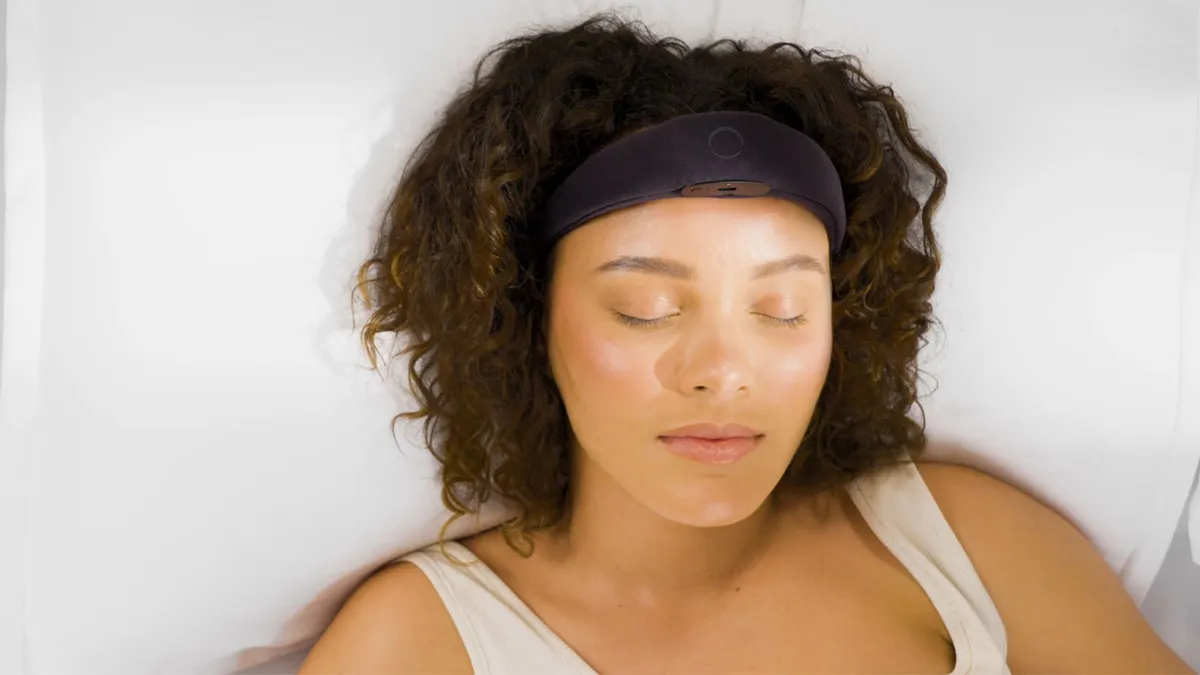
Move over eye masks, the headband is coming through. Back in 2024, Village Global, an early-stage venture fund backed by Amazon's Jeff Bezos, Netflix’s Reid Hoffman and Microsoft's Bill Gates, ploughed money into the neuro-tech company Elemind Technologies.
Fast forward a year and the company's co-founder and CEO Meredith Perry revealed on LinkedIn that Elemind has made $3.1 million in top-line sales since launch, growing 20% month on month in Q4 of 2025.
With the rich and famous backing them and growing interest across social media, it certainly looks like sleep headbands could be the IT sleep product of 2026.
Where will sleep tech go in 2026
Not so long ago, strapping a smart watch to your wrist overnight to track your sleep and wake up times was the pinnacle of sleep technology. Now we have beds that control our temperature, headbands that interfere with brain waves and trackers built with AI algorithms.
According to Research Nester, the global Sleep Tech Devices market was valued at just under $27 billion in 2025 and is projected to reach approximately $30.74 billion in 2026, with wearables being a key area of growth.

What will this growth look like for consumers? We're expecting to see sleep technology integrate even more AI and be more involved in the medical scene.
Thanks to AI, trackers already offer personalized sleep coaching from your mobile based on your personalized sleep metrics and we expect these language models to develop this year.
Meanwhile, consumer devices including the Apple watch have FDA-clearance for sleep apnea detection and we expect to see more global brands follow suit, meaning people will be taking their smart watch data to medical professionals for official diagnosis.
Zuckerberg and clan aren't flying around in hoverbikes just yet, but they're sleeping in beds that seem to do everything bar the actual sleeping for you; while the Joe Bloggs of the world are analysing their sleep at home to a level that would once have only been achievable in a sleep lab.
What gadgets do you think will be in our bedrooms by 2027? Drop them in the comments below...