The Christmas dinner has been eaten, the dishes done and you're faced with the post-roast slump. A nap on the coach is probably calling you're name, but sleep experts urge you take a 'fart walk' instead.

Is your mattress due an upgrade in 2026? Our guide to the best mattresses online helps you find the right one for your budget and sleep needs, all tried and tested by our sleep experts
The most commonly cited benefits of fart walking are improved digestion, better blood sugar regulation and reduced bloating, so why are we writing about it on Tom's Guide's sleep desk? Well, all of these things are tied in with getting a good night's rest.
"Walking after eating helps us get better sleep by reducing stress, managing blood sugar levels, and improving digestion by stimulating the gastrointestinal tract," says Physician and Medical Director Dr. Edmonds Hakimi.
Although there's no scientific studies specifically looking at 'fart walking' (we're not sure that title would sit well in an academic journal), science checks out on general walking for better sleep — and the sleep experts I've consulted approve of the trend.
What is fart walking?
The fart walking technique is simple: You get up and go for a short, relaxed walk just after finishing a meal to stimulate your bowels and release gas.
Kudos for the trend and its catchy name go to Canadian cookbook author Marilyn Smith, who now names herself 'The Fart Walking Lady'.
Debuting fart walking in a social media video, Smith explains taking a gentle walk in the evening after dinner can not only help you release gas, but also reduce your risk of developing type two diabetes and help you "age wonderfully."
Health-conscious TikTokers have soaked up her advice and, thankfully, it's not any old social media fad.
Despite the lack of direct science on the fart walk, there's plenty of evidence backing up how it can help you sleep at night, especially after an indulgent meal.
Walk your way to better sleep
Walking, no matter the time of day, offers great sleep benefits. Seriously, studies show it reduces the risk of sleep apnea and boosts sleep quality, as well as leading to more deep sleep and a regulated body clock.
"Walking helps you sleep better by influencing both physiological and psychological factors, including regulating your body clock, reducing stress, and inducing physical tiredness," says Dr. Paul Harris, Medical Director of Soaak Technologies with over 50 years experience in Naturopathic and Functional medicine.
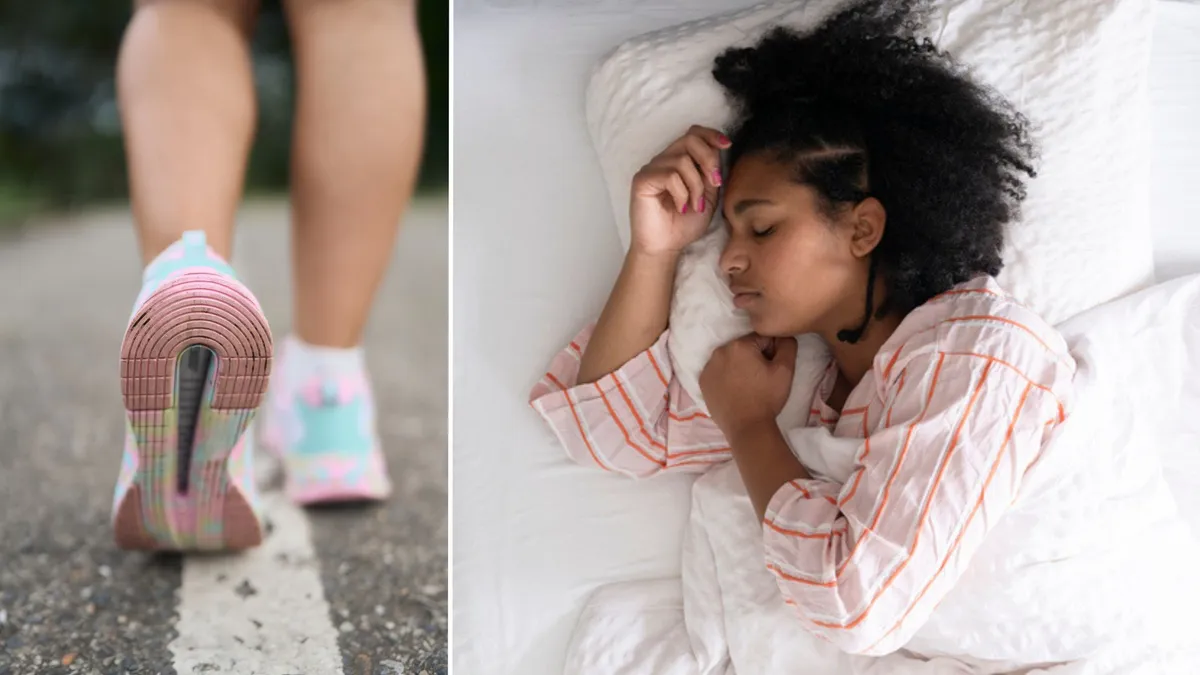
"For best sleep benefits, morning walks are great for setting your internal clock (circadian rhythm) and boosting daytime energy, while gentle evening walks 30 to 90 mins before bed [aka a fart walk] relieve stress and signal winding down," he adds.
So, how exactly does fart walking pave the way for better sleep? From improved digestion to body temperature regulation, ahead you'll find out all the reasons why a fart walk could save your sleep this holiday season...
4 reasons fart walking helps you sleep
1. It improves digestion
Time and time again, experts have warned about how your eating habits impact sleep. Eating too close to bedtime is particularly associated with negative sleep outcomes.
Providing a buffer between mealtime and bedtime, a fart walk is the ideal way for your body to sort through sustenance before bed, getting digestion out the way before your body starts winding down to rest.

"A gentle walk after eating supports digestion. It wakes up your digestive system so that food can be digested and move past the stomach before sleeping," says certified integrative physician and sleep expert Jacob Teitelbaum, M.D., says.
"Otherwise, people are more prone to nighttime acid reflux, which disrupts sleep." This can also help you avoid the symptoms of GERD.
2. It relieves stress
It's no secret that stress and sleep just don't get along. You don't even need to be a bundle of nerves for stress to impact your rest.
In fact, underlying stress (those worries constantly sitting at the back of your mind) can creep up at bedtime, keeping you awake staring at the ceiling way later than you intended.
But worry not, a fart walk could take that stress away. Walking and moving in general is scientifically proven to lower stress and boost feel-good hormones like serotonin.
Plus, a post-meal stroll physically eases the discomfort of bloating, which often exacerbates stress.

"Easy walks help you to burn off excess adrenaline and release stress, so you can ease into the rest and relax part of the nervous system (the parasympathetic nervous system)," says Teitelbaum.
With the parasympathetic nervous system activated, your heart rate is slower and you're sure to feel calmer and more ready to nod off by the time your head hits the pillow.
3. It aids blood sugar management
As mentioned above, improve blood sugar regulation is one of the beauties of fart walking, and this can set you up for a more peaceful night's sleep.
In the OG fart walking TikTok, Smith says fart walking helps maintain blood sugar levels — "keeping them from ricocheting all around" — particularly among older individuals.
While the science of fart walking and blood sugar is yet to be studied in depth, one small study showed a 30-minute walk after eating can help curb blood sugar spikes, which is good news for sleep.

From hormonal interference to nighttime awakenings, unstable blood sugar levels are no good for sleep. Rapid sugar spikes after eating (thanks to glucose in food) spike cortisol, making it harder to fall or stay asleep.
Meanwhile, high blood sugar levels cause thirst and urination, making you get up more frequently at night. On the flip side, low blood sugar can cause disrupting night sweats.
Blood sugar can also interfere with sleep cycles with unstable glucose levels reducing deep sleep. Without plenty of this restorative sleep stage, you won't feel as refreshed upon waking.
How to fart walk for better sleep
- When should you walk? Just after dinner
- How long should you walk for? 15 to 30 minutes
- What about intensity? It should be a light rather than vigorous walk
It can certainly be tempting to curl up on the sofa after your festive dinner and snooze the afternoon away. But that can lead to a lot of tossing and turning once bedtime rolls around. Instead, experts urge you to take a fart walk before hitting the hay.
But Dr. Emma Lin, a board-certified Pulmonologist and Sleep Medicine Specialist, offers a word of warning: "There’s no need for speed," she says.
"The idea is to increase your heart rate slightly and engage your lungs, but not to the point that you find yourself too alert afterwards."

A 2019 study in Sports Medicine did confirm, after all, that vigorous exercise ending an hour or less before bed can impair sleep efficiency and sleep time, and make it harder to fall asleep fast.
Moreover, science indicates that, for the biggest benefit, you should get out and walk as soon as possible after a meal.
This 2023 study by German researchers found walking stopped blood sugar levels becoming too high when undertaken as soon as possible after a meal rather than after a longer interval or before eating.
In the space between your fart walk and actually getting into bed, it's important you keep your body in that calm space by following a sleep-friendly evening routine. This routine will look different for everyone depending on your responsibilities and preferences. Dark shower or pre-bed stretch, anyone?