The first time you fire up a new Garmin watch, the amount of stats can be overwhelming, and the more you use the watch, the more data it throws at you about your activity, workouts and recovery.
There’s a lot of useful information that can guide your training to help you get fitter and reduce your injury risk, but there’s so much data on your wrist these days it’s not always to separate the wheat from the chaff.
I’ve been using the best Garmin watches for over 10 years and have run 15 marathons in that time. Right now I’m training for the London Marathon and have the Garmin Forerunner 970 on my wrist, and some of the data it provides is very useful, while other stats I simply ignore.
Before I dive into what info I find useful I think it’s important to say that in order to get the most useful advice from your watch, it needs accurate data going in, and for me that means wearing an external heart rate monitor during workouts.
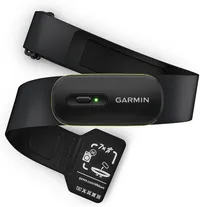
I use a chest strap, but arm bands are also a worthwhile upgrade on the heart rate sensors on watches. These optical sensors are now pretty good — the Forerunner 970’s heart rate tracking is mostly reliable — but I prefer the security of a chest strap’s data if I’m planning to use the watch's analysis to guide my training.
Here are the five stats I check regularly on my Garmin watch during marathon training, and three I ignore.
Stats I Care About #1: Training load

In many ways, running is a simple sport, in that if you can increase the amount you run in terms of distance and intensity over time, you will get fitter and faster. However, to do this safely you have to judge your training load carefully, and that’s where training load and running tolerance come in.
Your training load will look at your acute training load — the amount of running you’ve done in the past week — compared with your chronic training load, which is your longer term load.

You don’t want to suddenly increase the amount or intensity of your training because you risk injury, so you can use your training load ratio to ensure you’re building your fitness in a sustainable manner.
My ratio is 1.1 right now, which is where I want it in that my short term training load is higher than my chronic load, but only a little, so theoretically I’ll be getting fitter without pushing too hard.
Stats I Care About #2: Running tolerance

Most Garmin watches show training load, while some pricier models like the Garmin Forerunner 970 I wear also have running tolerance, which covers the same area in a different way.
Running tolerance shows the distance you’ve run in the last week, but takes into account intensity and so assigns extra distance to harder runs which have more impact on the body, then shows this in comparison to the distance the watch estimates your body can handle.

For example I’ve run 74.8 miles over the past seven days, which Garmin rates as 91.8 miles because of the extra difficulty of some of those runs, and my running tolerance is currently rated at 103 miles a week.
If I push beyond my tolerance, there’s a greater risk of injury, in theory. You can use both training load and running tolerance to stack up the weeks of marathon training in a way that gets you fitter with a reduced risk of injury.
Stats I Care About #3: Heart rate variability

Each morning I will check my heart rate variability (HRV) as measured by the watch overnight, just to see that it's within my normal parameters.
If it isn’t, then this can be a sign that something’s wrong. Maybe I haven’t recovered properly from a past workout, or I’m getting ill, or I had a late night and too many drinks and my body is feeling the stress.
I don’t live and die by this reading, but keeping tabs on your HRV during an intense period like marathon training can highlight early warning signs your body is getting run down, so you can adjust your workouts or take an extra rest day if required.
Stats I Care About #4: VO2 max

Your VO2 max is a great indicator of your cardiovascular fitness, and throughout any successful marathon training block I’ve done I’ve seen my VO2 max rise as the weeks go by.
This isn’t something I check every day, but every couple of weeks I’ll check in and hopefully see a steady rise in my VO2 max graph, indicating that my training is indeed making me fitter.
Stats I Care About #5: Active calories

I don’t generally monitor my weight closely, but when I’m logging a lot of miles during marathon training I do check my active calories burned each day to ensure I’m eating enough to not lose weight.
Garmin shows overall calories as standard on its watches, which includes an estimate of your resting calorie burned each day, but active calories is more important for me when judging my meals and fueling my runs.
This is something I look at on long runs and hard workout days in particular — you don’t want to dig yourself a hole where you’re leaving your body without the nutrition it needs to fuel all that running.
Stats I Ignore #1: Predicted race times

Your Garmin watch will give you predicted times for 5K, 10K, half marathon and marathon races. These are something I’ve seen runners obsess over and even base their race targets on, but I ignore them.
That’s because they’re not accurate enough to be useful in my opinion, especially for the marathon. They also don’t adjust quickly, so even if you run a faster time in training or a race than the watch suggests you can, it will still predict a slower time.
Right now it’s predicting a marathon time of 2:34:37, which is about nine minutes slower than my PR, and I've regularly beaten Garmin's predicted marathon time by five to 10 minutes in the past.
Stats I Ignore #2: Running economy

This is a stat only available if you’re using a Garmin HRM 600 chest strap with one of the pricier models in the line-up, and it is available on my Forerunner 970, but I’ve not found it something that’s useful during marathon training.
In theory, improving your running economy would be valuable in making you a faster runner, but it’s a marginal gain that is hard to do without direct coaching.
I'm also not sure how well a watch can judge your overall economy, because runners of levels have very different gaits that work for them.
I’d say focusing on getting fitter is a lot more valuable than worrying about how you run during marathon training — by running a lot of miles, you’ll naturally become more efficient anyway.
Stats I Ignore #3: Sleep score

A consistent sleep schedule is vital for recovery during marathon training, but I simply don’t trust my Garmin watch to provide an accurate assessment of my rest, so I don’t worry about the sleep score it gives each morning,
I’ve noticed that Garmin watches overestimate my time asleep throughout the years I’ve been testing them, and I have a better idea of how well I’ve rested than any wearable, so I don’t need any conflicting info on this front.
If you're a runner who uses a smartwatch for training, which stats do you rely on the most? Let me know in the comments.

Follow Tom's Guide on Google News and add us as a preferred source to get our up-to-date news, analysis, and reviews in your feeds.
More from Tom's Guide