
If your bed is beyond saving, our guide to the best mattresses you can buy online, tested and chosen by experts, can help you find a new one.
With the windows locked tight and the heat cranked up, you might think you're successfully keeping the bleak weather outside. But condensation can make your entire home damp and experts warn your bed might be suffering the brunt of it.
"The mattress can trap this moisture and create a hidden pocket where mould grows," warns Dr. Menachem Jacobs, Resident Physician at Yale New Haven Hospital.
"The dangerous part is that you may never see the mold, yet spores can spread invisibly through the mattress fabric."
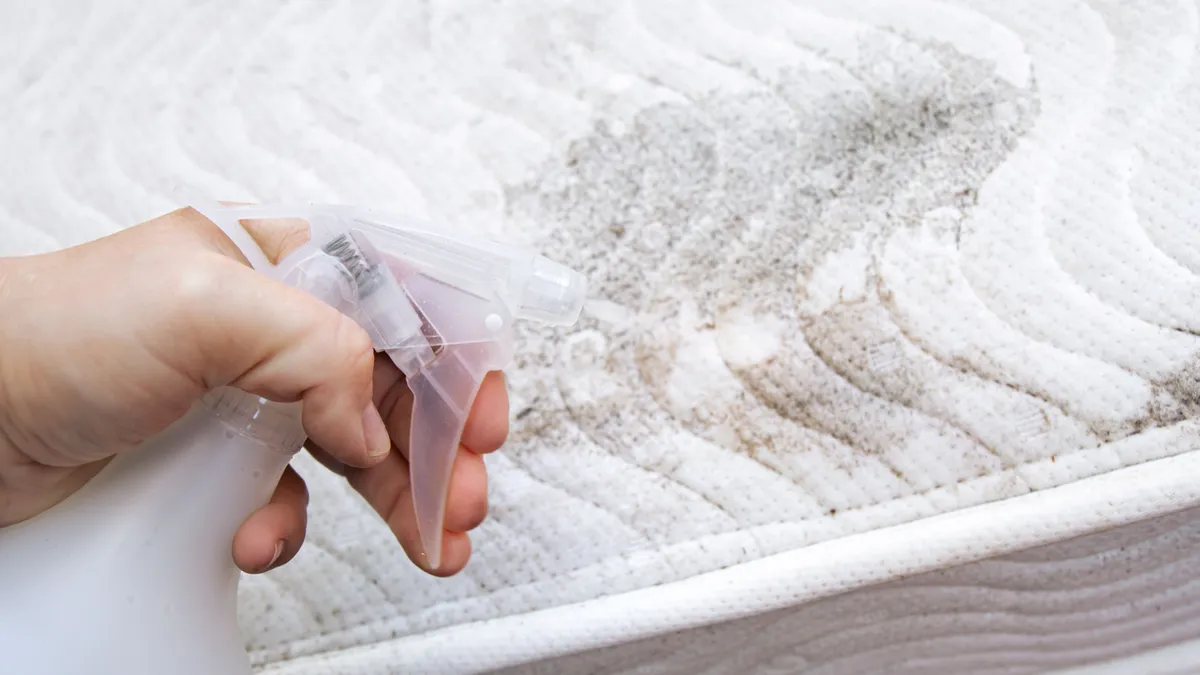
Mold isn't always obvious on your mattress — look out for dark flecks and brown spots — but once the spores set in, it's bad news for both your bed and your sleep.
"The real culprit is a moldy bed”
Feeling more run down than usual? Your bed might be too blame. "[Mold] spores can worsen allergies and cause coughing fits," notes Dr. Jacobs.
"Many families spend months treating what they think are recurring colds without realizing the real culprit is a moldy bed.”
Dr. Jacobs warns that cleaning your bed should be a priority, even during the busy holiday season.
"Viruses and bacteria can survive in warm bedding for days, which means if one person in the household is ill, the infection can easily spread back and forth through shared sheets and duvets."
Mold also spells bad news for your mattress itself. Damp causes the interior materials to break down, leading to sagging. So your moldy bed might be inadvertently responsible for your morning back pain.
What to do if you find mold in your mattress
Once you've spotted mold in your bed, you need to treat it immediately or the stain can spread fast.
- Strip the bed. Remove all bedding and place it in a hot wash to kill any lingering mold spores. Ensure your bedding is completely dry before dressing the mattress again.
- Check the pillow. If your mattress is moldy, there's a good chance your pillow is afflicted too. Pillows can sometimes be machine washed but if that's not possible, follow the below tips for your mattress and pillow.
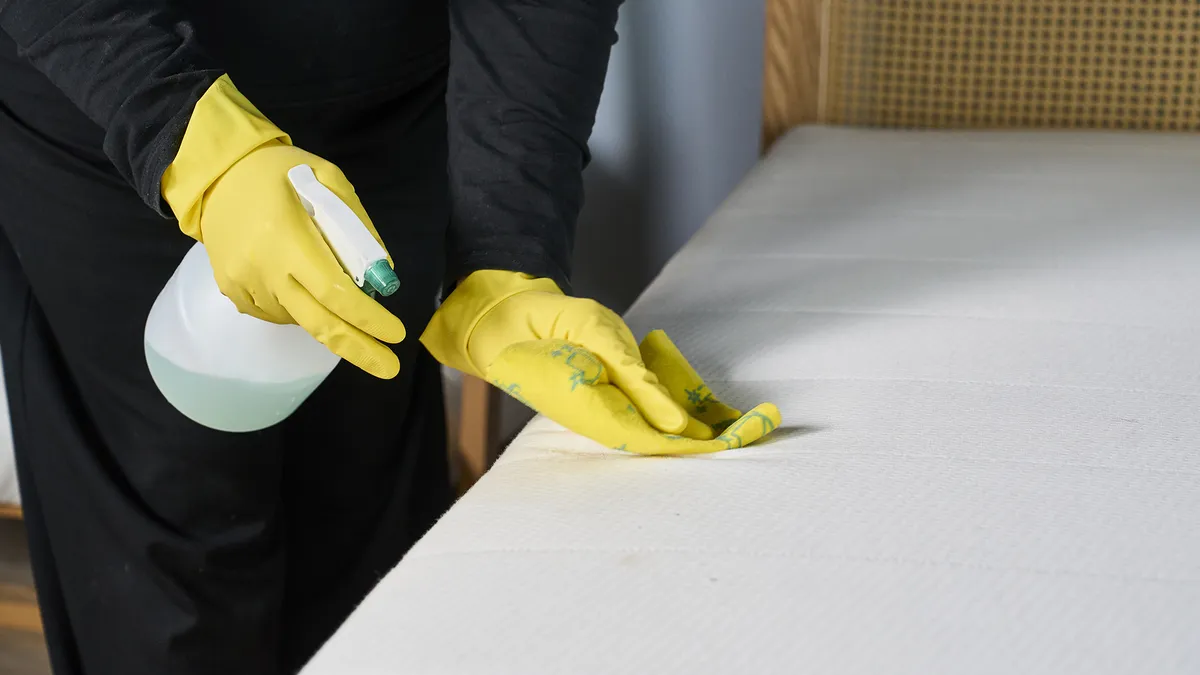
- Spot treat the mold: Combine equal parts white vinegar and water in a spray bottle and lightly spritz the mattress (don't saturate the surface.) Leave to sit for roughly 20 minutes then blot with a clean cloth.
- Apply a layer of baking soda: Sprinkle a thin layer of baking soda over the surface of the mattress and leave for a couple of hours to fully dry. Vacuum the mattress thoroughly.
For more information, check out our guide to removing mold from your mattress.
If the stain is covering the entire surface, then you will need to replace the mattress. Mold spores can become deeply embedded in the thick layers of a mattress, so even if you think you've treated the surface, the problem might still be lurking. That's why upkeep is so important.
Mold prevention tips
Martin Seeley, CEO of MattressNextDay, advises daily upkeep to prevent mold in your mattress this winter; "small habits make a big difference."
He recommends wiping condensation from the walls every morning and opening the curtains to let sunlight in. "Natural light helps dry the space and stops mold from settling in the first place,” he notes.
Committing to these small habits now can help you avoid the hassle of removing mold from your mattress (or buying a new bed entirely)...
1. Air your mattress every morning
“Most people do not realize how much moisture their mattress takes in every night," says Seeley. "That’s why it’s important to strip your bed once a week and give it a few hours to air out before making your bed each morning."
Giving your mattress a chance to breathe allows trapped moisture from condensation and sweat to escape.
Seeley also advises opening a window, just for a bit. "You will notice the whole room smells fresher and feels lighter," he says.

2. Consider where your bed is placed
Having your mattress pressed directly against a wall can worsen a mold problem, as the bed soaks up the condensation. Plus, it can make the bed colder, making it hard for you to maintain an even body temperature overnight.
"If you can, pull the bed out just a little bit. Even 20 or 30 centimetres of space makes a big difference. It stops that icy air from hitting you in the night and lets the mattress breathe properly," advises Seeley.
We also don't recommend putting your mattress directly on the floor, as it cuts off air flow. If you do like the floor mattress aesthetic, place a tatami mat or bunkie board beneath.
3. Invest in a dehumidifier
"Dehumidifier all the way" says our Sleep Editor Nicola Appleton, who swears by her dehumidifier to keep her damp bedroom dry.
The best dehumidifiers suck damp and condensation out of the air, for a drier home (and a mold-free mattress.)
Ideally, you should place a dehumidifier in the center of the room, where it has the most space to get to work. And don't forget to empty it regularly, particularly if there's a lot of damp in your home.

Follow Tom's Guide on Google News and add us as a preferred source to get our up-to-date news, analysis, and reviews in your feeds.