If you are getting your home ready for festive hosting, do not overlook the sink. Even with pristine worktops and clean floors, cloudy stainless steel covered in chalky water rings instantly makes a kitchen feel tired.
Before the holiday cooking frenzy begins, you can revive a dull basin without scratching the metal or buying pricey specialty cleaners. This five-minute routine cuts through greasy buildup and seals in a bright, showroom shine just in time for visitors.
Cut through grease with warm soapy water
Rinse away loose food debris, then wash the entire basin thoroughly with hot water and dish soap. Using a soft microfiber cloth or non-scratch sponge, wipe in long, steady strokes that follow the faint brushed grain of the steel rather than scrubbing in circles.
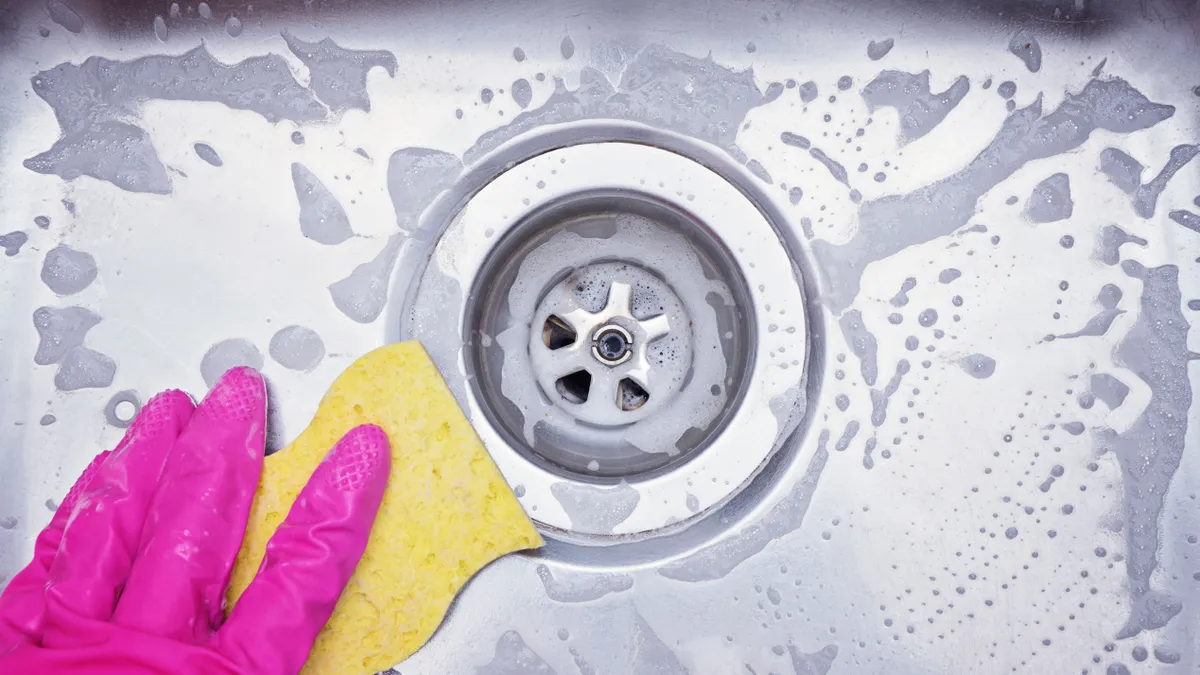
This removes the surface grease film so your cleaning paste can make direct contact with the mineral spots underneath.
Lift cloudy limescale with baking soda
Sprinkle a light dusting of baking soda over the damp steel, concentrating on the drain and faucet base where hard water residue gathers. Using a damp cloth, work the powder into a paste along the metal's grain to lift dull water rings without scratching.
For stubborn hard-water marks, rinse the baking soda paste away thoroughly first, then apply a light spray of white vinegar directly to the mineral scale.
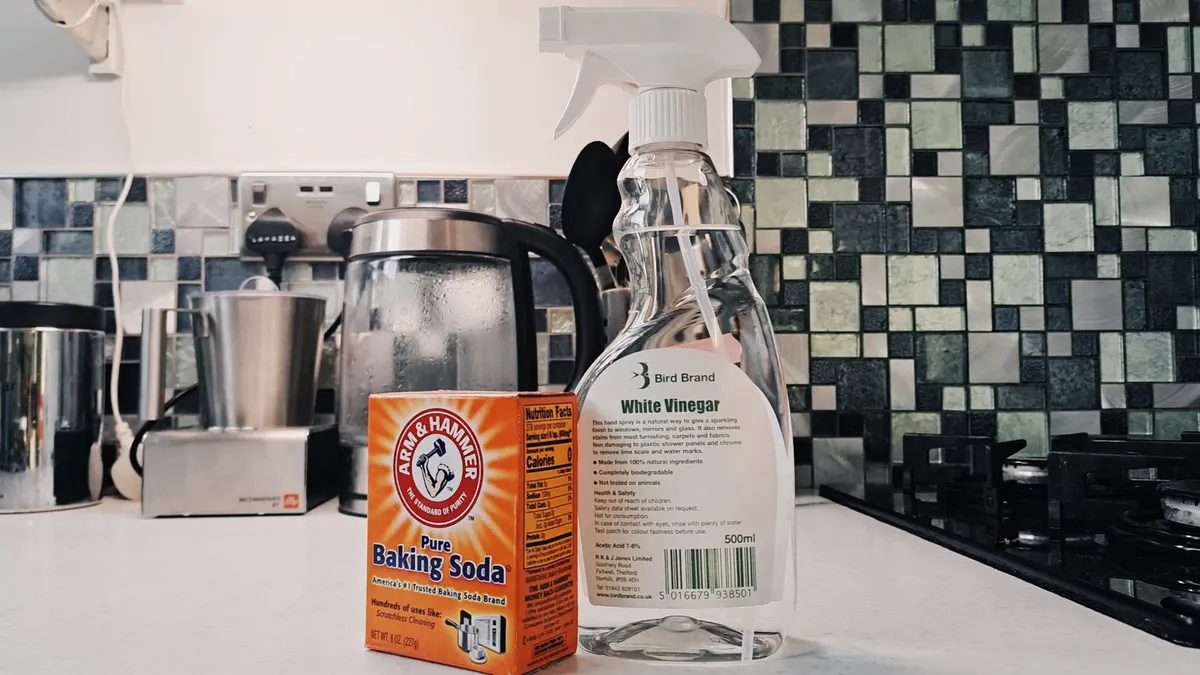
Letting the vinegar sit undiluted for a few minutes allows its mild acetic acid to chemically dissolve crusty calcium and magnesium deposits without being neutralized by the alkaline baking soda.
Avoid spraying vinegar onto specialized faucet finishes like matte black, brass, or oil-rubbed bronze, as the acid can strip or discolor the coating.
Once the mineral scale softens, use a soft-bristled brush or non-scratch sponge to gently agitate and lift any remaining gritty buildup from the metal’s surface texture.
Buff dry and seal the shine
Standing water left to evaporate is why cloudy spots return. Use a dry dish towel or microfiber cloth to wipe the entire basin, faucet, and drainboard until completely dry.
For an optional finishing shine, apply a single drop of mineral oil (like baby oil) or olive oil to a soft cloth and buff it into the steel, following the direction of the metal's grain. Buff vigorously with a clean, dry section of the towel until no residue remains.
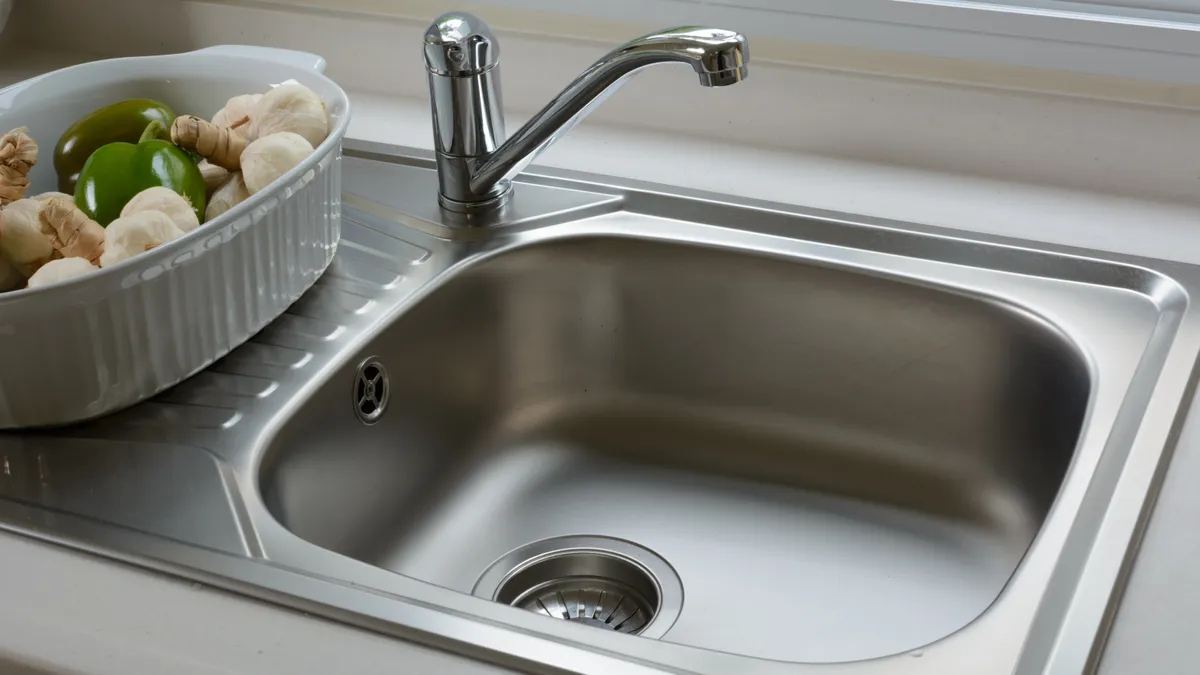
This creates a light barrier that repels water beads and keeps the shine lasting longer, especially on faucets and handles.

Follow Tom's Guide on Google News and add us as a preferred source to get our up-to-date news, analysis, and reviews in your feeds. Make sure to click the Follow button!
More from Tom's Guide