For as long as I can remember, I treated the standard dual-layer kitchen sponge like a one-size-fits-all scrubbing block.
My routine was simple: squirt soap onto the soft side, give it a quick squeeze to foam up, and then use whichever side felt right for the job. If a dish had stuck-on food, I flipped straight to the abrasive scouring side and scrubbed.
It wasn't until I noticed the dark coating flaking off my favorite frying pan that I looked into how these everyday sponges are actually constructed. It turns out that two-tone design isn't just cosmetic, and mixing up the sides is a fast track to ruining your kitchenware.
What the two layers are actually made of
While the classic yellow-and-green sponge is the most common, dual-layer sponges come in various color combinations. That two-tone construction consists of two completely different cleaning tools bonded together, each engineered for specific materials and tasks.

The soft base layer, typically made from synthetic polyurethane foam or natural cellulose wood pulp, is a porous material designed for maximum absorption and foam creation. It holds soap and water efficiently while remaining soft, flexible, and completely non-abrasive against delicate surfaces.
Bonded to it is the abrasive top layer, or scouring pad. Made from dense synthetic fibers, such as nylon or polyester, often infused with abrasive mineral particles, this side is engineered strictly for heavy-duty scraping to break down stubborn, burnt-on food residue.
The mistake everyone makes

I've always relied on the rough scouring side as my shortcut for stubborn grease, using it on almost every dish in the sink. It wasn't until I noticed the flaking coating on my non-stick pans that I realized the synthetic fibers in heavy-duty scouring pads act like micro-sandpaper, slicing through Teflon and ceramic coatings until food begins sticking permanently.
That abrasive friction does subtle damage elsewhere, too. On stainless steel, plastic containers, and glassware, it leaves fine scratch patterns that dull the finish and create micro-grooves where bacteria can hide.
Plus, scrubbing directly with the scouring side is a huge waste of money. Because those dense fibers can't trap air or hold water like the porous cellulose base, soap drains right through without lathering, forcing you to use twice as much dish soap for every load.
How to use each side correctly
To protect my kitchenware and make my sponges last twice as long, I started following a strict rule of surface matching.
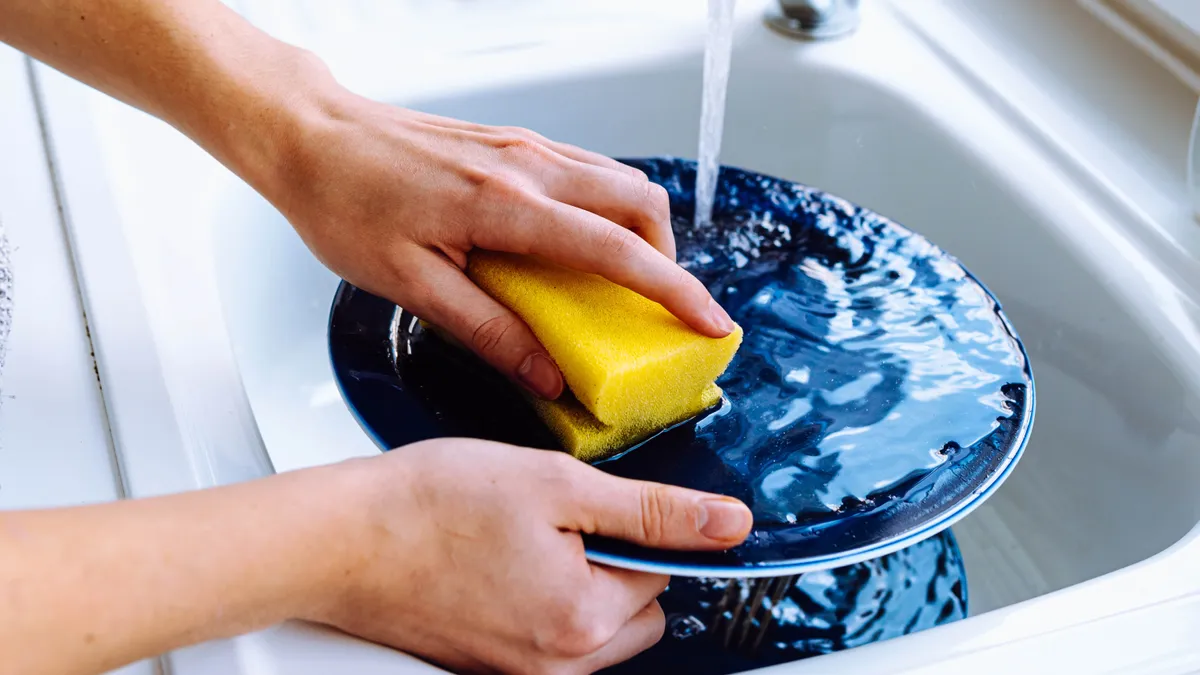
Now, I reserve the soft layer exclusively for items that scratch easily — including non-stick and ceramic-coated pans, glassware, plastic Tupperware, seasoned cast iron skillets, and wiping down smooth countertops or stainless appliances.
I save the scouring side strictly for uncoated, durable surfaces that need real muscle, like uncoated stainless steel pots, baked-on casserole dishes, oven grates, and outdoor grill burners.

Follow Tom's Guide on Google News and add us as a preferred source to get our up-to-date news, analysis, and reviews in your feeds. Make sure to click the Follow button!
More from Tom's Guide