Baking sheets are the unsung workhorses of the kitchen, but over time, high heat and cooking oils turn pristine metal into a mottled, brown mess.
While some people assume those dark, burnt-on stains are permanent, or reach for harsh, toxic oven sprays, you do not need industrial chemicals to restore your pans.
The secret lies in using mild abrasives paired with a chemical reaction to break down polymerized fat without destroying the underlying metal.
Here's three simple cleaning methods that strip away years of built-up grease with the least amount of elbow grease.
Why dish soap fails on polymerized fat

That tough, brown layer on your sheet pans is not just dry oil, it is polymerized fat. When cooking oils are repeatedly exposed to high oven heat, their chemical bonds break down and cross-link into a tough, plastic-like varnish that fuses directly to the metal surface.
Standard liquid dish soap is formulated to trap fresh, liquid surface fats, but it completely slides off this hard, cured barrier.
While abrasive metal scrubbers might scrape off small patches, they also create micro-scratches in your pans that make future grease stick even faster.
To break the bond permanently, you need an oxidizing or alkaline reaction to dissolve the polymerized layer from the inside out.
How to remove burnt-on grease from baking sheets
Clean baking sheets with hydrogen peroxide

For heavy-duty buildup on uncoated aluminum or stainless steel sheets, combining baking soda with hydrogen peroxide creates a powerful oxidizing paste.
Mix half a cup of baking soda with two to three tablespoons of hydrogen peroxide in a small bowl until it reaches the consistency of toothpaste.
Spread the paste evenly over the burnt grease spots and let it sit undisturbed for up to twenty minutes — allowing the oxygen bubbles to loosen the carbonized oil while keeping a close eye on aluminum to prevent discoloration.
Then finish off by grabbing a non-scratch scrub sponge. Gently lift the softened residue, making sure to scrub back and forth along the grain if cleaning stainless steel. Rinse thoroughly with warm water and dry.
Strip greasy residue with baking soda and vinegar
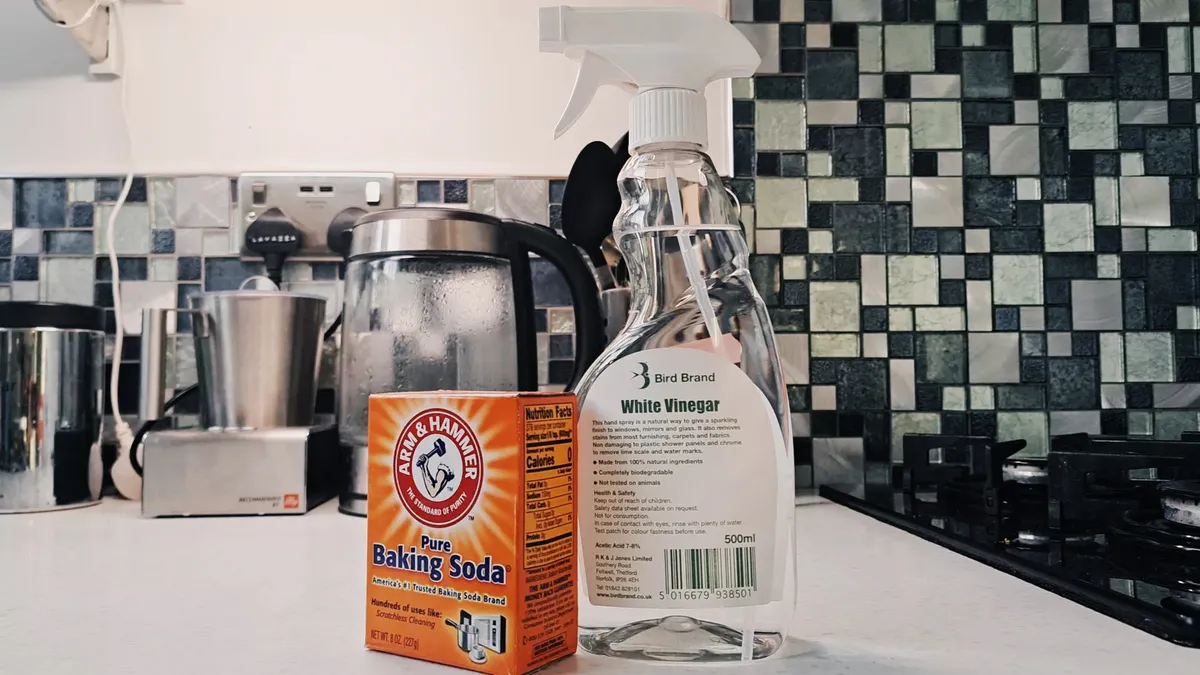
If you want to lift stubborn grime without oxygen bleach, combining baking soda and distilled white vinegar offers an easy solution.
Mix baking soda with a little water to form a thick, spreadable paste and apply it directly across the dry baking sheet.
Let the paste sit for at least twenty minutes so its high pH can break down the grease and loosen the sticky layer. Next, scrub the surface clean with a sponge, letting the gritty texture of the baking soda scour away the stuck-on mess.
Finally, spritz white vinegar over any leftover residue. The fizzing action will help lift the paste from the pan, letting you easily rinse it away with warm tap water.
Deep clean with baking soda and dish soap

For non-stick baking sheets or lighter grease buildup where harsh scrubbing could damage the protective coating, a gentler combination of baking soda and degreasing liquid dish soap is ideal.
Sprinkle baking soda over the stained areas, squirt a small amount of concentrated dish soap over top, and mix them directly on the pan with a few drops of warm water to form a soft paste.
Let the mixture penetrate the grease for twenty minutes before working it into the pan using a non-abrasive sponge. Then rinse thoroughly and towel dry to maintain the integrity of the non-stick finish.
What is the hardest thing to clean in your home? Drop your biggest household pain point in the comments below.

Follow Tom's Guide on Google News and add us as a preferred source to get our up-to-date news, analysis, and reviews in your feeds. Subscribe to Tom's Guide on YouTube and follow Tom's Guide Entertainment on TikTok and Instagram.
More from Tom's Guide