







The best Android phones cover every base you could think of in the phone world. Want something cheap? Foldable? All in on cameras? Something that will charge from 0% - 100% before you've finished your coffee? All these and more live within this guide.
The Samsung Galaxy S26 Ultra sits at the top of our list right now. The Google Pixel 10a remains the based value option, while the Asus ROG Phone 9 Pro with its two-day battery life is the top pick for users wanting efficiency out of their new phone more than anything else.
As we test more Android phones, we'll update this list to make sure you're always kept in the know as to what the best picks are. But right now, this is our list of the best Android phones you can buy.
The best Android phones you can buy right now
Why you can trust Tom's Guide Our writers and editors spend hours analyzing and reviewing products, services, and apps to help find what's best for you. Find out more about how we test, analyze, and rate.
Best Android phone overall
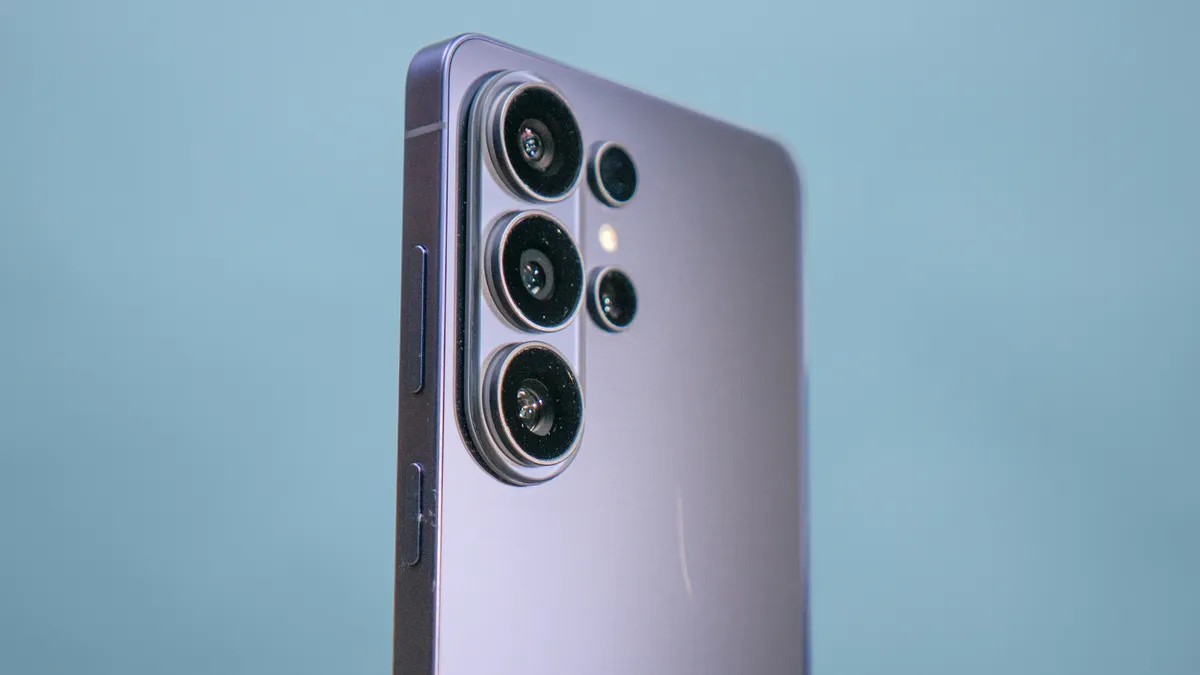


The Samsung Galaxy S26 Ultra cements Samsung's status as the top Android manufacturer by successfully bridging the gap between high-end hardware and futuristic software.
The centerpiece of the phone's new featuresis the new Privacy Display, a feature that single-handedly makes this the best choice for professionals and security-conscious users. While this technology does result in a slightly dimmer peak brightness and narrower viewing angles compared to the S25 Ultra, the trade-off is a level of utility and privacy that no other competitor currently offers.
On the photography front, the S26 Ultra continues to dominate through sheer versatility and improved low-light performance. Furthermore, the new Horizon Lock feature for video is a game-changer for mobile creators, ensuring that footage remains perfectly level and stable regardless of how much the phone is tilted or shaken.
Despite its excellence, the S26 Ultra is not without its flaws, most notably a big camera bump that causes the phone to wobble significantly when placed flat. Additionally, power users may be disappointed by the lack of built-in Qi2 magnets for accessories and the decision to skip the next-generation silicon-carbon batteries found in some rivals. However, with a stellar battery life of over 16 hours and a software ecosystem that is now smarter than ever, these negatives are minor hurdles. For anyone willing to pay the $1,299 premium, the Galaxy S26 Ultra is undeniably the most capable, innovative, and powerful Android phone you can buy today.
- Read our full Samsung Galaxy S26 Ultra review
Best budget Android phone


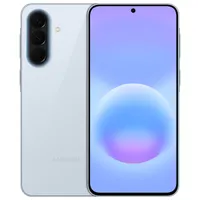
The Google Pixel 10a is a disappointing upgrade when compared to the Pixel 9a, with almost identical hardware and few noticeable changes. However, considering how much we liked the Pixel 9a, it means there's still plenty to appreciate where the newer model is concerned.
You get the same 6.3-inch, super bright display, an affordable $499 price tag and a slight redesign that pushes the camera bump all the way inside the phone. That's right, this phone is completely flat on both the front and back, with nothing resembling a camera bump to be seen.
Google's also added satellite SOS connectivity, which debuted on Pixel 10, and makes the Pixel 10a one of the cheapest (if not the cheapest) devices to have that emergency feature. Which just goes to show that you don't need an expensive flagship to be able to call for help in the wilderness.
The downsides are that the Tensor G4 chipset has made a comeback, and causes the phone to miss out on a lot of the AI features that make the regular Pixel 10 so appealing. There are plenty of AI features tobe found, but you're missing a lot of the bigger stars like Magic Cue. Likewise, the cameras, flat as they may be, haven't changed compared to last year.
While the Pixel 9a's photography skills were excellent, we would have liked to see some kind of hardware upgrade. Still, it means you get to take advantage of the wider aperture for sharper images and better low-light performance.
We still haven't had a lot of time with the Pixel 10a, and that means a lot of our testing is still to come. That's when we'll find out key details about the phone's battery life, how performance compares to Pixel 9a and whether the camera quality has changed with the new software.
- Read our Google Pixel 10a hands-on review
Best Android phone for battery life


If you need a phone that'll last for as long as possible between charges, I give you the Asus ROG Phone 9 Pro. It hit 20 hours and 34 minutes in our battery test, making it one of the best Android phones for battery life we've ever tested. It's also a huge jump up from the Samsung Galaxy S26 Ultra's 16 hours and 10 minutes.
The Phone 9 Pro is designed for gaming, so it does have a specific aesthetic that's more like one of the best gaming mice than the minimalist look of the Google Pixel 10. I wouldn't say its an acquired taste, but it probably won't suit everyone. Which is kind of the story of this phone generally.
It has a hefty battery, but that also makes it heavier than the other phones on this list (except the Motorola Razr Fold). The Phone 9 Pro has one of the top chips (Snapdragon 8 Elite) but is also the same price as the 2026 flagship Ultra/Pro phones, even though it was released at the end of 2024.
That wouldn't normally be a problem, but Asus only committed to two years of software updates, which means the end of support is coming up pretty soon. This sounds like a negative picture, but it isn't. It's an incredible phone for gaming and high-resource tasks, and the X Mode makes them run smoother too.
It's an impressive phone, even if the images aren't quite as colorful as those you can snap on Samsung's range, but it can be difficult to recommend over the others on this list unless you really need the mega battery life either for gaming or because you're often away from a charger for long stretches.
- Read our full Asus ROG Phone 9 Pro review
Best Android flagship phone


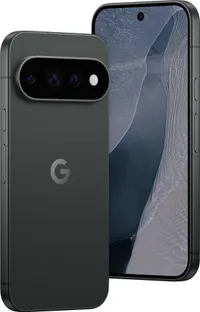
The Google Pixel 10 easily offers some of the best upgrades of the entire Pixel 10 line-up. Not just improving upon last year's model, but adding features we thought we'd only ever see on a Pro-tier model.
The big change is the fact that the phone now comes with a 10.8MP telephoto lens, complete with 5x optical zoom. While this isn't the best resolution, and has caused the ultrawide camera to drop to 13MP, it's still a fantastic extra that most entry-level flagships prefer to ignore.
On top of that the phone comes with a range of new AI features. There's the new Pixel Journal, and improvements to features like Best Take and Add me for optimal group photos. But we also get to enjoy features like Ask Photos, for speedier AI photo edits and the Magic Cue assistant that aims to get you important information when you need it most.
The new 3nm Tensor G5 chipset also offers a small performance boost, though don't expect this to be able to pull off Apple or Samsung levels of computing. Still, it seems to have had an impact on the battery life considering the phone lasted 13 hours and 13 minutes, compared to the 12 hours and 30 minutes on the Pixel 9. Which is a nice little improvement.
And since it's a flagship Pixel model, it get the same outstanding 7 years of major Android and security updates to bring even more features to the experience.
- Read our full Google Pixel 10 review
Best foldable Android phone


Last time around, Samsung’s foldables didn’t set the world on fire. This time around, things are different — the Samsung Galaxy Z Fold 8 Ultra brings a whole spate of new updates to the formula that make it the very best foldable phone you can buy right now. A new screen, a more powerful processor, and some truly ridiculous battery life — Samsung is back, baby.
First, that battery life. We tested the staying power of the Fold 8 Ultra and found 14 hours and 33 minutes. That’s some ridiculous battery life, outlasting just about every other foldable phone you can buy today. You’d be looking at a non-folding phone to get more. Quick charge is good too, topping the phone up to 76% in the space of 30 minutes.
Then there are those screens. The outer, 6.5-inch screen is excellent all on its own, the AMOLED panel brighter than just about anything else we’ve ever seen. Then you unfold the device, and the inner screen hits with the same brightness and even more real estate. Even better, the common folding crease has been vastly reduced in Samsung’s latest models — very impressive indeed.
This is a powerful handset. The chip aced our benchmarks, and we’ve found it ample for any kind of tasks we’ve thrown at it. Games run fast and smooth, and multitasking is hitch-free. And given the immense size of the inner screen, multitasking is something you’ll be doing a lot of, otherwise, you probably should have just bought a standard Galaxy phone.
The cameras are fine. The 200MP main shooter is very good, with solid image quality across the board. Until, that is, you get to the telephoto lens. It’s not good. The selfie cams are fine, but there are better out there at the moment. That’s a problem — especially when you take into consideration just how much the Galaxy Z Fold 8 Ultra costs.
There’s been a fresh price hike of $100 this time around, finally taking the base model storage over $2000. That’s a lot of money to pay for anything, and while the phone is absolutely worth it for the most part, the cameras should force some more careful consideration.
- Read our full Samsung Galazy Z Fold 8 Ultra review
Also tested
How we test the best Android phones
The same method we use to test the best phones applies to the dozen or so Android phones we evaluate each year. Every smartphone Tom’s Guide evaluates is tested for several days in real-world use cases and benchmarked with a gamut of performance-measuring apps. In terms of performance, we used Geekbench to measure overall speed and 3DMark Wild Life to measure graphics performance.
We also use our own video editing test in the Adobe Premiere Rush app to see how long it takes to transcode a clip, which we run on both Android phones and iPhone to compare performance. (This test is not always available for all phones we test due to app compatibility issues.)
| Row 0 - Cell 0 | Geekbench (single-core / multicore) |
3DMark Wild Life Unlimited (FPS) |
Galaxy S26 Ultra |
3,785 / 11,563 |
179 |
Pixel 10a |
1,694 / 4,501 |
58 |
Asus ROG Phone 9 Pro |
2,012 / 8,076 |
26.3 |
Pixel 10 |
2345 / 6581 |
80 |
Motorola Razr Fold |
2,711 / 9,134 |
129 |
To measure the quality of a phone's display, we perform lab tests to determine the brightness of the panel (in nits), as well as how colorful each screen is (DCI-P3 color gamut). In these cases, higher numbers are better. We also measure color accuracy of each panel with a Delta-E rating, where lower numbers are better and score of 0 is perfect.
| Row 0 - Cell 0 | Peak brightness (nits) |
DCI-P3 (%) |
Delta-E |
Galaxy S26 Ultra |
1,806 |
106 (Vivid), 90 (Natural) |
0.29 (Vivid), 0.22 (Natural) |
Pixel 10a |
1,896 |
95 (Adaptive), 85 (Natural) |
0.26 (Adaptive), 0.21 (Natural) |
Asus ROG Phone 9 Pro |
1,676 |
117.8 |
0.33 |
Pixel 10 |
2,333 |
89 (Adaptive), 76.9 (Natural) |
0.29 (Adaptive), 0.30 (Natural) |
Samsung Galaxy Z Fold 8 Ultra |
2,687 |
106 (Vivid), 90 (Natural) |
0.29 (Vivid), 0.22 (Natural) |
| Row 0 - Cell 0 | Battery life (Hrs:Mins) |
Galaxy S26 Ultra |
16:10 |
Pixel 10a |
15:16 |
Asus ROG Phone 9 Pro |
20.34 |
Pixel 10 |
13:13 |
Samsung Galaxy Z Fold 8 Ultra |
14:33 |
One of the most important tests we run is the Tom's Guide battery test. We run a web surfing test over 5G (or 4G if the phone doesn't have 5G support) at 150 nits of screen brightness until the battery gives out. In general, a phone that lasts 11 hours or more is good, and anything above 15 hours makes our list of the best phone battery life.
How to choose the best Android phone
The first place to start when shopping for the best Android phone for you is your budget, and there are a few tiers. The cheapest Android phones cost under $200 and offer mostly the basics for using apps, taking pictures and staying connected. We chart the best cheap phones under $300, though honestly, you'll make a lot of compromises to get a phone priced that low.
As you move up to under $450, you'll find more compelling handsets, touting better processors, higher-grade materials and more camera lenses. Our main guide to the best cheap phones for less than $500 goes into greater depth on these devices.
Jump into the $700-and-up range, and the best phones offer flagship-caliber performance along with cutting-edge computational photography and special features. You'll start to see features like telephoto lenses appear at this level of phone.
The most premium Android phones offer the best hardware - and some of them even fold. But you'll be paying at least a grand, if not closer to two grand, for the privilege of accessing the best of Android.
Last but not least, we take the best phones out in the field to take photos outdoors, indoors and at night in low light to see how they perform versus their closest competitors.
We take shots of landscapes, food, portraits and more, and also allow you to be the judge with side-by-side comparisons in our reviews and 200 photo head-to-head shootouts.

