







There were tons of exciting TV advancements in 2025. From the four-stack OLED panel found on the LG G5 OLED to Panasonic's ThermalFlow cooling inspired by F1 cars, we witnessed a lot of innovation this year, and 2026 is set to get even more exciting with the dawn of Micro RGB TVs.
But it wasn't the OLEDs or Mini-LED TV tech that excited me most over the past 12 months. While there was certainly some innovation in picture performance and software, it was new features and design changes that stood out most.
Here are the TV upgrades that excited me most in 2025.
TV mounts of the future

Most TVs these days are equipped with two different types of mounts: either separate V-shaped legs placed at equidistant lengths under the TV or a pedestal stand set in the center that attaches to the back. There's little variance across manufacturers, but you'll often see V-shaped legs on the smallest and largest sizes, while pedestal stands are usually relegated to 55-inch, 65-inch, and 75-inch TVs.
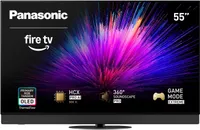
But one 2025 TV in particular took its stand design to a whole new level: The Panasonic Z95B OLED TV is undoubtedly one of the best OLED TVs to launch in 2025, offering specific enhancements that most TVs ignore. One of these upgrades is its TV stand, which gives every rival model a run for its money.
It's equipped with a rotating Lazy Susan that allows you to swivel the OLED TV at various angles, making it even easier to customize the best viewing placement.
Panasonic's TV stand doesn't look or feel cheap, like most of the alternatives. It's equipped with a rotating Lazy Susan that allows you to swivel the OLED TV at various angles, making it even easier to customize the best viewing placement. It's one of the most unsung aspects featured on the Panasonic Z95B, a TV that wins a lot of deserved praise for its OLED performance.
It's also made of solid metal, whereas others are typically plastic. The V-shaped stands are the most egregious culprits in terms of feeling cheap, but some pedestal stands, especially those made by Hisense and TCL, can feel similarly second-rate.
More TV makers should follow Panasonic's footsteps. Since returning to the US in 2024, Panasonic has gone above and beyond when designing its TVs, and it shows. Although the price of the Panasonic Z95B OLED TV might make most buyers wince, it's one of the few TVs that doesn't require any extras, be it a wall mount or soundbar for the complete home theater experience.
Going near-bezel-less

TV bezels are growing thinner every year, to the point where we've reached near-borderless TVs. Short of buying Samsung's The Wall, which boasts 99% picture (and costs $100,000), you're stuck with more conventional TVs that offer borders as slim as 2mm in length, as found on the Samsung S95F OLED TV.
Samsung is a notable champion in the proliferation of super-thin bezels on its TVs. It's also remained committed to designing ultra-slim TVs, such as the Samsung S90F OLED, which features a depth of just 1.6 inches. Although its flagship S95F and the mid-range S90F OLED TVs offer ultra-thin borders, they pale in comparison to the Samsung QN990F Neo QLED TV.
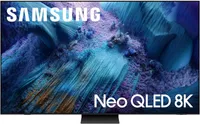
The eye-catching display, which ranks among the best 8K TVs, is the perfect model for Samsung to flex its new design ethos. Instead of an all-black frame, the Samsung QN990F is silhouetted in a silver bezel that's basically imperceptible. The chrome accent is also carried over into the pedestal stand. It's a beauty to behold.
Samsung calls it the "Infinity Screen," which is apt, given that it offers one of the most immersive experiences in the market. While it's not totally borderless, the QN990F appears like a mere screen floating in front of you. With TVs, it's all about cinematic presentation, and the QN990F nails it before you even turn on the screen.
I saw the Samsung QN990F in action at Samsung's headquarters in New Jersey and was totally blown away. It thoroughly changed how I feel about 8K TVs, and it is among the most beautiful displays in the market, next to something like the Samsung The Frame Pro. Sadly, almost no one will get to experience this incredible feat of design — that is, unless you're willing to shell out over $5,000 for one.
Broader gaming features for PC players

Although a 165Hz refresh rate means absolutely little in the world of ultra-fast PC monitors these days, even the best gaming TVs couldn't muster over 144Hz until this year. It's a surprising shift, and offers an improved experience for the most hardcore of PC gamers out there.
Hisense, on the other hand, went above and beyond by offering 165Hz on both its mid-range Mini-LED TV and its flagship model.
Hisense is a key player in bringing PC gaming sensibilities to modern TVs. Sure, Samsung and LG launched flagship TVs with a 165Hz refresh rate, specifically the Samsung S95F and LG G5 OLED. Hisense, on the other hand, went above and beyond by offering 165Hz on both its mid-range Mini-LED TV and its flagship model.
Hisense went so far as to include a USB-C input on the Hisense U8QG Mini-LED TV. Given the absence of DisplayPort on most TVs, the inclusion of this bespoke video input makes it even easier for gamers to play titles at higher frames, using a variety of connected devices, including laptops, tablets, and smartphones.
Unfortunately, Hisense sacrificed one HDMI 2.1 input to include a USB-C port. In 2026, Hisense should consider designing a TV that offers four HDMI 2.1 ports and one USB-C, while also adding the same input to its mid-range U7 model.
Like the bezel-less design and swivel stand, 165Hz isn't a feature that folks will remember coming about in 2025, but it's these features that pave the way for even better designs in the coming years. Well, that and Micro RGB technology.


Follow Tom's Guide on Google News and add us as a preferred source to get our up-to-date news, analysis, and reviews in your feeds.

