If there's one thing I've learned from over a decade of testing and reviewing TVs, it's this: TV brands don't exactly make it easy to understand what you're buying.
The best TVs come in different configurations, offer competing benefits, and the boxes they arrive in are covered in confusing terms that most people (myself included) struggle to keep track of.
With that in mind, I've put together the ultimate cheat sheet for TV-shopping in 2026. Here are all of the display types you'll run into when shopping for a TV — and how they stack up against one another.
TL;DR
- LCD/LED TVs are typically the most affordable on the market, but of these models, we recommend buying a direct-LED displayover an edge-lit display
- QLEDs are simply LCD/LED TVs with color-boosting quantum dots
- Mini-LED TVs are among the best LED TVs you can buy, as they allow for brighter highlights and tighter contrast control. They are often QLEDs.
- RGB LED TVs are some of the newest, premium-level TVs on the market. They're similar to Mini-LED TVs in their approach but reportedly deliver better color volume.
- OLED TVs are widely considered the best-performing TVs you can buy thanks to their self-lit pixels.
- QD-OLEDs are a type of OLED display enhanced with quantum dots.
LCD/LED

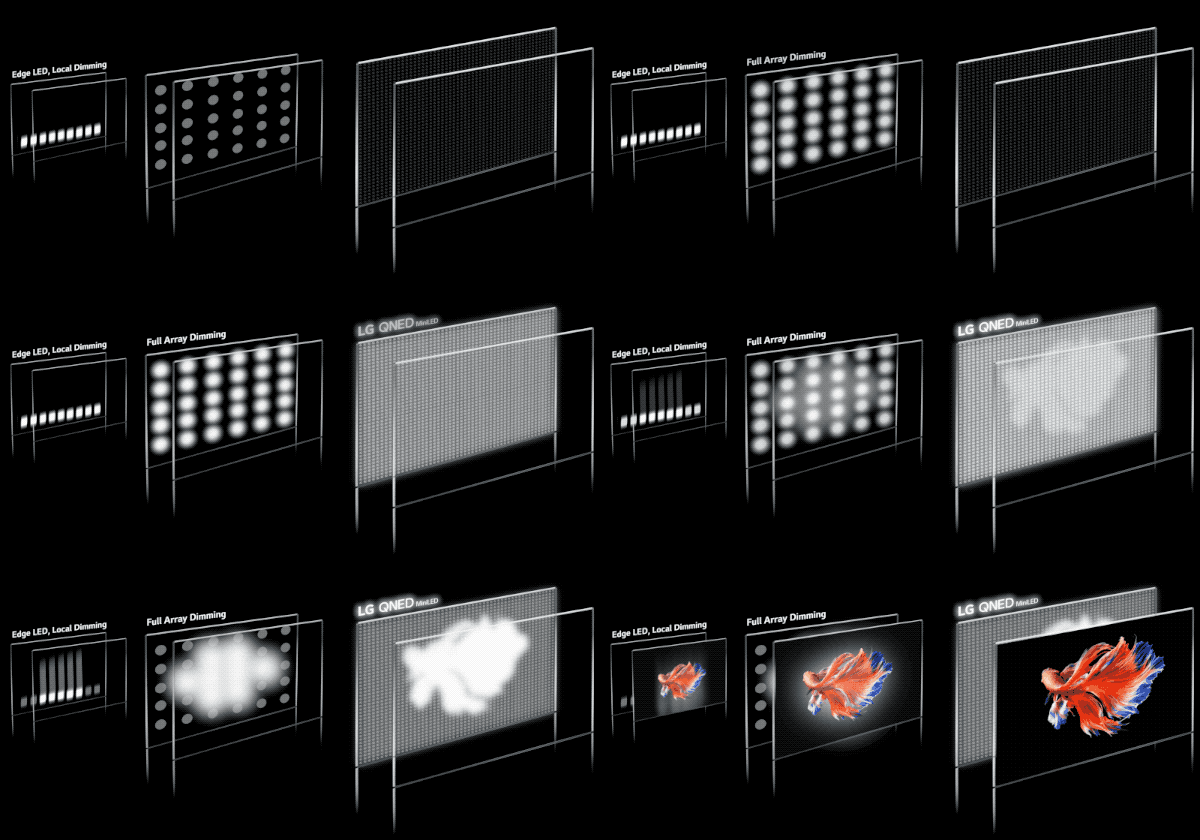
Read my full explanation for why I avoid buying edge-lit TVs
The most basic TV technology you can buy in 2026 is a good ol’ fashioned, LCD/LED display. TVs that fall into this category are typically either backlit by LEDs or feature LEDs along the edge of the panel.
Due to the relatively simplistic nature of LCD/LED technology, these TVs tend to be among the most affordable on the market. As such, you can expect LCD/LED TVs to offer modest performance at best.
If you’re shopping in this category, I recommend choosing a backlit LED TV rather than an edge-lit LED TV. While both types usually offer low brightness and shallow contrast relative to higher-end TVs, backlit LEDs tend to perform better than their edge-lit counterparts.
When hunting for a backlit LED TV, take a gander at the specifications and look for the term direct LED, backlighting or full-array LED. I recommend avoiding models that mention edge lighting.
Full-array LED/local dimming
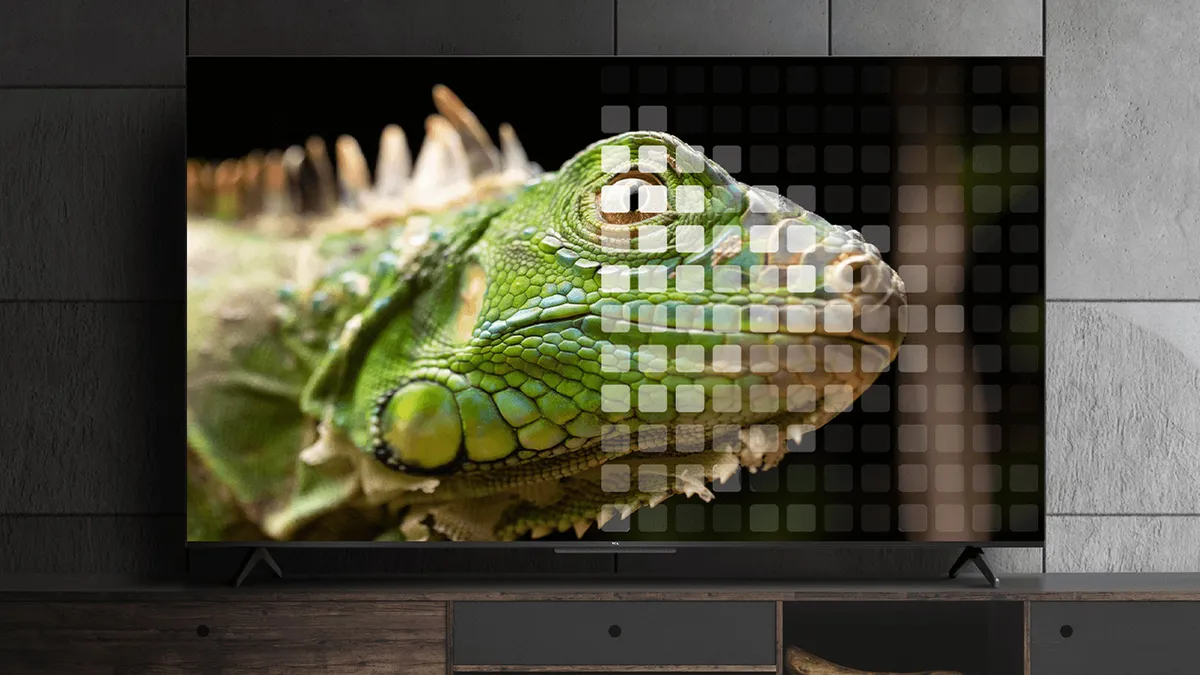
The next step up from a basic, LED-based TV is one that carries a feature called full-array local dimming. In a nutshell, this divvies up LEDs into separate, independently controllable zones. When a display is able to modulate contrast in this manner, the picture tends to be brighter with better overall contrast.
These are usually direct-LED TVs, though there are more rudimentary ways to implement local dimming on an edge-lit display. Most of the time, TVs with local dimming tend to be pricier than garden-variety, LCD/LED-based displays. If you’re in the market for a TV with local dimming capabilities, keep an eye out for the terms full array, local dimming or FALD.
QLED

Quantum dots have become a relatively standard feature in even entry-level TVs.
In general, the QLED designation refers to LCD/LED displays (with or without local dimming) that feature quantum dots. These microscopic nanocrystals (illuminated by blue light) pass through a special color filter and result in brighter, purer color. In recent years have become a relatively standard feature in even entry-level TVs.
Samsung, Hisense and TCL leverage the QLED designation more prominently than other brands, though Sony has recently adopted the term, too. (Previously, Sony had elevated the term Triluminos Color over QLED, but now uses both interchangeably.)
Once upon a time, LG adopted the term QNED to describe its quantum dot-enhanced, LCD/LED TVs, but in 2026, “LG QNED” now refers to a proprietary hardware- and software-related suite of enhancements that may (or may not) feature quantum dots.
Two recently released, quantum dot-enhanced sets you might come across today are the Samsung Q7F and the Hisense U65QF. Samsung's entry-level QLED leverages a direct-LED display with no local dimming, while the Hisense U65QF uses a more complicated display type: Mini-LED.
Mini-LED

One of the most advanced variations of LCD/LED-based TVs you can currently buy, Mini-LED TVs are precisely what the name implies: LED TVs with smaller-sized LEDs.
In almost every case, Mini-LED TVs feature full-array local dimming, but they do so with much smaller LEDS than that of a basic LED display. Their smaller stature allows for more dimming zones and tighter contrast control, and the best Mini-LED TVs you can buy are usually much brighter than standard LED TVs, too.
In 2026, almost every major TV brand offers a variety of Mini-LED TVs ranging from entry-level models to high-end flagships. Mini-LED TVs are often QLEDs, though it’s worth going over some of the brand-specific names for this blend of Mini-LED backlighting and quantum dot-color:
- Hisense ULED
- Samsung Neo QLED
- Sony Mini-LED QLED
- TCL QD-Mini LED
All of these brands would maintain that these terms refer to more than just the hardware, but if you set aside various, brand-specific software-based enhancements, these are all Mini-LED TVs with quantum dot-color.
Some of the top-performing Mini-LED TVs in recent months include the Sony Bravia 9 and the Samsung QN90F, both of which feature excellent brightness and superb backlight control.
On the more affordable side of the Mini-LED spectrum are sets like the Hisense U75QG and the TCL QM6K. These models deliver a more modest Mini-LED experience and quantum dot-color for below-top-shelf prices.
RGB LED

The newest advancement in LED TVs, these models are still relatively scarce and priced at a premium compared to most other TVs in the LCD/LED class.
Like Mini-LED, RGB LEDs are small and controllable across many zones. However, RGB LEDs have an additional trick up their sleeve: color variation. While Mini-LEDs rely on white light and a color filter, RGB LEDs tap red-, green- and blue-colored LEDs.
In 2026, almost all of the biggest players in the TV industry are beginning to roll out RGB LED TVs. As is the case with Mini-LED TVs, most of these companies have their own name for the hardware and software that comprises their RGB LED technology:
- Hisense RGB Mini-LED
- LG Micro RGB evo
- Samsung Micro RGB
- TCL RGB Mini-LED
Sony is developing its own version of this much-ballyhooed tech, and there are unconfirmed reports that it will eventually refer to its interpretation as Sony True RGB.
Super Quantum Dot (SQD) Mini-LED

In addition to launching its own RGB LED TVs, TCL has announced a new take on quantum dot-enhanced Mini-LEDs. Dubbed Super Quantum Dot (SQD), this is essentially a souped-up version of the brand’s Mini-LED TV formula.
We’ve yet to get our hands on a TCL SQD Mini-LED TV, but in discussing the technology, TCL’s engineers have described a refined version of the quantum dot layer and an updated color filter that, in tandem, allow for even brighter, purer color.
To date, only TCL has announced an SQD Mini-LED TV: the TCL X11L.
Micro-LED
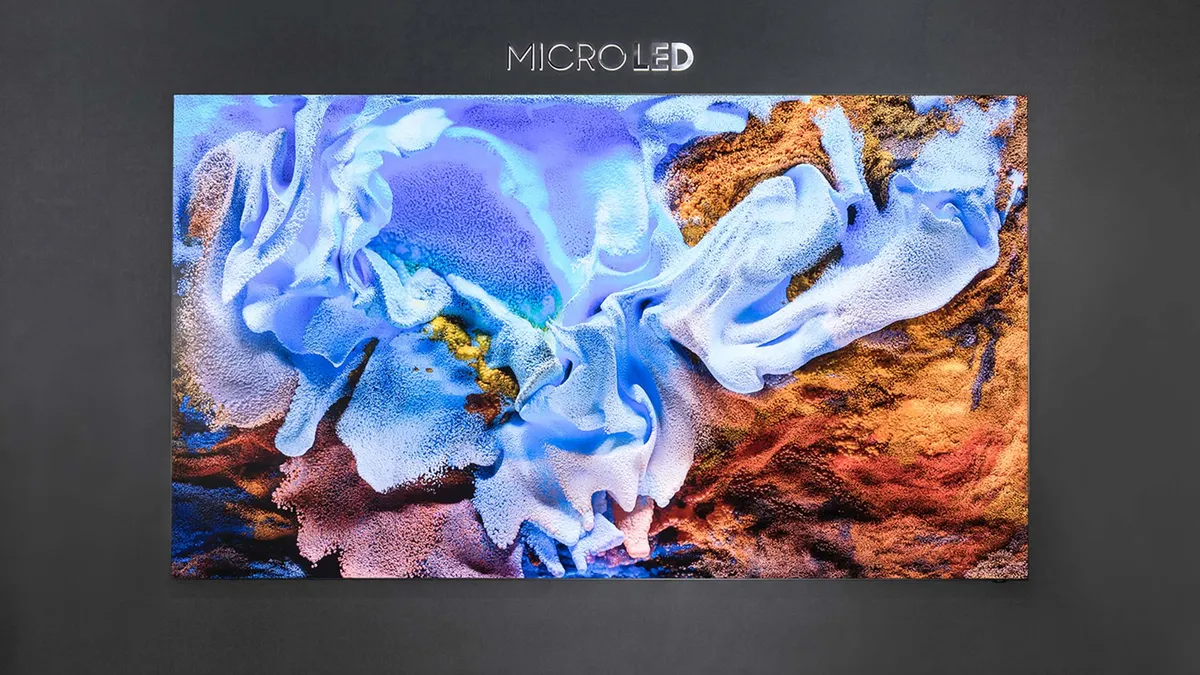
Micro-LED displays are still wildly expensive to manufacture.
Despite Samsung and LG including the word “micro” in their respective RGB LED titles, Micro-LED displays are entirely different. They’re also mostly relegated to niche markets — you’re more likely to find Micro-LED deployed in corporate signage or tech showcases rather than a person’s living room.
This is because Micro-LED displays are still wildly expensive to manufacture, and most of the Micro-LED TVs we’ve seen to date have featured giant, prohibitively expensive screens that clock in at well over 100 inches.
The benefits of Micro-LED displays are tremendous. Unlike Mini-LED and RGB LED TVs (which rely on LED backlighting), every pixel on a Micro-LED display is self-lit. This means that they deliver incredible contrast control and can safely reach dizzying brightness levels.
Unless the landscape of the industry changes dramatically very soon, we’re still several years away from Micro-LED TVs being efficiently manufactured at popular size points (to say nothing of their exorbitant prices). Many believe that the next great showdown in the premium TV space will be OLED vs Micro-LED.
OLED (Organic Light-Emitting Diode)

Considered by most experts to be the best all-around display type available to consumers today, OLED TVs are immensely popular among picture purists and A/V enthusiasts due to their long list of benefits.
Like the Micro-LED TVs of tomorrow, OLED TVs (sold by LG, Panasonic, Samsung and Sony) offer self-lit pixels for incredible-looking, razor-sharp contrast control. This not only allows for perfect black levels, but also gives an OLED TV a “signature look” that even the best Mini-LED TVs can’t quite replicate.
OLED TVs launched at eye-popping prices but have since settled into a more manageable price range. Nevertheless, these TVs are almost always pricier than similarly sized LED TVs due to their delicate engineering.
Because they leverage organic material, OLED displays need to regulate their brightness levels carefully, lest the heat will degrade the panel. This means that OLED TVs tend to be dimmer than high-performance LED TVs. Nevertheless, affordable OLED TVs (like the entry-level LG B5) and mid-range sets (like the LG C5) remain immensely popular picks.
The best OLED TVs, however, have found a way to enhance their brightness and color volume without risk of panel degradation. Quantum dot-enhancement is one such solution.
Quantum-dot OLED (QD-OLED)
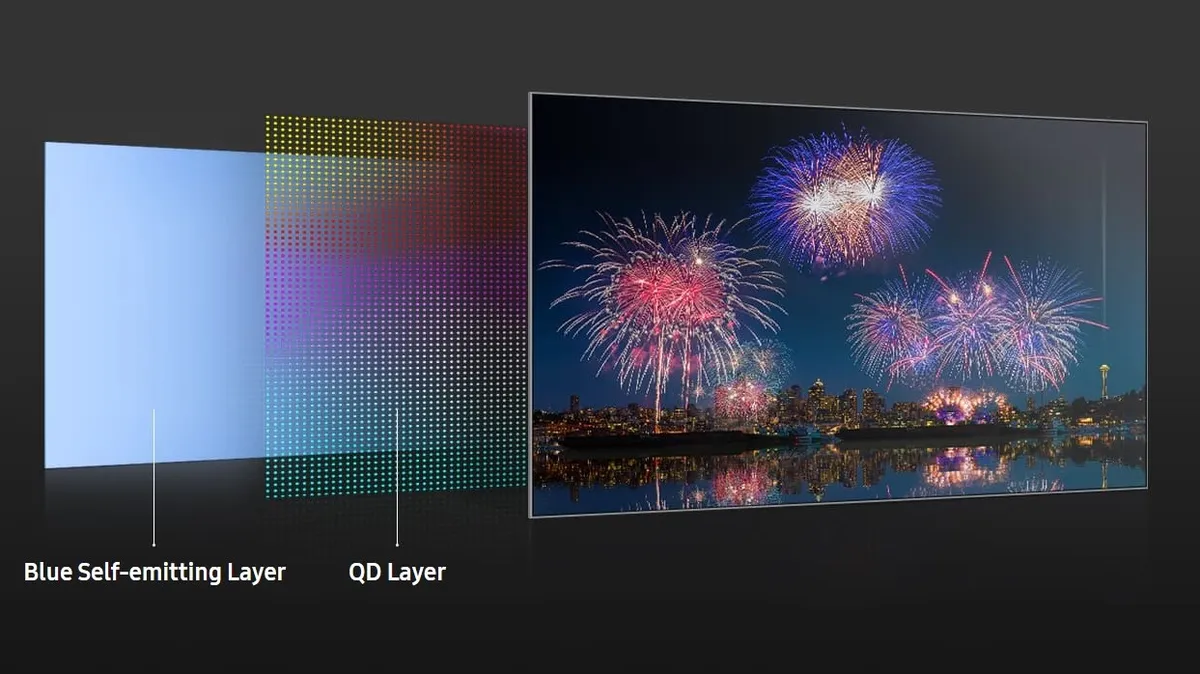
Quantum dot-enhanced OLED TVs combine the inherent benefits of OLED technology with quantum dot-color. The result is performance that is every bit as impressive as a standard, OLED-driven picture, but with the added bonus of higher color purity and overall brightness.
So far, Samsung and Sony are the only two TV-makers that offer QD-OLED TVs, including the Samsung S95F, one of the impressive TVs Samsung has ever made.
In recent years, LG Display has countered the QD-OLED revolution with OLED developments of its own, including the company's impressive, 4th-generation OLED panel, whose unique structure allows for better brightness. As a result, the LG G5 is one of the brightest OLEDs we've ever tested.
LG's top OLED TVs — as well as flagship QD-OLED TVs from Samsung and Sony — represent the best OLED technology has to offer in 2026. It's tough to see the hierarchy shifting in 2026, though RGB LED TVs may give OLED a run for its money.

Follow Tom's Guide on Google News and add us as a preferred source to get our up-to-date news, analysis, and reviews in your feeds.
More from Tom's Guide