A battle for the next generation of TV technology is on the horizon, and Sony’s secret weapon may have just earned its name.
According to The Walkman Blog, Sony has trademarked the name “True RGB” for use in TVs. Based on what we’ve already learned about the brand’s development of an advanced Mini-LED display, True RGB could be this elusive technology’s official name.
If that’s the case, Sony’s True RGB will soon join Samsung Micro RGB and Hisense RGB Mini-LED as another major player in this burgeoning class. All of these similar-sounding display technologies are similar in their approach, too, with each brand putting its own spin on it — but as someone who’s been closely following TVs for over a decade, Sony’s variation of this technology is the one that excites me the most.
What is True RGB?

True RGB is allegedly the name of Sony’s newest, most-advanced Mini-LED display technology. The brand unveiled this impressive tech earlier this year, though there was no indication at the time that True RGB would be its eventual name.
True RGB leverages red-, green- and blue-colored LEDs that can be independently controlled across all dimming zones rather than white LEDs. The result is a more colorful, lifelike picture.
What sets this technology apart from most Mini-LED TVs is, in a word, color. The best Mini-LED TVs excel at brightness and contrast due to the smaller size of their LEDs, which can be grouped into tighter zones relative to standard LED TVs.
Sony’s newest Mini-LED tech iterates on this formula by adding color variation to the mix. It leverages red-, green- and blue-colored LEDs that can be independently controlled across all dimming zones rather than white LEDs. The result is a more colorful, lifelike picture.
Despite differences in branding, these smaller, color-coded Mini-LEDs are at the heart of what Samsung calls Micro RGB; what Hisense refers to as RGB Mini-LED and what Sony could be calling True RGB.
But of all the different interpretations, Sony’s take on the tech is the most intriguing to me. It all comes down to one element: Sony engineering.
True RGB: the Sony advantage

While brands like Samsung and LG have certainly closed the gap in recent years, I still find Sony's attention to detail to be second to none.
Sony TVs aren't often the brightest in their class, nor do they tend to be as flush with features when you do a point-by-point comparison with their closest competitors. Nevertheless, Sony TVs are often my first choice.
This is because every detail of a Sony TV — from design to performance — feels carefully considered, especially elements that contribute to picture quality. While brands like Samsung and LG have certainly closed the gap in recent years, I still find Sony's attention to detail to be second to none. This is especially the case at the upper end of its TV range — where True RGB TVs will initially live.
Sony's picture processing is astoundingly good. Its upscaling is the best in the game and it routinely delivers an incredibly accurate picture, even at lower-end price points.
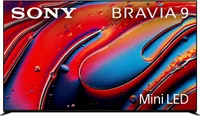
Take, for instance, the Sony Bravia 9. It's not quite as bright as rival Mini-LED TVs like the Hisense U8QG, and it's pricier, to boot. But I've spent a ton of time with both of these TVs, and in a head-to-head match-up, I'm going with the Bravia 9 every time.
The U8QG is a bright, colorful TV that punches above its weight. It's a great bargain, all things considered.
But the U8QG can't fool me into thinking that I might be watching an OLED TV. Its motion handling isn't quite as smooth and minor visual artifacts are often noticeable. It gets brighter than all get out, but often it looks too bright, leading to a flat-looking presentation.
Folks in my industry often refer to a so-called Sony tax, lamenting the brand's higher-than-average prices across nearly every tier of TV. And, while it's true that Sony TVs tend to be pricier than the competition, I see that cost in every smooth, band-free sunset and every upscaled, 720p broadcast.
I already know that Sony's take on the next generation of Mini-LED is the one I'm most excited to see. Now we just have to for confirmation from Sony that, when the time comes, we'll be referring to it as True RGB.

Follow Tom's Guide on Google News and add us as a preferred source to get our up-to-date news, analysis, and reviews in your feeds.
More from Tom's Guide
- I test TVs for a living — and Hisense needs to improve its TVs in one way before I recommend them
- Samsung just dropped the first ever Micro RGB TV — and it's a total game changer
- I'm a TV expert and this is the one picture mode you should avoid at all costs