What a year 2025 has been. We've seen AI take off with hyper-realistic photos and videos that took the internet by storm, Nintendo finally launch its long-awaited Switch 2, Valve actually drop word on its upcoming Steam Machine and so much more. Oh, and I suppose Katie Perry blasting off into space.
The past year has seen some massive moments for tech, and many of these were unquestionably the biggest fails we here at Tom's Guide have seen. Will it be remembered as the year the internet broke? When RAM prices were one the cheapest PC component you could get?
One thing is clear: 2025 was a time like no other, for better and for worse. And we're here for the latter to be set in stone.
Maybe we can take these blunders and reflect upon them in 2026 to make sure they never happen again... who am I kidding? Mistakes will always be around the corner, but let's make sure these moments in tech aren't forgotten by marking them off in Tom's Guide's list of the biggest tech fails of 2025. Now, ready for the worst?
RAMaggeddon
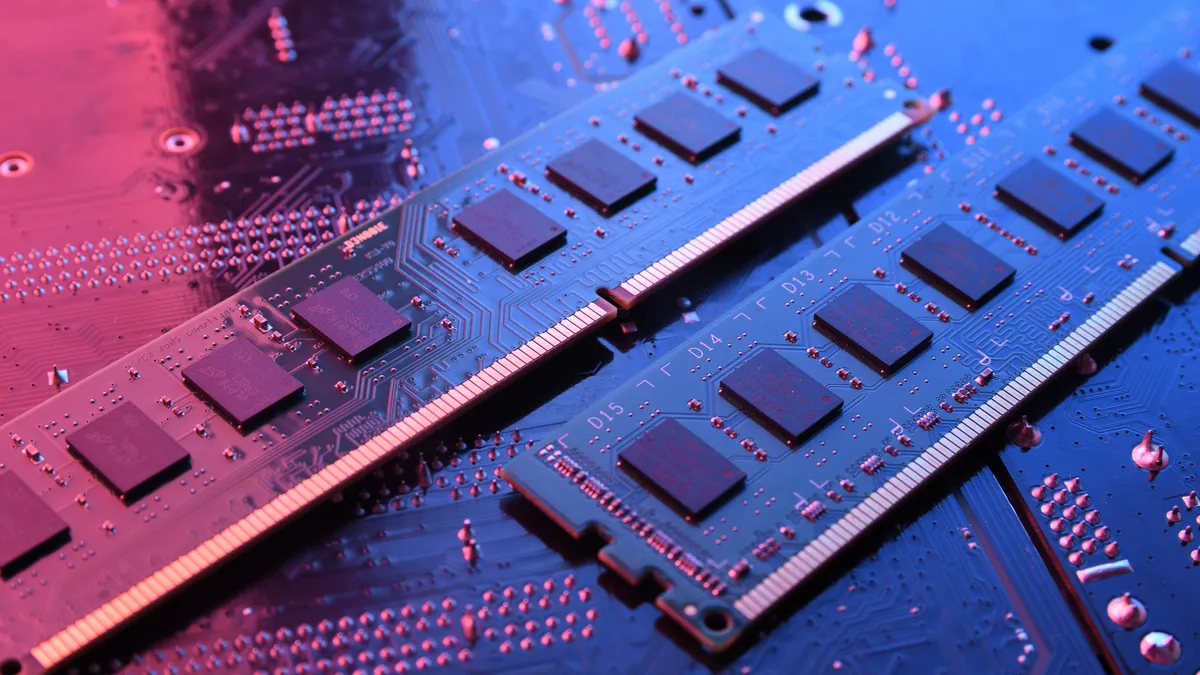
I don’t know about you, but for me, 2025 was a year-long reminder that the material conditions many of us take for granted only exist thanks to a global supply chain that’s a lot more precarious than we like to think about.
In addition to watching failures in cloud storage providers like Amazon Web Services and Microsoft Azure cause huge problems for businesses and users worldwide, we saw prices for RAM and SSDs skyrocket over the last few weeks due (at least in part) to a steep increase in demand from AI companies.
I had been hoping the issue would blow over, but when Micron killed its Crucial line of RAM in early December “in order to improve supply and support for larger, strategic customers in faster-growing segments” (i.e. AI data centers), I knew we were in for a big headache. Now we’ve quickly reached the point where it’s cheaper to buy a pre-built gaming PC than build one yourself, much like it was during the height of the COVID-19 global shutdown, when prices on high-end graphics cards (and many other PC components) skyrocketed due to high demand and not enough supply.
Unfortunately, since this happened late in the year, the RAM crisis is one big 2025 downer that’s likely to carry well into 2026 and beyond. It doesn’t just impact folks buying (or building) desktops and laptops, either; RAM shortfalls affect manufacturers of tablets, gaming consoles and more. So brace yourself: PCs, laptops and phones may jump in price by 100-500% in the year ahead as manufacturers burn through their stockpiles and either jack up prices or stop selling certain products entirely. Thanks, AI! — Alex Wawro
The internet has had a real shaky year

The planet is dependent on an internet connection — from vital government services to the household items around us. It’s much more than our connection to the world’s information; it’s integral to our lives.
And much of what we use the internet for is dependent on three: Amazon Web Services, Microsoft Azure and Google Cloud. These three account for approximately 65% of the entire internet, and they all suffered significant outages, which revealed some fragilities in the system.
Whether it’s the internet’s phonebook (DNS register) being run out of one server region for the planet, or content delivery networks bugging out, whenever one of these companies sneezes, the internet catches the flu, and it costs billions of dollars to the businesses that rely on it.
Then there’s the impact on you. Smart doorbells become glorified paperweights, essential banking services disappear and you can’t book a doctor’s appointment. There’s too much on the line not to address some of the issues in the lack of multi-regionality in these system architectures, and business/governments having a proper backup plan baked into their IT.
Oh, and shoutout to Cloudflare, too! While it’s not a cloud storage company, this service accounts for around 20% of all websites and went down. — Jason England
Live demos are risky business

Look, I applaud tech companies using live demos to show off their latest products. If they work as intended, they’ll be lauded as a technical marvel, especially if the stakes are high. If not, though, it goes down in history as a brutal “cringe” moment. Elon Musk felt the burn when the “bulletproof” Armored Glass of his Cybertruck shattered right before everyone’s eyes, and in 2025, Meta was awarded the fail of the year.
After revealing the much-anticipated Meta Ray-Ban Display smart glasses at Meta Connect 2025, pushing the tech to new heights with a seamless built-in display and a boatload of AI-enhanced apps, CEO Mark Zuckerberg decided to get a call on stage from fellow CTO Andrew "Boz" Bosworth via WhatsApp. Or, tried to, at least, as all we got instead was an incessant ring tone on loop, a broken AI voice stating “Boz WhatsApp video call” and an awkward Zuckerberg umming and ahing to try and rectify the situation.
I mean, what else can you do when your flagship product that billions of dollars have been invested in fails live on stage? Alas, the call failed multiple times until Boz finally joined Mark on stage. It was blamed on the terrible Wi-Fi, as it was during another live demo when a chef asked Meta’s Live AI to create a Korean-inspired steak sauce, only for both parties to be stuck in a loop of “what do I do first?” and “you’ve already combined the base ingredients.” No, Chef Jack Mancuso had never done the latter.
Was that actually the problem, though? Nope. Zuckerberg's Meta Ray-Ban Meta demo didn't work because, first, there were too many people in the building during the rehearsal of the Live AI demo, with Boz stating, "we DDoS’d ourselves, basically." As for the WhatsApp call, that was due to a "never-before-seen bug." As Boz notes: "The display had gone to sleep at the very instant the notification had come in that a call was coming in." At the very least, that bug is now fixed.
Is that a resounding “oof” I hear? It’s still ringing in my ears. But when all is said and done, I’ll always prefer a tech company to try and impress by straight up showing me what its product can do. Let’s just make sure there’s enough prep time so it all works swimmingly right off the bat before becoming another infamous meme. Hey, it worked with Apple when Tom’s Guide’s Global Editor-in-Chief Mark Spoonaur attempted to bend the iPhone Air during a live interview without any damage, so take note. — Darragh Murphy
Thinner phones just cannot catch a break

One of the big pushes in phone hardware has to be making them thinner. While this was fine when it came to the best foldable devices, it certainly didn’t go well for the iPhone Air and the Galaxy S25 Edge.
Thinner phones, as a concept, are not inherently a terrible idea. They’re easy to carry and more comfortable to keep in your pocket for one thing. The problem that both Apple and Samsung had was the sacrifices that had to be made. That includes having a lower battery life (to the degree the iPhone Air needs an actual case to reach the same level as the iPhone 17) and offering fewer camera options.
Having lower specs could, in theory at least, be an acceptable trade for the much vaunted thinness. However, the issue was that both companies decided that you should pay more cash for less. The iPhone Air cost $999 when it was released, while the Galaxy S25 Edge cost a staggering $1,099. That means both phones are more expensive than the $799 you’d pay for both the iPhone 17 and Galaxy S25. That’s a big ask for a phone that has some noticeable drawbacks compared to the alternatives.
So what was the result? People simply weren’t interested in the phone to the degree that it was hoped. Now, we’re hearing that Samsung has paused work on the Galaxy S26 Edge, potentially pushing back the release of the entire Galaxy S26 range. Meanwhile, the iPhone Air 2 has seemingly been delayed until 2027. So while we may see the next generation of thinner phones, it looks like phone makers are being much more wary this time around. — Josh Render
ChatGPT-5

This has been a big year for OpenAI. The company behind ChatGPT has had its ups and downs, but by far its messiest of experiences was the GPT-5 launch.
After the incredible success of GPT-4o, and ChatGPT’s dominance in the world of AI chatbots, everyone was waiting patiently for the next launch, one that was supposed to change the world.
For months, the launch was teased and then delayed. Sam Altman and his team spoke of its brilliance and how they were almost scared of just how good it actually was… and then GPT-5 dropped.
Despite all of the build-up, there just wasn’t much substance. It was smarter, had a few more features and, when put against benchmark tests, was the best version of ChatGPT yet. But it still felt pretty underwhelming.
Not only that, but when users started actually using it, many felt the experience was actually worse than the previous version that had been rolled out.
To make matters worse, this older version had also been removed, forcing everyone to use ChatGPT-5 instead. OpenAI ended up getting so many complaints that the company had to pull a reverse, offering users the choice between models and promising to make rapid improvements to GPT-5.
Since then, OpenAI has released two critical updates, now bringing us up to GPT-5.2. Despite efforts to fix the damage, GPT-5 has likely been the company's least popular launch to date, and gave competitors much-needed time to catch up with it. — Alex Huges

Follow Tom's Guide on Google News and add us as a preferred source to get our up-to-date news, analysis, and reviews in your feeds.
More from Tom's Guide
- Intel Panther Lake vs Snapdragon X2 Elite vs AMD Gorgon Point — one chip is already pulling ahead in 2026's CPU war
- Microsoft promises to improve PC gaming in 2026, but will it be enough to topple Steam?
- I just discovered a secret productivity hack for my Mac, and it’s transformed how I focus