The stage is set for a huge CPU battle in 2026, and it’s already started as Intel and Qualcomm have fired away ahead of Panther Lake and Snapdragon X2 Elite debuting early next year (read: CES 2026).
We’re also seeing leaks related to AMD and will bring to the party with Gorgon Point, and there are a lot of moving parts. So to keep track of everything, I’ll keep this hub updated with everything you need to know about the next generation of laptop and desktop chips.
Meet the competitors
- Intel “Panther Lake” (Core Ultra 300 Series) laptop chips - CONFIRMED
- Intel “Arrow Lake-S” desktop chip refresh - PREDICTED
- Qualcomm Snapdragon X2 Elite - CONFIRMED
- AMD “Gorgon Point” (Ryzen AI 400) laptops, “Strix Halo” (Ryzen AI Max+) laptop refresh and Ryzen desktop CPUs - EXPECTED

Three big players are entering the arena: Intel, Qualcomm and AMD. They are coming in heavy with a huge suite of new chips. Let’s break it down into a battle on two fronts.
Laptops
2026 will be the year of the laptop, and we already know it's going to be a silicon bloodbath. In one corner, you’ve got Intel Panther Lake — built on the company’s 18A platform, which is a new technological foundation that brings the best of Intel’s faster chips and the more power-efficient chips into one piece of silicon.

As we’ve tested, this is looking to provide up to 50% faster CPU performance, a 50% faster GPU, up to 1.2x faster AI performance, and up to 40% higher performance per watt (better power efficiency).
In the other corner is Qualcomm. We’ve got to test the Snapdragon X2 Elite and X2 Elite Extreme, which follow a lot of the same formula as the original X Elite, bar one difference — memory (RAM) can be embedded directly onto the chip. Taking notes from Intel and AMD, the company’s now adding shared memory between the CPU, GPU and NPU.

This rethink and generational uplift is showing up to 39% faster single-core and 50% faster multi-core speeds, 69% higher memory bandwidth, 78% faster AI performance, and up to 2.3x faster graphics performance.
And in the final corner (shrouded in secrecy because this is based on leaks and rumors at the moment) is AMD. Team Red has the headline keynote slot at CES 2026, so they have to be bringing something! And that much seems true with two new laptop chip lines: Gorgon Point and a Strix Halo refresh.

Given it’s leaked on Geekbench, the AMD Ryzen AI HX 400 series (Gorgon Point) looks set to take the current core configurations you see in AMD laptops today, but give them a turboboost — specifically 15-20% higher than the previous generation. Not only that, but the leak reported by VideoCardz seemingly confirms a new generation of integrated graphics, too, that will support RDNA 3.5 — specifically the Radeon 890M.
The latter is still a possibility at the moment, but the plan seems to be a Strix Halo refresh that broadens the amount of chips available — to target both mid-range and high-end offerings with that diabolical integrated GPU. WCCF reports that these will also bring faster memory support.
Desktops

Starting with Intel, Team Blue is taking another crack at its Arrow Lake desktop chips with a refreshed range. The original launch was quite the stumble, with problems in power management, performance limitations, and some BIOS bugs, so Intel wants to take another crack at it.
Looking at leaks, it seems the company’s getting its act together with higher clock speeds, more efficiency cores, and better RAM support to overcome memory latency issues. Basically, this is a much more optimized version of the same chips.

Meanwhile, AMD seems to be all in on launching two new CPU lines at CES — the souped-up gaming-centric CPUs in the Ryzen 7 9850X3D and the Ryzen 9 9950X3D2. X3D chips are finely tuned to play super nicely with dedicated GPUs, and it seems to be more of the case here.
Second is a new Ryzen 9000G desktop APU, which is more of an all-in-one approach that updates the architecture for newer graphics standards like RDNA 3.5.
Codename translator: what will they actually be named?
- Intel Panther Lake = Core Ultra 300 Series (according to leaks)
- AMD Gorgon Point = Ryzen AI 400 series/Ryzen AI HX 400 series
- AMD Strix Halo = Ryzen AI Max series
This can get confusing. You're reading me flipping between calling the latest Intel chips "Panther Lake" and "Core Ultra 300 Series." So what will you actually be buying in retail stores in early 2026? AMD is just as guilty of this with calling their chips "Gorgon Point" and "Strix Halo."
Luckily, Qualcomm's much more straightforward with the names "Snapdragon X2 Elite" and "Snapdragon X2 Elite Extreme" (even though the latter is getting a little too close to what I'd name an energy drink back in the 90s). But to help you out, let me translate the codenames here.
Intel Panther Lake

We know three levels of Panther Lake chips exist (I've tested them). But here's what the Geekbench leaks point to these being called.
- Intel Core Ultra 300V: This would be the base configuration with 8 CPU cores and 4 GPU cores
- Intel Core Ultra 300H: This name may designate the chip that sports 16 CPU cores, but ditches the GPU (the one you will probably see in gaming laptops)
- Intel Core Ultra X 300H: That X looks set to identify the top-of-the-range model with 16 CPU cores and that full-blown 12-core GPU. Geekbench results just dropped on the Ultra X9 388H.
AMD Gorgon Point
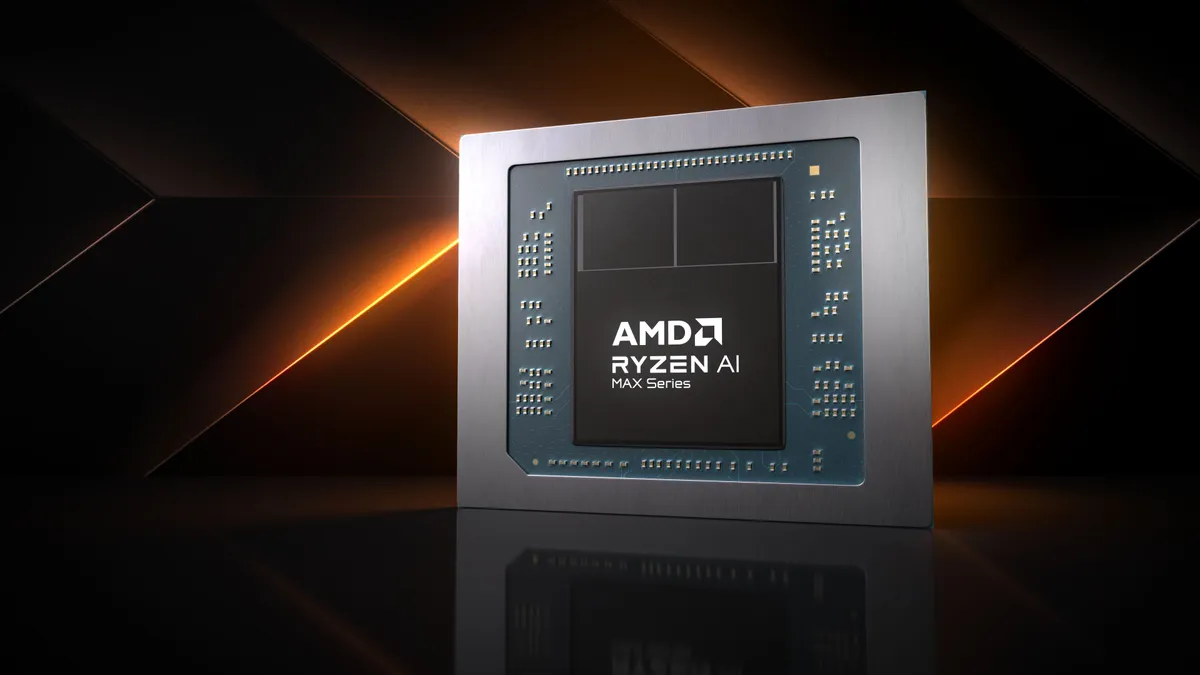
AMD's not messing too much with the formula here, and just upping the number by one. So far, leaks have shown the following chip names.
- AMD Ryzen AI 400 series: Based on the past generation, these will be the base-to-mid-range chipsets.
- AMD Ryzen AI HX 400 series: That HX stands for higher performance, so is reserved for their upper-level chipsets with faster clock speeds, higher TDPs and improved AI performance.
- Strix Halo = Ryzen AI Max+: Given the rumors of more Strix Halo chips coming to CES, it's worth me noting that for the all-in-one chips with crazy good integrated graphics, you're going to want to find the name "AMD Ryzen AI Max" followed by a number.
How they stack up (according to our tests and leaks)
- Snapdragon X2 Elite has established an early lead in CPU speeds
- Intel Panther Lake has overhauled graphics performance and power efficiency
- But AMD leaks show Gorgon Point may crash Intel’s party

To get into this, I need to break something down here — the difference between Arm and x86 computing is significant, because they go about completing tasks very differently.
What is x86? The old guard with CISC
For over 30 years, computers have used x86 chipsets — Intel and AMD are flying the flag of Complex Instruction Set Computing (CISC). Basically, the architecture aims to tackle every part of a task equally, rather than taking things one at a time.
The big benefit here is native compatibility with literally everything on Windows (no emulation needed). But while power efficiency has been getting much better with recent chips, it cannot touch Arm for one reason.
What is Arm? The new kid on the block with RISC
After a couple of failed Windows on Arm experiments, Microsoft and Qualcomm have gotten their act together with Snapdragon X Elite chips and produced a blinder.
Like a smartphone, these chips used Reduced Instruction Set Computing (RISC) — breaking down complex tasks into barebone instructions and completing a single one with every tick of that processor’s cycle.
So this is not just a battle of companies, it’s a battle of principles, and this shows in the performance numbers. Arm usually gets a lead on pure CPU speed and battery life, but x86 gets its advantage in graphics and compatibility.
There are going to be many more chips than what we've tested/seen leaked so far. For example, we don't have benchmarks for the top-of-the-range Panther Lake chip with a 12-core CPU. But these are a good baseline of what to expect.
When we get more benchmarks, I'll update this chart over time!
UPDATE: New leaked Geekbench benchmarks just dropped for some of the mid-range AMD and Intel chips. These numbers are (mostly) based on the leaks we’ve seen. I did get to benchmark the Snapdragon X2 Elite and Elite Extreme myself, so these numbers are accurate based on my own testing. Other numbers came from leaks courtesy of VideoCardz and PC Gamer.
Geekbench CPU benchmark results
So in terms of Geekbench leaks and testing, Qualcomm has the early advantage, but that’s only half the story. Intel’s fully gone in on turboboosting those Xe3 GPU cores, and adding a whole lot of AI-infused trickery to boost gaming. In fact, it’s looking like you could get something similar to a dedicated Nvidia laptop GPU in integrated graphics.

We saw this start to happen throughout the course of this year, and while I was a little too dramatic in saying Nvidia’s days on top were numbered back on New Year’s Day, the crux of the piece is still true — integrated graphics are really taking the fight to dedicated GPUs.
That much was true with AMD Strix Halo, and the company seems to be taking another step forward performance-wise, while also broadening its range of chips available to make them more affordable, too. One step forward with Gorgon Point, while giving you more Strix choices to pick from.
What about Apple?
- M5 is already offering similar performance to what we see in Snapdragon X2 Elite
- M5 Pro architecture rumored to be altered to offer vastly improved performance
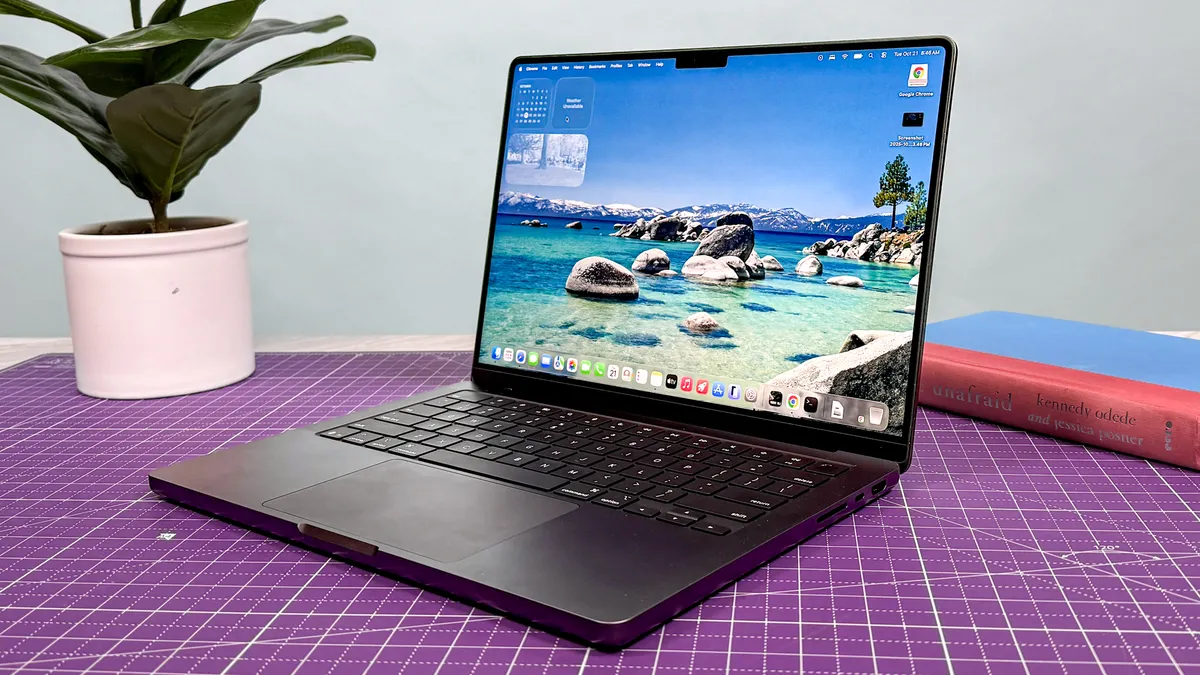
This is a big unknown heading into 2026. Apple Silicon runs on an Arm architecture, and one thing we know for sure is that the latest M5 chip in the MacBook Pro is a power-efficient screamer.
But what about the M5 Pro and M5 Max? It’s being rumored that the architecture may be getting a big switch-up from a system on a chip (everything on one die) to a system of chips (separate chiplets for each thing). As we’ve learnt from Intel Panther Lake and AMD’s Ryzen AI Max+, doing so makes for some serious performance upgrades.
We won’t know for sure until they are officially in our hands, which is looking likely to arrive in Spring 2026.

Follow Tom's Guide on Google News and add us as a preferred source to get our up-to-date news, analysis, and reviews in your feeds.
More from Tom's Guide
- RAM prices are exploding — here's why and everything you need to know about surviving RAMageddon
- Lenovo leak confirms first rollable gaming laptop with ultrawide OLED display coming in 2026 — here's what we know
- M5 MacBook Air reportedly coming Spring 2026 — plus the missing MacBook Pros and a new Mac Mini