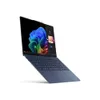
CES 2026 is going strong, and the biggest laptop manufacturers (who aren’t Apple) are showing off all the new notebooks coming our way. Most of the Tom’s Guide computing team is on the ground getting hands-on time with these laptops, and as part of that same team, I can tell you some great machines are heading our way.
One of the biggest new advances for laptops this year is the new Intel Core Ultra 3 “Panther Lake” CPU. Based on some of our initial testing and Intel’s claims, this processor could finally realize the potential of the Core Ultra series. Many companies are claiming laptops with Panther Lake can last up to 20 hours or more, which is par with the best MacBooks for best battery life.
But of course, AMD brought its own salvo of new laptop chips to CES this year in the form of new AMD Ryzen AI 400 series CPUs. Codenamed Gorgon Point, this new AMD silicon aims to deliver better battery life, multi-tasking, and gaming performance in Windows laptops.
With that in mind, here are the best laptops we’ve seen at CES 2026!
Dell XPS 14 (2026)

Don’t call it a comeback. Actually, absolutely call this a comeback, as Dell has delivered the best kind of apology with the new Dell XPS 14. Boy, does it feel great to write XPS again instead of Premium, which was the name of last year’s not-an-XPS laptop.
The new Dell XPS 14 isn’t just last year’s notebook with a different name, as Dell has addressed two of the most controversial design elements. We now have a physical function row, along with a touchpad with clearly visible borders. Thankfully, we don’t lose design aspects we liked, such as a sturdy CNC-machined aluminum chassis and a 2.8K tandem OLED display option. It also packs the new Intel Panther Lake chip and various options for RAM and storage.
Alienware 16 Area-51 (2026)

The new Alienware 16 Area-51 isn’t a major upgrade over last year’s model, but it finally has an OLED display along with lower input lag and an updated cooling system. Besides that, this is still the same beefy gaming laptop featuring an otherworldly design, tons of ports, and should deliver strong gaming performance since it will pack up to an RTX 5090 laptop GPU, up to an Intel Core Ultra Series 2 CPU, up to 64GB of RAM and up to 12TB of storage.
Last year’s Alienware 16 Area-51 was my favorite gaming laptop, so I have high expectations for its follow-up—especially now that it has an OLED panel.
Lenovo Yoga Slim 7i Ultra Aura Edition

The Lenovo Yoga Slim 7i Ultra Aura Edition is a pretty remarkable feat of engineering — packing impressive Intel Core Ultra Series 3 performance and power efficiency into a premium chassis that is less than 1kg. Doing all of this without compromising the premium nature of its components, the sound ergonomics of a great-feeling keyboard, a drop-dead gorgeous OLED display, and fantastic haptics on the touchpad are impressive in all the right ways.
And since you could spec this all the way up to the X9 388H chipset, you could be in with a gaming monster of a machine to boot. You’ll be able to pick one up at some point between April and June of this year at prices starting from $1,499.
MSI Stealth 16 AI+

The MSI Stealth 16 AI+ lives up to its “stealth” moniker by looking more like a MacBook Pro than a traditional gaming laptop. This machine not only looks great and feels premium, but it also packs serious horsepower underneath its elegant chassis. Panther Lake CPU? Check. Up to an RTX 5090 GPU? You better believe it! And let’s not forget about that gorgeous 16-inch QHD OLED panel with its smooth 240Hz refresh rate.
There’s a lot to like about the MSI Stealth 16 AI+. If you’re like me and prefer that your gaming laptops not look like gaming laptops, this is the notebook for you!
Samsung Galaxy Book6 Pro

The Samsung Galaxy Book6 Pro is one of the most exciting laptops on the horizon. Why? It nails the fundamentals of being a svelte laptop that delivers the performance and battery life needed for everyday work, as our Jason England said in his Samsung Galaxy Book6 Pro hands-on preview.
I didn’t get to see the Galaxy Book6 Pro myself, but I’m a big fan of Samsung’s laptops, so I expect this new model to be as good (or better) than its predecessors.
MSI Prestige 16 AI+

MSI’s Prestige laptops haven’t been as popular as the company’s gaming hardware, but that could change thanks to the new 2026 Prestige lineup.
All four models are great, but I’m singling out the MSI Prestige 16 AI+ as one of the best laptops of CES. It not only promises to deliver serious Panther Lake-driven power, but looks good in the process.
The attention to design and ergonomics is evident, the OLED panel is bright and colorful, and it even remains quiet. Don’t overlook the MSI Prestige 16 AI+, as it could be a sleeper hit for 2026.
Acer Swift Go 16 AI

We at Tom’s Guide have long been fans of Acer’s Swift Go laptops, and I think the new Acer Swift Go 16 AI will continue that trend in 2026. Though it features a virtually identical design to its predecessors, it’s what’s on the inside that counts, as this laptop is driven by a Panther Lake CPU.
Additionally, it’s also surprisingly thin and light for a laptop of this size—very MacBook Air in that respect. It also doesn’t sacrifice ports to maintain that thinness, which I appreciate. If you’re looking for a dependable Windows laptop in 2026, you should keep an eye on the Acer Swift Go 16 AI (or even its smaller sibling, the Swift Go 14 AI).
LG Gram Pro 17 (2026)

Billed as the world’s lightest 17-inch laptop packing an RTX GPU, the latest iteration of the LG Gram Pro is also made from a magnesium/aluminum alloy that LG is calling “Aerominum.” Fancy made-up name aside, the LG Gram 17 Pro could be an unexpected hit with gamers who want a light laptop for work, or office workers who also want to play the best PC games.
This sleek-looking laptop will also pack a Panther Lake CPU and have a 17-inch 2,560 x 1,600 LCD panel. I'm looking forward to going hands-on with it when it's released.
Lenovo Legion Pro Rollable concept

The Lenovo Legion Pro Rollable concept features a rollable OLED display that can extend from 16 inches all the way up to 24 inches with an ultrawide 24:9 aspect ratio. Basically, you get three aspect ratios here. 16:10, 21:9, and 24:9. Wild! It also packs a Panther Lake CPU and that classic Legion design we all love.
The only thing we don't love is that it's a concept and isn't (yet) available.
Lenovo ThinkPad Rollable XD Concept

Lenovo didn't just have one concept, as it also announced the ThinkPad Rollable XD Concept. The display doesn’t roll into the base. As the screen grows from 13.3 inches to 16 inches vertically, it rolls up and over the top of the display. There’s also an external touchscreen (world-facing display) that covers the top third of the lid, complete with interactive widgets for your AI assistant, sticky notes, weather, and more.
When fully extended, you can actually see the internals of the laptop, including the cables that make this magic happen. This panel is tough, too, as it’s made of Gorilla Glass Victus 2. We also like that you can activate the rolling just by pressing your finger on the top edge of the display and then gliding it across. A cool concept, though I'm not sure who it's ultimately for.
Lenovo ThinkBook Plus Gen 7 Auto Twist

This Lenovo laptop is actually real but it still has an interesting hook like the two mentioned above. The Lenovo ThinkBook Plus Gen 7 Auto Twist has a motorized dual-rotation hinge that automatically tracks your face when you move. While the mechanic seems gimmicky, it can be useful if, for example, you want to make video presentations more lively.
Unique mechanic aside, I was also impressed by the relatively thin profile, generous port selection, and vivid 14-inch 2.8K OLED panel. Even without the twisting mechanic, it’s a slick laptop. The $1,649 asking price seems reasonable for what you get, though it definitely won't be for everyone.

Follow Tom's Guide on Google News and add us as a preferred source to get our up-to-date news, analysis, and reviews in your feeds.
More from Tom's Guide
- I just saw Roborock's new two-legged robot vacuum climb stairs
- CES 2026 Day 2: Everything you don't want to miss
- I saw Samsung’s 2026 flagship OLED and Micro RGB TVs side by side