




We spend roughly one-third of our lives sleeping and finding the right mattress is the key to getting better snooze. When picking a bed, you need to put yourself (and any co-sleepers) first: what mattress best suits your sleep position, body type, and sleep needs?
Over the past five years we've tested mattresses of every budget and type, putting them through our rigorous mattress testing methodology. Only the very best make it into this guide, and from our experience, it's the Simba Hybrid Pro that deserves the top spot. This high-quality mattress is simply great all-round, making it the best choice for most sleepers.
But our testing team has found an option to suit every need, whether you want extra support, a breathable feel, or simply a touch of luxury. Here are our top-rated mattresses of 2026 to shop today...
1. Best mattress overall


We think the Simba Hybrid Pro is the best mattress you can buy in 2026. It's a premium hybrid bed made with high-quality foams and coils, plus a wool top layer and a breathable cover. In our Simba Hybrid Pro Mattress review we found it to be comfortable and supportive in every sleeping position — which is why it takes the top spot.
There are five key things you need to look for when buying a mattress; firmness, pressure relief, temperature regulation, motion isolation and edge support. We assess them all as part of our mattress methodology, and while the Simba Hybrid Pro hasn't visited our sleep lab (yet), our hands-on testers have investigated every seam of this mattress.
Our testing team agreed the Hybrid Pro is medium-firm with a slightly squishy feel that delivers ample pressure relief to your shoulders, hips and lower back. We love it best for side and back sleeping, but there's still good support for stomach sleepers (although the Otty Firm might be better if you lie on your front.) The support all-round is good, as our tester was able to sit on the side without squashing the edges, even if it was less stable at the corners.
We found the Hybrid Pro's breathable design stayed a comfortable temperature during the night, even if it's not as cooling as the Panda Hybrid Bamboo. Its motion isolation technology is good enough that you shouldn't be bothered by your partner moving around in the night, but Nectar's memory foam mattress might be better if you bed share with a very restless sleeper.
For this kind of all-round quality, you do pay a higher price, with a double often £1,299. The DreamCloud Hybrid, below, is a better value choice. On the whole, however, we think it delivers value for money, thanks to the crowd-pleasing design and high-quality build. And Simba sales happen semi-regularly, so keep an eye out for a deal.
2. Best mid-range mattress
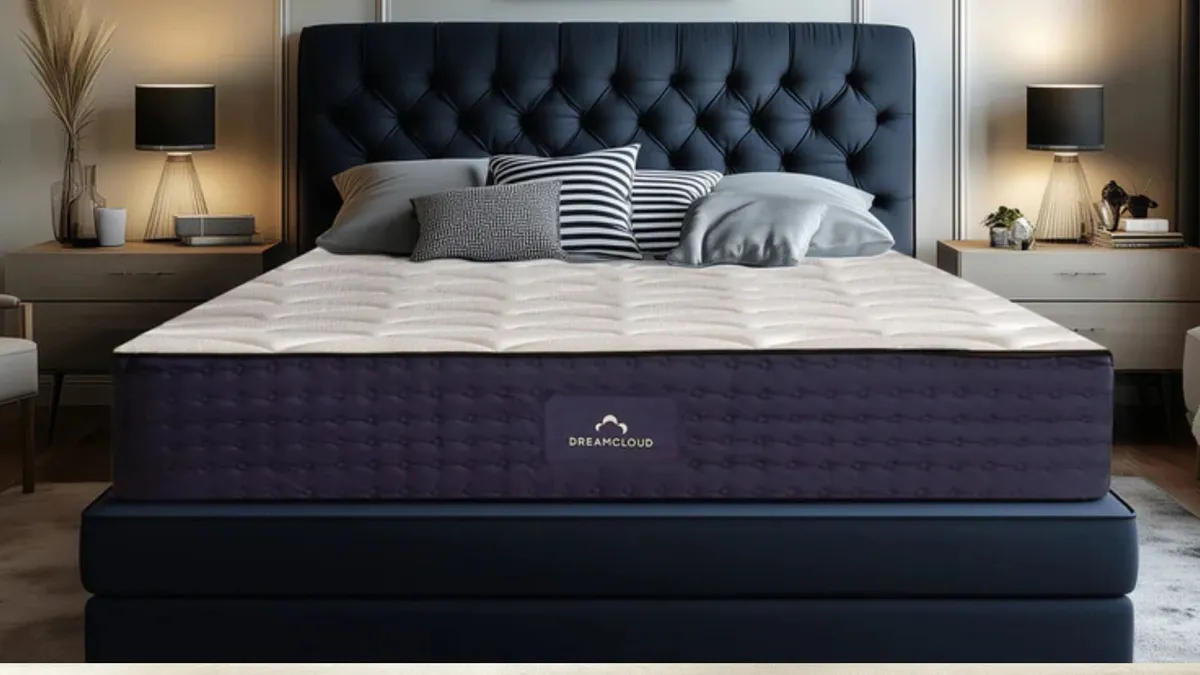


We think the DreamCloud Hybrid is the best mid-range mattress available today, delivering plenty of pressure-relieving comfort and a touch of luxury at a reasonable price.
With its quilted cover, CertiPUR Certified foams and premium pocket springs with reinforced edge support, our DreamCloud Hybrid mattress review team were impressed with its ability to relieve aches and pains. The medium-firm model skews firm and our lead tester found it provided plenty of lumbar support. This helped ease her lower back pain, while the quilted top delivered enough pressure relief for comfortable side sleeping.
The DreamCloud Hybrid also excels at temperature regulation despite not featuring any specifically cooling materials; even our testers hot-sleeping husband praised the breathable design (although the Panda Hybrid has it beat). Edge support was another strong feature, so you should feel stable sat or lying on the side of the bed. And while the DreamCloud Hybrid's motion isolation was a slight downside — you're likely to feel the movement of a restless partner — it should be good enough for the average co-sleeper.
For a cheaper alternative to the DreamCloud Hybrid, the Origin Hybrid has an orthopaedic layer for enhanced spinal support and a cool-to-touch cover that hot sleepers will appreciate. And the Nectar Memory Foam mattress below is a great choice if you want something in a similar price bracket but with more of a memory foam hug. Or to increase the hotel feel, consider upgrading to the DreamCloud Luxury Hybrid Mattress.
The big draw of the DreamCloud Hybrid is that it punches above its weight in terms of comfort and support. It's best for back and stomach sleepers but with just enough cushioning for side sleepers (consider the Simba Hybrid Pro for something plusher.) At £499 for a double it comes in at a very nice price indeed, and you'll also like the extras: a 365-night trial, free named day shipping and forever warranty.
3. Best memory foam mattress

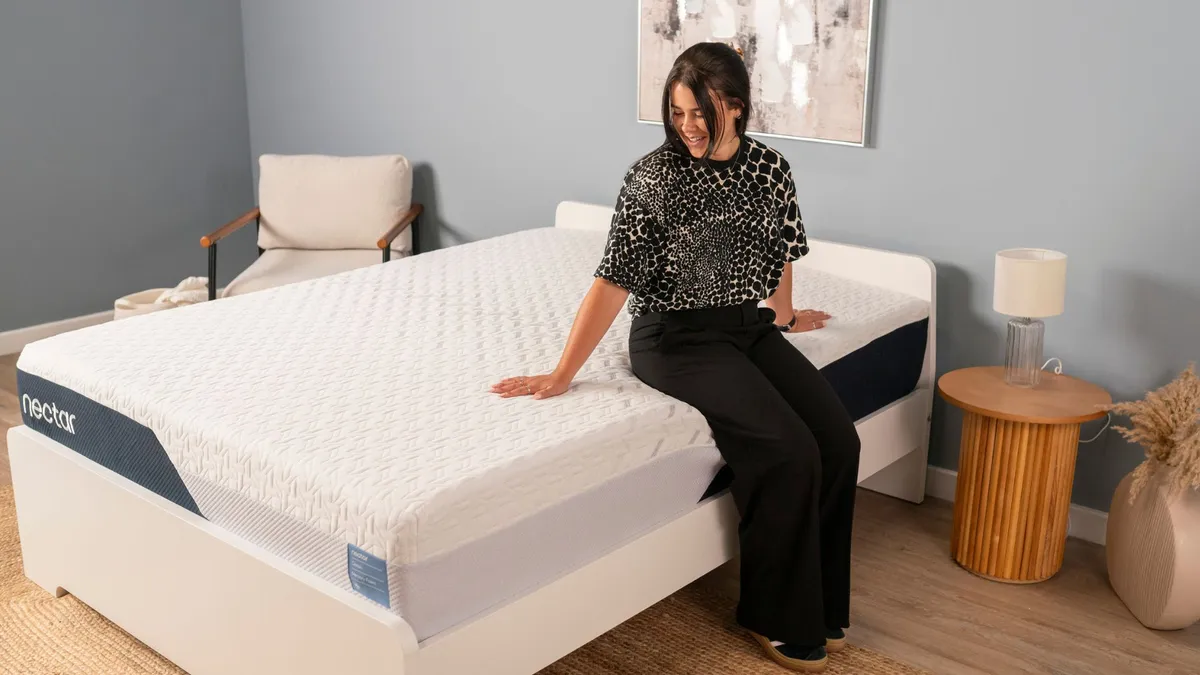
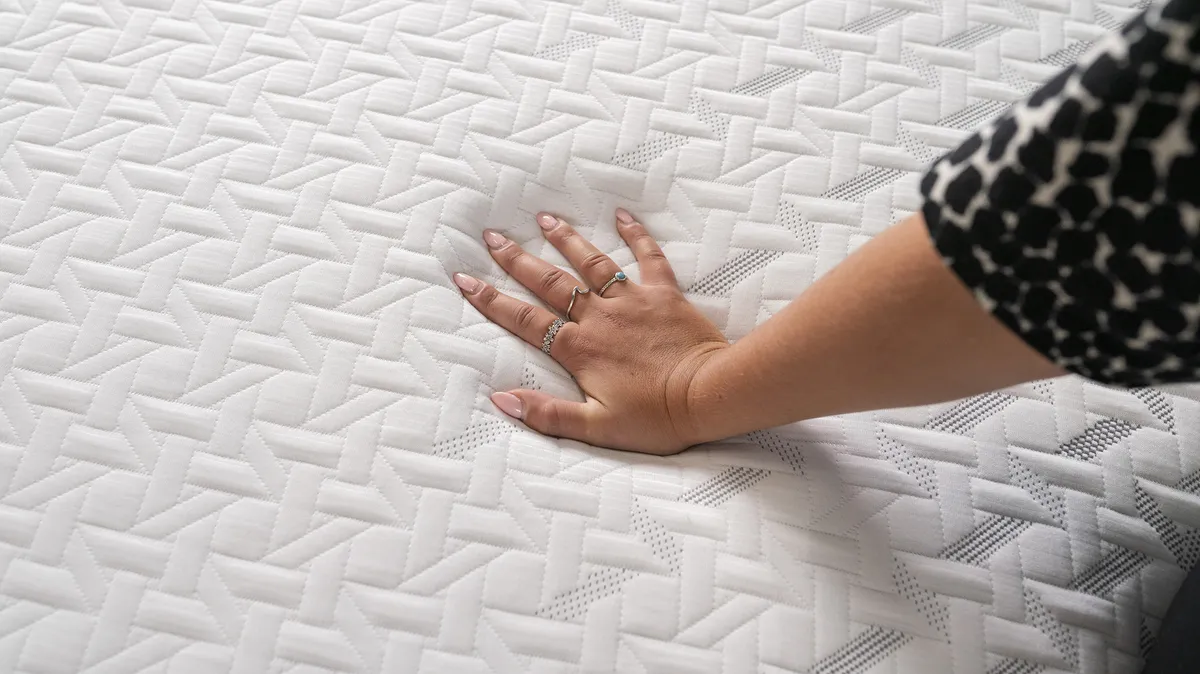


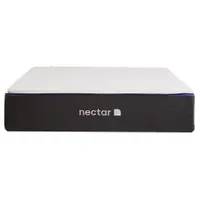
Hybrid mattresses dominate the market these days, but if you crave the enveloping feel of an all-foam bed there are still some strong options. The Nectar Classic is a long-standing favourite that delivers the goods. This affordable mattress is made with three layers of foam plus a breathable cover and it all adds up to a bed we recommend as the best memory foam mattress available.
In our Nectar Mattress review we found it to be on the the firmer side but it excelled in our pressure relief tests. Placing a 20kg weight in the center of the mattress, we measured ample sink, indicating the bed conforms to your body while holding the spine straight. It should be a good all-rounder, although the slightly firm feel might be too hard for lightweight side sleepers (try the Eve Wunderflip instead.)
It performed similarly well in our motion isolation drop tests, which is to be expected; the foams eat up excess movement. However, foam also has a tendency to trap heat and we found it could sleep a little stuffy. The edge support was also an issue — consider swapping to a hybrid mattress like the DreamCloud above if either flaw is a dealbreaker.
Good memory foam mattresses are few and far between, but if you want an alternative to the Nectar, we found the ErgoFlex 5G mattress to be a great fit for most sleepers. It offers impressive motion isolation and edge support, with more of a sink-in feel than the Nectar Classic. If you have an active lifestyle and need more restorative sleep, the Zoma Memory Foam Mattress is designed to provide just that that at an affordable price.
For most people, though, the Nectar Classic is the memory foam mattress to go for. The firmer feel means that it's a solid choice for back and stomach sleepers. And anyone who shares a bed and doesn't want to be disturbed by their partner will appreciate its serious motion isolation. It's also excellent value, with a double typically £449.
4. Best cooling mattress


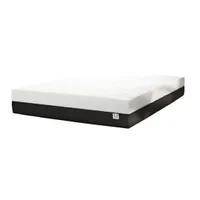
Tired of waking up hot and sweaty? The Panda Hybrid Bamboo Mattress is our pick for anyone who wants to keep things cool. It's a medium-firm mattress made with a combination of breathable bamboo-infused foams and pocket springs to maximise airflow, and in our Panda Hybrid Bamboo Mattress review it maintained a comfortable temperature while delivering impressive full-body support. It comes in at a mid-range price too, making this the best cooling mattress we can recommend right now.
Unsurprisingly the Panda aced our temperature regulation test, scoring a cool 5 out of 5. Our lead testers hot-sleeping husband reported that the Panda never left him too warm. But it's not all about cooling, and our pressure relief tests showed a good balance of cushioning and support. It'll best suit side and back sleepers, although the Relyon Bridgwater is better for lightweight side sleepers.
While the temperature regulation is top notch, the Panda Hybrid did struggle in some performance areas. The responsive design resulted in some motion transfer, but not enough to disturb most sleepers, while the edge support was weaker than we'd expect from this price bracket. Our testers were comfortable lying on the sides, but felt unsteady sitting on the edges.
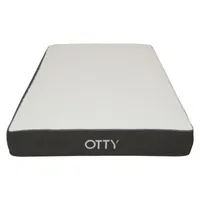
With British summers getting hotter, the good news is you aren't short of breathable bed options. The Simba Hybrid Pro at #1 is a strong choice, while the Otty Original is an affordable all-rounder that can't match Panda's cooling tech, but manages temperatures well. And the Emma Original Elite Mattress features a flexible layer of open air pockets to enable airflow and allow your skin to breathe.
For a reliable, no-nonsense cooling bed, though, the Panda Hybrid Bamboo Mattress is a tough one to beat. Most people will get on perfectly with its dependable temperature regulation and great pressure relief; in particular, anyone with back problems will appreciate its impressive lumbar support. The Panda is rarely discounted, but we saw 30% off for Black Friday last year, so it might be worth waiting for a sales period. Whenever you buy you'll get free white glove delivery to the room of your choice, which is a bonus you don't get with many sleep brands.
5. Best hotel mattress


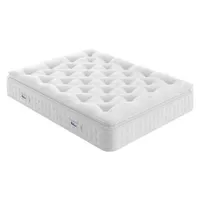
Anyone who's enjoyed their best sleep on a hotel bed and wants to replicate that feeling at home should check out the Silentnight Premier Inn 2.0 mattress. Made by Silentnight, a venerable name in the sleep business, this hotel-style mattress features an indulgent pillow-top as well as layers of foam, polyester and zoned pocket springs. And thanks to its medium-firm feel and targeted support, our reviewer rates it as the best mattress for back sleepers that she's ever tested.
Our Silentnight Premier Inn 2.0 Mattress review team were impressed with the pressure relief, but noted that beneath the luxury pillow top the firm support makes itself known. Side sleepers might prefer the more indulgent — and expensive — Relyon Bridgwater Dunlopillo Latex mattress. In terms of temperature control the mattress doesn't feel cool to the touch but it does a good job of dissipating heat. However, the synthetic materials could mean that hot sleepers might get too warm, so consider the DreamCloud Hybrid for a cooler take on hotel-style comfort.
The motion isolation impressed our team, with our lead tester noticing a little vibration only when her husband moved around heavily. And the Premier Inn 2.0's edge support proved to be excellent, thanks to firmer coils around the perimeter.
You don't need a hotel-branded mattress to get five-star sleep, with the Simba Natural Hybrid Escape offering an eco-friendly alternative. However, with a double Premier Inn 2.0 just £749, it's a good price for what's on offer. Back and stomach sleepers who experience aches and pains are likely to love the lumbar support, while the pillow top adds welcome pressure relief. Bear in mind however that there's no sleep trial on offer: all you get is a 14-day return period.
6. Best dual-sided mattress


Struggle to find a mattress that meets your needs night after night? Eve's The Wunderflip Premium Hybrid mattress might offer a solution, as this flippable bed gives you two firmness options to choose from. Consisting of a mattress core with a softer and firmer side, and a separate pillow top cover that attaches via a chunky zip fastener, it uses layers of foam, micro-springs, pocket springs and quilting to deliver two different feels.
Our Eve The Wunderflip Premium Hybrid mattress review team found that it offered plenty of pressure relief, but noted that neither side felt particularly firm. That might make it better for side sleepers with changing needs, rather than back or stomach sleepers (we found the 'softer' side less supportive overall). Whichever way you flip it, the motion dampening qualities were good, with little movement felt when sharing the mattress.
Temperature regulation also impressed and our tester didn't overheat on either side of the mattress. This is thanks to a fibre-filled pillow top, breathable foam and a sprung core allowing air to circulate. And the Wunderflip's edge support was good but not the best. The cushioned top layer made the sides feel less firm, but it was solid enough that you don't have to worry about rolling off.
Even on its firmer side the Wunderflip is a softer mattress, so if you prefer a mattress with a hard feel, consider the REM-Fit Pocket 1000. Or the Eve Premium Hybrid offers similar temperature regulation and more support at a lower price.
Eve's The Wunderflip Premium Hybrid mattress is a comfortable option for anyone who prefers a softer feel; dedicated side sleepers will enjoy it, but back and stomach sleepers might want more support. A £1,099 price tag for a double feels a little steep, but it's regularly discounted by 50% and if you can catch it on sale, it's a good buy. It comes with a 200-night trial and a 10-year warranty, too.
Also tested and recommended
The mattresses listed above are the ones we'd recommend for most people, but if nothing sounds quite right for you, below we've gathered together some of the best mattresses we've reviewed over the past few years. All these mattresses are worth your consideration, even if they didn't quite make the mark for our main selection.
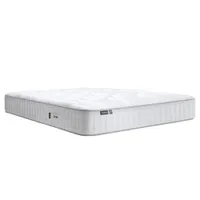
Best mattress 2026 review scores: at a glance
Mattress |
Our score |
Header Cell - Column 2 | User score |
Header Cell - Column 4 |
|---|---|---|---|---|
Simba Hybrid Pro |
★★★★½ |
Generated from a three month testing period on a king size. |
★★★★★ |
Averaged from over 38,000 reviews at Simba, plus reviews from MattressNextDay, John Lewis and more. |
DreamCloud Hybrid |
★★★★½ |
Generated over a five week testing period on a double size. |
★★★★½ |
Averaged from over 1,000 reviews at DreamCloud — no third-party reviews currently available. |
Nectar Memory Foam |
★★★★ |
Generated from a three-month testing period on a double size. |
★★★★½ |
Averaged from over 2,000 reviews at Nectar, plus over 5,000 reviews at Amazon. |
Panda Bamboo Hybrid |
★★★★½ |
Generated from a one month testing period on a double size. |
★★★★½ |
Averaged from over 200 reviews at Panda, alongside reviews from MattressOnline, Boots and other retailers. |
SilentNight Premier Inn 2.0 |
★★★★½ |
Generated from a one month testing period on a double size. |
★★★★½ |
Generated from 8,400+ reviews at Premier Inn — no third-party reviews could be found. |
Eve The Wunderflip Premium Hybrid |
★★★★ |
Generated from a two month testing period on a king size |
★★★★ |
Generated from 100+ reviews at Eve — no third-party reviews could be found. |
Mattresses we're testing right now
We're always looking for the best mattresses for every sleep style and budget: that means regularly testing the newest launches and the most popular mattresses. Here's a selection we're currently testing at our Sleep Lab or in our expert's homes:
Simba Earth Apex Mattress: With the Simba Hybrid Ultra Mattress our number one rated bed for most sleep styles and the Simba Earth Escape a favorite for those seeking natural comfort, we have high hopes for the Earth Apex (a luxury upgrade to the Escape.)
Sleepeezee Regency Kenilworth 1600 Pocket Sprung Mattress: Approved by the king (yes, really), the Sleepeezee Regency Kenilworth should offer a royally good night's sleep — our tester can confirm it looks good enough for Buckingham Palace but does it feel good enough for your bedroom?
Eight Sleep Pod 6: If the British heatwaves killed your sleep this summer you'll want to bookmark this page for the latest updates on the Eight Sleep. This high-tech smart cooling system uses a water based system to literally put temperature control in your hands.
How we test mattresses
The Tom's Guide mattress review process is editorially independent and not influenced by third parties. To ensure unbiased product recommendations, we test every mattress in several key areas: pressure relief, support and comfort, temperature regulation, edge support, motion isolation, and durability. For each review, our lead tester spends a minimum of three weeks on the mattress, which is roughly how long it takes the body to get used to a new bed.
Comfort and firmness are subjective, so alongside our lead reviewer, each bed mattress is tested by a trusted panel. This panel is made up of people with different body types and sleep styles, to ensure every preference is taken into account.

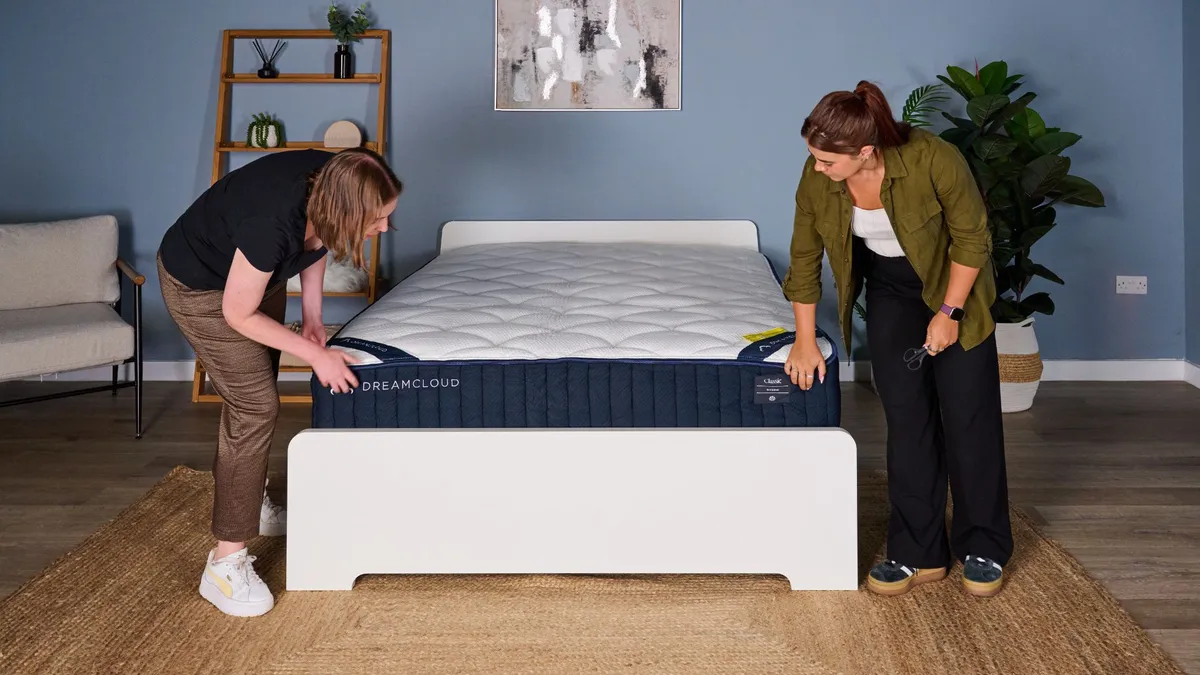


Our testing team includes side, back, stomach, and combination sleepers, as well as people with different body types. This allows us to get a well-rounded view of how each mattress performs for a variety of people.
We also run a series of objective tests, using weights. We can then compare these results to other mattresses we've tested. In addition, we analyze the public reviews for each mattress, to see how real-world customers are responding. We then rate the mattress out of five, based on the data collected and the performance compared to other mattresses we've reviewed.
You can learn more about our testing process in our mattress methodology. This testing focuses on the following three processes:
- Each mattress is tested across key areas: pressure relief, comfort, support, motion isolation, edge support, and temperature regulation.
- We analyze available user reviews to understand what customers think of the mattress, looking for recurring issues / features to explore in our tests.
- We fact check any support or comfort claims made by the brand.
How to choose the best mattress for you
The guide above contains our favorite mattresses. These are the ones our team have slept on, tested, and loved. But just because we think a mattress is the best doesn't mean it's going to be the right choice for you. So how do you find the perfect mattress?
Our number one piece of advice is to opt for a mattress with a sleep trial. A sleep trial gives you a period of time (typically 100 nights) to test the bed in your own home. If you don't like it, you can send it back for a refund. Some brands charge a small fee for these returns, but many offer it for free. Every bed in this guide includes a sleep trial.
When choosing a mattress, the primary factors to consider are:
- Your sleep position
- Mattress firmness
- Your weight
- Your sleep needs
- Your budget
How you prioritize these factors will depend on your own individual circumstances. If you have no health issues and a tendency to sleep well no matter where you are, a standard bed in a box (within your budget) might suit you fine. But if you often struggle to get a good night's rest, finding the right mattress can transform your sleep.
Sleep position
Why you can trust Tom's Guide Our writers and editors spend hours analyzing and reviewing products, services, and apps to help find what's best for you. Find out more about how we test, analyze, and rate.
Sleep position is one of the first things to consider when buying a mattress. There are four common sleep positions: side, back, stomach, and combination (someone who regularly moves between positions). Understanding your sleep position can help you understand what mattress will suit your needs.
- Side sleepers need ample pressure relief at the shoulders, hips, and knees so tend to prefer medium feel mattresses with plenty of contouring. Memory foam mattresses are often a good choice
- Back sleepers benefit from medium-firm mattresses with strong lumbar support. Both hybrid and memory foam mattresses can suit back sleepers, but avoid softer foams.
- Stomach sleepers require strong support at the hips to keep the spine comfortable. Opt for medium to medium-firm mattresses if you have a lighter build, or a medium-firm to firm mattress if you have a heavier build.
- Combination sleepers need a mattress to suit different sleep styles, and medium-firm hybrid and all-foam mattresses tend to be good all rounders. Good motion isolation is another priority, so when you move around you don't wake anyone else in the bed.
Mattress firmness
Mattress firmness refers to how hard or soft a mattress is. We judge it on a scale of one to 10. One refers to a mattress that's marshmallow soft, while 10 is as hard as a rock. These ratings are subjective (weight plays an important role here, which we'll discuss below), so when determining firmness we ask a range of sleepers with different body types and preferences how they experience the bed.
There's no good or bad firmness rating, and no easy answer to the question 'how firm should a mattress be?' Let's take a look at the different firmness ratings and who they benefit:
1 to 3.5 out of 10: These are super soft mattresses that you really sink into. Mattresses this soft are typically best for lightweight side sleepers who enjoy feeling 'hugged' by the bed, but it's important to ensure you're still getting enough support. Excess sink can result in back ache.
4 to 4.5 out of 10: Medium-soft mattresses, these beds have plenty of contouring but shouldn't leave you feeling like you'll fall through the mattress. These mattresses suit side sleepers with light to average builds.
5 to 6.5 out of 10: True medium mattresses that balance contouring with support. Side sleepers and back sleepers can both benefit from a medium mattress and they're also good for bed sharers.
7 to 7.5 out of 10: These medium-firm beds prioritize strong support and often have minimal sink. Good for sleepers with back pain and front sleepers. However, side sleepers might wake up with numb arms on these beds.
8 to 9.5 out of 10: Firm mattresses are often beds you lie on top of, with almost no contouring but plenty of support. They're good for stomach sleepers who need stability at the hips, plus those with a bigger build.
10 out of 10: Extra firm mattresses are rare and rock hard — you might feel like you're sleeping on the floor. Some back and stomach sleepers prefer this type of build, but it's a divisive feel.
Weight
Modern mattresses are typically multi-layered designs. The upper layers are the comfort layers, providing contouring and pressure relief. The base layers contribute to the overall stability and support of the mattress.
Sleepers with a lighter build will often benefit from the extra cushioning of a softer mattress, while those with an average build tend to prefer medium to medium-firm mattresses. Sleepers with a heavier build (over 230lbs), benefit from the superior full-body support of a firm mattress.
Sleep needs
Sleep needs vary from person to person, so it's important to consider what you prioritize in your sleep. Bed sharers should look for a mattress with good motion isolation, which will absorb movement so you can't feel your partner toss and turn.
Hot sleepers need a mattress with cooling features, to help absorb and dissipate heat throughout the night. Sleepers with back pain should consider a bed with enhanced lumbar support, while those with limited mobility can benefit from strong edge support.
The right mattress won't stop insomnia or cure your back pain, but it can help you enjoy comfier rest.
Budget
No matter your budget, it's still important to remember the above factors when choosing your mattress. If you have a tight budget, consider the features that are most important to your sleep needs — whether that's contouring or support or a breathable build — and use that to find a mattress within your price range that's right for your sleep style.
Mattress buying advice
A good mattress can be an investment purchase, and as sleep is essential to our wellbeing, it's important to get it right. Here our team of sleep experts and mattress testers answer all your questions, including what the different types of mattress are, how to find the right mattress for you, and when is the best time to buy a mattress.
What are the different types of mattresses?
Mattresses come in many different forms and are made with many different materials. There's no singular 'best' mattress type — we should know, we've tested every one we can get our hands on.
Below are the most common types of mattress for both beds in a box (which come rolled and packed) and traditional flat mattresses, alongside their pros and cons.
Hybrid mattresses
Hybrid mattresses contain layers of springs and cushioning, making them perhaps the most diverse bed type. Most hybrid mattresses follow a similar build: top layers of comfort materials (often foams but sometimes wool or other fibers) followed by a spring base (or multiple layers of springs.) So depending on the design, a hybrid can be rock hard or marshmallow soft.
The use of coils gives hybrid mattresses a bouncier feel than most all-foam beds. This has some advantages — hybrid mattresses tend to be easier to move around on — but it can result in potentially disruptive motion transfer.

But two areas where hybrids typically excel are support and breathability. That's thanks to the spring base: it keeps the body lifted while allowing hot air to circulate and cool.
Memory foam mattresses
Memory foam mattresses are made using multiple layers of polyurethane foam (actual 'memory foam' is only found in the top layers.) They're best known for their cushioning — traditional memory foam delivers a 'body hugging' feel that can relieve aches and is often recommended for side sleepers.
But memory foam is a surprisingly diverse material and firmer foam beds are available for back and stomach sleepers. Memory foam also excels at motion isolation (trapping disruptive movement), making it a popular choice for bed sharers. And it's typically a more affordable material; memory foam mattresses are often cheaper than comparable hybrids.
However, memory foam has some downsides, including a tendency to trap heat — hot sleepers should opt for an all-foam mattress with cooling infusions. And support can be a weakness (literally) as some soft foam beds have a quicksand sink-in feel.
Latex mattresses
Latex foams are often used in eco-friendly mattresses, as they're naturally derived from rubber trees (synthetic latex is also available.) Latex foams are often bouncier than memory foam and lack the soft 'give', making them best for back and stomach sleepers. Latex is also naturally breathable.
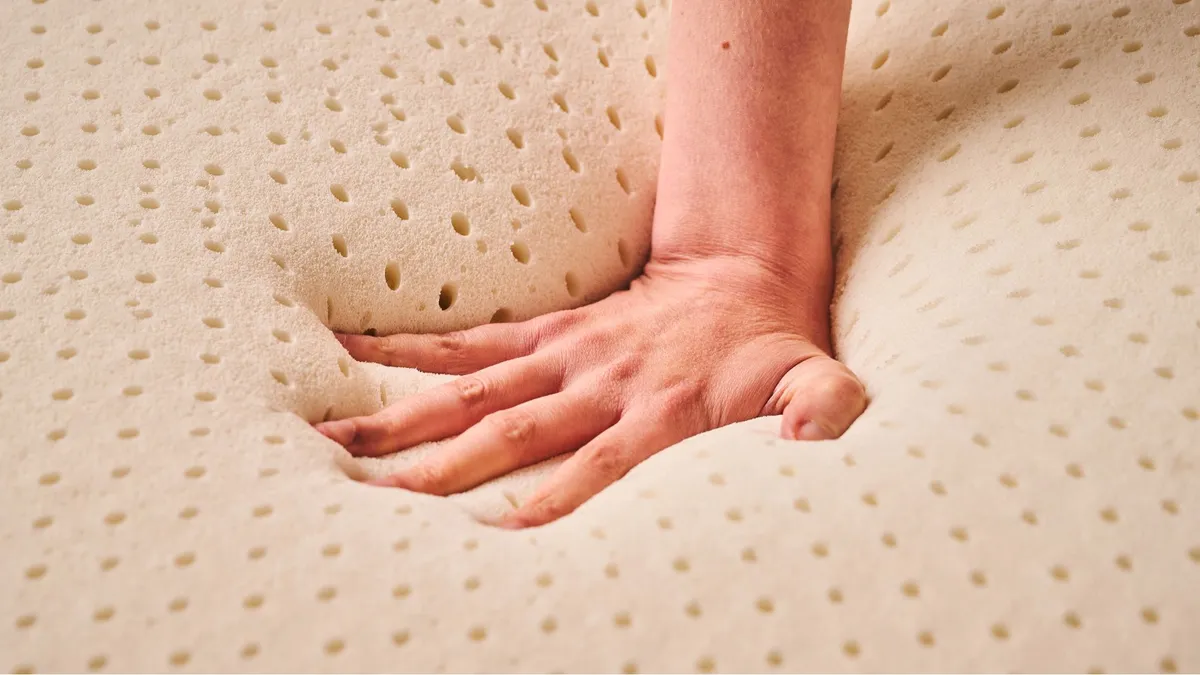
While a few all-foam latex mattresses do exist, you'll typically find latex acting as a comfort layer in a hybrid bed. Latex is among the most expensive mattress materials but it's also one of the most durable. You get a lot of bang for your buck.
Innerspring mattresses
Innerspring mattresses are a traditional bed type that use coils to create a buoyant and breathable feel. With limited cushioning innerspring mattresses are often recommended for back or stomach sleepers, as well as those on a budget — these are often the most affordable mattresses.
Innerspring beds are becoming increasingly usurped by hybrids, which have more diversity. However, you can still find innerspring designs from budget retailers and mattress stores.
Smart mattresses
More and more sleep brands are turning to high-tech solutions to help customers snooze better, with integrated sleep tracking, adjustable firmness and even built-in temperature control now common features in smart beds.
This is a broad category that encompasses a variety of technological sleep solutions but most smart mattresses have at least one thing in common: a high price tag.
What mattress type is best?
There is no mattress type that's better than the other, as each model can suit a different sleep style — the best mattress for you won't necessarily feel as comfortable for someone else. For this reason, ensure you always get a mattress trial, so you can test the bed over the course of several weeks and see if it's right for you.
With that said, we know from our testing that there are some general trends in comfort. Lightweight side sleepers typically benefit from soft to medium mattresses, often with ample cushioning. People of average body weight (around 130 to 230lbs) tend to prefer medium-firm mattresses, while those with heavier builds should consider firm mattresses.
Where is the best place to buy a mattress?
It used to be unusual to buy a mattress online, but the rise of beds in a box has made it much easier to buy a high-quality mattress online and get it delivered straight to your door. In our experience, the best place to buy a mattress is online, where you can find direct to consumer brands offering excellent prices on beds for every sleep style.
Without the cost of a brick and mortar store, online mattress brands can save money — and this saving is passed onto the consumer. Some sleep brands also take a dual approach, selling the full line up of mattresses online and a few select models in store.
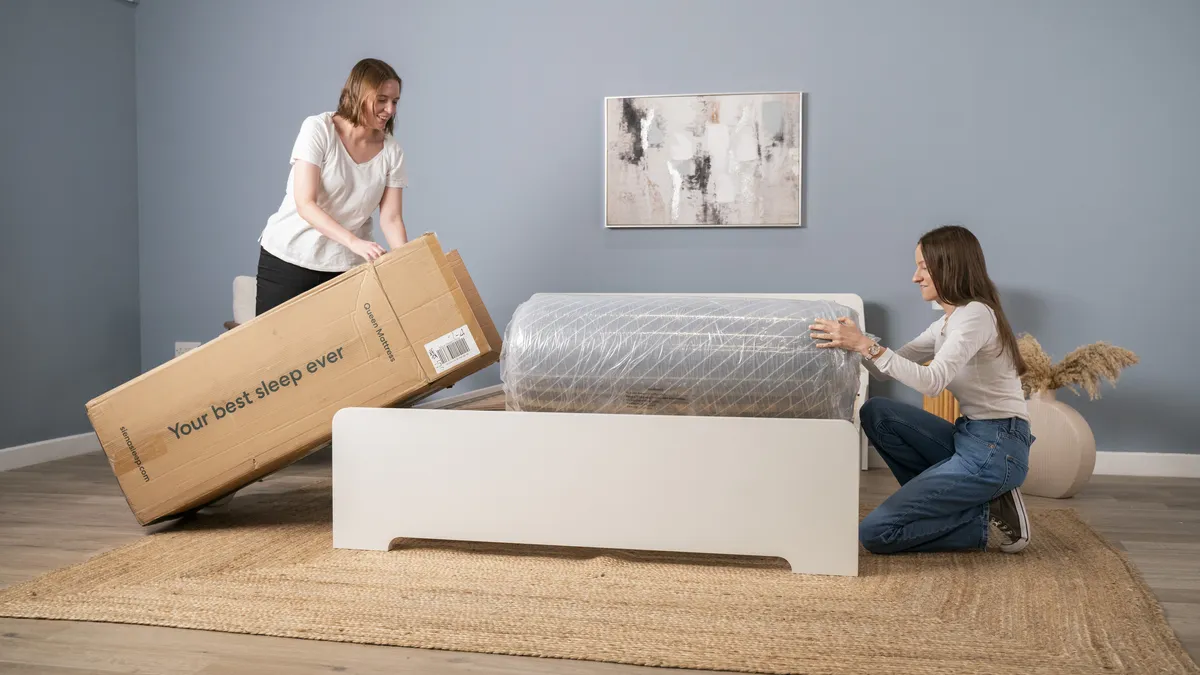
Most online-only mattress brands sell 'mattresses in a box', in which the bed is compressed, wrapped in plastic, and boxed. Once removed from the packaging the mattress will spring back into place and gradually inflate to its full height.However, some brands (including Simba) do sell flat mattresses. Often these beds are sold with white glove delivery, so you can avoid the setup process.
There are also third-party online mattress retailers, where you can sometimes score a better price than shopping direct from the manufacturer. However, in our experience the brand will typically offer superior benefits, such as trial and warranties, plus better after care.
If customer service is a priority, there are definite advantages to shopping in store. While many online mattress retailers offer live chat boxes and phone help, they're not always reliable.
Wherever you choose to buy your mattress, don't forget the sleep trial. A trial period of 30 days minimum allows you to really get to know the mattress, so you know it's going to be right for you.
When is the best time to buy a mattress?
The best time to buy a mattress is traditionally Black Friday, as this is when we expect all the major sleep brands (plus third-party retailers) to run a competitive sale. By timing your purchase to coincide with the Black Friday / Cyber Monday period, you should have a large variety of discounted mattresses to choose from.
In recent years, however, Black Friday has seen competition from the bank holiday sales. Easter, Boxing Day and New Year's sales often bring reliable discounts from top-rated mattress brands, meaning you don't have to wait until November to upgrade your sleep for less.
In fact, you don't necessarily have to wait for a sales period to save at all. For example, the Nectar mattress sales are good year-round and while the Emma mattress sales vary from month to month, a bank holiday doesn't necessarily equal a bigger discount.
Finally, if you're looking for a budget-friendly bed for a guest room, you might want to check out the Amazon Prime Day sales. These typically run twice a year (once at the start of summer and once in autumn) and can bring some major discounts.
What are the best mattress brands in the UK?
We've tested beds from all the best and most popular brands in the UK, including Simba, Emma, Panda, Nectar, DreamCloud, Eve, and Tempur-Pedic. These brands all offer mattresses to suit a variety of sleep styles and budgets, with regular sales throughout the year.
It's a Simba mattress currently occupying our top spot, and Simba is one of our favorite UK mattress brands (it's also recently expanded to the US). Simba Sleep UK is a B Corp Certified brand and the beds are designed and manufactured in the UK. Simba mattresses come with a 200-night trial and a 10-year guarantee.
How often should you change your mattress?
In this guide we hope to help you find a new bed when your old mattress has reached the end of its life — but how often should you replace your mattress? This depends on a number of factors, but on average your mattresses should be replaced every six to ten years.
As a mattress ages it begins to lose support. Dips start to appear and this sagging leads to back and neck ache. Older mattresses also have cosmetic issues, such as stains. While this might appear to impact your sleep, it could indicate that your mattress has mold or mildew.
Here are some common signs that your mattress needs replacing:
- You've owned it for at least six years (or four years, for a cheap bed)
- You're wake up in pain most mornings
- You wake up in pain during the night
- Your allergies worsen as soon as you climb into bed
- You feel like you might sink straight through the mattress
- You've noticed dips and sags in some areas of the bed
- There's an unusual smell and dark stains
- It's started making a noise (or more noise)
- Your body has changed in recent years and the mattress no longer offers the right support
- Your sleep needs have changed and your bed can't keep up
Regular mattress cleaning and maintenance can extend the longevity of your bed, as can rotating your mattress (be aware that some mattresses with zoned support shouldn't be rotated.)
As a general rule, latex mattresses have the longest lifespan, while a good memory foam mattress is typically more durable than an equivalent quality hybrid. Innerspring mattresses often have a short lifespan.
How much should I spend on a mattress?
At Tom's Guide we think mattresses are an investment that will pay you back with good rest — for that reason, we recommend paying what you can afford for a quality mattress.
It is possible to pick up a good mattress for less than £300 for a double, but expect to make certain concessions. These mattresses typically lack the longevity and comfort of pricier builds. They tend to be best for guest rooms and teenage bedrooms.
Increasing your budget to the mid-range category opens you up to a wider variety of mattresses, made with better quality materials. We consider a mid-range mattress around £400 to £600 for a double, while an upper mid-range mattress can set you back up to £800. Although more money upfront, these beds will typically stay comfortable and supportive for longer.
A premium mattress costs upwards of £800 for a double (and this is where you'll find our top pick, the Simba Hybrid Ultra). These mattresses tend to be the cream of the crop, although a high price tag doesn't necessarily indicate the best mattress for your sleep style.

Is it better to buy a mattress online or in-store?
These days, it's easy to buy a mattress online. There's much more choice available, and generous trial and warranty periods give shoppers a much-welcome peace of mind.
However, the convenience of clicking 'buy now' isn't enough for a segment of shoppers who would rather be hands-on with a mattress to avoid possibly dealing with the hassle of a return. The in-store mattress buying experience is still alive and well in 2026, and it's a better avenue to take if you want to familiarise yourself with a series of beds first.
Shopping in-store also offers you more personalised attention from knowledgeable salespeople who can answer your questions. On the flip side, some customers may find such interactions stressful. The online equivalent is a chat box, with either another human or an AI bot on the other side.
If you're trying to be mindful of budget, online will be a better bet. Not only will you find a larger range of beds across multiple price points, but brick-and-mortar stores often upcharge to account for overhead costs.
Bottom line: it all comes down to what you prioritise when purchasing a mattress.

