If you’re shopping for a new sports watch and don’t have a huge budget, the Garmin Forerunner 265 and Coros Pace 4 are two models that should be on your radar, because they both offer great value.
They’re two of the best sports watches you can get because of the impressive line-up of features they have at a relatively low price, and they're two of my favorites to use as a marathoner.
There are some key differences between the watches that might make one more suitable for your needs, though, such as their design, battery life, accuracy and music storage features.
I’ve highlighted the differences that stood out for me when testing the two watches at the same time, including when running a half marathon with both. If you want more details on either watch, check out our Garmin Forerunner 265 review and Coros Pace 4 review.
Coros Pace 4 vs. Garmin Forerunner 265: Price & availability

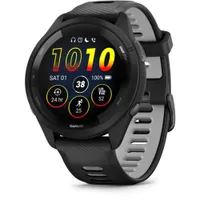
The Garmin Forerunner 265 is the older watch, having launched in March 2023. It comes in two sizes — 42mm and 46mm — and costs $449 at full price. However, because it is an older model, it’s almost always on sale somewhere and is currently just $299.
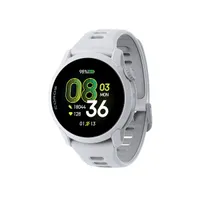
The Coros Pace 4 launched in November 2025 and costs $249, so even with the Garmin in the sales, it’s the cheaper watch of the two. It’s available in two colors and comes with either a nylon or silicone band.
Coros Pace 4 vs. Garmin Forerunner 265: Specs
| Row 0 - Cell 0 | Coros Pace 4 |
Garmin Forerunner 265 |
Price |
$249/£229 |
$449.99/£379.99 |
Size |
43.4 x 11.8mm |
41.7 x 12.9mm (42mm); 46.1 x 12.9mm (46mm) |
Display |
1.2in 390 x 390 AMOLED |
1.2in 360 x 360 AMOLED (42mm); 1.3in 416 x 416 AMOLED (46mm) |
Bezel |
Plastic |
Plastic |
Screen |
Glass |
Glass |
Weight |
40g |
39g (42mm); 47g (46mm) |
Water resistance |
50m |
5ATM |
Battery life (watch mode) |
Up to 20 days |
Up to 15 days (42mm); Up to 13 days (46mm) |
Battery life (multi-band GPS) |
24 hours (always-on) |
15 hours (42mm, always-on); 14 hours (46mm, always-on) |
Storage |
4GB |
8GB |
Coros Pace 4 vs. Garmin Forerunner 265: Design & display

Both watches have lightweight plastic designs with bright AMOLED touchscreen displays. The Forerunner 265 sticks to Garmin’s usual five-button design, while the Pace 4 has three buttons, one of which is a digital dial.
The larger 46mm model of the Forerunner 265 has a 1.3in display, while the smaller 42mm Forerunner 265S watch has a 1.2mm display, the same size as on the Pace 4. In general, the 42mm Forerunner 265S is similar in size and weight to the Pace 4.

There are more color choices with the Forerunner 265, and l I think it’s a slightly more attractive watch than the Pace 4. I also prefer using buttons over the Pace 4’s digital dial, which I find is often triggered accidentally if I don’t have the buttons locked.
Both watches are comfortable to wear 24/7 though, and I still like the look of the Pace 4. They have all the same sensors on board, including a pulse oximeter, barometer and a GPS chipset that allows for multi-band tracking.
They also share the same 5 ATM waterproof rating, but there are a couple of other advantages to the Garmin’s design. One is that it has 8GB of storage compared with 4GB on the Coros, and the other is that it can connect to external sensors via both Bluetooth and ANT+, whereas the Pace 4 only uses Bluetooth.
On the other side, the Pace 4 has an advantage in that it has a built-in mic, which you can use to take voice notes, such as a training log at the end of your workout.
Coros Pace 4 vs. Garmin Forerunner 265: Sports tracking & training analysis

Both watches come equipped with a long list of sports modes, including dedicated track, run and triathlon modes. All of these modes are customizable, and you can also load structured workouts and training plans onto both watches to follow from your wrist.
Once your training is done, both watches have a lot of analysis to offer, including guidance around your training load and suggested recovery time, and race time estimates for 5K, 10K, half marathon and marathon events.
I like that Coros does not differentiate between its watches, and all of them get the same level of training analysis. That means the Pace 4 has the same features as the flagship Coros Vertix 2S in this area, whereas the Forerunner 265 is missing some of the training analysis you get on more expensive and newer Garmins.
That said, the Forerunner 265 still offers great analysis and has one feature that Coros doesn’t, which is an overall training readiness rating based on factors like your recent training load, sleep and stress.
Coros Pace 4 vs. Garmin Forerunner 265: GPS & heart rate accuracy

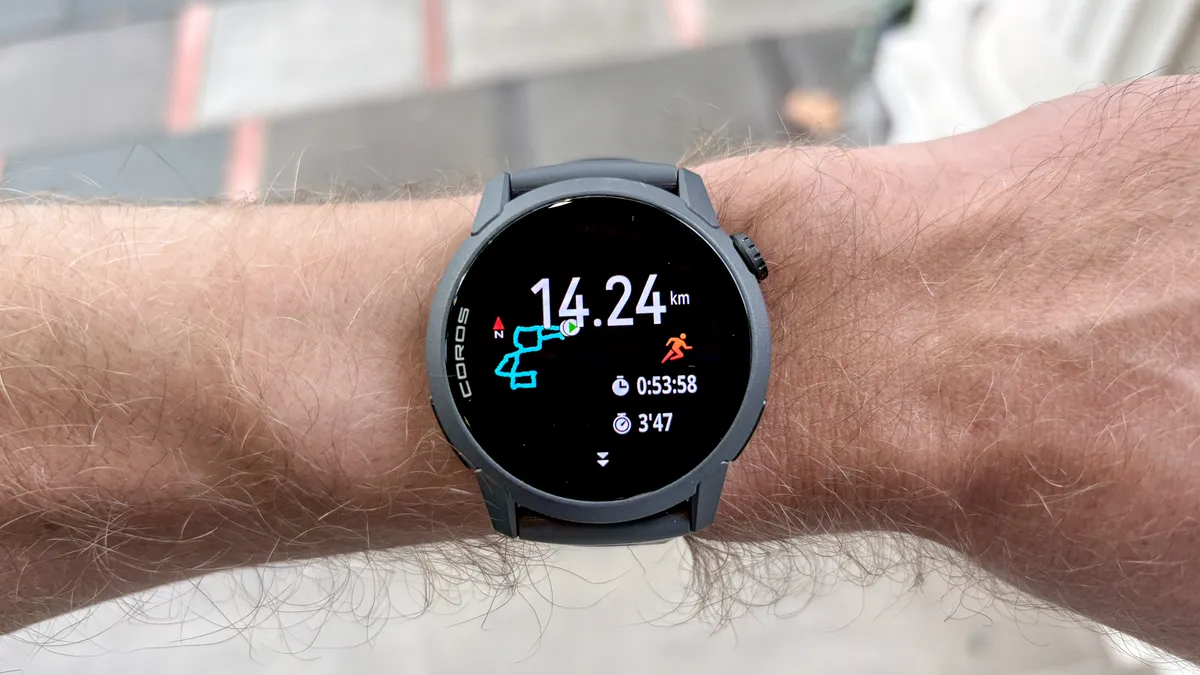
I’ve tested both of these watches for months at a time individually and wore them both for a couple of runs recently — a 10K and a half marathon — checking their GPS and heart rate tracking by looking at the GPS tracks and comparing the heart rate readings against a chest strap.
Both offer multi-band GPS, and I have mostly had good results with both watches in terms of GPS accuracy. This includes the half marathon I ran recently, where the two watches matched each other, and also a Garmin Forerunner 970 I wore for the same run.
However, I have done a couple of city races with a lot of twists and turns, where the Forerunner 265 did struggle slightly more than other watches. Whereas the Pace 4 has always been bulletproof on this front, so I might give it the slight edge on GPS reliability.

With regards to heart rate accuracy, once again, both have been very reliable for me in the main, but as with all optical heart rate sensors, they sometimes struggle to respond as quickly to changes in heart rate as a chest strap and make a few more errors in general.

Overall, both are good on heart rate, but the Pace 4 has been a little more error-prone for me than the Forerunner 265, including during the half marathon I ran. Both mostly matched the Garmin HRM600 chest strap’s readings during this, but the Coros had a few more errors than the Forerunner 265.
Coros Pace 4 vs. Garmin Forerunner 265: Battery life

Coros watches have always excelled in battery life, and the Pace 4 does outlast the Forerunner 265, both in watch mode and when tracking activities.
The Pace 4 can last up to 20 days in watch mode and offers 24 hours of multi-band GPS tracking. The watch mode battery life does come down with the screen set to always-on, but it still lasts me five to six days on a charge when running every day.
You can get up to 15 days of battery life from the smaller Forerunner 265S in watch mode, and 13 days with the larger Forerunner 265. The Forerunner 265S offers 15 hours of multi-band GPS, and the Forerunner 265 offers 14 hours.
When I tested the Forerunner 265, it tended to last me four to five days on a charge with the screen always-on, so it’s not a huge difference from the Coros, but you will have to charge the Garmin a little more regularly.
Coros Pace 4 vs. Garmin Forerunner 265: Smart features & navigation
The Garmin Forerunner 265 has more smart features than the Coros Pace 4, and one key difference is that it can link up with music streaming services, including Spotify, to download playlists to listen to without your phone.
While the Pace 4 does have music storage, this is only for MP3 files that you drag and drop to the watch, so it’s not as useful for most people.
The Forerunner 265 also offers NFC payments through Garmin Pay, and has access to the small Garmin Connect IQ app store, which contains some useful apps, widgets and data fields.
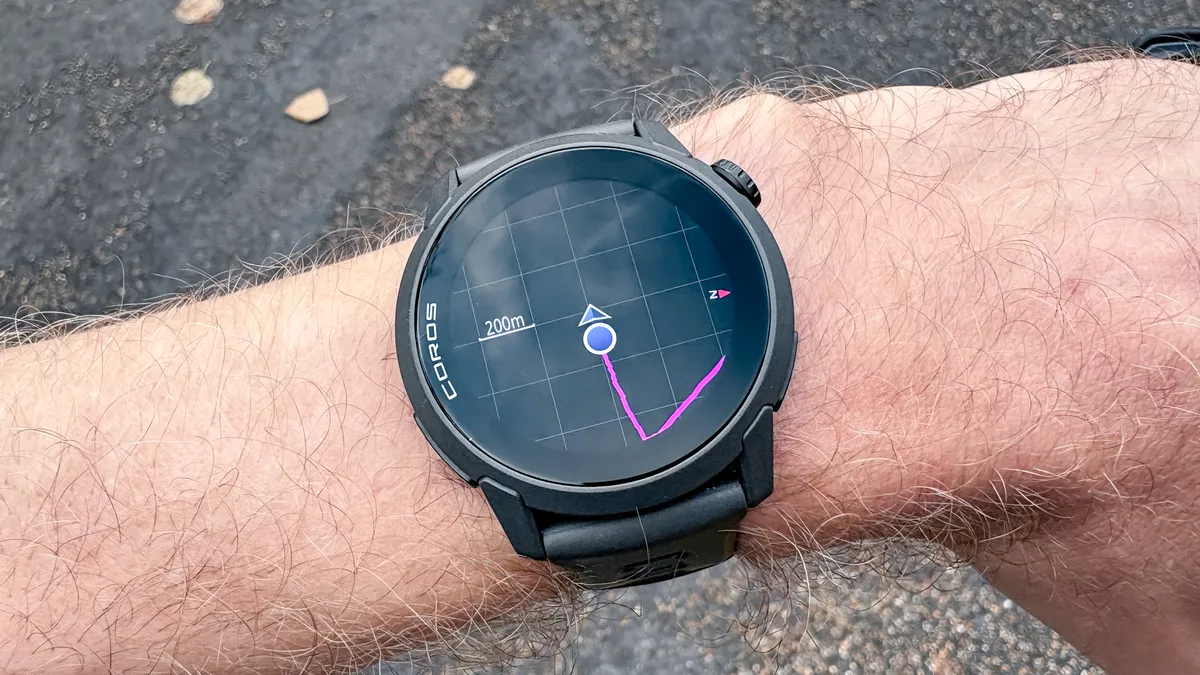
Both watches also mirror your phone’s notifications and have breadcrumb navigation, which you can use to follow routes loaded onto the watch with turn-by-turn directions. Neither have full maps, though; that’s a feature saved for more expensive Garmin and Coros models.
Coros Pace 4 vs. Garmin Forerunner 265: Verdict
This is a tough call because these are both excellent watches and neither will let you down in terms of accuracy, and the essentials of sports tracking and training analysis.
For me, the Garmin has the nicer design, better smart features and the handy training readiness stat as key advantages, while the Coros has better battery life, slightly more reliable GPS accuracy and is cheaper even when the Forerunner 265 is reduced in sales.
I’d also say it’s an advantage that the Pace 4 is a newer watch, and Coros has a good record of bringing software updates to its devices long after they launch. Garmin is highly unlikely to do that with the Forerunner 265, which has been superseded by the Garmin Forerunner 570 in its line-up.
Overall, I’d lean towards the Coros Pace 4 myself, but if you’re keen to go with Garmin, then the Forerunner 265 offers a lot of value when reduced in sales.

Follow Tom's Guide on Google News and add us as a preferred source to get our up-to-date news, analysis, and reviews in your feeds.
More from Tom's Guide
- I just ran a marathon with the Apple Watch Ultra 3 vs. Garmin Fenix 8 Pro — here’s the winner
- Coros Pace 4 vs Coros Pace 3 vs Coros Pace Pro: Which is the best Coros watch for you?
- Garmin Fenix 8 vs. Garmin Fenix 8 Pro: should you upgrade?