The Garmin Forerunner 970 is the best sports watch available, in my opinion, which is why it’s stayed on my wrist long after I finished testing it for our review.
I’ve been wearing the Forerunner 970 for over six months now and have run over 1,500 miles with it on my wrist, along with a whole load of cycling, strength workouts and yoga.
While it doesn’t come cheap, the Forerunner 970 is an incredible sports watch for endurance athletes in particular, and it lives up to its price tag. It will also be in sales more regularly in 2026, since it has been out for a while now.
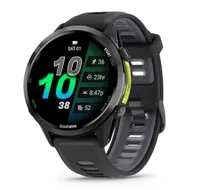
During my time with the Forerunner 970, I’ve also tried a raft of excellent alternatives, including the Garmin Fenix 8 Pro, Suunto Vertical 2 and Garmin Venu X1, but I always end up favoring the Forerunner 970 for my own use.
It’s not entirely perfect, though, and there are some cons I’ve noticed through my testing. Here are my long-term likes and dislikes for the Garmin Forerunner 970.
Like #1: The design has proved durable

One of the biggest updates to the Forerunner 970 compared with the Garmin Forerunner 965 is its sapphire crystal screen, which makes it more scratch-resistant.
The Forerunner 965 only has a strengthened glass screen, which is scratch-resistant, but not as much so as the sapphire crystal display and I did scratch the 965 during my testing.
After six months with the Forerunner 970, it doesn't have any marks or scratches, and looks good as new.
Like #2: It’s light, slim and always comfortable to wear

The reason I prefer the Forerunner 970 to the Garmin Fenix 8 and Fenix 8 Pro is its lighter design. It’s not as rugged and metallic as the Fenix, but still pretty durable, as I’ve said, and it’s much thinner and lighter, which makes it more comfortable to wear all the time.
While it would be amazing if Garmin made a smaller version of the Forerunner 970 as well, the 47mm model fits my slim wrist well and is certainly less noticeable than chunkier adventure watches.
Like #3: The flashlight is useful almost every day

Garmin brought a built-in flashlight to most of its new watches in 2025, including the Forerunner 970, and it’s very useful indeed.
While I mostly use it to help see to my kids if they wake up at night, or to creep out of the house in the morning for a run without waking everyone else, the flashlight is also great as an extra light for those who camp or regularly run in the dark.
Like #4: The accuracy has been impeccable

In my six months of testing, I haven’t had any GPS errors of note with the Forerunner 970, which I usually have in the most accurate multi-band mode but have also used in all-systems-on GPS mode.
While I generally use the Garmin HRM 600 chest strap with the watch, I have also used it many times without an external heart rate sensor, and the optical HR tracking on the Forerunner 970 has been reliable as well.
You expect good GPS accuracy in particular from any top sports watch these days, but it’s still good to have it confirmed with long-term use.
Like #5: The training analysis is genuinely useful

There is so much training analysis on the Forerunner 970; it’s a bit overwhelming at first, but over time, you start to focus on the metrics that are most useful at any given time.
I love the running tolerance and endurance score stats on the watch when marathon training, for example, because they help me build up my load gradually, and I can see myself getting more accustomed to higher mileage.

I also check in on the VO2 max estimates on the watch when building up from a break, for some positive reinforcement that I’m getting fitter and training at the right intensity.

As a road runner mostly focused on flat events, I don’t use hill score so much, but even that’s a metric I’ve used and enjoyed when traveling in areas where I do a lot more climbing and descending on trail runs.
Like #6: It’s had some useful updates since launching

The Forerunner 970 is one of the newest and best Garmin watches, and it is still getting every new feature from software updates from the brand. In the time I’ve been using it, there have been a couple of notable upgrades.
I really like the new battery widget available on the watch, which can help you monitor your use, and the sports scores widget is fun for keeping track of your favorite teams.
There are also lifestyle logging and health status features that launched with the Garmin Venu 4, and you can use the Forerunner 970 to log what you eat and drink for Garmin’s nutrition tracking feature as well.
Dislike #1: The Forerunner 970 is laggy at times

I’ve noticed the Forerunner 970 isn’t the fastest watch with regard to flicking through menus and, more notably, when saving activities or loading maps.
I often run with two watches, and when I save my run on the Forerunner 970, it will sometimes take 15-30 seconds, compared to being almost instant on a watch like the Coros Pace 4.
Similarly, when I first press a button to scroll through the widgets on the watch, it takes a couple of seconds to wake up.
After that, it’s nice and snappy, and in general, this slowness hasn’t been something that annoys me really, but an upgraded processor on the next version of the watch would be welcome.
Dislike #2: The running economy stats haven't been useful

I was really excited about the running economy estimates on the Forerunner 970 (when paired with the HRM 600 chest strap) when the feature was announced at the launch of the watch, but it’s not a metric I’ve really found much use in long-term testing.

My overall economy has stayed roughly the same, and while the step speed loss stat measured during runs does change a little depending on how fast I run, it’s not something I feel I can use to improve my running at all.
Dislike #3: The battery life is just OK

The Forerunner 970 had poor battery out of the gate, but this was improved quickly via updates, so it lasts around four or five days on a charge with always-on if you don’t have the display set to the brightest setting — I find the lower settings are more than bright enough.
It’s perfectly fine battery life, and it’s not been hard to find a time to charge the watch, but it’s less than you get from some other AMOLED watches, including the Fenix 8 and Suunto Vertical 2, and about the same as the smaller Coros Pace 4.

Follow Tom's Guide on Google News and add us as a preferred source to get our up-to-date news, analysis, and reviews in your feeds.
More from Tom's Guide
- Not the Fenix 9 — this is the new Garmin watch I want to see in 2026
- Coros Pace 4 vs Coros Pace 3 vs Coros Pace Pro: Which is the best Coros watch for you?
- Garmin Fenix 8 vs. Garmin Fenix 8 Pro: should you upgrade?