Google’s AI-powered search results are supposed to make finding answers faster and easier. Since it's almost impossible to ignore them, you'd think they would be fairly reliable. But a new analysis suggests they may also be getting things wrong — more often than most people realize.
According to a report highlighted by Ars Technica, Google’s AI Overviews — the summaries that now appear at the top of some search results — were inaccurate about 10% of the time during testing.
At first glance, that might not sound alarming. No system is perfect, but after digging into the findings, it’s clear the real issue isn’t just how often these answers are wrong — it’s how hard it is to tell when they are.
Here's a look at what's going on with Google.
The mistakes aren’t obvious

When people think about AI getting things wrong, they usually imagine bizarre answers like obvious hallucinations. Even ChatGPT is proven to be wrong 1 in 4 times.
But that’s not what’s happening here. Most of the errors identified in Google’s AI Overviews weren’t outrageous — they were subtle. In some cases, the summaries:
- left out important context
- simplified complex topics too aggressively
- or presented partially correct information as fully accurate
That makes them far more dangerous than obvious mistakes as billions of users rely on Google every day. Because if something sounds reasonable, most people won’t question it.
Why 10% is a bigger deal than it sounds

Google handles billions of searches every day and even a small error rate at that scale can translate into millions of incorrect or misleading answers daily.
Unlike traditional search results, AI Overviews often sit above all the links, meaning, users may never click through to verify. In other words, the AI answer becomes the "final" answer and context from original sources gets lost.
Ultimately, the margin for error matters a lot more here.
The confidence problem
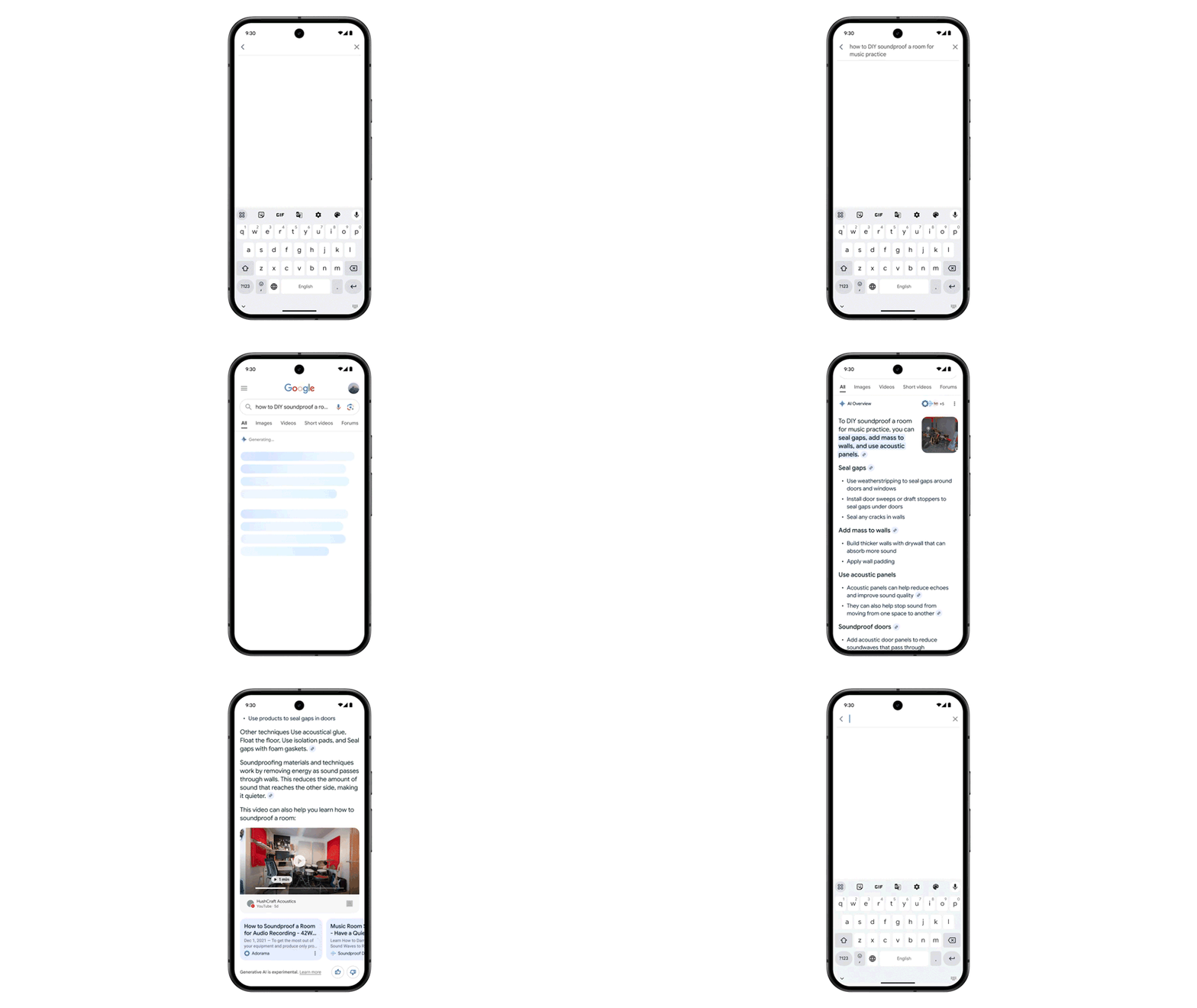
If you use AI even casually, you may have noticed its level of confidence is high. It can offer an answer that sounds so strong that you'd never think to double check. This adds another layer to this that doesn’t get talked about enough. AI doesn’t just summarize information — it presents it confidently.
Even when an answer is incomplete or slightly off, it can still sound polished, clear and authoritative.
That creates a subtle psychological effect. Meaning, the cleaner the answer feels, the more we trust it. And that’s exactly where things can go wrong.
Bottom line
So should you trust Google’s AI answers? I reccomend no, at least not blindly. A 10% error rate might sound small — until you realize those mistakes are often subtle, confident and easy to miss.
However, you also don't need to ignore them completely. They can be useful for quick summaries, getting a general sense of a topic and speeding up basic research. But they shouldn’t be your final answer — especially when accuracy matters.

Follow Tom's Guide on Google News and add us as a preferred source to get our up-to-date news, analysis, and reviews in your feeds.
More from Tom's Guide