Of course I used to sleep with my phone on my nightstand — how else would I set my alarm? So what if the temptation of social media meant sometimes I was scrolling long past my bedtime, keeping my brain alert throughout the night?
Good sleep hygiene encourages you to keep your phone away from your bed, but it wasn't until I bought a $10 analog alarm clock I realized just how useful this advice is.
I asked the experts why keeping your phone on your nightstand has such a negative impact on your sleep, and how a $10 analog life fix is such an effective solution.
Disadvantages of keeping your phone on your nightstand
Keeping your phone to hand as you sleep seems like an innocuous habit but as the experts explain, even a silent phone is a lurking distraction. Here's why...
Sends your emotions rolling
Unless you have a superbly curated feed, looking at your phone rarely imparts the feeling of total relaxation that you need for sleep.

"Phones deliver highly engaging, emotionally charged content. Even brief scrolling can increase mental arousal, delay sleep onset, and activate networks associated with vigilance and reward," explains Dr. Daniella Marchetti, Clinical Psychologist Specializing in Behavioral Sleep Medicine at RISE.
That’s a lot of emotion to be experiencing as you try to wind-down.
"Just at the time we should be quietening the brain for sleep, we are stimulating it instead," says Dr. Deborah Lee, sleep expert at Dr. Fox Online Pharmacy and The Wooden Bed Company.
Disruptive lights and sounds
You've gone to bed on time but your friends don't have the same good habits and they keep blowing up your phone with disruptions.
These can range from flashing lights to vibrations to an unwanted 'ping' just as you're drifting off. It's a barrage of nuisances that keep you from properly shutting down.

"Even if you’re not actively using it, having your phone nearby can fragment sleep — notifications, light, vibration, or even just the mental pull of knowing it’s there can keep your brain slightly on alert," says Chrissy Lawler, LMFT and author of The Peaceful Sleeper.
"Phones are linked to work, social obligations, and global news cycles, so having that 'always on' symbol nearby can make it harder for the nervous system to fully switch off," Dr. Lee adds.
Blue light
Blue light is a part of the visual light spectrum and it triggers the release of cortisol (a hormone that wake us up) while suppressing melatonin (a hormone that sends us to sleep.)
The biggest source of blue light is the sun but your phone is a secondary source.
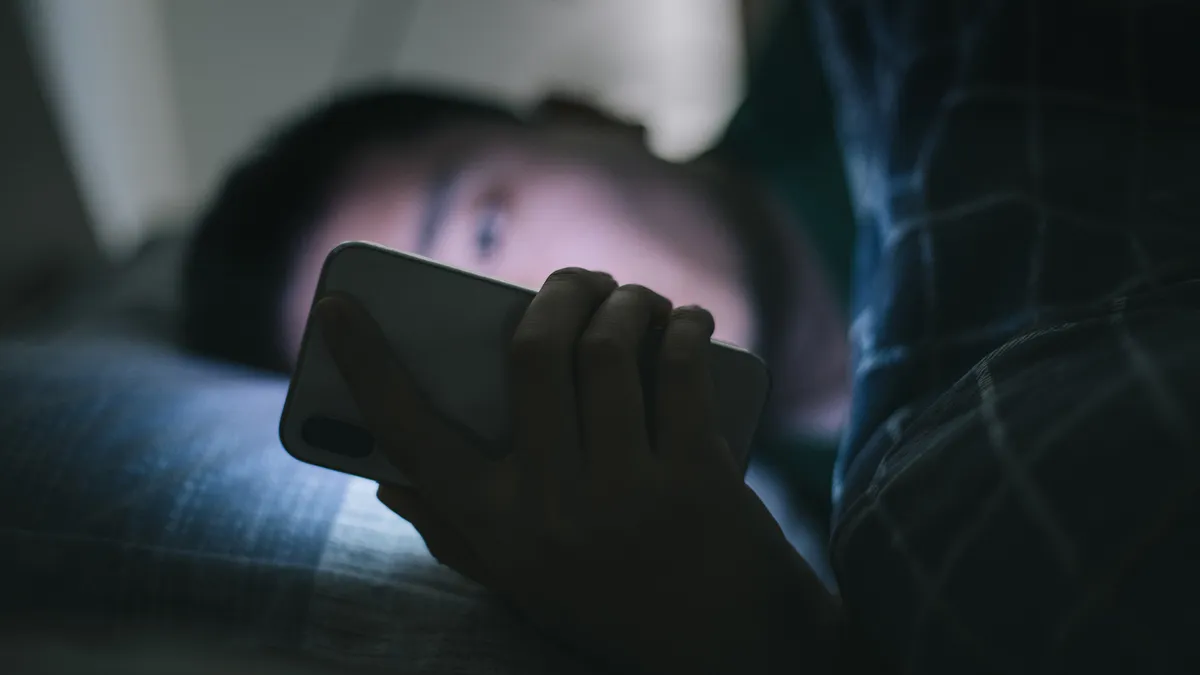
“Electronic devices give off blue light, which disrupts sleep patterns," says Erin Clifford, wellness coach and author of Wellness Reimagined. "Blue light doesn't allow your melatonin level to rise, which makes falling asleep harder."
Recent research suggests blue light isn’t quite the sleep killer we once thought it was but either way, a dose of a glaring screen right before bed isn’t conducive to sleep.
Desire to scroll
Even when your phone is tucked away on your nightstand, it still has the potential for disrupting your sleep, a problem Dr. Marchetti describes as "anticipatory alertness."
"Even when not actively used, a nearby phone can influence sleep through anticipatory arousal, which occurs when we subconscious monitor for notifications," she says.
"On its own, it increases the likelihood of sleep-interrupting behaviors, can be tempting to reach for during a nocturnal awakening, and may fragment sleep if an alert or vibration goes off. Availability makes a difference subconsciously."

My terrible sleep habit is that I always double-check my alarm on my phone once I'm tucked up in bed. And then, perhaps, a sneaky peek at TikTok... which turns into another 20 minutes of doomscrolling.
"What feels like 'winding down' often turns into doomscrolling. Those little dopamine hits, combined with blue light that suppresses melatonin, keep your brain alert."
"You think you’re relaxing," says Lawler, "but you’re actually stimulating your nervous system."
Creates negative associations
Your brain learns to recognize certain sleep-inducing triggers at bedtime, which is why a nighttime routine is so helpful.
However, using your phone before bed can have the opposite effect. By blasting your brain with a dose of stimulation when you're all tucked up, you tell your brain being in bed is for being awake.
"By removing your phone from the bedside, you eliminate both the temptation and the trigger, helping your brain associate the bed with sleep rather than stimulation," explains Dr. Lee.
The $10 switch that's helping me sleep better
I justified having my phone by my bed because it was my alarm, plus a combination of screen limits and sleep-friendly settings meant I could keep my 'one last look' scrolls under 20 minutes... most nights.
But let's break down the numbers. Say I went to bed at 10:30 p.m. I'd then spend another 20 minutes on my phone. Add on a 20 minute sleep latency (longer, if I'd scrolled past something that got my thoughts racing) and soon I wasn't falling asleep until 45 minutes after my assumed bedtime.

Not to mention the temptation for another quick peek if I found myself waking up at 3 a.m.
I only decided to buy an analog alarm clock as a fallback after a mishap with my phone alarm, assuming it would be a small addition to my nightstand.
It quickly became my main alarm clock, relegating my phone to an unnecessary distraction that I could keep on the other side of the room.
And what do you know, without a cheeky 'last look' before bed, I immediately cut down how long it took me to fall asleep.
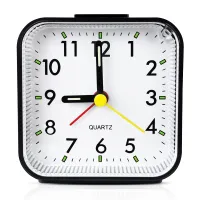
How an alarm clock can help you beat phone addiction
"Replacing your phone with a traditional alarm clock removes a major source of cognitive and behavioral activation," says Dr. Marchetti. "In practical terms, you’ve reduced the number of cues that prompt wakefulness, which makes it easier for your brain to transition into sleep."
"Switching to a traditional alarm clock removes the temptation [to scroll] entirely," explains Lawler. "It creates a clear boundary between day and night, which helps your brain power down more efficiently."
So taking my phone off my nightstand and replacing its main function (an alarm) with an analog alternative (an alarm clock) cuts down distractions both before going to bed and when I'm ready to sleep.
Lawler describes it as a "clear boundary between day and night", helping your brain power down "more efficiently."

"Less distractions result in less anxiety and lead to better sleep quality and duration. All this means you are likely to wake up to your traditional alarm clock, feeling better rested, brighter and in a more positive mood." says Dr. Lee.
If you have an urgent need to keep your phone to hand, it can stay in the room, but an alarm clock helps cut out that 'last look' many of us are guilty of.
'Small adjustments to your sleep environment can have a meaningful impact on sleep quality," encourages Dr. Lee.
Healthier ways to incorporate your phone into your nighttime routine
It's probably no surprise that on the Tom's Guide team, we're big fans of tech, so I'm certainly not advocating you throw your phone away.
"Phones are not inherently harmful," reassures Dr. Marchetti. "They are powerful tools that can either support or disrupt sleep depending on use patterns."
Lawler notes that used right, a phone can be a useful routine addition for those with anxious, busy minds. "Listening to a calming podcast or audiobook can give your brain one thing to focus on instead of replaying the day. But that’s very different from scrolling," she says.

"White noise or other soothing sounds like the ocean, forest, or rainstorms, coming from the app on your phone, can help you fall asleep and stay asleep because it masks other noises like outside traffic or snoring,” adds Erin Clifford.
Keeping your phone out of arm's reach can also prevent endlessly hitting the snooze button. As Clifford points out, snoozing "disrupts your body's internal clock and causes you to feel groggy for hours.”
"Overall, replacing your phone with more traditional wind-down rituals — reading, journaling, meaningful conversation — sends your brain a much clearer message: the day is over. It’s time to rest," advises Lawler.

Follow Tom's Guide on Google News and add us as a preferred source to get our up-to-date news, analysis, and reviews in your feeds.