Major hormonal changes and sleep do not mix well, and one of the biggest changes a woman can face is menopause.
While there are many symptoms of menopause, trouble sleeping is one of the most common. For some women, menopause insomnia can be caused or worsened by night sweats, hot flashes, and nocturia. For others, the triggers aren't so clear cut.
There are ways to beat menopausal sleep challenges, including Cognitive Behavioural Therapy for Insomnia (CBT-i) and HRT, but these can be costly.
More focus has been placed on finding alternative, cheaper and more natural methods in recent years, and one of the frontrunners so far is Tai Chi.
In fact, a study recently discovered that Tai Chi is nearly as effective as CBT-i for helping older adults to manage their insomnia.
To learn more, we spoke to experts in sleep disorders, menopause, and Tai Chi for their thoughts on how this ancient Chinese practice can help people to fight off insomnia triggered by menopause. Here's what they said...


Dr Audrey Wells is the Chief Medical Officer of SLIIP, a healthcare company that offers sleep consultations online via video. Dr Wells is board-certified in sleep medicine and is an advocate for woman's sleep health.

Dr. Alyssa Dweck is a board-certified gynaecologist. She is a certified menopause provider and serves as the Chief Medical Officer at Bonafide Health.

Dr. Michelle Sands is a licensed naturopathic physician (ND) and is board-certified in anti-aging medicine. She specializes in women' health, particularly female hormones. She is the founder and CEO of Glow Natural Wellness.
How Tai Chi reduces insomnia during menopause
Many women's health experts endorse Tai Chi for its low intensity, accessibility, and stress relief. As Dr Alyssa Dweck explains, other studies prove that mind-body exercises such as Tai Chi positively influences sleep quality during menopause.
"Mind body exercises can improve sleep through reducing anxiety and depression, both of which are related to menopause and related sleep disruption," says Dr Dweck.
"This practice, including Tai Chi, decreases fatigue which may help regulate sleep-wake cycles."

Tai Chi doesn't cause cortisol spikes
According to the Dr Dweck, another plus is Tai Chi's suitability for middle and older-aged adult, even among those with a lower fitness level.
'Instead of asking women to sit still and 'empty their minds', which rarely works when hormones are shifting, it gives the brain something gentle and rhythmic to focus on'
Dr Michelle Sands, women's health specialist
Dr Michelle Sands, a women's health specialist at Glow Natural Wellness, agrees. "Unlike high-intensity workouts, tai chi doesn’t spike cortisol. For many women in midlife, late-day intense exercise actually worsens insomnia.
"Tai chi supports movement, circulation, and relaxation without overstimulating the system."
Accessibility isn't the only benefit that comes from the martial art's low intensity; its gentleness also helps to ease the common menopausal symptoms of nighttime anxiety and frequent wakings.
"The slow, intentional movements combined with steady breathing signal safety to the nervous system," says Dr Sands.
"Instead of asking women to sit still and 'empty their minds', which rarely works when hormones are shifting, it gives the brain something gentle and rhythmic to focus on."

Sleep experts are highlighting the positive effects on menopause insomnia too. Board-certified sleep doctor at Sliiip Dr Audrey Wells explains that menopause increases activity in the sympathetic nervous system (which triggers fight-or-flight response). Tai Chi heightens the parasympathetic system (which calms the body after stress).
According to Dr Wells: "Tai Chi combines slow movement, breath regulation, and focused attention, which lowers cortisol, improves parasympathetic tone, and reduces cognitive and physical hyperarousal, all major drivers of menopausal insomnia."
The longterm sleep benefits of Tai Chi

Kara McKeown is a Certified Menopause Coach and physical therapist at Cape Concierge Physical Therapy. Kate is trained in a wide variety of health conditions and clinical disorders.
Dr Dweck tells us there's plenty of long-term sleep benefits to practicing Tai Chi, such as educed anxiety and depression, as well as more indirect positive results.
"If sleep is improved, downstream effects can be associated with reduced risk of heart disease, cognitive decline and general well being," she points out.
Long lasting results
However, benefits aren't always instant as the study shows that Tai Chi was initially an inferior method to CBT-I at managing insomnia, but non-inferior after 15 months of practice. So why did it become more effective after a year's worth of practice?
According to Certified Menopause Coach at Cape Concierge Physical Therapy Kara McKeown, unlocking all the sleep benefits of Tai Chi requires consistency.
"The longer you practice Tai chi, the easier it becomes to enter the meditative state that it can induce," she explains.
"You can get the benefits in a shorter period of time and the results are long lasting. While the insomnia study itself was only for a 12 week period, the benefits remained at a 24-month follow up."
Dr Sands agrees. "Over time, consistent practice improves sleep quality, stress resilience, balance, and overall body awareness," she says.
"Chronic insomnia is rarely just a sleep problem—it’s a whole-body stress pattern. Tai chi helps unwind that pattern over months, not just nights."
According to Dr Sands and McKeown, long-term advantages are also seen because of a very simple reason: People stick with Tai Chi.
"It’s low-impact, accessible, and doesn’t punish your joints or nervous system," says Dr Sands.
"It is sustainable for most people in that it doesn't require much for space or equipment and is cost effective," McKeown explains. "Once the techniques are learned, they can be performed without being in a class or with an instructor."
Effective, but not a complete solution for all
While Dr Wells agrees that Tai Chi is an excellent foundation for many people with menopause, it's not a "complete solution" for everyone as some symptoms can be too severe for Tai Chi to treat alone.
"Tai Chi works best as part of a layered approach rather than a standalone fix," the sleep doctor says.
"Women with severe insomnia, untreated sleep apnea, significant depression or anxiety, trauma-related sleep disruption, or intense hot flashes may also need CBT-I, targeted medical treatment, or hormone therapy."
How to practice Tai Chi to manage insomnia during menopause

Dr. Mao Shing Ni (Dr Mao) is a doctor of Chinese medicine, and a Tai Chi master and instructor who has authored books on Harmony Tai Chi and managing menopause symptoms.
If you're thinking of using Tai Chi to help ease menopause insomnia but aren't sure where to start, we've called upon Dr. Maoshing Ni, a Tai Chi master and author of exercise program Dr. Mao's Harmony Tai Chi: Simple Practice for Health and Well-Being to answer some common questions.
First of all, what exactly is Tai Chi? "Tai Chi is a traditional Chinese mind–body practice based on the Taoist principles of balance, flow and harmony," says Dr Mao.
"It combines slow, flowing movements with breath and focused awareness."
However, he explains that some forms of Tai Chi, such as the physically-demanding, martial arts-oriented styles, are not suited for menopause-related fatigue and insomnia.

Choosing the right Tai Chi practice for menopause
"Practices that emphasize slow transitions, soft joints, and coordinated breathing—rather than strength or martial precision—are ideal during times of hormonal fluctuation," he advises.
"For example, Harmony Style Tai Chi combines the best of Chen, Yang and Wu for health and balance."
To get the sleep-boosting benefits of Tai Chi, Dr Mao recommends practicing in the morning or late afternoon, up to fours before bedtime.
"This timing helps discharge stress, regulate cortisol, and transition the body into parasympathetic (rest-and-digest) mode without overstimulating the system right before sleep," he suggests.
Dr. Mao’s Harmony Tai Chi online video instruction is tailored towards fatigued days and menopause symptoms. It integrates Traditional Chinese Medicine principles with accessible movement for improving sleep naturally.
Another natural method that Dr Mao recommends to ease menopause insomnia is guided meditation.
"Train the mind to let go of words, thoughts, and images as you consciously welcome inner awareness and the stillness of deep sleep."
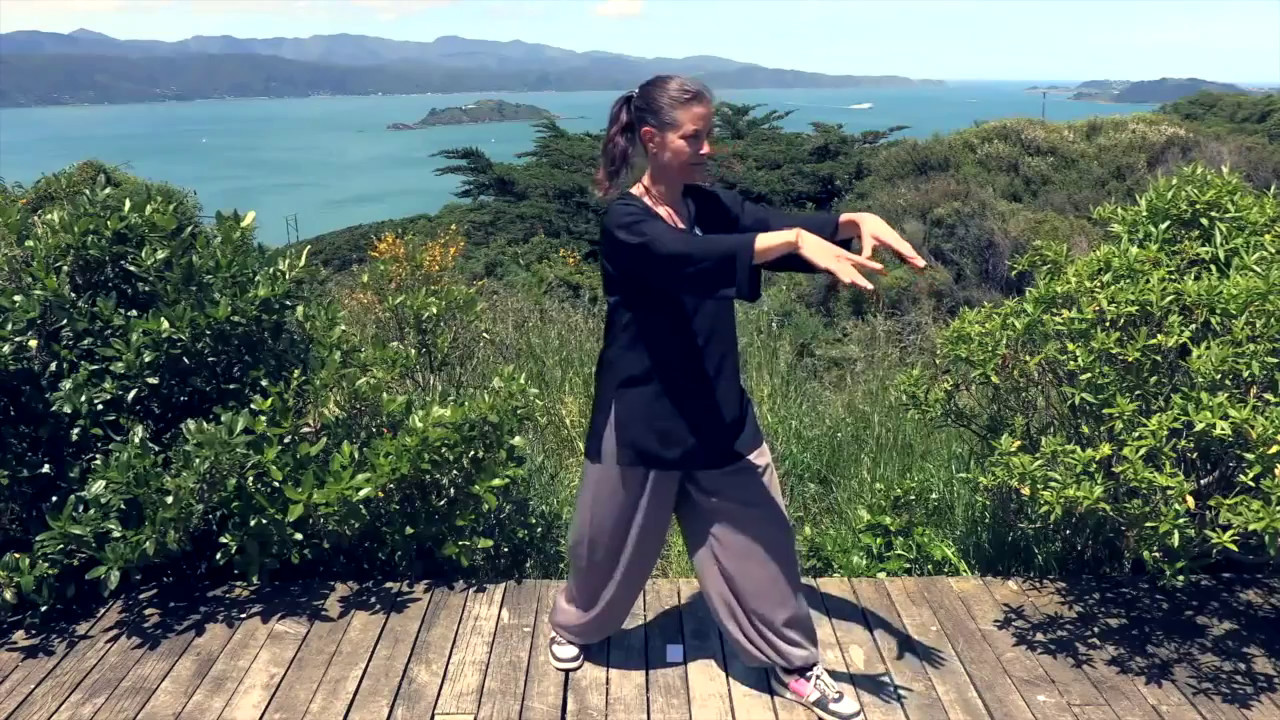
In addition Dr Mao's Harmony Tai Chi program, there are plenty of beginner videos and resources online, such as this beginner-friendly tutorial from master Tai Chi instructor Leia Cohen:
How to improve sleep during menopause
As Dr Wells mentions above, Tai Chi is beneficial but not a one-size-fits-all solution for menopause insomnia. "In menopause, sleep improves when the environment supports cooling, predictability, and nervous system safety."
"That means keeping your bedroom cool and dark, using breathable bedding, avoiding alcohol close to bedtime, maintaining consistent sleep and wake times, and getting morning daylight exposure."
Dr Wells still thinks Tai Chi is an invaluable way to treat the sleep challenges that come with menopause, though.
"Regular movement, stress-reducing practices like Tai Chi or yoga, and addressing hot flashes or sleep apnea medically are just as important as traditional ‘sleep hygiene’ tips."
- Read more: Our guide to the best mattresses for all sleepers