Tom's Guide Verdict
The Leesa Original is a mid-range memory foam mattress with a twist. While the excellent cushioning and pressure relief echo traditional foam beds, Leesa swaps your standard memory foam for an eco-friendly alternative, to improve airflow and body support. And to help save the planet, of course. At $1,059 for a queen in the year-round sale it's competitively priced, and the green design might give it the edge over its rivals.
Reasons to buy
- +
Comfortable for side and back sleepers
- +
Great pressure relief at the shoulders and hips
- +
Strong edge support lets you stretch out
- +
Environmentally friendly build
Reasons to avoid
- -
Bed sharers might disturb each other with heavy movements
Why you can trust Tom's Guide Our writers and editors spend hours analyzing and reviewing products, services, and apps to help find what's best for you. Find out more about how we test, analyze, and rate.
You sleep better when you feel good about yourself, and that's an ethos Leesa puts into its mattresses. Consciously sourced materials and a robust donation program have made Leesa a sleep brand with a difference, so when it announced much of the line-up was swapping plastic-based memory foam for eco-friendly GreenFlex foam, we had to give it a go. Can the Leesa Original mattress still deliver its famous foam 'hug' from a new design?
We conduct seven robust tests in our lab to capture objective data on the four areas of a mattress that most affect your sleep comfort: pressure relief, temperature regulation, motion isolation and edge support. We also sleep on a mattress for at least three weeks before subjectively rating it. All of this data is fed into our bespoke scoring system, along with feedback captured by our expert testing panel, to create an overall review score. Read our full mattress methodology here.
Memory foam is found in many of the best mattresses we've tested because while this synthetic product isn't great for the planet, it's exceptionally good at cushioning. And if I didn't know the Leesa Original had taken a different approach, I'd believe it's your classic foam bed. The pressure relief is a stand-out feature, with contouring that compares to the thick, dense foams of the Nectar Premier mattress.
The Leesa Original has some tough competition for a place in our guide to the best memory foam mattresses but after putting it through our mattress testing methodology, it shines as an all-rounder. Here's my full honest review and why the Leesa Original mattress makes it easy being green.
Leesa Original Mattress review: Price
- A queen is normally $1,059 in Leesa's year-round sale
- A 120-night trial and limited lifetime warranty are included
- Priced similarly to rivals from Nectar, Casper, and Puffy
The Original is one of the more affordable mattresses from Leesa and it fits in the mid-range price bracket. You can expect to pay roughly $1,000 for a queen Leesa Original Memory Foam mattress, depending on when you shop. Here's a breakdown of the sizes, MSRP, and regular sale pricing:
- Twin MSRP: $967 (normally sold at $769)
- Twin XL MSRP: $1,026 (normally sold at $819)
- Full MSRP: $1,246 (normally sold at $995)
- Queen MSRP: $1,332 (normally sold at $1,059)
- King MSRP: $1,803 (normally sold at $1,439)
- Cal king MSRP: $1,803 (normally sold at $1,439)
There's nearly always 20% off at Leesa in the regular mattress sales but around the holidays you can often boost your discount. Look out for 25% off and even 30% off (the latter tends to be reserved for major events, like Memorial Day and Black Friday.) Leesa has thrown in free gifts in the past as well, although those are increasingly rare. Bookmark our Leesa mattress sales page for regular deal updates.
The Original faces some stiff competition in this price bracket. It's biggest rival might be the Nectar Premier mattress, typically $999 for a queen at Nectar, but Casper's The One puts up a fight at $899 for a queen, as does the Cloud mattress, which is $1,049 in a queen size from Puffy.
We think the Leesa Original is well priced for an all-foam bed, particularly as its made in the USA and uses eco-friendly GreenFlex foam (which I'll discuss in more detail below). But the budget sleep market is growing and the best cheap mattresses are getting better. All-foam beds like the Siena ($349 for a queen), the EGOHOME ($379 for a queen), and the SweetNight ($399.99 for a queen) are cheaper but potentially less durable alternatives.
Leesa's 120-night sleep trial and limited lifetime warranty are both above average, although not quite as good as the 365-trial from Nectar. However, as it takes roughly 30 nights to break in a bed, 120 nights should give plenty of time to decide if the Original is right for you.

Leesa Original Mattress review: Design
- 10" tall and with a classic three layer design
- Uses dense 3lb foam for durability and pressure relief
- Features BioFlex foam, an eco-alternative to normal memory foam
Leesa's Original mattress has a three layer construction, typical of foam mattresses. A base layer of durable foam provides support, a middle layer of transition foam should increase stability and pressure relief, and a top layer delivers cushioning.
In the Original, the top two layers are crafted using dense 3lb foam. That's perhaps not quite as impressive the 5lb foam used in the (luxury) Saatva Contour5 but it still indicates a high-quality build. 3lb density is unlikely to make much difference to the feel but it should improve durability.
But the most eye-catching feature of the Leesa's build is the comfort layer, which is made with Leesa's new GreenFlex BioFoam. This eco-foam caught my attention when it when it was first announced and bumped the Leesa Original right to the top of my testing priorities.

That's because while memory foam has a classic, body hugging feel, it's a bit of an environmental mess (it's made from petroleum, after all). Leesa's eco-foam could represent a new frontier for foam beds, delivering the same stand-out pressure relief from a material that's better for the environment.
The entire thing is wrapped in a Breathable Knit Cover with a soft finish and Leesa's distinctive stripe design. Alternatively, you can opt for the Cooling Quilt Top Cover — it adds breathability and plushness for $199 more.
Like all the best mattresses in a box, the Original comes vacuum sealed and rolled. It was easy to set up but if you order anything bigger than a full, I recommend asking for a helping hand.


Leesa Original Mattress review: Comfort
- Great pressure relief at the shoulder and hip, with plenty of support
- Medium-firm feel best suits side and back sleepers
- Breathable with excellent edge support and good motion isolation
I'd been hands-on with the previous Leesa Original mattress during a trip to the 3Z mattress factory in Arizona and I can remember being impressed by the contouring. I was excited to try the new design and see if the GreenFlex foam was a worthy replacement for the original materials.
Before testing the Leesa Original I'd been sleeping on the Plank Firm Luxe, one of the firmest mattresses we've tested. So my initial response to the Leesa Original was softness — despite the foam switch, this bed still delivers cushioning.
The longer I used the Leesa Original, the more the support came through (although as a dedicated stomach sleeper, it was too soft at the knees). Like the Nectar Premier, one of our favorite foam mattresses and a bed I tested at home, the Leesa Original delivers cushioning at the hips and shoulders without causing you to sink too far into the mattress.
I spent four weeks sleeping on a queen size Leesa Original mattress and also put it through the full Tom's Guide testing process in our Sleep Lab. Here are the results.
Temperature control: 3.8 out of 5
Ever found yourself tossing and turning on a stuffy mattress? Good temperature regulation stops that from happening, by allowing air to circulate and excess heat to escape. It's a must if you experience night sweats or wake up from overheating.
As a general rule, all-foam mattresses can struggle with temperature regulation (dense foam holds onto heat). But remember, the Original uses Leesa's GreenFlex bio-based foam. Add on a breathable cover and this mattress takes some steps to prevent heat build-up.
To test temperature regulation, we conduct a heat absorption and dissipation test. One person lies on the mattress for 15 minutes while we measure temperature changes with a thermal cam. They then jump off and we measure for another 15 minutes, to see how quickly the bed cools down.
At its hottest moment, the Leesa Original gained 11.°F in warmth. That's a poor performance, worse than the maximum temperature increase (MTI) of rivals the Siena and the Nectar Premier. You might find that as you lie on the Leesa Original, heat pools beneath you.
However, an MTI of 11.3°F is lower than 15.2°F of the SweetNight and close to the 10.5°F of the Bear Elite Hybrid (the best cooling mattress we've tested). And in the second part of our test the Leesa Original excelled, dropping 3.5°F between minute 15 (when our tester left the bed) and 16.


That drop off continued throughout the first five minutes with an initial cooling rate of 1.32°F/minute (even faster than the Saatva Classic, another highly rated cooling mattress). And while the Leesa Original didn't drop back to its original temperature within the testing time frame, it had lost 9.6°F from its highest point. That's similar to the Siena, which ended up 1.5°F above its starting point.
Our hands-on testing backed up the lab results. The Leesa doesn't feel cool to the touch but it does a good job at maintaining a neutral feel. Even when I piled the blankets on I didn't wake up overly warm. It was similar to my experience testing the Siena Signature, which kept an even feel through a warm summer.
Fellow tester Frances Daniels agreed that the Leesa Original mattress had a neutral feel, even if the soft knit cover means you won't get that 'ahh' chill when you climb into bed. Factoring in our lab testing and hands-on experience, we award the Leesa Original 3.8 out of 5 for temperature regulation.
Pressure relief: 3.9 out of 5
Pressure relief in a mattress consists of two parts. Cushioning, which helps distribute weight in the places where you press against the surface, and support, which keeps your spine lifted and aligned. The very best mattresses for pressure relief combine these two factors to create an almost 'weightless' feel, as if you're cradled by the bed.
With thick layers of dense memory foam, I was expecting good cushioning from the Leesa Original but perhaps weak support. It surprised me, striking a good balance between the two.
This was reflected in our lab tests. We placed a 25kg weight in the hip and shoulder area of the Leesa Original. It sank on average 4.2125" — that places it in the 'Excellent' zone of our scoring, beating rival the Nectar Premier. Side sleepers, you can expect the mattress to contour around your hip and shoulder to prevent pressure build up. (But it's not quite the deep sink offered by the Helix Midnight Luxe, our top rated mattress for side sleepers.)
After leaving the weight for 5 minutes, we removed it and timed how quickly the materials bounced back. The Leesa returned to form in 3.5 seconds on average, which puts it in the 'Good' bracket. A quick response indicates the materials move when you move, to deliver non-stop support. It might take a second for the Leesa to catch up, but overall it doesn't take long to bounce back.


This makes it easy to change positions on the Leesa Original, although it can't compare to the quick response of the Saatva Classic. However, it's faster than the Nectar Premier and outstrips the Helix Midnight Luxe (a mattress I often felt 'stuck' in.)
I've been sleeping on the Leesa Original mattress for four weeks and in my experience, it's a bed primarily for side and back sleepers. I'm a natural stomach sleeper and I've found myself moving onto my side on the Leesa, to make the most of the cushioning. (The Siena Signature is a superior mattress for stomach sleepers but the Leesa will do for short bursts.)
It's an assessment my testing team largely agreed with, although lightweight side sleeper Frances Daniels might have preferred something plusher. She described the Leesa Original as "pretty good at contouring and distributing pressure relief" but noted it wasn't a "plush, cushioning pillow top mattress" — try the Helix Sunset Luxe if you want a bed you can really sink into.
Firmness
We use a scale of 1-10 to describe mattress firmness. One is a bed that's softer than a marshmallow, while 10 is a bed that's harder than a plank of wood.
Firmness is subjective so to get the most accurate reading possible, we ask people of different body types and needs to test the mattress and give a rating. We then use this, combined with our pressure relief tests, to determine an average.
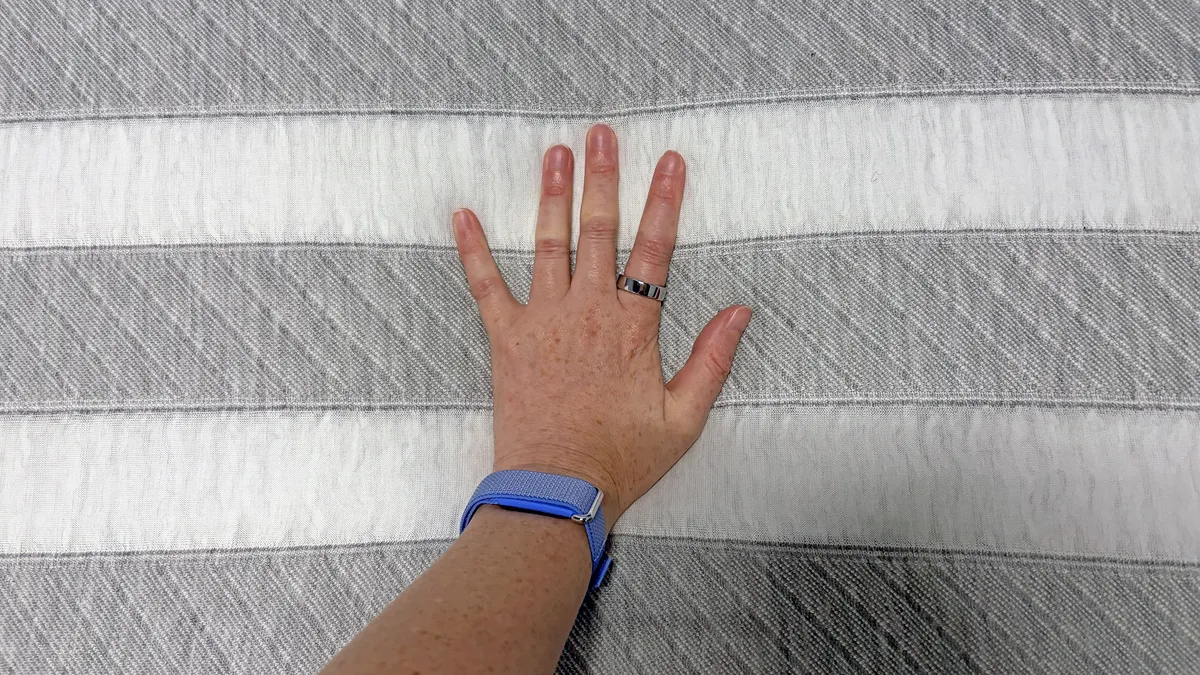
Leesa describes the mattress as 'medium', which would place it at five on the scale. Our testing team felt it leaned medium-firm, describing it as between 6-7. This is reflected in our pressure relief weight tests.
Overall, we describe the firmness as 6.5, or medium-firm. This firmness is typically considered a good all-rounder, comfortable for most back and side sleepers, as well as combination sleepers.
Motion isolation: 3.6 out of 5
Bed sharers, this test is for you (and yes, that includes anyone sharing with a pet.) Motion isolation prevents disruptive movement from traveling from one side of the bed to another, so you won't wake up when someone rolls over.
In our lab, we test motion isolation using a slam ball and an accelerometer. We drop our 5lb slam ball onto the and measure the impact (IIA) and decay rate using an accelerometer placed on the other side of the bed. We then repeat this 10 times and take the average.
The Leesa Original had an IIA of 17.856 m/s2, which is surprisingly large. So surprising I did the test another 10 times, and came out with a near identical number. An IIA this big indicates the mattress absorbs a large amount of force from impact, which means heavy movements might disrupt even a deep sleeper. It's among the highest IIAs we've measured, significantly more than the Siena and the Nectar Premier (although the SweetNight recorded a similarly substantial mark.)

But the Leesa did have a trick up its sleeve (under its covers?). While the initial impact was large, the decay rate was super quick. In other words, any impact quickly died out. The average decay rate of 1.114 seconds is faster than even the Siena, which is top of the class when it comes to motion isolation. This means even if your partner leaps into bed, the aftershocks are minimal.
So it's perhaps no surprise that tester Frances found heavy movement disruptive, even for deep sleepers. Although she agreed she'd sleep through light and moderate movements, she felt someone falling into bed would wake her up.
I'm a deep sleeper and I had a more positive view of the Leesa Original. My knees felt jolted during the intense movement section of the test but I could sleep through someone climbing into the bed (even if they were collapsing after a long day.)
When we initially tested the Leesa Original, we found the motion isolation excellent. It's possible the BioFlex foam (which Leesa claims is more responsive than traditional foam) has slightly dinged the motion isolation of this mattress. But an overall score of 3.6 is still pretty good.
Edge support: 4.5 out of 5
Whether you like to stretch out in your sleep, sit on the bed when getting ready, or push down for a boost out of bed in the morning, we all rely on edge support from time to time. This is what keeps us from sliding off the mattress.
Edge support took a hit in our review of the previous iteration of the Leesa Original Mattress, earning a measly 2.5 stars. But with the updated design, Leesa seems to have ironed out this flaw. We placed a 25kg weight at the foot and side of the mattress, three inches from the edge, and measured the sink. The weight balanced easily and an average sink of just 3.8125" indicates the sides of the Leesa Original mattress deliver plenty of support.
It beats the Nectar Premier (which had a slight 'slippery' feeling to the surface) but just falls behind the Siena Signature and Saatva Classic. But those beds are two of the best we've ever tested when it comes to side support, so that's no surprise.


We also measured how far we could get to the edge of the mattress before we started to roll off. I was dangling off the sides before gravity took over, so there's no fear in stretching out.
In our hands-on tests the team felt comfortable sitting and lying on the edges. As did I at home, when having a quick sit down to do my skincare, tie up my shoes or (most likely) scroll through my phone. I also asked my mom to test the sides — she's 70 and her 'creaky' knees are notoriously hard to please. While she noted some initial sink she felt the edges were comfortably stable, giving her the support she needs getting out of bed.
Leesa Original Mattress review: User reviews
- Rated 4.5/5 stars from over 20,000 Leesa shoppers
- Rated 4.1/5 from over 760 shoppers on Amazon
- Reviewer's praise the medium-firm feel and support
There are over 20,000 reviews of the Original mattress on Leesa (although most of these refer to the older design without the GreenFlex foam). Of those reviews, more than 14,000 of them award the Original mattress a full five stars, while 2,800 users have given it four stars.
Positive reviews highlight the support of the mattress, Some reviews note the bed is firmer than expected but not always as a negative — plenty of customers describe the Leesa as easing back pain. A similar picture can be found on Amazon, with 4.1 stars from 700+ reviews.
Multiple reviewer's also mention being repeat customers, either replacing well-loved mattresses or opting to buy the same bed for multiple rooms. That indicates good durability and value.

While some users praise the Leesa Original for reducing back pain, others found the mattress worsened the problem. Many of these reviewer's also note the bed is softer than expected — the Plank Firm, the best firm mattress on the market, might have been a better choice.
A significant proportion of the negative customer reviews are focused on poor service and slow delivery. This is a consideration when buying a new bed but it would be remiss not to note the number of reviews praising the quick delivery and response.
There's one thread across reviews; a strong smell. I didn't notice any off gassing odor during unboxing, so fingers crossed this was the result of the older foam.
Leesa Original Mattress review: Should you buy it?

The Leesa Original mattress is everything you expect from a memory foam bed; thick cushioning delivers impressive relief for side sleeper friendly full-body contouring. And it does all that without actually being a memory foam mattress.
You won't get a marshmallow-soft feel but the Leesa's GreenFlex foam adapts to the body to reduce pressure at the shoulder and hips. The medium-firm feel also ensures plenty of support for back sleeping, making this a versatile choice. (stomach sleepers will find it too soft — try the Plank Firm instead.)
For average weight side and combination sleepers, the Original hugs the touch points while keeping the spine lifted (lightweight side sleepers might prefer something softer, like the Zinus Green Tea mattress.) This adaptable feel is something we felt was missing from rival the Nectar Premier Memory Foam mattress, which didn't appeal to several of our back sleeping testers.
Perhaps the most exciting thing about the Leesa Original lies inside. Leesa has always been an eco-thinking mattress brand and replacing memory foam with bio-based GreenFlex foam has been a worthy upgrade. Not only do you get the green credentials but the temperature regulation is improved and the edge support is much stronger (even my mom and her weak knees were comfortable pushing off the side).
And while our motion isolation tests had mixed results, my hands-on experience has been positive. For most couples, the Leesa Original should absorb excess movement to ensure your late nights don't disturb their early mornings.
At $1,059 for a queen in the regular Leesa sales ($1,332 MSRP), the Leesa Original is competitively prices, although if you're after a budget bed I recommend Zinus or Siena. But for side sleepers who want the contouring comfort of memory foam while keeping an eye on their eco-footprint, the Leesa Original mattress is a winner.
Leesa Original Mattress review: Alternatives
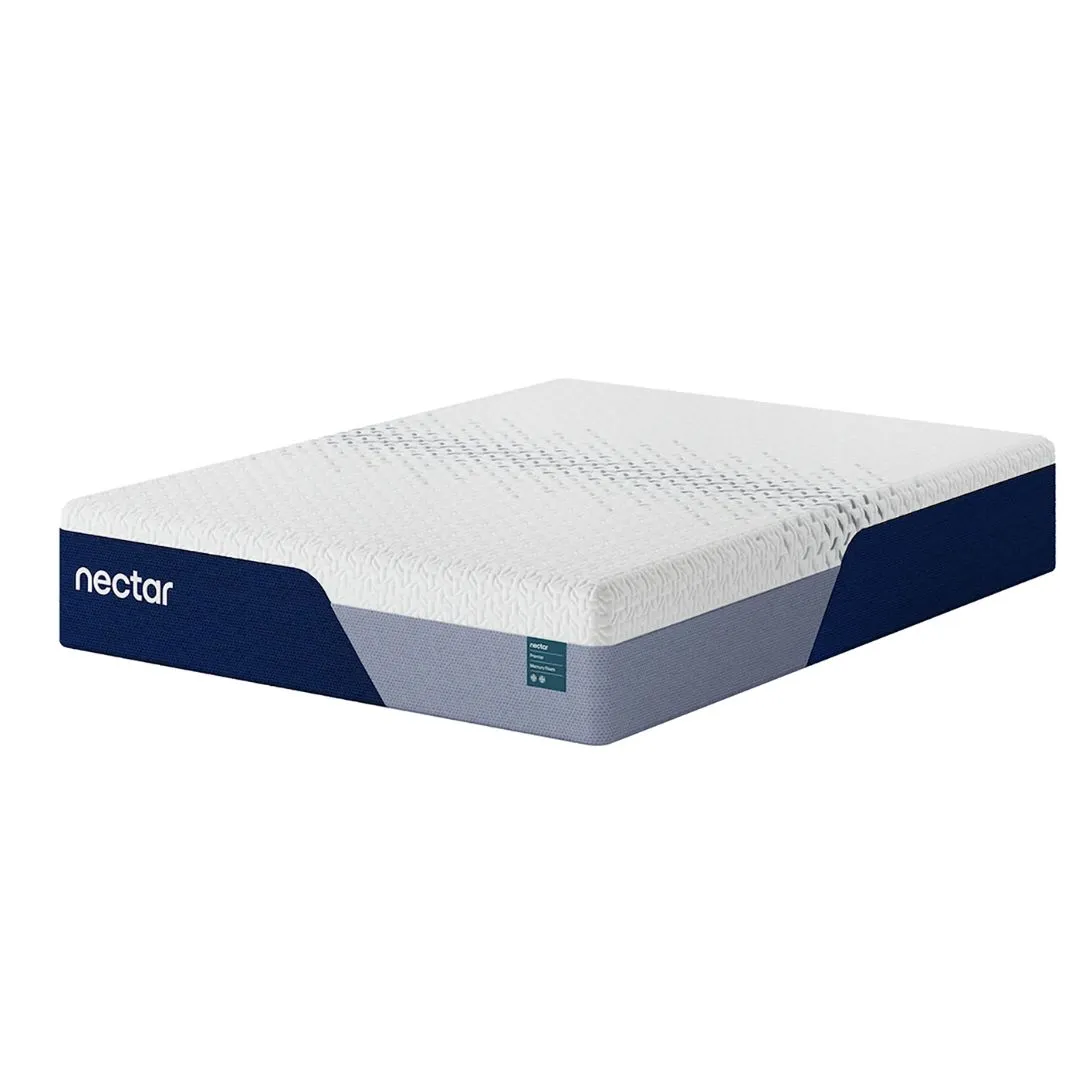
The Nectar Premier Memory Foam mattress might be the Leesa's closest competitor, a similarly priced all-foam bed that's good for side sleeping and stays a neutral feel at night. The Nectar Premier isn't as strong at the edges as the Leesa but it's better at absorbing movement, so consider what your sleep needs more. A queen is $999 in the year-round Nectar mattress sale.

Our top-rated budget mattress, during our Siena Signature mattress review we were impressed by the incredible support of this firm bed. It's also great at isolating motion and has sturdy edges from corner to corner. At just $349 for a queen from Siena in the permanent sale it's exceptional value, but based on our testing, we don't think it will last as long as the Leesa.
DreamCloud's Luxe Memory Foam Mattress feels indulgent. Think thick pillow top, oodles of pressure relief and exceptional contouring. However, it does get stuffy and while it's good for side sleeping, a lack of lumbar support makes it less comfortable for back and stomach sleepers. But the luxury cushioning is well-priced with a queen $1,599 in the DreamCloud mattress sale.